The pitch for modern driver assistance is seductive: let the car take the strain, keep your hands near the wheel, and arrive fresher. But a new real-world comparison of seven assisted driving systems has exposed just how wide the gap can be between the brochure and the B-road. Over a 37-mile loop mixing motorway, sweeping A-roads and rural lanes, the Jaecoo 7’s set-up produced roughly one warning a minute and repeatedly needed rescuing at bends, while established systems from Tesla, Volvo, Ford and BMW handled the same route with far less drama.
The test, run by Auto Express as the second part of its driver assistance megatest, is a useful reality check for anyone shopping on the strength of a features list. Because as the results show, having the technology and having it work properly are two very different things.
The test: seven systems, one demanding loop
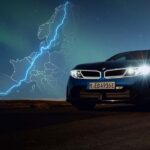
Seven brands took part: Leapmotor, Jaecoo, Ford, Volkswagen, Tesla, BMW and Volvo. All the cars offered Level 2 capability, meaning they can read their environment, including speed limits, manage pace and distance to the vehicle ahead, and steer to keep themselves in lane. The Tesla and Volvo went further, able to change lanes automatically on the motorway, while Ford’s BlueCruise carries a Level 2+ classification that permits genuinely hands-off driving on approved motorway stretches.
It is worth being precise about that terminology, because marketing departments are not always. A Level 2 system can hold a lane and a speed, but it expects you to keep a hand on the wheel and your attention on the road. BlueCruise is the outlier here, and even its hands-off mode comes with a camera watching your eyes and a legal requirement to take back control when asked. Regulators are still working out how to signal these differences to other road users: in the United States, for instance, NHTSA has proposed cyan lights to mark self-driving cars, a draft rule that is permissive rather than compulsory. In the UK, the legal position remains simple: whatever the badge on the boot says, the driver is in charge.
The route was chosen to be awkward on purpose. Of the 37 miles, around 10 ran along the M40, another 10 covered the A422 with its sweeping 50mph bends, and the A43 dual carriageway brought the cars back to the Upper Heyford base. Detours through Middleton Cheney, Farthinghoe and Brackley added tighter corners, roundabouts and junctions. None of the cars offered the sort of “L2++” urban assistance that BMW aims to introduce from 2027, so this was a fair fight between today’s systems.
Testers, working alongside Colin Grover of Apollo Vehicle Safety, aimed to keep their feet off the pedals and their hands off the wheel wherever possible. Points went to systems that adapted well to speed signs and road features, were intuitive to use, and communicated their status clearly. The driver, crucially, remained responsible throughout. These are assistance systems, not autonomy, and the person behind the wheel stays liable at all times.
The Jaecoo 7’s difficult hour
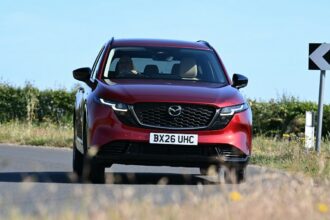
The Jaecoo 7 had the most troubled run of the seven. On a rural road at the 50mph limit, approaching a sweeping right-hand bend marked by five chevron arrows, the car simply failed to make the turn. The tester had to grab the wheel. At a tighter left-hander it ran too close to the verge, corrected onto the central white lines, then over-corrected back towards the grass.
The roundabout approach was worse. Forward-distance monitoring spotted a Land Rover Defender ahead and slowed the car to 26mph. Once the Defender cleared the approach, the 7 accelerated straight towards the grassy road island, requiring human intervention to take the Brackley exit. On the fast rural B4030 it headed towards a tricky 35mph corner at 55mph, again needing a human save. Later it slowed and steered promisingly into a gentle right-hander, then bailed out halfway through the turn.
There were flashes of competence. Performance stabilised on the motorway and dual carriageway, which testers put down to the system being engineered for wide Chinese highways rather than Northamptonshire’s leafy corridors. That is a plausible explanation, and a reminder that tuning a system for one driving environment does not automatically translate to another. Buyers will judge these cars on how they behave on a wet Tuesday in Brackley, not on a specification sheet.
Warning overload and invisible icons
Where the Jaecoo really lost points was in how it communicated. Unlike the other six cars, it flooded testers with beeps, bongs and messages, including “Intelligent Cruise Control cancelled!”, “Adaptive Cruise Control (ACC) failure” and “Contact service!”. Over the roughly 60-minute run it produced 30 ACC turned-off warnings and 28 driver distraction messages. That is roughly one alert a minute, and it turns the cabin into a fruit machine.
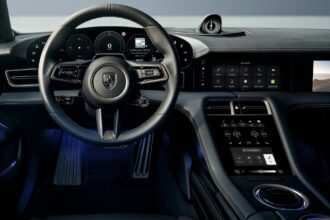
The irony is sharp. When a tester glanced at the digital driver’s display to check speed, the car responded with a “You have been distracted” warning. The display icons themselves, a grey steering wheel that turns blue when the system is active and a green speedo on a pale background that occasionally flashes to signal intelligent speed assist availability, were described as practically invisible. So the car complained about the driver looking at information the driver could barely see.
The control logic did not help. A long press on the steering wheel graphic turns on Intelligent Cruise Assist and the blue lane markings, yet the warning messages confusingly refer to ICC instead. If a system needs a manual to explain which acronym is shouting at you, it has already failed the clarity test.
Speed limits that refused to stick
Adapting to speed signs is one of the pillars of a good Level 2 system, and here the Jaecoo was bewildering. It adjusted itself to the limit only twice, and only when a tester spotted a minuscule warning and clicked the down arrow in time. Otherwise, speed had to be managed manually, which rather defeats the point of an assistance system on a road where the limit keeps changing.
Compare that with the systems that scored well, which read signs, applied the change and told the driver plainly what they had done. The difference is not exotic technology. It is calibration, interface design and a clear idea of what the system is for.
The contrast: Tesla, Volvo, Ford and BMW
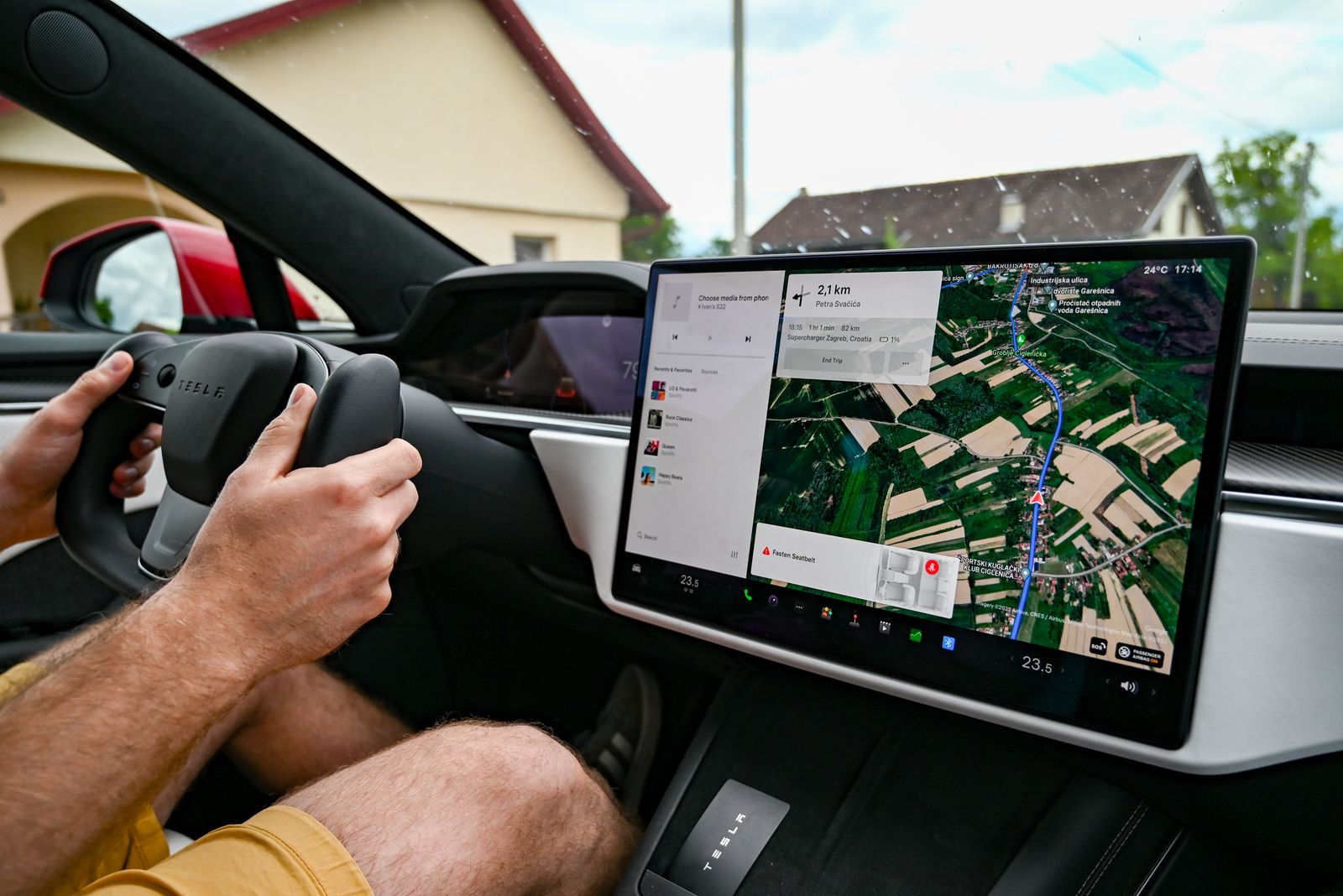
The rest of the field showed what mature development looks like. On the A422’s sweeping bends the Tesla and Volvo tracked the lane without fuss and changed lanes automatically on the motorway when asked. Ford’s BlueCruise went properly hands-off on the approved motorway stretches, living up to its Level 2+ billing, while BMW’s system performed solidly and points to an urban L2++ future from 2027. Volkswagen and Leapmotor sat somewhere in the middle.
The lesson is not that established brands are infallible. It is that years of real-world data, conservative tuning and honest driver communication produce a system that feels like help rather than a fight. That culture of questioning assumptions is exactly what separates a system that works on a Northamptonshire B-road from one that does not.
What buyers should take away
Hands-free is not hands-off, and no amount of branding changes that. Every car in this test required an alert driver, and the best ones made that partnership easy: clear status, sensible speed changes, and interventions that felt like a nudge rather than a wrestling match.
The Jaecoo 7’s showing is a warning against buying on the strength of a feature list. A long list of assistance tech means nothing if the car fights the road, if the icons are invisible, and if the warnings arrive at the rate of one a minute. When you test drive your next car, take it somewhere awkward. Find a sweeping bend, a roundabout and a stretch of rural road, switch the systems on, and see whether the car helps or hinders. That 20-minute detour will tell you more than any specification sheet ever could.