How Gemini arrives in the CX-5
The update is delivered over the air, so there is no dealer visit and no hardware change. Drivers must sign into their Google account and enable Gemini before it becomes active. Once switched on, it supersedes Google Assistant entirely rather than sitting alongside it.
There are caveats. Full functionality depends on a data connection, so cars without a live connection will not get the complete experience. The system supports 12 European languages, and the rollout covers CX-5 models with built-in Google software across supported European markets.
Mazda has not framed this as a novelty. When the third-generation CX-5 was revealed, the company promised intuitive hands-free technology. Gemini is the delivery of that promise rather than an afterthought bolted on a year into the car’s life.
Why the CX-5 gets Gemini first
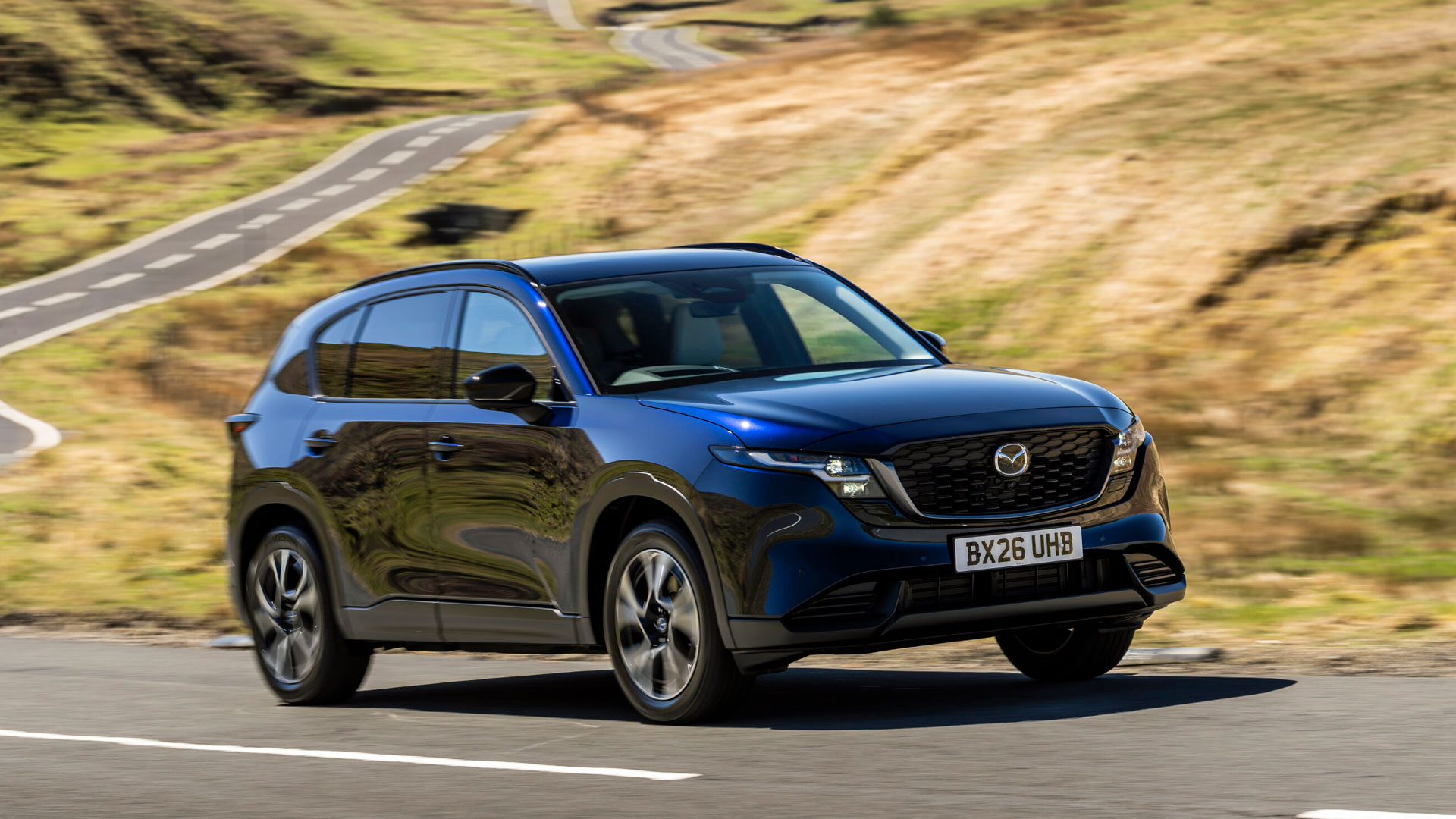
The answer is straightforward: it is the only Mazda with Google built in. Every other model in the range runs Mazda’s own infotainment software, which means Gemini has nowhere to live. For now, the CX-5 is a testbed as much as a flagship.
That is a notable position for a car with the CX-5’s sales record. Mazda has sold five million since launch in 2011, around 105,000 of them in the UK, making it the brand’s most successful product by a wide margin. Mazda also reported its biggest ever order bank before third-generation sales began, so there is a large, engaged owner base ready to receive the update.
What Gemini can actually do
The pitch is conversational rather than command-based. Mazda says the system understands natural language, context and follow-up questions, which means drivers can speak as they would to a passenger instead of memorising set phrases.
Navigation is the clearest demonstration. Rather than dictating a postcode, a driver can ask for a top-rated café with outdoor seating along the current route, then refine the request with further questions. That kind of layered search is exactly where older voice systems fell apart, requiring the driver to start again from scratch.
Music requests work through supported apps including Spotify, Amazon Music and YouTube Music, with Gemini able to assemble mood-based playlists on request. Messaging covers summarising incoming messages, including WhatsApp, reading them aloud in full, and drafting, refining, translating and dictating replies by voice.
None of this is unique to Mazda. It is the same Google stack appearing elsewhere, which is precisely the point: the assistant improves as Google improves, without Mazda having to ship new hardware.
Mazda joins a growing Google AI club
The wider industry has been moving in this direction for a while. Volvo, Ford and Renault all now offer Google’s AI assistant in their cars, and the pattern suggests assistant-led interfaces are becoming the default rather than a premium extra.
That shift has not been without friction. Software-defined features have brought a wave of recalls and fixes across the industry, from infotainment glitches to safety-system faults. Rivian’s recall of almost 99,000 R1T, R1S and R2 models over a rear-view camera software fault is a reminder that when core functions depend on code, the code has to be right.
There is also a broader question about whether legacy manufacturers can adapt quickly enough to software-led competition. As we argued in our coverage of the Paris Motor Show 2024 and why Europe’s legacy car brands shouldn’t be written off, established makers have deeper engineering resources than the hype cycle suggests. Partnering with Google is one way of buying time and capability at once.
The rotary controller is gone
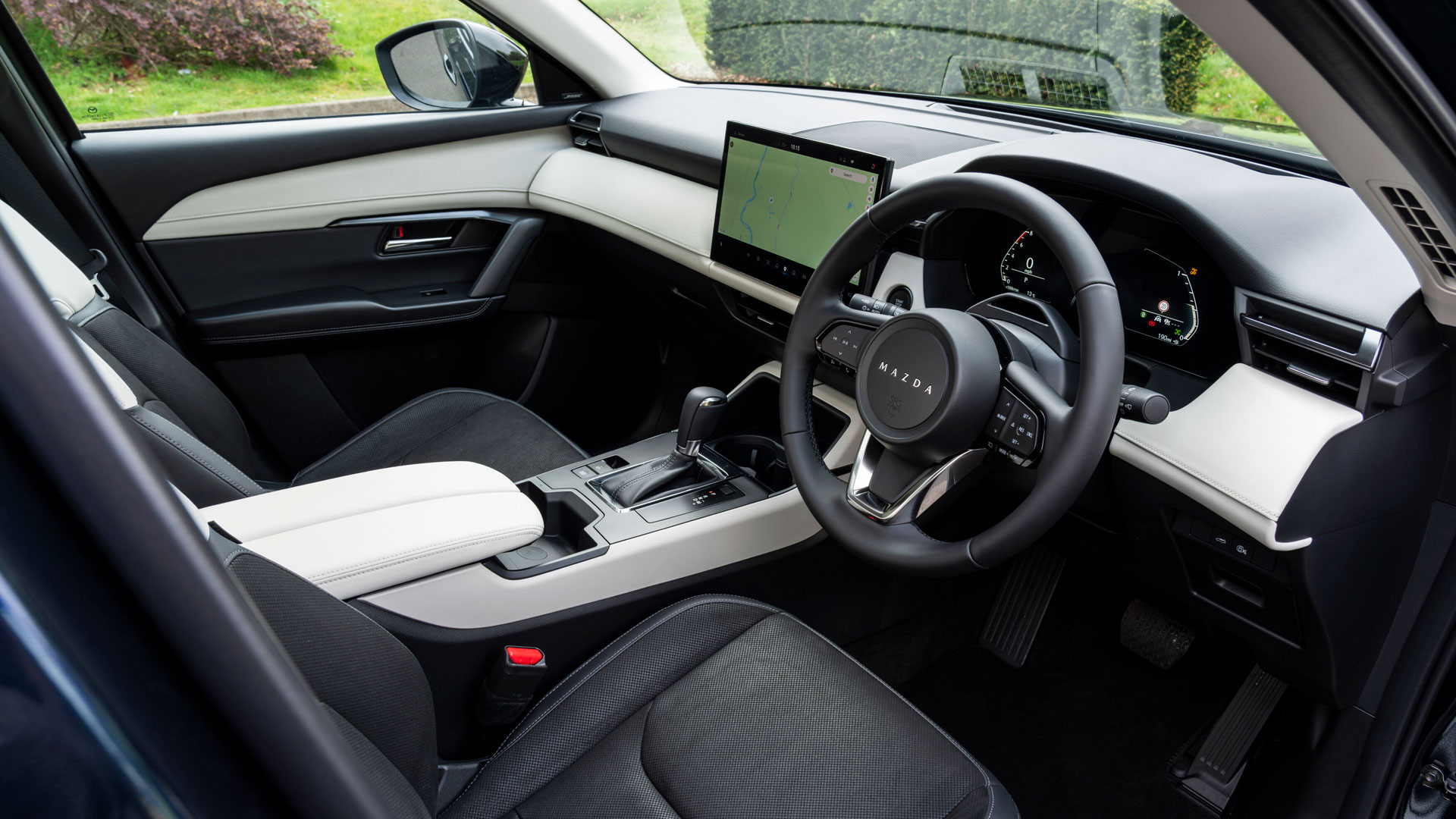
To understand why Gemini matters so much here, you have to look at what Mazda removed. The third-generation CX-5 dropped the brand’s long-standing rotary controller, the physical dial that let drivers scroll menus by touch without looking away from the road. In its place: a large central touchscreen and voice commands.
That decision has drawn criticism. Auto Express road testers found the new CX-5’s display distracting and slow to respond, a verdict that lands awkwardly for a car built around screen interaction. A sluggish touchscreen is annoying in a showroom and considerably worse at 70mph on a motorway. If the screen is the weak point, a voice assistant that genuinely understands context could let drivers keep their hands on the wheel and their eyes on the road. The caveat is that it has to work first time, every time. A conversational assistant that mishears a destination is no better than a fiddly menu.
CX-5 model facts and UK pricing
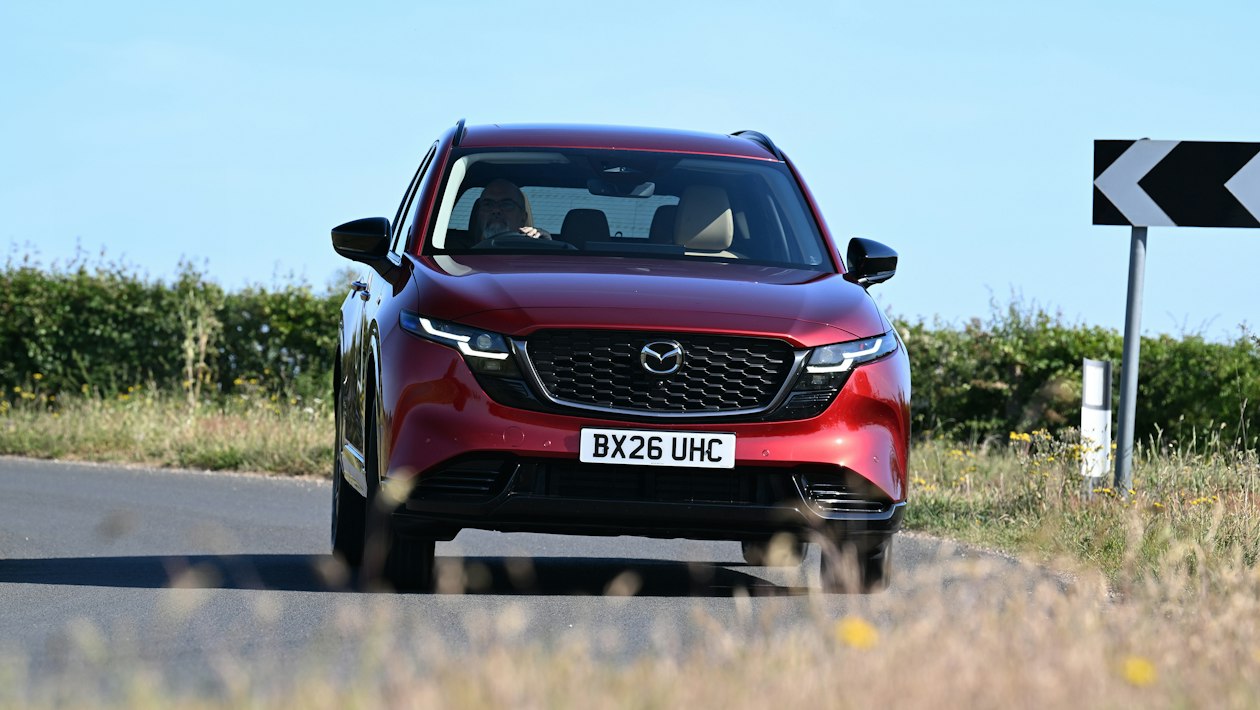
The third-generation CX-5 went on sale earlier this year and is offered exclusively with a 2.5-litre e-Skyactiv G petrol engine using Mazda’s M Hybrid technology. There is no diesel and no plug-in option in the current line-up.
UK prices are unchanged with the addition of Gemini. At the time of writing, the entry-level Prime Line starts at £31,550 on the road, which keeps the CX-5 broadly where it was against rivals in the family SUV class. Existing owners with a Google-equipped car get the update at no cost beyond the data connection it requires.
Does Gemini make the CX-5 easier to live with?
On paper, yes. Gemini’s ability to handle follow-up questions and preference-based searches is a genuine step beyond the rigid command structure that made earlier systems so frustrating. Asking for a coffee stop with outdoor seating and then narrowing it down is the kind of task where natural language earns its keep.
The reservations are practical rather than philosophical. Data dependence is the obvious one: a car that leans on the cloud for its primary interface is a car that feels different when the connection drops. Drivers who routinely travel through poor signal areas should temper expectations. There is also the learning curve, since signing in and enabling Gemini puts the setup burden on the owner rather than the dealer.
Whether the trade is worthwhile depends entirely on how well Gemini performs in the real world, not in a press release. The first genuinely useful test will be whether owners stop reaching for the screen at all.