Performance and powertrain: unchanged with the right roof
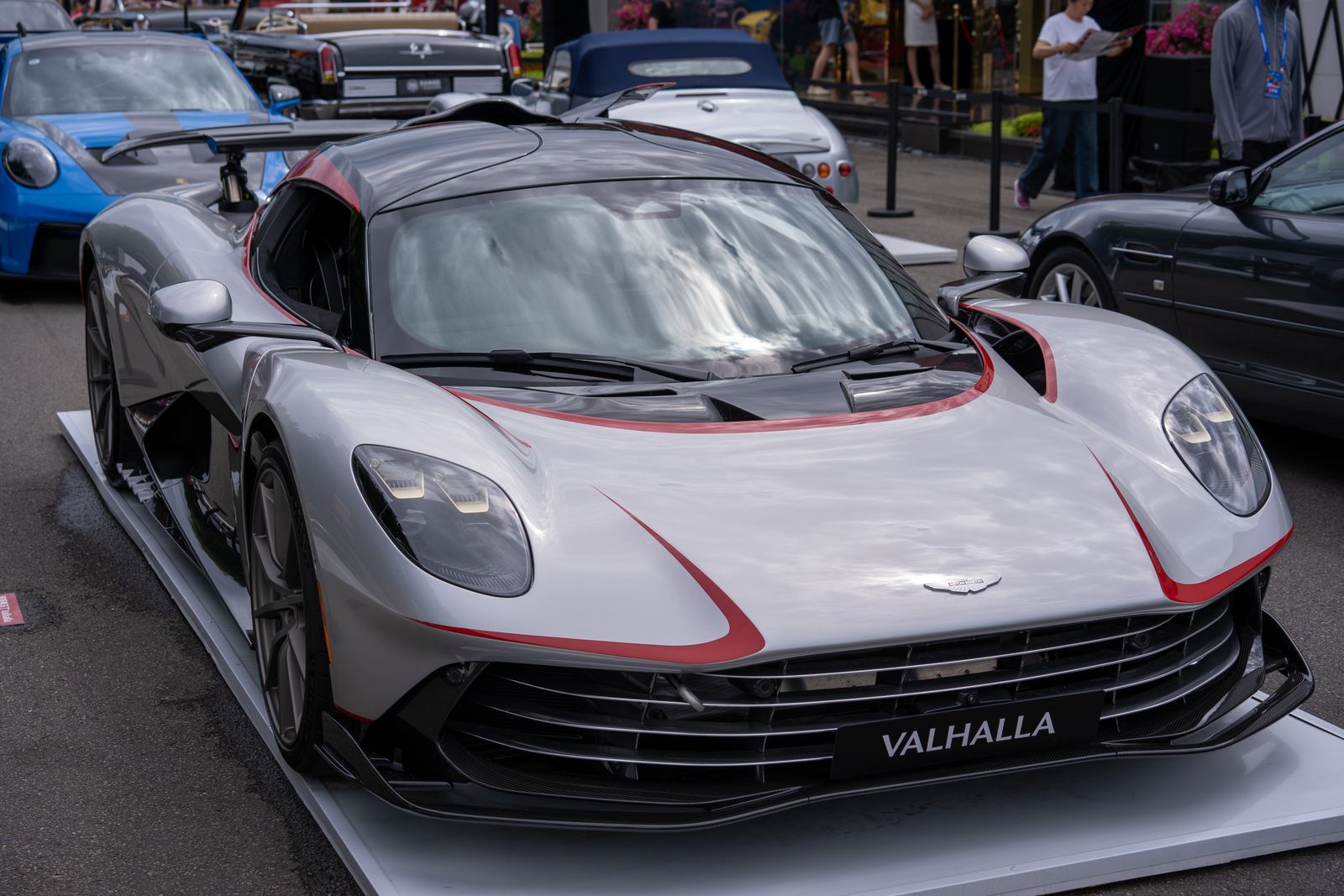
Mechanically, the Spider is identical to the coupé. That means a mid-mounted 4.0-litre twin-turbo V8 working as part of a plug-in hybrid system with three electric motors. Aston Martin quotes a combined 1,064bhp and 1,000Nm of torque, a 0 – 62mph sprint of 2.5 seconds and a top speed of 217mph, the same figures it publishes for the hard-top.
Convertibles at this end of the market normally carry a small performance penalty, whether through added weight, reduced torsional rigidity or the drag of an open cabin. Aston Martin has clearly worked to ensure the Spider’s numbers stand shoulder to shoulder with the coupé’s, and with the carbon roof fitted, they do.
The hybrid hardware also means the Valhalla can run on electric power alone for short distances, a characteristic that is becoming increasingly familiar across the performance car landscape.
Roof options explained: fabric, carbon or cover
This is where the Valhalla Spider departs most sharply from convention. Rather than engineering a heavy folding mechanism, Aston Martin has gone with a stowable fabric roof as the standard solution. It is a lightweight answer to a complex problem, but it comes with a caveat: with the fabric roof in place, top speed is limited to 124mph.
Buyers who want the full 217mph need the optional carbon fibre roof, which is fitted as standard in the US. A third option, a rain cover, is intended purely for use when the car is parked. At the time of writing, Aston Martin has not released images of any of the three roof arrangements, which leaves a fair amount to the imagination ahead of customer deliveries.
A fabric panel keeps weight and complexity down, while the carbon roof caters to owners who intend to use the car’s full performance. The rain cover acknowledges that a hypercar does not always live in a garage.
Weight and aerodynamic changes: just 25kg heavier
Aston Martin quotes 1,680kg with lightweight options specified, which is just 25kg more than the coupé. For a convertible, that is a remarkably small penalty, and it helps explain how the Spider manages to match its sibling’s acceleration.
Aerodynamics have been reworked to suit open-air driving. A removable wind deflector channels airflow towards the “snorkel” above the rear of the cabin, which sits 35mm higher than on the coupé. The deflector folds into three parts, making it easier to stow.
Cabin and practicality: easier access, clever storage
Aston Martin has thought about the practical realities of a low-slung hypercar with a roof. New carbon fibre “Touring” seats are designed to ease entry and exit when the roof is on, while the coupé’s more hip-hugging seat remains available as a no-cost alternative for owners who prioritise support over accessibility.
Storage for the wind deflector comes courtesy of new 15-litre sill compartments, a sensible use of otherwise dead space. The active aerodynamics and the Electronic Stability Programme (ESP) also detect whether the roof is on or off and adjust their settings accordingly, so the car’s behaviour changes with the roof status rather than leaving the driver to compensate.
Pricing and production: a premium over the coupé
Aston Martin has not announced a price for the Valhalla Spider, and UK pricing and specification are unconfirmed. The coupé is quoted at £850,000, though that figure should be treated as indicative until Aston Martin publishes confirmed UK OTR prices. The Spider is expected to carry a premium over the coupé, with some examples featuring bespoke touches from the company’s Q division likely to top £1 million. Whether UK cars receive the carbon fibre roof as standard, as US cars do, has not been confirmed.
Production numbers are equally intriguing. Aston Martin plans 999 Valhalla Coupés, and the Spider is understood to account for around one in four cars, though final numbers are yet to be confirmed. That would put the open-top variant at roughly 250 units, making it a rare thing even by hypercar standards.
What the Spider adds to the Valhalla formula
The Valhalla Spider is a hypercar that asks its buyers to make one specific choice rather than the usual convertible sacrifices. With the carbon roof specified, it matches the coupé’s 2.5-second sprint and 217mph top speed, and the 25kg weight penalty is small enough to be irrelevant to all but the most obsessive track-day driver.
The roof arrangement is the talking point, and it will divide opinion. A stowable fabric panel is a pragmatic, lightweight solution, but limiting that configuration to 124mph means the standard roof is really a touring accessory rather than a performance one. Buyers who want the headline figures will need to specify the carbon roof, and in the US that decision is made for them.
The Touring seats, the 15-litre sill storage and the roof-aware active aero all suggest Aston Martin has thought carefully about how owners will actually use the car. The absence of any images of the roof options is a curious gap, but it does little to dull the impact of the announcement.
With around one in four of the 999-car run expected to be Spiders, this will remain an exclusive machine. For buyers weighing up a Valhalla, the question is simple: do you want the roof off often enough to accept the fabric panel’s speed limit, or is the carbon roof the only sensible specification? Either way, the Spider shows that going open-top need not mean going slower, provided you tick the right box.