The problem with car television is not that there is too little of it. It is that there is too much of the same thing. Ask anyone who has drifted away from motoring shows in the past decade and you will hear a version of the same complaint: three blokes, a few supercars, a scripted argument and a climax that involves something exploding. A format that was genuinely fresh two decades ago has been reheated so many times that the genre now feels like a tribute act to itself.
That is the backdrop to a conversation doing the rounds among car enthusiasts, prompted by Jalopnik asking its readers a simple question: what would your dream automotive show actually look like? The answers are more revealing than any commissioning editor’s pitch deck. They tell you what viewers want, and why the industry keeps failing to give it to them.
The Three Dudes Problem
The writer who kicked off the discussion was blunt about it. Car TV, they argued, is thin and dominated by the “three dudes in cars” format, namechecking Top Gear, its American sibling and The Grand Tour as the chief offenders. The observation is hard to argue with. Between them, those shows defined a template that has been copied, parodied and flogged for more than two decades.
What is more interesting is the show the writer held up as a near miss. Netflix’s Hyperdrive, filmed in Rochester, New York, was an automotive obstacle course that mixed racing with precision driving, which the reader described as “American Ninja Warrior for cars.” The concept was strong. The execution, in this reader’s view, was not: spectacle, reality-TV storylines and a loud production style smothered the thing that made it worth watching in the first place. Their pitch was essentially a stripped-back Hyperdrive, focused purely on precision driving across a wide variety of drivers and cars.
That tension runs through everything that follows. Viewers do not object to drama. They object to drama that has been bolted on to something that was already interesting.
Three Mechanics, Three Old Cars, One Long Grudge Match
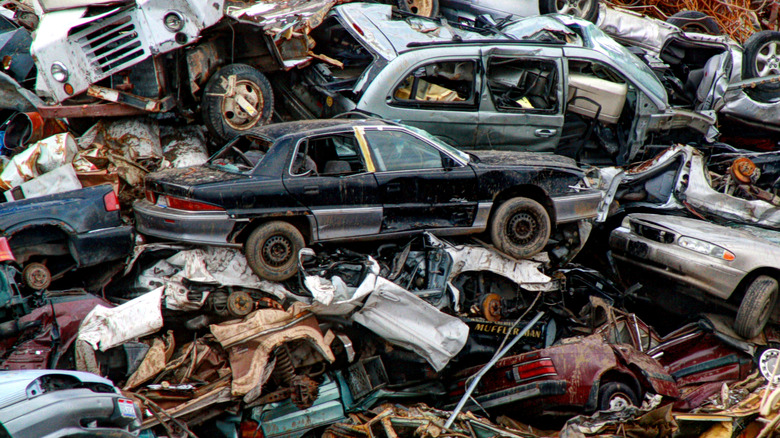
The strongest pitch to emerge from the thread came from a reader going by zfenderguy, and it is the kind of idea that makes you wonder why nobody has made it yet. Three charismatic mechanics each pick a 10 to 15-year-old ordinary car. They then run it through a series of torture tests, and the winner is whoever keeps their car running longest. Points are awarded for survival. A different scenario and a different set of cars each episode.
The genius of this is that it inverts the entire premise of modern car television. Supercars are not relatable. A tired 12-year-old hatchback with a questionable service history is extremely relatable. It also has genuine stakes, because the failure mode is not a scripted breakdown but an actual one, and the person responsible is standing right there with a spanner. It is the same instinct behind our look at the best ‘appliance’ cars and why ordinary motors deserve more credit: there is real affection out there for the unglamorous workhorses, and almost no television that reflects it.
Bring Back Scrapheap Challenge
Another reader, Lerry Sanders, made the case for reviving Junkyard Wars, the US title for the show known in Britain as Scrapheap Challenge. Their verdict on a potential American remake was withering: it would be “really dumb, over the top.” The original show, they said, was “perfect.”
That is a telling distinction. Scrapheap Challenge worked because it was fundamentally about competence. Teams of engineers and hobbyists built working machines out of scrap, and the pleasure came from watching clever people solve problems under pressure. The charm was in the sheds, the welding and the slightly chaotic spirit of it all. Any remake that trades that for pyro and a dramatic score has misunderstood the brief entirely.
Let Ordinary People Have a Go
Reader Alf Enthusiast offered a pitch with a similarly democratic spirit: members of the public learn to race over the course of a week, then compete on track on the final day. No celebrities, no ringers, no manufactured feuds. Just the arc of someone going from nervous novice to grid member in seven days.
This is cheap television in the best sense and emotionally rich in a way that a supercar review can never be. The transformation is the story. It also quietly does something the genre rarely manages: it makes the viewer think they could do it too, which is precisely the feeling that gets people into motorsport at grassroots level.
The Review That Takes a Whole Episode
The most structurally ambitious idea came from Flashpoint Zero, who proposed a single car reviewed by six different sets of eyes. The subject was a BMW 3 Series, and the panel was: a BMW specialist journalist, a serial multi-generation BMW owner, a general enthusiast, a loyalist who has owned Mercedes and Audi for years, a complete non-enthusiast, and finally a panel of master technicians assessing build quality and maintainability.
It is a brilliant deconstruction of the review format, which usually gives you one voice and pretends it is objective. The 3 Series is exactly the right car for that format: familiar, endlessly debated and central to the segment. A car that significant deserves more than four minutes of B-roll and a verdict about steering feel.

Junkyards, Restorations and Getting It Running
Radar Lover Gone pitched a Roadkill-style show built around junkyard and used-marketplace finds, with a motto that ought to be printed on a T-shirt: “Don’t get it perfect, get it running.” It is the anti-restoration show, celebrating ingenuity over concours perfection.
Giantsgiants went in a different direction entirely, proposing an anime-style series in which characters travel Japan finding derelict cars to restore. Crucially, the pitch deliberately steps away from Initial D and Wangan Midnight, both of which are built around racing. This one is about restoration, about bringing something back rather than thrashing it. Given the current appetite for Japanese classics, that feels less like a niche fantasy and more like an obvious commission.
Speed Racer, Spies and Proper Comedy
Then there is Old_SLAAB_Guy, who wants a Speed Racer revival with a whodunit tone, a Mach 5 kitted out with Knight Rider-style gadgets, spies, Racer X, comic relief from Chim-Chim and Spritle, and cameos from F1, NASCAR, WEC, IMSA and IndyCar drivers. It is gloriously unhinged and entirely sincere, which is exactly why it would probably work.
At the other end of the spectrum, Crash 2.0 argued that modern shows are “too PG and smiley,” and quoted a line that gets to the heart of the whole debate: “Top Gear was a comedy, the cars were just props.” Whether you agree or not, it explains the enduring affection for the Clarkson-era show. The cars were the setting, not the subject. The subject was three people who genuinely irritated each other.
What Viewers Actually Want
Read the pitches together and a pattern emerges. Nobody is asking for bigger budgets or more exotic machinery. They are asking for precision, personality and real stakes. They want to see competence rewarded and incompetence punished. They want ordinary cars, ordinary people and the messy reality of keeping old metal on the road.
The industry’s instinct is always to add: more spectacle, more narrative, more noise. The readers’ instinct is to strip things back. A precision driving contest without the reality-TV padding. A torture test where the jeopardy is mechanical rather than manufactured. A review that admits a car means different things to different people. The pitches are on the table. Somebody just needs to put them on screen.