A Brief History of Morgan Cars
Morgan was founded in 1909 by H.F.S. Morgan, whose first product, the three-wheeled Runabout, was designed as a cheap, tax-friendly cyclecar. The formula of light weight plus modest power proved so effective that Morgan was still building three-wheelers in the 1950s, long after most rivals had moved on. The four-wheeled 4/4 arrived in 1936 and remained in production, in evolving form, into the 2010s.
The company’s modern identity was forged by two cars. The Plus 8, launched in 1968, stuffed a Rover V8 into the traditional body and created a genuine muscle car in tweed. Then came the Aero 8 in 2000, Morgan’s first car with an entirely new chassis and aluminium construction, which reintroduced the marque to export markets and set the template for everything since. Family ownership has been continuous for most of that history, with Investindustrial taking a majority stake in 2019 to fund the next chapter.
The Morgan Method: Ash, Aluminium and Hand Assembly
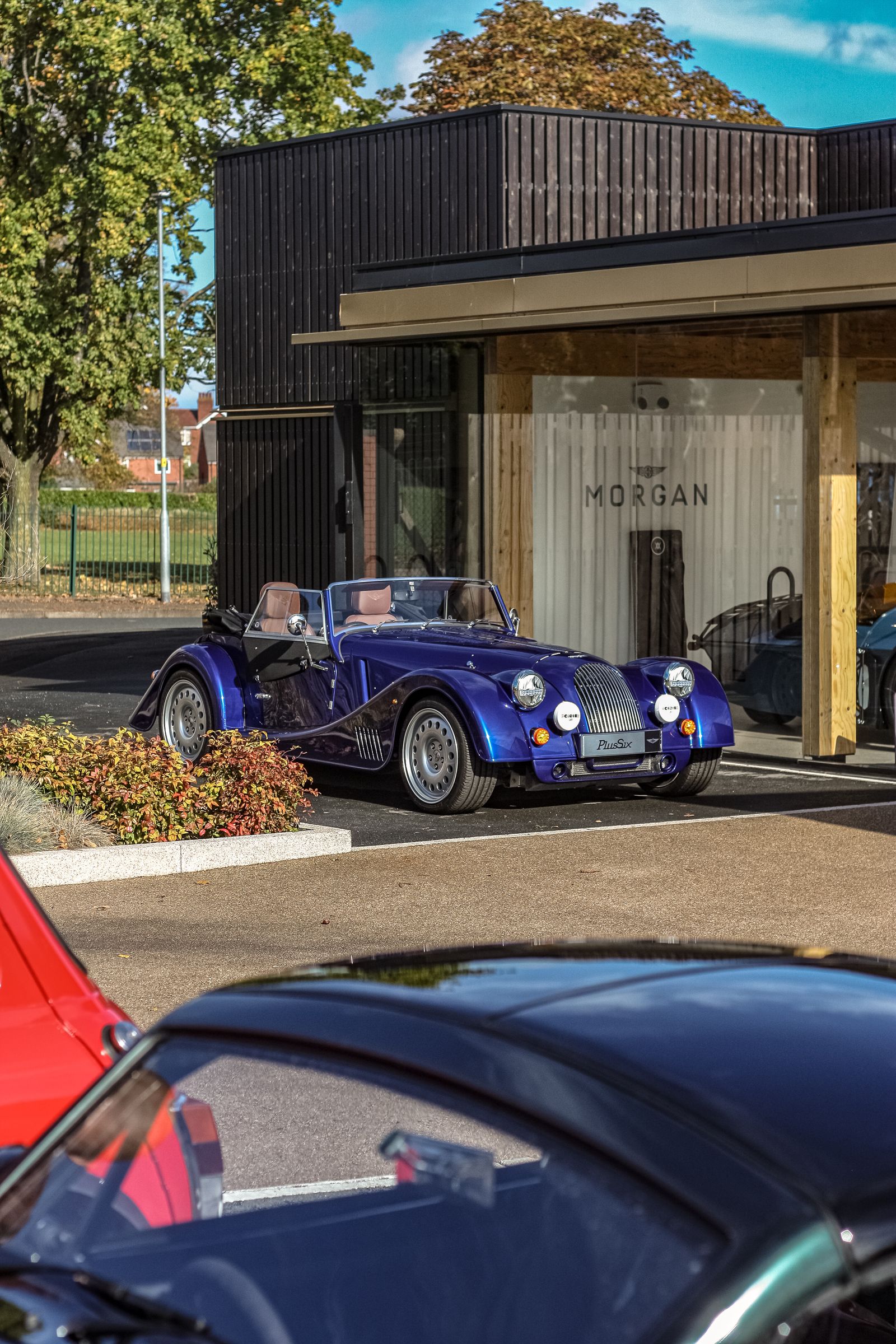
Walk into the Pickersleigh Road factory and the first thing you notice is the smell of wood. Morgan’s traditional models still use an ash frame for the body’s upper structure, hand-shaped by craftsmen who serve a five-year apprenticeship. The frame is not a chassis in the structural sense; it supports aluminium body panels that are beaten over wooden bucks, then fitted and fettled by hand.
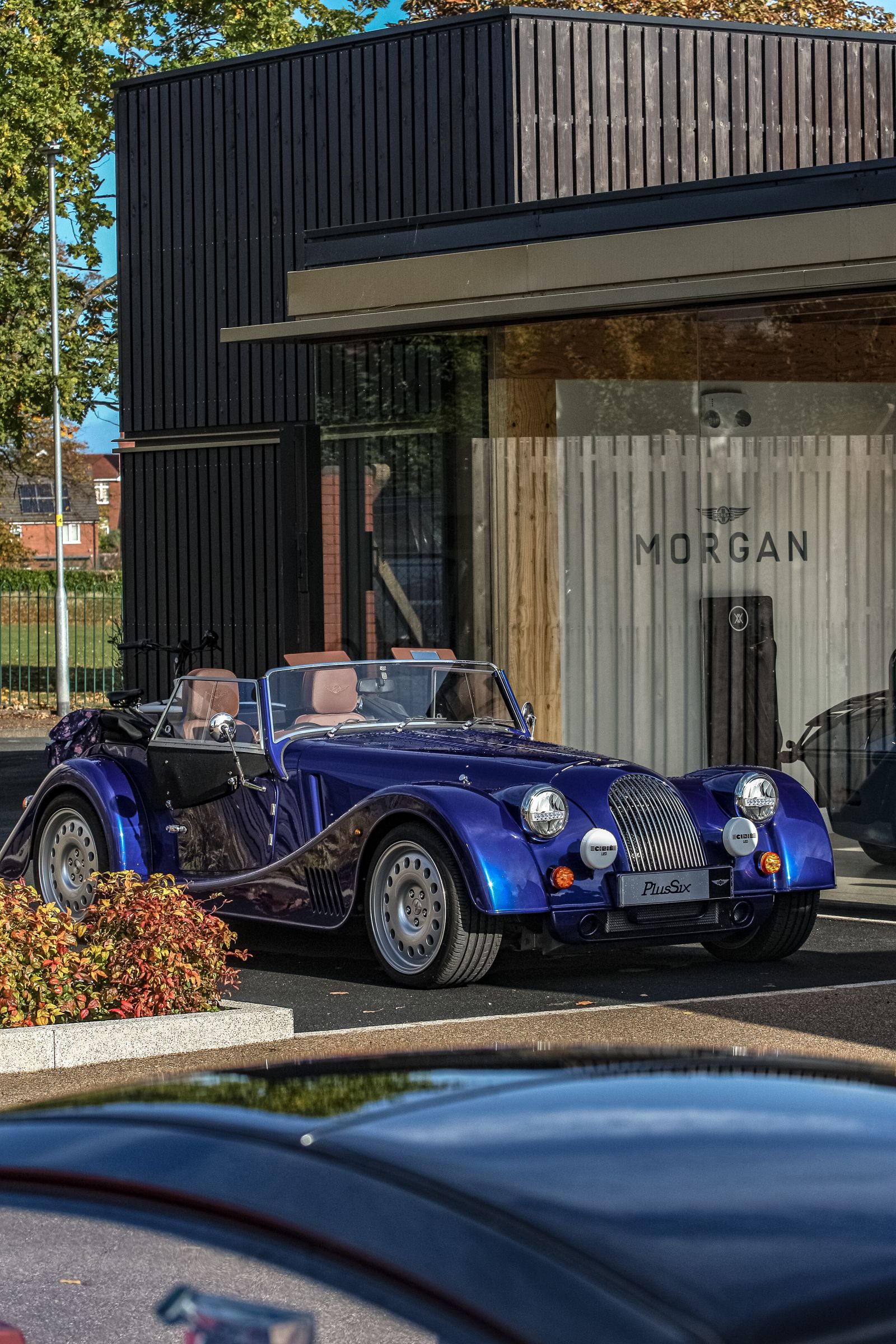
Since 2019, the Plus Four and Plus Six have sat on Morgan’s bonded aluminium CX platform, which provides real crash structure and modern suspension geometry while keeping the visual signature of the old cars. The result is a machine that looks hand-built because it is, but which meets contemporary safety and emissions rules. Production remains deliberately small, measured in hundreds rather than thousands of cars a year, and every one is effectively bespoke.
The Current Morgan Range
The Plus Four, from around £82,000 at the time of writing (list price, before options and on-the-road costs), is the heart of the range. It uses a BMW-sourced 2.0-litre turbocharged four-cylinder producing 258bhp, enough for 0-62mph in about 4.8 seconds in a car weighing roughly 1,013kg. Choose the manual and you get one of the most rewarding gearboxes on sale.
The Plus Six adds BMW’s 3.0-litre straight-six with 335bhp and an eight-speed automatic, trading some purity for effortless torque and grand-touring ability. It costs from roughly £107,000 at the time of writing (list price, before options and on-the-road costs).
The Super 3 is the three-wheeler reborn, a jet-fighter-shaped trike with a 1.5-litre Ford three-cylinder engine and belt-drive to the single rear wheel. It is not fast in outright terms, but at around 635kg it delivers a sensation of speed few supercars can match.
At the top sits the Midsummer, a limited run of 50 coachbuilt cars on the Plus Six platform, created with Italian design house Pininfarina and featuring a hand-finished barchetta body. All 50 sold out almost immediately, a reminder that Morgan’s most exclusive products now trade on design as much as dynamics. The wider industry is wrestling with similar questions of identity and reinvention, as the Alfa Romeo Cuorerosso Concept: A 1,750kg Electrified 2+2 Coupé Manifesto shows in its own very different way.
What It’s Like to Drive a Morgan
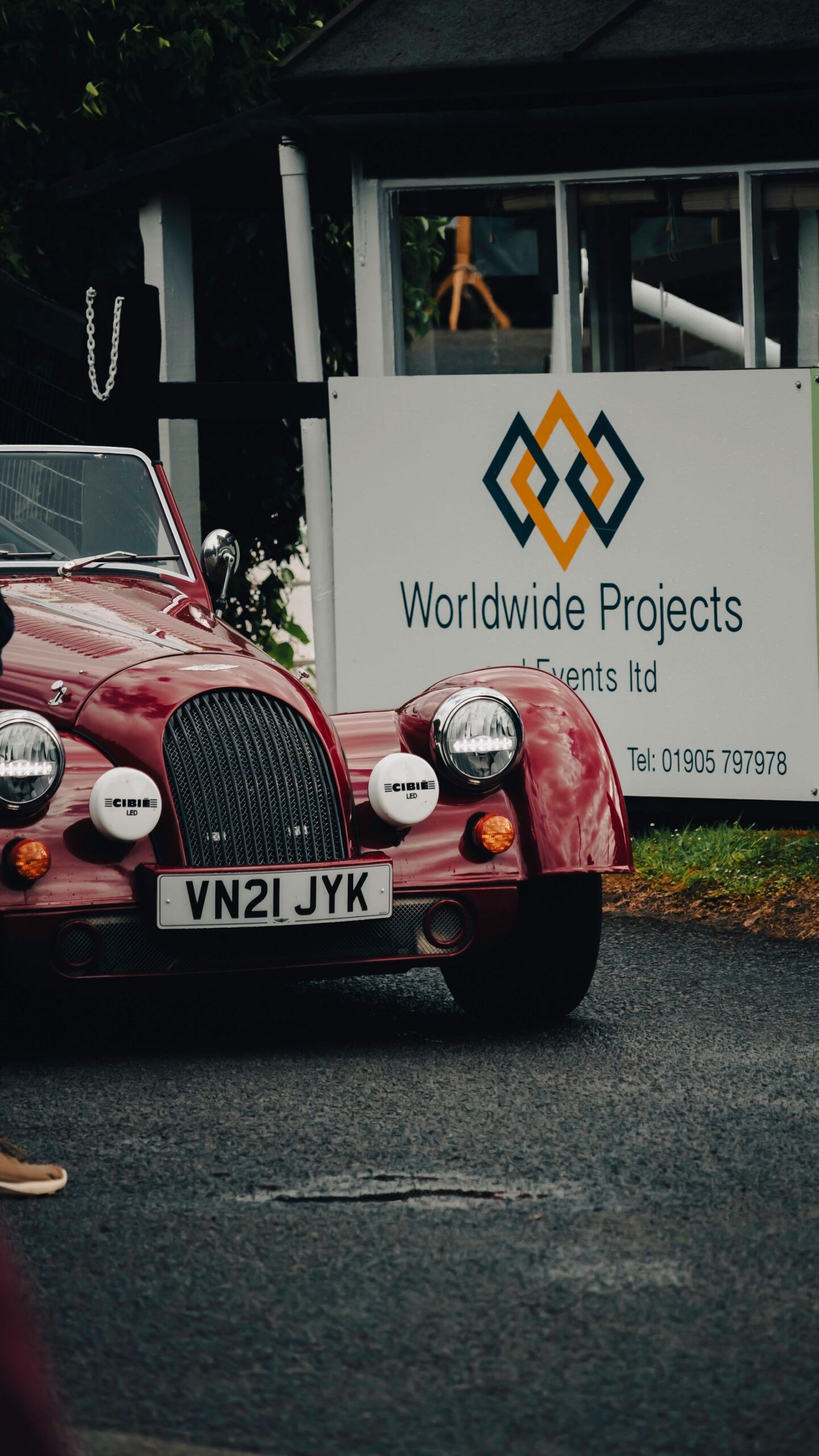
Driving a Plus Four is a reminder of how much feedback modern cars have engineered out. The steering is unassisted, so you feel every camber and every white line. The ride is firm but never harsh, and the visibility out of the narrow cabin is surprisingly good thanks to the upright screen and slim pillars.
The compromises are real. The boot is small, the cabin is tight for taller drivers, and the roof, while improved, still requires a degree of contortion. Refinement at motorway speed is acceptable rather than impressive. But the rewards are disproportionate: a Morgan at 50mph feels more alive than most sports cars at twice that. If you enjoy the analogue approach, the Used Lotus Emira Buyer’s Guide: V6 vs AMG Four-Cylinder, Prices and What to Check covers another British-built machine that prioritises feel over numbers.
Owning a Morgan
Depreciation is gentler than you might expect. Traditional Morgans have historically held value well, and limited-run models like the Midsummer tend to appreciate. A standard Plus Four will still lose money over three years, but owners report that the curve is flatter than a comparable Porsche 718, though this is anecdotal rather than a published residual forecast.
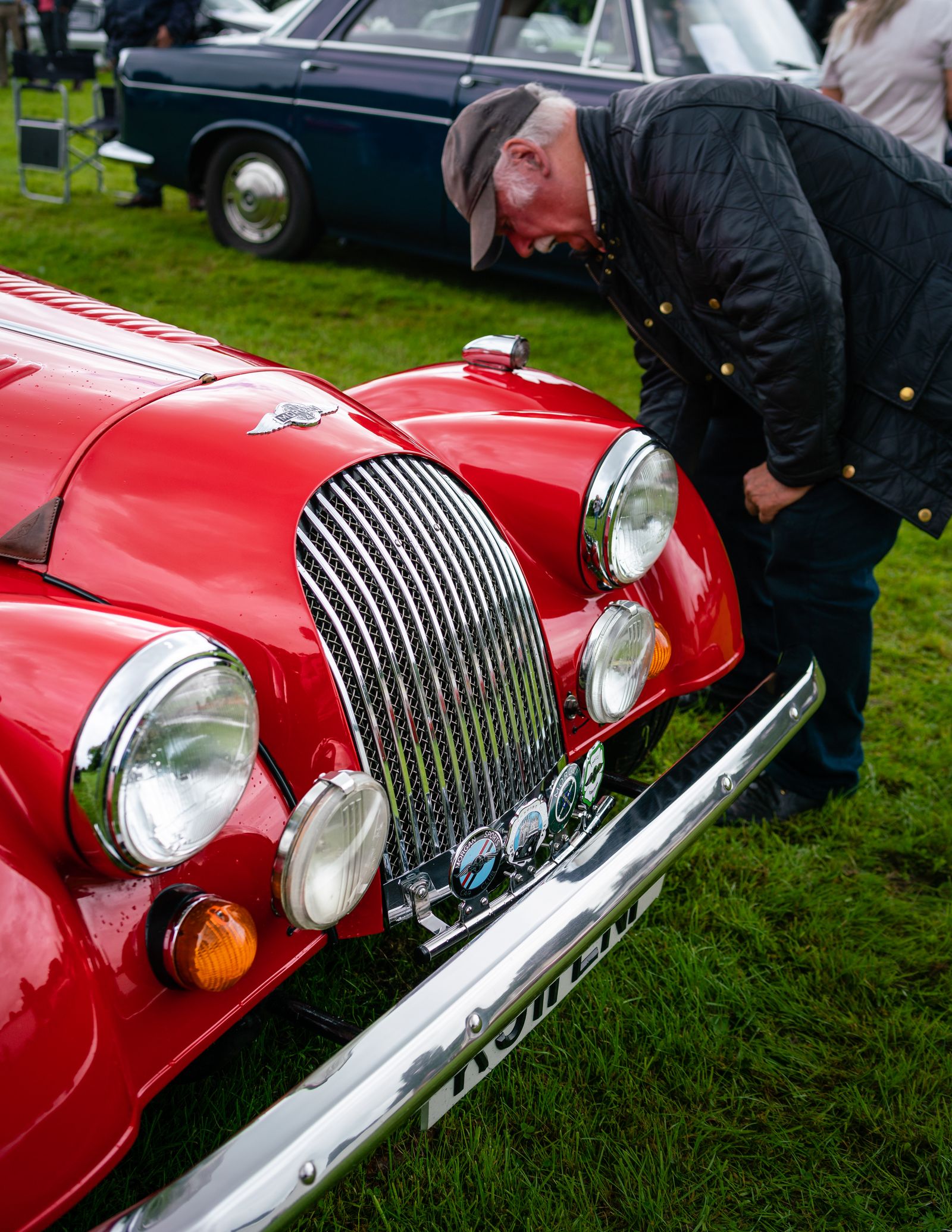
Running costs are manageable because the engines are BMW units serviced through Morgan’s dealer network, with intervals and parts pricing that won’t shock anyone used to premium German cars. Insurance is specialist but owners generally report it is not punitive, so it is worth getting quotes before you commit. VED follows standard rates, which at the time of writing means the standard annual charge plus any applicable supplement for cars over £40,000 in their first few years. The real draw is the owners’ community: the Morgan Sports Car Club runs events across the country, and factory tours and owner days are part of the ownership experience in a way mass-market brands cannot replicate.
The Future of Morgan Cars
Morgan has confirmed that electrification is coming, though it has been careful not to promise a date it cannot keep. The company has experimented with electric prototypes and has said any EV must preserve the Morgan character, meaning light weight and rear drive. A hybrid or range-extender approach is plausible for the Plus range in the medium term, while the Super 3’s three-cylinder engine could eventually give way to something quieter.
The bigger challenge is scale. Morgan’s hand-built model depends on low volumes and high margins, and the transition to electrification requires capital that a firm of this size must borrow or earn. Watching how Morgan navigates that is instructive, and the industry’s wider manufacturing strains, as covered in Volvo EX60 Production Crisis: Megacasting Delays Leave Dealers Facing a Lost Year, show that even giants can stumble when they change how cars are made.
Verdict: Who Should Buy a Morgan?
A Morgan makes sense if you want a sports car that feels like an event every time you take it out, you value craftsmanship over connectivity, and you have a second car for the weekly shop. The Plus Four is the sweet spot: fast enough, usable enough, and still unmistakably a Morgan.
Look elsewhere if you need daily-driver practicality, if your commute is mostly motorway, or if you expect a modern infotainment suite. Buyers cross-shopping a Porsche 718 Boxster will find the Morgan slower, less refined and harder to live with. They will also find it far more memorable. In a market where so many cars feel interchangeable, that counts for a great deal.
For more on this, see morgan cars enduring appeal.