Waymo has spent years bolting its self-driving hardware into cars built by other people. The Jaguar I-Pace that made the company famous was never designed to be a robotaxi, and neither was the Zeekr Ojai or the Hyundai Ioniq 5 now joining the fleet. Each one arrives at a Waymo facility and gets stripped, fitted and tested before it can carry a paying passenger. The next vehicle is different, and the difference matters more than the badge on the bonnet.
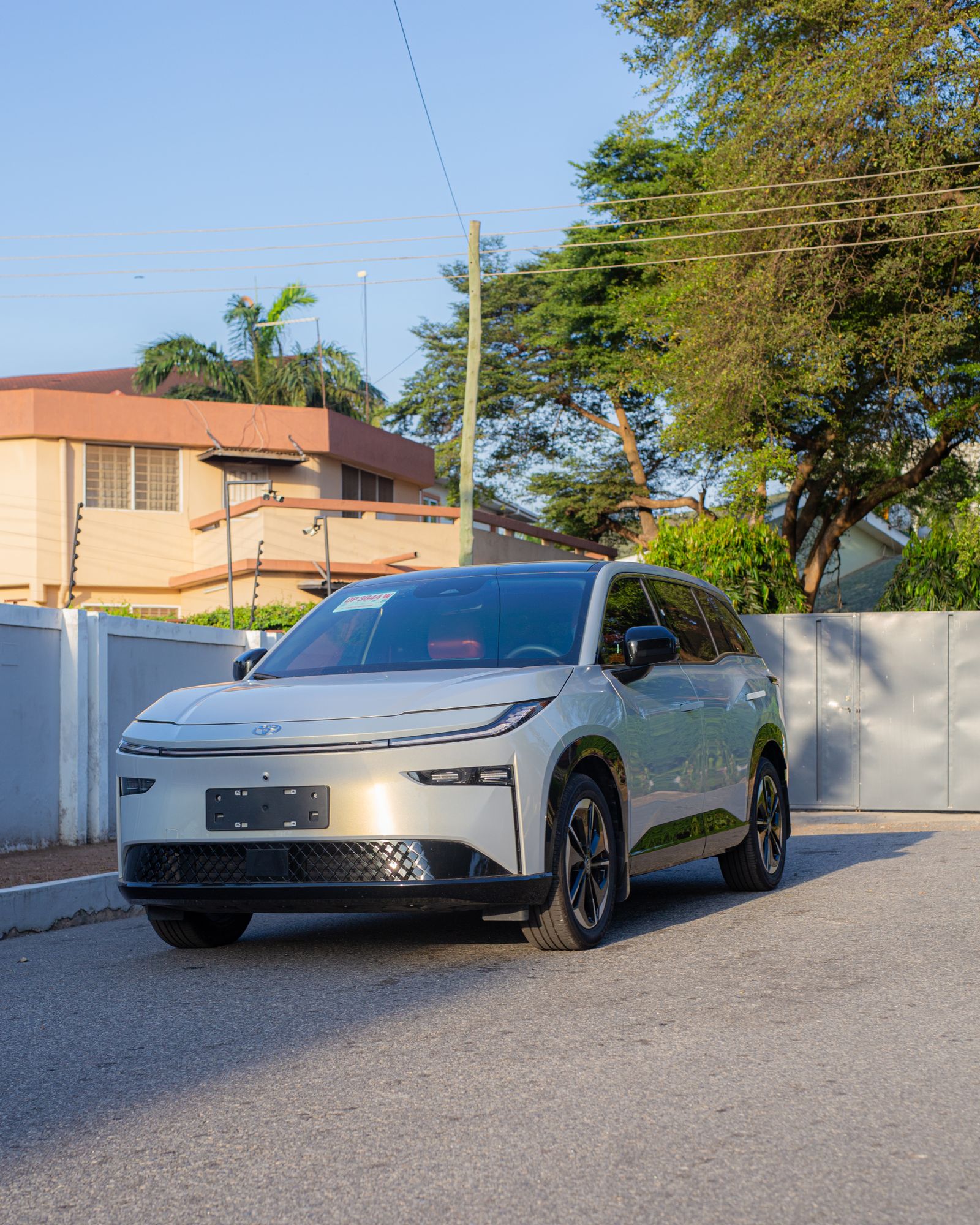
Waymo and Toyota have revealed a custom bZ4X electric SUV with the Waymo Driver integrated on the production line. Toyota will build it at its Takaoka plant in Toyota City, Aichi Prefecture, and Waymo’s self-driving hardware goes in at the same site. No third-party conversion shop, no retrofit programme. This is the first vehicle from the partnership designed with production-line integration from the outset, and it is aimed at right-hand-drive markets including the UK.
What Waymo and Toyota have actually announced
The bZ4X is the first concrete vehicle to come out of a partnership announced in April 2025, when the two companies signed a preliminary agreement to “explore” working together on autonomous driving. At the time, that language was deliberately vague, covering everything from robotaxis to personally owned cars. Now there is metal to look at.
Hiroki Nakajima, member of the board and executive vice president of Toyota Motor Corporation, framed the tie-up around a shared goal: “We share a strong sense of purpose and a common vision with Waymo in advancing safety through automated driving technology, and we are confident this collaboration can help bring our solutions to more people around the world, moving us one step closer to a zero-accident society.”
Waymo co-CEO Dmitri Dolgov was equally warm about the partner: “We chose Toyota because of our respect for the legendary safety, reliability, and quality of their vehicles, and we look forward to deepening our collaboration as we scale our fully autonomous Waymo Driver technology globally.”
What Waymo has not disclosed is just as telling. There are no sensor specifications, no unit volumes and no per-vehicle costs. For now, the bZ4X robotaxi is a statement of intent as much as a product.
Built for riders, not drivers
Strip away the autonomy and the changes to the bZ4X are a neat summary of what a robotaxi actually needs. The cabin gains extra rear legroom, automatic doors, a power tailgate and ambient lighting. None of that is about lap times or range anxiety. It is about making the back seat a pleasant place to spend 20 minutes, because in a driverless car the back seat is the whole experience.
Automatic doors and a power tailgate remove the small frictions that a human driver normally absorbs. There is nobody up front to lean over and pop the boot, and nobody to greet a passenger wrestling with a door handle in the rain. Ambient lighting is the softer end of the brief, but it points at the same idea: this is a service, and the vehicle is the shopfront.
The base vehicle itself is familiar. The refreshed bZ4X is sold in the United States simply as the Toyota bZ, starting at $34,900 there. That is a US price for the retail car, not the robotaxi, and Waymo has not put a figure on what its version costs to build. UK pricing for the retail bZ has not been confirmed. It is also worth noting that Toyota’s first bZ4X batch was recalled in 2022 because the wheels could detach, an inauspicious start for a model now being entrusted with driverless passengers.
Japan first, UK later
The rollout plan is cautious and right-hand-drive first. A test fleet will begin operating in Japan in 2027, a phase Waymo describes as testing and validating the autonomous bZ4X fleet. The UK and “other Waymo markets” are planned for later years, with no dates attached. Dolgov has named the UK as a launch market after Japan.
Dolgov was direct about the sequencing: “We’ll start with the right-hand drive markets in Japan and the UK.” He added that there are no other countries, timelines or specifics to share yet.
Japan is already a live testbed. In September, Waymo said it is targeting fully driverless commercial rides in Tokyo in 2027 with taxi operator Nihon Kotsu and ride-hailing app GO, scaling to about 100 vehicles, subject to regulatory approval. A handful of left-hand-drive Jaguar I-Pace EVs already run in Tokyo, but with a safety operator behind the wheel. The bZ4X, built in right-hand drive from the start, is the vehicle that makes the next step practical.
Toyota is not new to this, either. Alongside Pony.ai, it began mass-producing bZ4X-based robotaxis in China earlier this year, which gives the company a production-line playbook for autonomous variants of the same model.
Why factory integration is the real story
Waymo’s binding constraint has never really been software. It is cars. Building the Waymo Driver into a Toyota production line removes a bottleneck that retrofit programmes cannot solve at scale, and it does so with a partner whose reputation rests on exactly the qualities a robotaxi needs: safety, reliability and build quality. Dolgov’s line that “Toyota’s commitment to zero traffic accidents resonates deeply with us at Waymo” is corporate language, but it is also the logic of the deal.
The scale involved explains why that matters. Most of Waymo’s US vehicles remain Jaguar I-Pace SUVs, a model Jaguar no longer builds. The Zeekr-built Ojai van and the Hyundai Ioniq 5 are being added, with Hyundai reportedly in talks to supply up to 50,000 Ioniq 5 robotaxis by 2028. Hyundai has said it would build “tens of thousands” of robotaxis for Waymo at its Georgia factory, though that has not happened yet. Waymo outfits its I-Pace and Ojai vehicles at its manufacturing site in Mesa, Arizona. The company now does more than 500,000 paid rides a week across 15 US metros, and earlier this month it picked Toronto as its first Canadian city, with riders targeted for 2028.
That is a lot of demand chasing a limited supply of cars. Every new automaker partnership adds manufacturing capacity, and a Toyota line turning out Waymo-ready bZ4X models is a different order of scale from a conversion shop in Arizona. It also puts Waymo into right-hand-drive production, which is the detail that matters most for the UK.
The wider industry is moving in the same direction, if not always at the same speed. Tesla’s plan for the Cybercab has run into regulatory friction, as our report on how the Tesla Cybercab sales target meets regulatory roadblock as AI spending slows sets out. Waymo’s approach is the most radical and the most boring at once: no steering wheel needed, but a factory line and a taxi licence first.
There is a broader industrial story here too. Toyota has a habit of making big engineering decisions quietly, then letting the results do the talking, as with Toyota’s New 1.5-Litre Hybrid Engine: Everything We Know About the 85mpg Powertrain. Integrating a rival’s autonomous stack into a mainstream production line is the same instinct applied to software: unglamorous, methodical, and potentially decisive.
The companies say they will keep working on autonomous technology for Toyota’s personal vehicles, alongside safety projects with Woven by Toyota, the automaker’s software arm, but those talks remain exploratory. Nothing has been announced about a retail car with the Waymo Driver, and no dates exist for the robotaxi beyond Japan’s 2027 test fleet. The car is being built for riders rather than drivers, and for now that is exactly who will get to use it.