Five Times the Computing Power
The performance gain comes from a new system-on-chip architecture. Instead of spreading the CPU, memory and other components across separate units, Porsche has consolidated them onto a single chip. It’s the same principle that has transformed smartphones and laptops, and it pays off in the ways you’d expect: faster startup when you get in, shorter loading times when you switch between functions, and smoother multitasking when you’re running navigation, media and climate controls at once.
In a modern cabin it’s the difference between a system that responds instantly and one that makes you wait. A laggy infotainment setup is one of the most common complaints in owner surveys across the industry, and it’s precisely the kind of thing that sours the ownership experience on an otherwise excellent car. Porsche is also promising over-the-air software updates, so the system should improve over time rather than ageing in place.
Porsche Digital Interaction Arrives
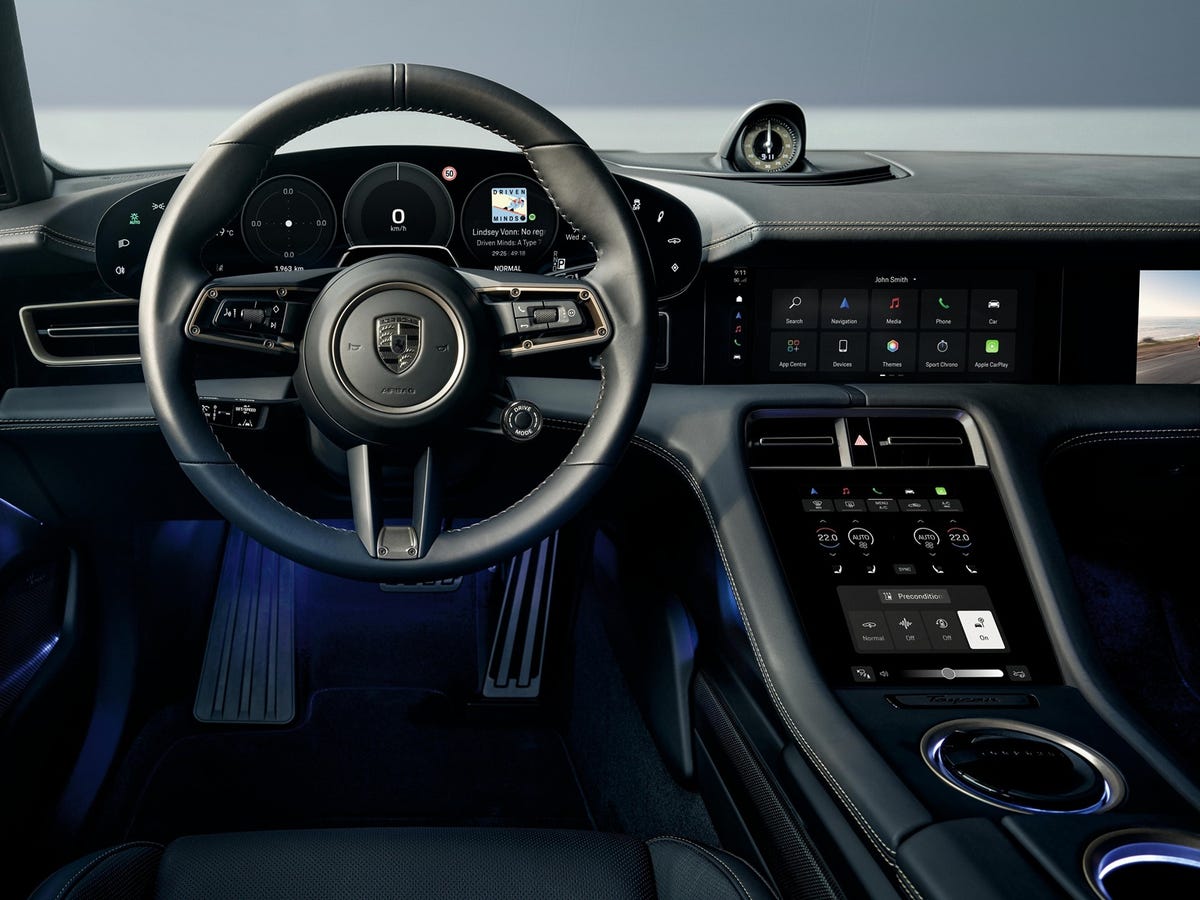
The interface first seen on the new electric Cayenne now comes to the 911, Taycan, Panamera and combustion-engined and hybrid Cayenne. Porsche calls it Porsche Digital Interaction, and it brings five selectable themes, configurable widgets and a rotatable 3D representation of your car shown in its actual exterior colour. Certain vehicle settings can be adjusted by manipulating that virtual car on the display, which is a neat trick that makes the screen feel connected to the metal outside.
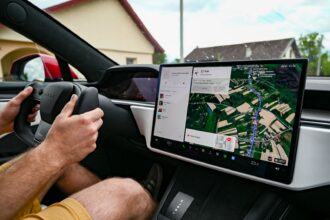
Supported navigation apps can also display on both the infotainment screen and the instrument cluster, so the driver keeps directions in their line of sight while the centre screen handles everything else. The five themes are a small touch, but they acknowledge that not every owner wants the same look, and configurable widgets let you put the information you actually use front and centre.
The AI-Powered Voice Pilot
The centrepiece is the upgraded Voice Pilot, built on a large language model. Porsche says it can understand natural speech, handle multi-step requests and answer follow-up questions, controlling navigation, media and entertainment, selected vehicle functions and compatible apps. In practice, that means you can ask for something in the way you’d actually say it, then refine the request without starting over, all while keeping your hands on the wheel.
Voice control has been the weak link in car interiors for years, largely because early systems demanded rigid commands and punished anything conversational. Large language models change that equation, and Porsche is among a growing number of manufacturers betting that natural speech is finally good enough to rely on. It’s worth noting the wider climate here: regulators are paying closer attention to screen-heavy cabins, and China’s proposed rules on distracting in-car tech show that the balance between touchscreen functionality and keeping eyes on the road is under scrutiny. A voice assistant that genuinely works is one of the more defensible answers to that problem.
Navigation and Charging Planner
Navigation Plus adds 3D maps and real-time traffic information, which is table stakes in this class but welcome nonetheless. On fully electric models, the Porsche Charging Planner identifies charging stops along your route and factors in battery preconditioning, so the pack is at the right temperature to accept a fast charge when you arrive. Preconditioning is the sort of behind-the-scenes detail that separates a smooth long-distance EV journey from a frustrating one, and having it integrated into route planning rather than left to the driver is a sensible move.
Apps and Audio
Apple Music is now available directly through the Porsche App Center, and compatible Bose and Burmester sound systems support Dolby Atmos spatial audio through supported apps. Smartphone integration and third-party app support have been improved too, with some apps loadable directly onto the car via the App Center. Porsche says the app selection will expand over time, which is the right promise to make given how quickly the software landscape moves.
What It Means for Drivers
The practical upshot is a more powerful digital platform and a more consistent user experience across model lines. Whether you’re in a 911 or a Cayenne, the interface, the voice assistant and the app ecosystem should feel like they belong to the same family, which hasn’t always been the case as Porsche’s range has diversified. Over-the-air updates mean the system can get better after you’ve bought the car, rather than being frozen at the spec it shipped with.
None of this adds a single horsepower, of course. What it changes is how the car feels to live with every day, which for most owners is the difference that actually registers. Buyers should check with their dealer on which production dates and models carry the new hardware, since the rollout is gradual.
The Bigger Picture
Oliver Seifert, Porsche’s infotainment boss, framed the launch in terms of platform ambition: “This new generation of infotainment means we can create a more powerful digital platform that combines enhanced performance, intelligent connectivity and a consistent user experience across multiple model lines. The combination of a modern system-on-chip architecture, Porsche Digital Interaction and an expanded digital ecosystem enables us to continuously develop the in-car Porsche experience.”
That word “continuously” is doing a lot of work. It signals a shift from shipping a fixed system to treating software as something that evolves, which is the model Tesla established and every premium brand is now chasing. For Porsche, the stakes are about credibility as much as convenience. The brand has been busy elsewhere, from GT3-only track programmes that lean hard into driving purity to managing the fallout from a US “Do Not Drive” recall over centre-lock wheels. A cabin that finally matches the engineering underneath rounds out the picture. The hardware now looks worthy of the badge, and that alone makes the new PCM one of the more significant updates in Porsche’s recent lineup.