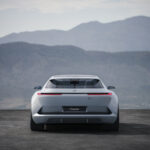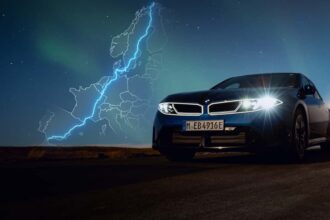
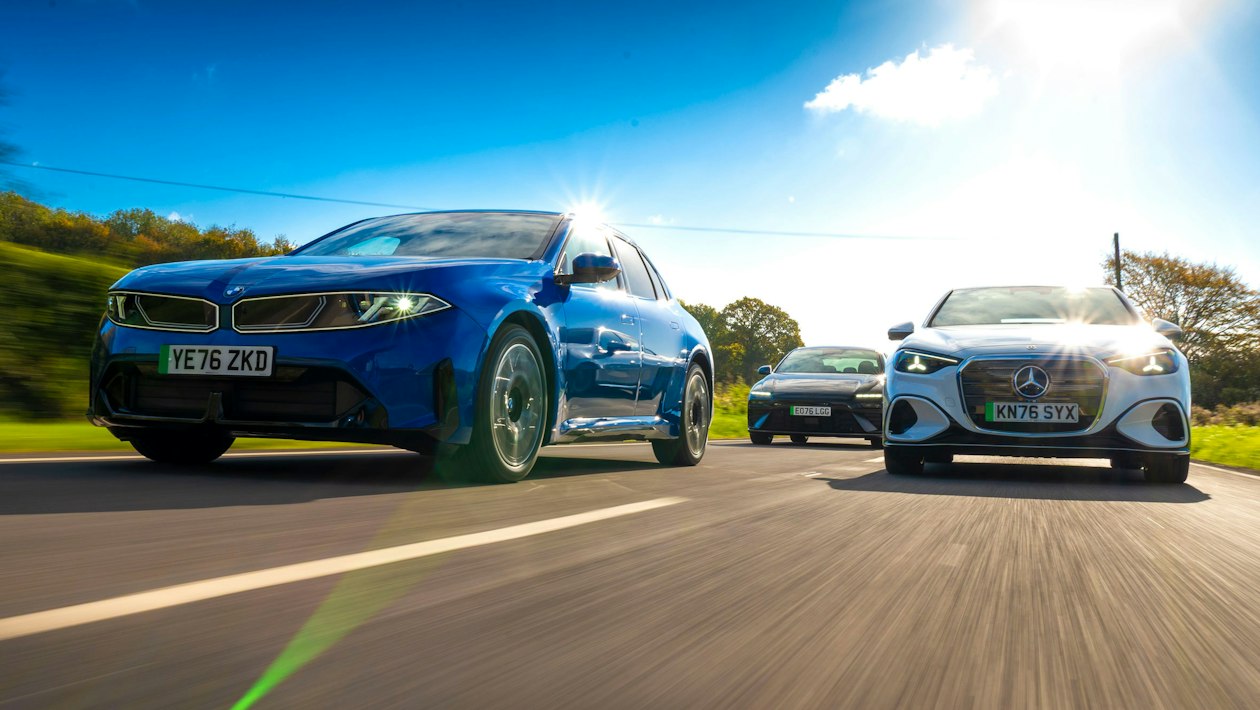
The electric saloon market now has a proper three-way fight on its hands. BMW’s Neue Klasse platform made its debut on the iX3 SUV, and the technology has filtered down to the car that matters most: the 3 Series. The new i3 lines up against two very different interpretations of the electric four-door. Mercedes has pushed its C-Class Electric upmarket with the C 400, while Hyundai has sharpened the revised Ioniq 6 and kept a firm grip on value. Prices run from £36,990 for the Hyundai to £58,535 for the BMW First Edition tested here, and the Mercedes C 400 Sport slots in at £57,995, with AMG Line, Premium and Premium Plus trims expected to push the C-Class Electric above that. These three cars are not really fighting over the same buyer. They are fighting over the same question: what should a premium electric saloon actually be?
BMW i3: the Neue Klasse reaches the heart of the range
The new i3 shares its silhouette with the petrol 3 Series but sits on a bespoke Neue Klasse platform, and that distinction matters. BMW has not simply dropped batteries into an existing shell. The car uses the same Panoramic Vision display that runs across the base of the windscreen as the iX3, paired with a large high-resolution touchscreen, and the cabin feels like a genuine step forward rather than a rehash.
Two battery options are offered: 87kWh and 113.4kWh. Every model is a twin-motor, four-wheel-drive arrangement, with trims running from base through M Sport to M Sport Pro. UK pricing starts at £47,925, rising to £58,535 for the First Edition tested here. That is a significant outlay, but BMW has justified it with the headline figure of the group: BMW claims more than 420 miles of range from the larger battery, and the i3 recorded the strongest efficiency of the three on test at 4.1 mi/kWh.
The trade-off is ride quality. The i3’s sportier set-up leaves it unsettled at lower speeds, a reminder that BMW still prioritises handling. Push it down a B-road and the sharpness and agility are genuine. For buyers weighing the broader 3 Series story, our coverage of the New BMW 3 Series (G50) Revealed: UK Pricing, Specs and January 2027 Arrival sets out how the combustion and electric lines now diverge.
Mercedes C 400 Electric: comfort first, at a price
Mercedes has taken the opposite approach. The C 400 Electric uses a bespoke electric platform but keeps a familiar name, and beyond the badge it shares little with the combustion C-Class. One powertrain is available for now: the C 400, with a 94kWh battery and twin motors delivering 4MATIC four-wheel drive.
The Sport model starts at £57,995, and AMG Line versions are expected to take the bulk of sales, with Premium and Premium Plus trims adding both equipment and cost. This is deliberate. Mercedes is repositioning itself as a more exclusive brand, and the C-Class Electric’s pricing reflects that ambition rather than any attempt to undercut BMW.
What you get for the money is the comfort champion of the test. With air suspension fitted, the C 400 is fast, quiet and refined at every speed, and the Hyperscreen is enormous yet highly configurable and genuinely easy to use. It is the most luxurious cabin here by a clear margin. The catch comes on a motorway run, where range is pegged back compared with the BMW, though Mercedes expects efficiency to improve at lower speeds.
Hyundai Ioniq 6: the value proposition
The revised Ioniq 6 was already a tough rival to the outgoing BMW i4, and Hyundai has sharpened the exterior for aerodynamics while fitting bigger batteries for longer range. The line-up now runs from entry-level Premium through N Line and N Line Evo, the latter two available with rear- or four-wheel drive. Prices span £36,990 to £46,960, making it comfortably the cheapest car here.
It is also the car with the smallest battery in the test, and the suspension is on the firm side and less sophisticated than its rivals, though never harsh. The interior feels spartan next to the BMW and Mercedes, but it is very well equipped for the money. Hyundai has always played the value card well, and the Ioniq 6 remains proof that a keen price need not mean a stripped-out car.
Range and efficiency compared
This is where the BMW takes a decisive lead. The 113.4kWh battery is the largest in the group, and the i3 converts it into more than 420 miles on BMW’s claim, at 4.1 mi/kWh the best efficiency of the three. That combination of capacity and economy is what separates it from the Mercedes, which loses ground on motorway runs despite its 94kWh pack.
The Hyundai’s smaller battery means shorter legs between charges, though its aerodynamic revisions should help it make the most of what it has. For drivers regularly covering long distances, the BMW’s advantage is not marginal. It is the difference between one charging stop and two on a journey that matters. Those thinking about how far the Neue Klasse approach can stretch should look at what happens when engineers take it in unexpected directions, as in the BMW i3 Pickup: Engineer Turns Range-Extender Hatch into a Budget Electric Truck.
Interior, practicality and boot space
The Mercedes wins on outright space. It offers a big frunk and more rear legroom than the BMW, though rear headroom trails the i3. The BMW counters with the best boot access of the three, making it the easier car to live with day to day, even if it cannot match the Mercedes for sheer room.
The Hyundai is the weakest here. It has a narrow boot opening, the smallest boot capacity in the test, and less rear headroom than the BMW. For families who regularly carry passengers and luggage, that is a real consideration rather than a footnote.
Safety and ownership
All three come with comprehensive assistance systems, and the BMW’s are notably less intrusive than the Mercedes’, which some drivers will prefer. Euro NCAP results have not yet been published for either the BMW i3 or the Mercedes C 400 Electric, so any comparison must wait.
The Hyundai holds a five-star Euro NCAP rating awarded in 2022, with best-in-class results at the time. Tests have since changed, so that score will not be directly comparable with the BMW’s and Mercedes’ once theirs are published. On warranty, Hyundai offers five years, two years longer than its premium rivals, and all three carry unlimited mileage limits. That is a meaningful advantage for high-mileage buyers.
Which electric saloon makes the most sense?
The BMW i3 is the most complete car here, and the range advantage is compelling enough to carry it despite the unsettled low-speed ride and the £58,535 asking price of the First Edition.
The Mercedes C 400 Electric is the one to choose if comfort is the priority. It is quieter, plusher and more refined than the BMW, and the Hyperscreen gives it the most impressive cabin in the test. Buyers are paying for luxury, and they should know that is what they are getting.
The Hyundai Ioniq 6 remains the smart money. At £36,990 it undercuts both rivals by a wide margin, comes with a five-year warranty and is generously equipped. It asks a fair question of anyone considering the other two: what exactly are you paying the extra for?
For more on this, see mercedes benz freezes german.