
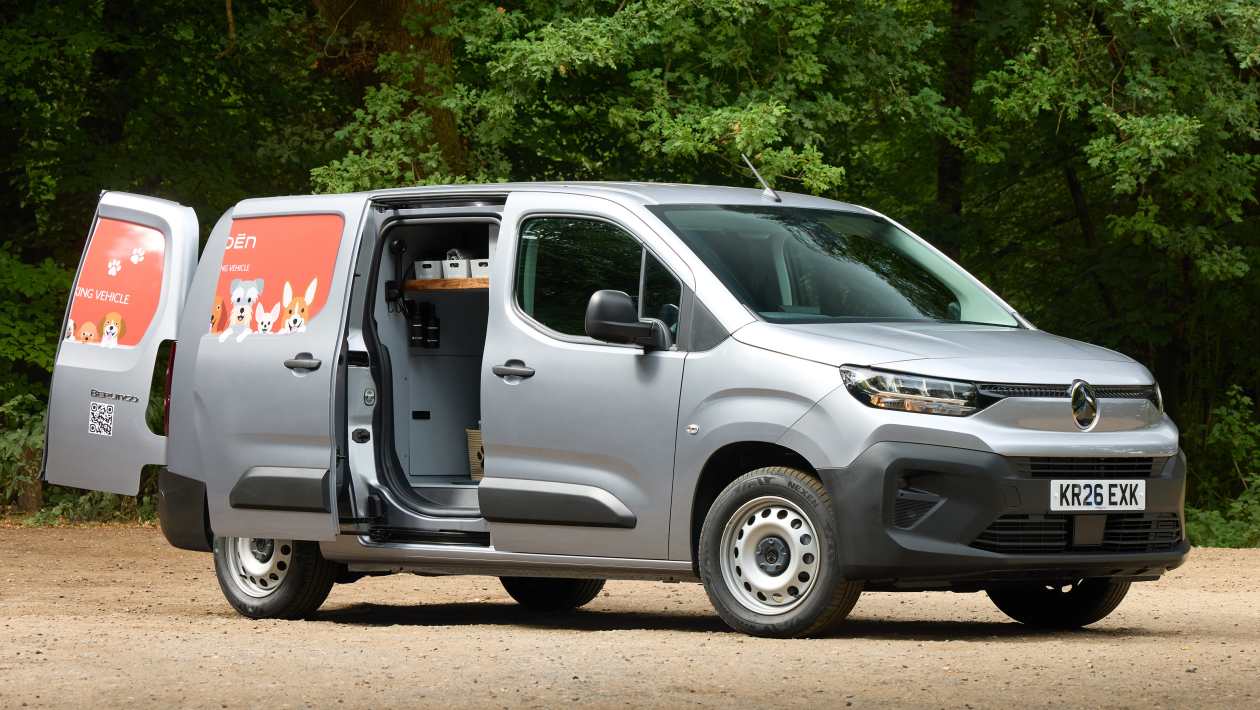
Citroën has a long history of building vans that feel more like companions than commercial vehicles, and now it has taken that idea literally. The French firm has unveiled the Pawlingo, a one-off concept based on its best-selling Berlingo Van, designed from the ground up around the needs of dogs rather than drivers. It was created in partnership with pet welfare charity Blue Cross, and it is packed with genuinely thoughtful touches. There is just one problem: Citroën has confirmed it has no plans to put the Pawlingo into production. Ever. That makes it a rare thing in the automotive world, a concept that exists purely to make a point.
Why Citroën Built It
The Pawlingo did not come from nowhere. Citroën commissioned research into how dog owners feel about transporting their animals, and the results make for uncomfortable reading. Some 56% of dog owners say they worry about their dog’s comfort on the road. Only 53% are confident that dog-walking services which use vehicles to transport dogs are properly equipped for canine comfort. And perhaps most tellingly, 51% said they would be more likely to use a dog walker whose vehicle was specifically adapted for canine wellbeing.
That last figure is the commercial hook. It suggests a real, measurable consumer preference sitting there waiting to be served, and it explains why Citroën bothered to build a show vehicle at all rather than simply issuing a press release about pet safety. The Pawlingo is a design study with a statistic behind it, and the statistic points at a gap in the market that nobody has seriously filled.
It also fits a broader pattern of manufacturers using concept cars to explore practical ideas that are not quite ready for the showroom. Citroën is not alone in this. Concepts built around a specific use case, rather than heritage or performance, have become a familiar way for brands to test whether a niche is worth pursuing. The difference with the Pawlingo is that its subject matter is animal welfare, and the case it makes is unusually concrete.
Inside the Pawlingo
The headline feature is the bedding. The Pawlingo carries four dog beds, each one using the same foam material found in Citroën’s Advanced Comfort Technology seats. That is the same cushioning system the company fits to its passenger cars, so the dogs are effectively getting the plushest ride Citroën knows how to build.
Each bed has its own camera, allowing owners to keep an eye on their animals while on the move. The air conditioning is pre-set to run between 15 and 22°C, which Citroën describes as the optimal temperature range for dogs travelling in a car. Anyone who has watched a dog pant nervously on a warm motorway journey will recognise the thinking immediately.
At the back, a ramp leads up to the bedding area. This is aimed squarely at elderly or smaller dogs, the ones most likely to struggle with a jump into a van, and Citroën notes it helps avoid the stresses, strains and unwanted vet trips that come with lifting a reluctant animal in and out of a vehicle. It is a small detail that says a great deal about how seriously the design team approached the brief.
The Practical Kit
Where the Pawlingo really earns its keep is in the sheer number of everyday problems it tries to solve. There is a built-in washing facility with a shower, shampoo and conditioner, which turns the back of a van into something close to a mobile grooming station. Towels and drying robes are included, and the interior surfaces are designed to be wiped down easily, because anyone who has transported a wet dog knows exactly how quickly a clean van stops being clean.
The kit list continues with harnesses, leads, a waste bin and two treat tins. None of it is glamorous, and that is precisely the point. These are the things dog owners actually carry around with them, usually loose in the boot or sliding around the footwell. Integrating them properly into the vehicle is a simple idea executed with real care.
What Citroën Says
Greg Taylor, Managing Director of Citroën UK, framed the concept in straightforward terms. “Our research shows 51% would be more likely to use a dog walker if their vehicle was specifically adapted for canine wellbeing,” he said. “The Pawlingo concept is based on the number one selling Berlingo Van, [and] is our vision of what that could look like.”
That reference to the Berlingo Van is not incidental. It is one of the brand’s commercial workhorses, a panel van already familiar to many small businesses, dog walkers and pet-care operators. Using it as the base makes the Pawlingo feel like a plausible conversion rather than a flight of fancy, which is exactly what makes the absence of production plans so frustrating.
A Concept With No Future
There are no plans to put the Pawlingo into production. Citroën has been clear about that from the start, and it is worth taking the company at its word. What exists instead is a piece of well-executed public relations that also happens to be a genuinely thoughtful design study, aimed at an estimated 15.5 million dogs living in UK homes, according to Citroën’s research, and the people who look after them.
The Pawlingo works because it is specific. It does not gesture vaguely at pet friendliness. It names a temperature range, specifies a foam compound, and fits a ramp for the dogs that need one most. Those choices come from research rather than guesswork, and they add up to a coherent argument that vehicles designed around dogs could be better than vehicles merely tolerated by them.
Whether that argument ever turns into a production model is another matter. Citroën, like many manufacturers, has a history of concept cars that influence future road cars without ever reaching showrooms themselves, and the Pawlingo may well be remembered as a clever piece of marketing rather than the start of a new segment. But it has done something useful. It has put a number on how many dog owners would change their behaviour if the vehicle was right, and it has shown what the answer might look like if anyone ever decides to build it.
The Pawlingo remains exactly what Citroën says it is: a vision, not a vehicle. The concept was unveiled in the UK and is based on the Berlingo Van.






2 Comments