Citroën has a habit of doing things the long way round. The original 2CV was drawn up in the years before the Second World War with a brief that sounds like a joke until you realise it was deadly serious: a car a French farmer could use to cross a ploughed field with a basket of eggs on the passenger seat, and arrive with every shell intact.
Now the company is applying that same back-to-basics thinking to an electric car. Citroën has unveiled an electric 2CV concept ahead of the Paris Motor Show, and has confirmed that a production version is targeted for 2028. If it lands anywhere near the numbers being talked about, it could be one of the cheapest EVs on sale in Europe.
The headline number: around €15,000
Citroën is aiming for a starting price of around €15,000 (roughly £13,000 at current rates) for the production car, and wants to build it in Europe rather than importing it from a low-cost manufacturing base. That figure applies to the European market, and Citroën has not confirmed UK pricing or availability.
For context, the new Renault Twingo E-Tech launched with a French starting price of €19,490 before incentives, which puts Citroën’s target roughly €4,500 below its closest rival. Subsidies of up to €5,700 are available in France, though Citroën has not confirmed whether its €15,000 figure is a pre- or post-incentive number. That distinction matters a great deal, and it is one of the first things we would want clarified.
The broader point stands either way. While most of the EV market has spent the last five years getting heavier, more powerful and more expensive, Citroën is betting that a meaningful chunk of buyers want the opposite. The Twingo’s arrival shows Renault has reached the same conclusion. The 2CV concept suggests Citroën intends to undercut it.

Small, light, and slotted below the C3
The concept measures 3.76 metres long, which makes it just three centimetres shorter than the Twingo and around ten centimetres shorter than the original 2CV. In Citroën’s own range it would sit between the tiny Ami quadricycle and the C3 supermini.
More interesting than the length is the weight target. Citroën is aiming to keep the production car around 1,000kg, which would make it lighter than the current Mazda MX-5. Given that many family EVs now weigh well over 1,500kg, that is a genuinely contrarian position, and it is the single biggest lever Citroën has on both range and cost.
What the concept keeps
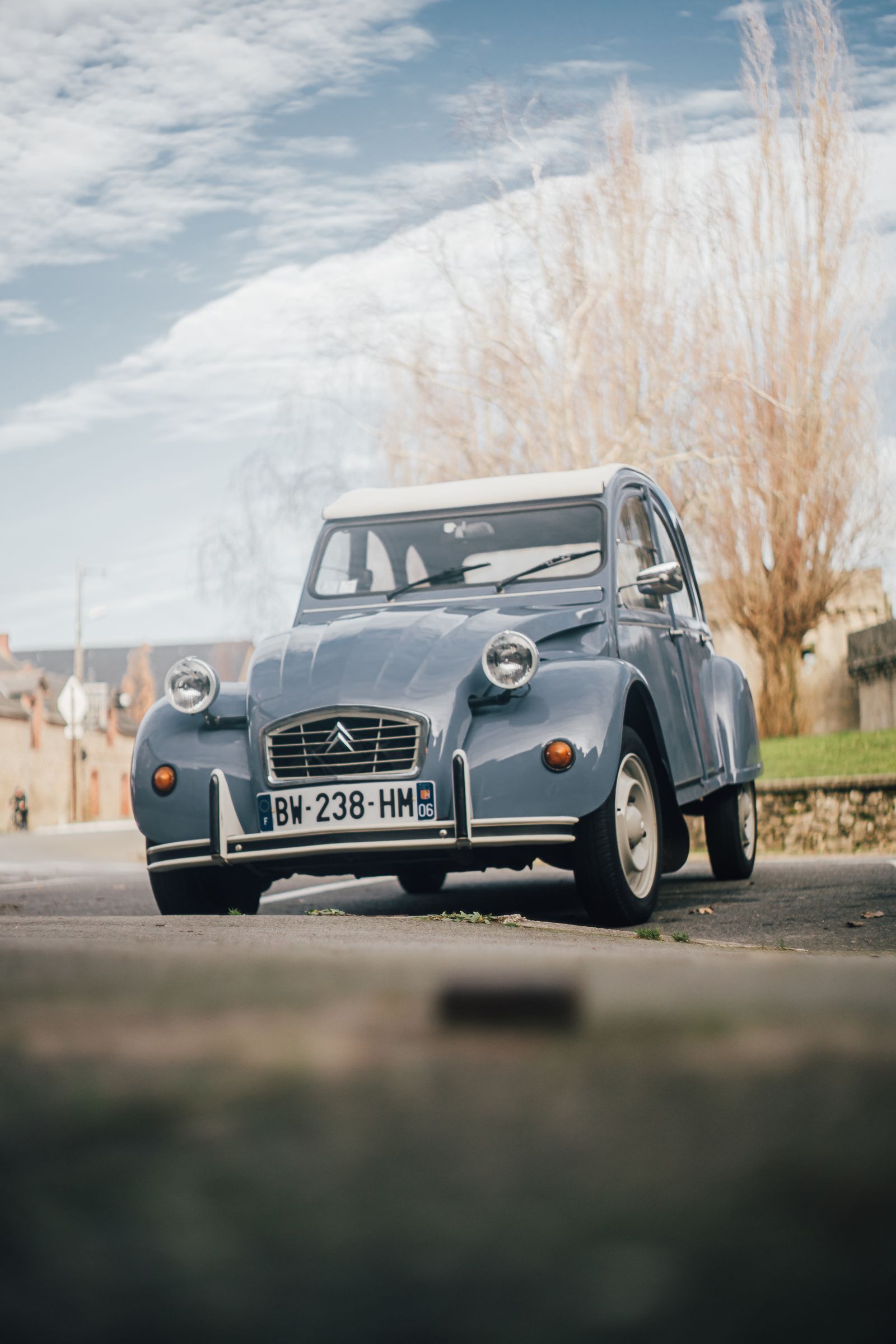
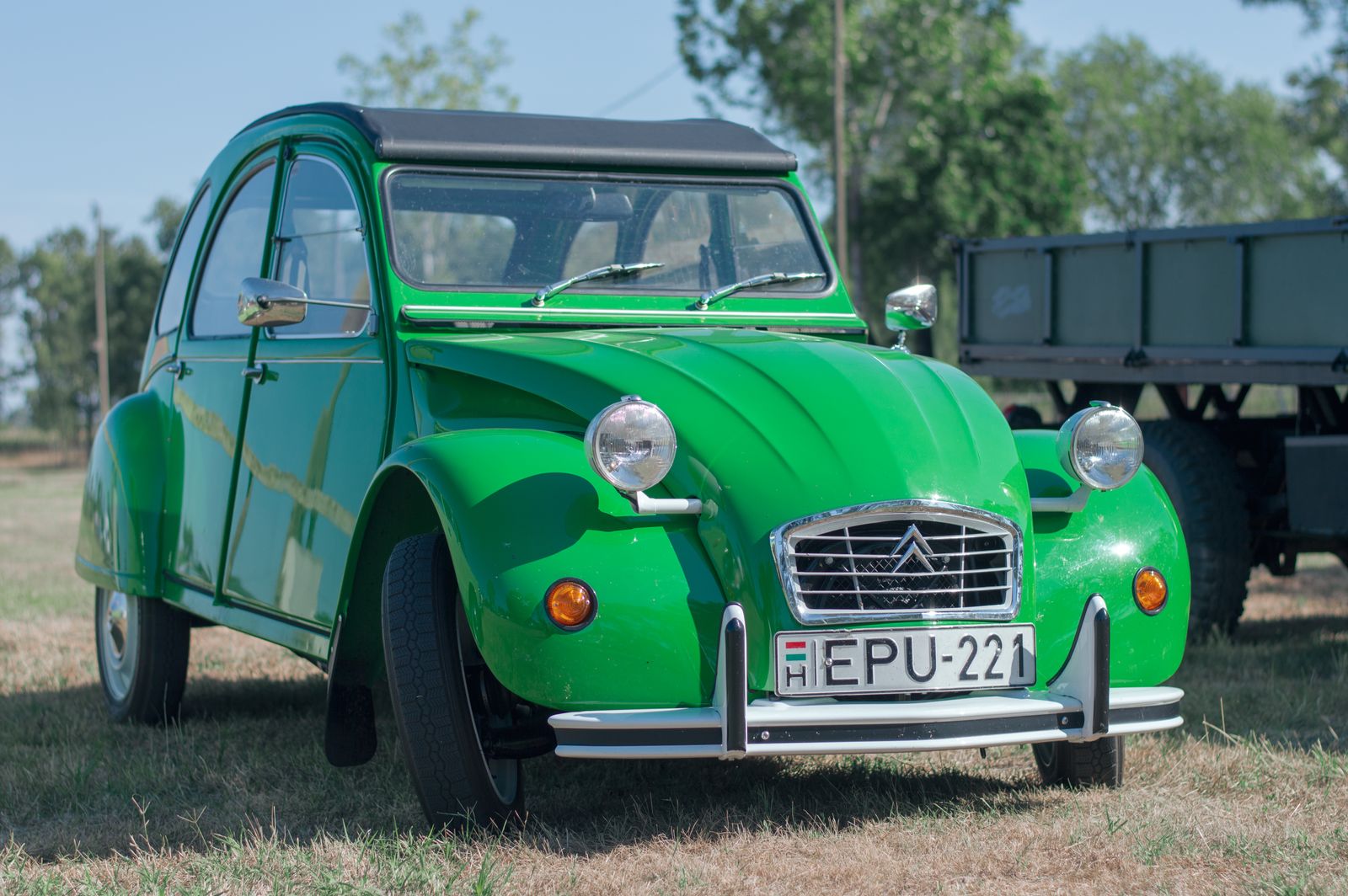
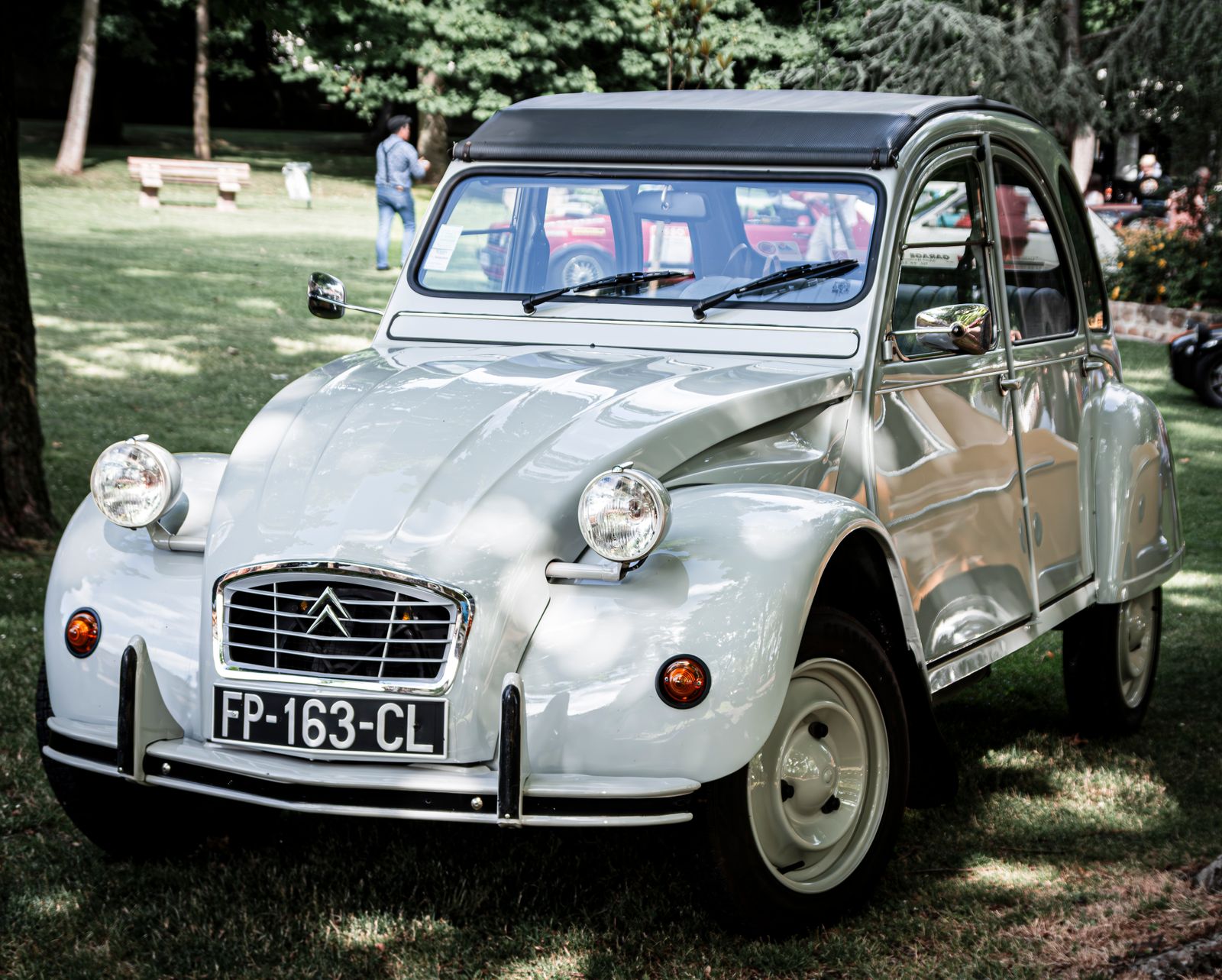
The nostalgia is not subtle, and nor should it be. The concept retains the general silhouette of the original Deux Chevaux, including the full-length fabric roof that rolls all the way open, the separate round headlight pods, pronounced fenders, an upright windscreen and the distinctive curved roofline.
The bonnet takes its inspiration from the TPV, the project that previewed the original car before the Second World War. It is a nice piece of internal archaeology: Citroën referencing its own pre-production prototype rather than simply copying the finished article.
What it changes
This is not a retro pastiche, though. The front end is taller and boxier than the original, the wheel arches sit much lower, and the rear fender skirts are gone entirely. The concept has roll-down windows rather than the original’s pull-up side screens, exposed wipers, air inlets below the windscreen and slim indicators integrated into the rear roof pillars.
There is a contrasting black tailgate stretching down to the bumper, plus modern LED lighting. The concept rides on 19-inch steel wheels, which will almost certainly shrink for production. Steel wheels are a deliberate signal: this is a car that does not pretend to be a luxury object.
Inside: a cabin with almost no dashboard
The interior is where the concept gets genuinely interesting. Citroën has removed almost the entire dashboard, replacing it with a cylindrical assembly that houses the steering wheel, the main controls and a Smart Vision Display that projects information into the driver’s field of view.
There is a square eight-inch touchscreen with comic-inspired graphics, backed up by physical controls, which will please anyone who has spent the last decade prodding at glass. The seats use Citroën’s Advanced Comfort technology, and the passenger seat extends so you can stretch out during a charging stop.
Then there are the details that give the game away. Removable storage baskets. A removable speaker. Fabric door-pull straps. And door pockets with cutouts sized to carry half a dozen eggs, a direct nod to that original design brief. The vibrant concept colours and hanging lights are unlikely to make production, but the egg holders ought to.
Powertrain: the big unknowns
Here is where the picture gets hazier. Citroën has not announced battery capacity, range, power output or charging speeds.
What we do know is where it sits in the hierarchy. The 2CV would slot between the 8hp Ami and the 113hp C3, which gives a rough upper and lower bound. Comparable small urban EVs typically run around 30kWh of usable battery and roughly 150 miles (250km) of range, and a car weighing around a tonne would not need much more than that to be genuinely useful around town. Whether Citroën can hit its price target with a battery of that size is the central engineering question.
The regulatory tailwind
Citroën says the production model will be designed around forthcoming European E-Car rules. The European Commission has proposed an M1E category for electric cars up to 4.2 metres long, with regulatory requirements frozen for ten years.
That freeze is the important part. If adopted, it would give manufacturers a predictable, lower-cost route to building small EVs, because they are not constantly re-engineering to meet shifting rules. At 3.76 metres, the 2CV would sit comfortably inside the proposed category. It is a rare example of regulation actively pushing in the direction of cheaper cars rather than more expensive ones.
Forty-two years of the original
The scale of what Citroën is reviving is easy to underestimate. The original 2CV sold millions of units over a 42-year production run, ranging from 9hp at launch to 29hp by the end. The name comes from France’s vehicle tax system, which calculated “tax horsepower” using a formula rather than a measurement, hence “deux chevaux”, or two horses.
Its soft, long-travel suspension was engineered specifically so a family of four could cross a field in rural France without breaking that basket of eggs. Production finally ended in 1990, by which point the car had become a punchline and a legend at the same time.
A cheap EV, and the questions that remain
The 2CV concept tells us something fairly clear about Citroën’s intentions. The company is not chasing the premium end of the electric market, where margins are fatter and volumes are smaller. It is going after the bottom of it, with a lightweight, small, deliberately simple car at a price that undercuts nearly everything.
There is precedent for this approach working. Renault has taken a similar nostalgic route with its own heritage revivals, including the Renault Gordini 8 Concept: The Electric Reinvention of a Rally Legend, which shows how much specification clarity matters when a concept is doing the talking. Citroën has so far given us the shape and the price target, but not the battery.
The other live question is what the Paris show itself will look like. The Paris Motor Show 2026: Chinese Brands Flood the Show as BMW Stays Away sets the scene for a European industry under real pressure from cheaper imported EVs, which is precisely the pressure that makes a €15,000 Citroën so strategically important.
Three things need answering before 2028. First, whether the €15,000 figure survives contact with battery costs. Second, whether the production car keeps the lightweight philosophy or quietly balloons to 1,400kg. And third, whether Citroën can actually build it in Europe at that price, which is a far harder promise than the styling.
The concept, at least, has the right instincts. It is small, it is light, and it is not trying to impress anyone with a screen the size of a television.