
Why a wing mirror is worth stealing
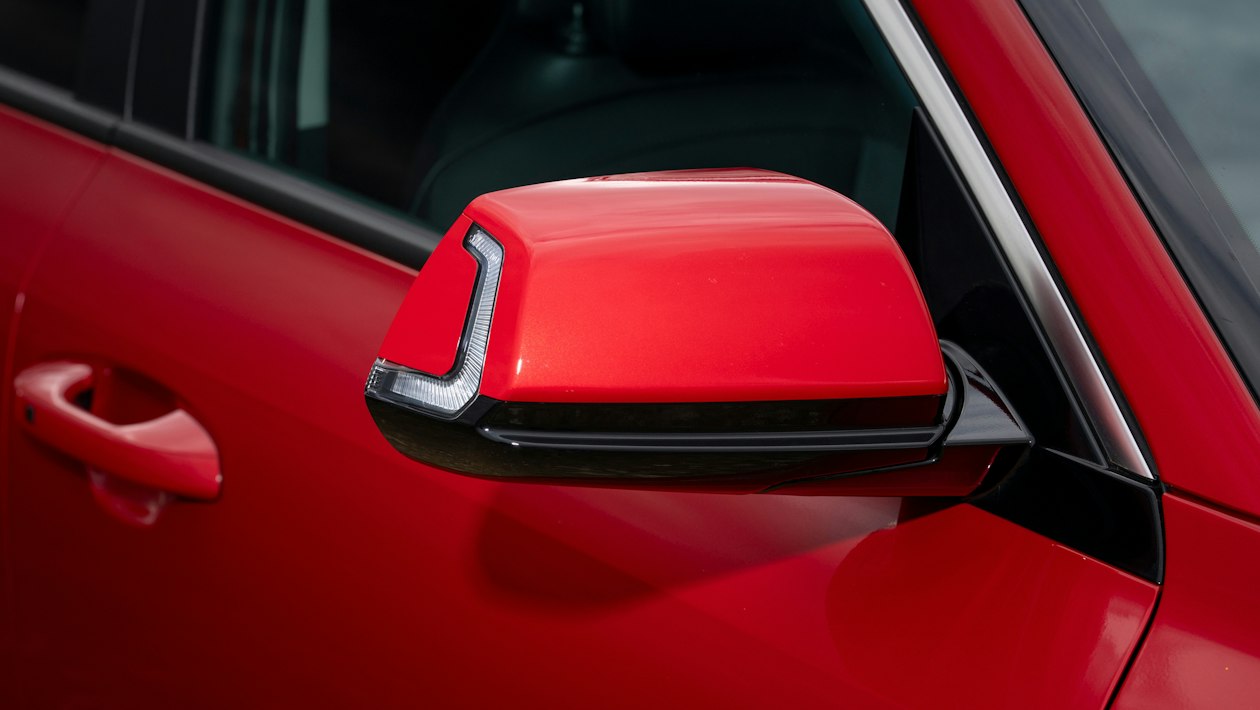
The door mirror stopped being a simple pane of glass some years ago. On a modern Range Rover or Taycan it is a small electronic assembly: a heated glass element, a motorised folding mechanism, blind spot monitoring hardware and, increasingly, an integrated camera feeding the surround-view system.
That combination makes the glass and the internal modules genuinely valuable as parts. A replacement mirror assembly on a luxury model can be expensive, running to several hundred pounds or more fitted, which tells you plenty about what the components are worth to someone who does not have to buy them legitimately. Thieves can be in and out in seconds, often leaving the housing behind and taking only what unclips or unscrews.
It is also a theft that is hard to prevent and easy to repeat. A car parked on a residential street overnight presents a row of targets at roughly waist height, with no alarm trigger until the glass is already gone.
Is mirror theft actually on the rise?
This is where the picture gets murky. Reports of wing mirror theft are sporadic rather than sustained, and there is no dedicated national category tracking them.
There was a spate in one area of New York in 2019, which the NYPD described at the time as “a local pattern in Manhattan North” that “does not appear to be a citywide condition,” and there have been further reports of door mirror theft in Amsterdam. Similar headlines did the rounds a few years ago about headlight theft, nicknamed eye-snatching, including a Porsche Taycan left with its lamps cut out. The images were striking. Whether the crime was widespread was never clear.
What the Chelsea case does show is that when a gang decides to work a wealthy postcode, it can take a large number of cars in a very short window. That is less a trend than a tactic.
What the Met’s own data reveals about parts theft
Freedom of information data from the Metropolitan Police, covering theft from motor vehicles across London boroughs from 2019 to early 2024, gives the clearest picture of what criminals actually take.
Number plates are the most commonly stolen part, with some variation by borough and year. Catalytic converter thefts exceeded number plate thefts in some boroughs in some years, but fell sharply towards 2024, consistent with an exclusive Auto Express report showing a 98 per cent reduction. The National Police Chiefs’ Council attributed that fall to factors including forensic marking and a national database to register and track stolen parts.
Door mirror theft has no category of its own. It falls under “other MV Parts/Accessories,” which makes it impossible to isolate from the data. In Kensington and Chelsea in 2024, that catch-all recorded 48 thefts, alongside 76 registration plate thefts, five catalytic converters and one sat-nav system.
So the 15 cars in Chelsea will be logged as “other” and disappear into a statistic. That is precisely why nobody can say with confidence whether mirror theft is growing.
Why criminals want the parts, not the car
A stolen car is a liability. It has a registration, a vehicle identification number and a shape that ANPR cameras and traffic officers are looking for. A stolen number plate is an asset, easily fitted to another vehicle to disguise its identity from ANPR and speed cameras, a problem explored in our report on Ghost Plates: One in 15 UK Cars Said to Dodge Cameras as AI Crackdown Begins.
Parts are cleaner still. A mirror glass carries no identity, fits a known list of models and moves through channels that are difficult to police. Criminals are often more interested in a car’s components than the vehicle itself, and the economics favour them: stripping a car yields more than fencing it whole, with far less exposure.
Police are closing the workshops that feed the trade
Enforcement has shifted towards the infrastructure behind parts theft rather than the thefts themselves. Last week the NPCC reported that week-long operations across the country had closed eight chop shops, where stolen cars are stripped of parts, with 18 arrests linked to the sites.
That followed a wider national effort. As we reported in Operation Alliances: 286 Arrests as Police Target Car Theft and Cloned Plates, this was the third national crackdown of its kind, and the scale reflects how police now view vehicle crime: not as opportunistic nuisance offending, but as organised criminality with supply chains, customers and a market to serve.
Closing a chop shop disrupts the demand side of parts theft. It does not stop a gang walking down a Chelsea street at two in the morning.
How to protect your car, and what to do if the mirrors go
There is no way to make a door mirror theft-proof, but you can make your car a less attractive proposition.
Park in a garage or on a driveway where possible, and favour well-lit, overlooked spots over quiet side streets. Where you have a choice, park with the mirror side closest to a wall or hedge, which limits access. Folding mirrors in reduces their visual draw but not the risk. Visible security markings on components generally make parts harder to sell on, and forensic marking was one of the factors the NPCC credited with the sharp fall in catalytic converter theft.
Report suspicious behaviour. Someone crouching at wing-mirror height along a row of parked cars at night is worth a call, and the Met’s inquiries into the Chelsea spree will depend on exactly that kind of information.
If your mirrors are taken, report it to the police and get a crime reference number before contacting your insurer. Check whether your policy covers glass separately, since mirror glass is often treated as a glass claim with its own excess. Do not buy a cheap replacement from an unverified seller; a secondhand module of unknown origin may not work with your car’s systems, and buying stolen parts keeps the market alive.
The Chelsea spree is a reminder that the modern car is a collection of valuable components, and that thieves have done the arithmetic. The technology that makes a luxury car desirable, from cameras to sensors to heated glass, is the same technology that makes it worth taking apart.





One Comment