
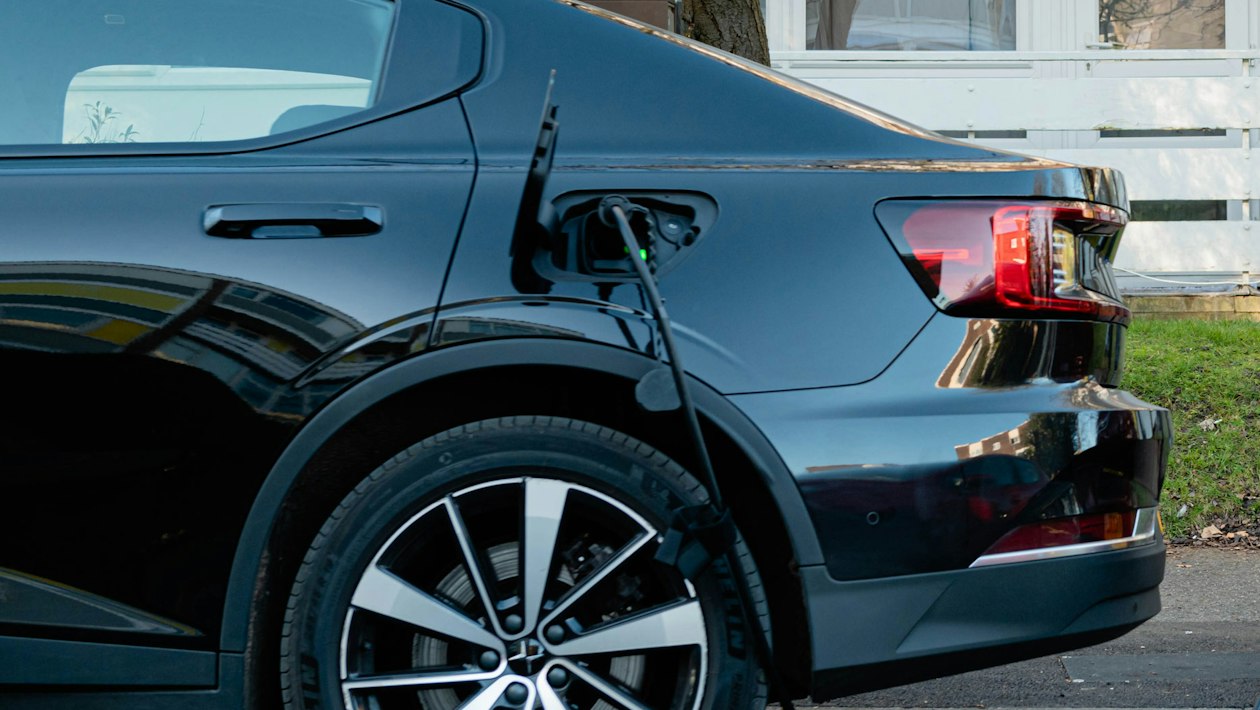
The government has removed the planning permission requirement for under-pavement electric car charging cables, a rule change that could make home charging a realistic option for households that park on the street. Drivers will be able to run a charging cable beneath the pavement from their home to their car without first submitting a council planning application, a process the Department for Transport (DfT) says has been putting people off switching to electric.
The DfT estimates the change will save drivers up to £300 on installation, a figure that covers the cost of the planning application and the associated administrative and contractor work rather than the application fee alone. That is a meaningful sum, but the bigger prize is access: for the roughly 40 per cent of UK properties without a driveway, this opens a route to charging at domestic electricity rates rather than paying public network prices.
Why the driveway divide has held back EV uptake
The UK’s electric transition has a geography problem. Drivers with a driveway can plug in overnight, pay a cheap off-peak tariff and wake up to a full battery. Drivers without one have historically faced a choice between expensive public charging and the logistical headache of running a cable across a pavement, which raises tripping hazards, accessibility concerns and, until now, planning bureaucracy.
The planning application process for under-pavement charging was widely regarded as a major barrier for many households considering a switch. The result is a two-tier market: those who can charge at home and those who cannot, with the latter facing running costs that can erode much of the EV advantage.
The timing matters. A record 99,199 battery electric cars were sold in the UK in September 2025, according to SMMT data, and the shift away from petrol is accelerating globally, with petrol cars slipping below half of global sales for the first time in a century. The policy is aimed at households without off-street parking, who face the biggest practical barrier to switching.
How cross-pavement charging actually works
The DfT published guidance on cross-pavement charging solutions in December 2024, setting out two approaches. The first is a cable channel embedded in the pavement, essentially a shallow trough that a cable sits in while charging, keeping the walkway clear. The second is a permanent under-pavement cable, installed beneath the surface and connected to a charge point on the street side.
Only the permanent under-pavement cable is exempt from planning permission under the new rule. That distinction is important for anyone weighing up the options: the cable channel approach, while less invasive, still requires the full planning process. The permanent solution is the one that has been unlocked.
In practice, installation typically involves a contractor digging a channel across the pavement, laying the cable in protective ducting, and reinstating the surface. It is specialist work, and councils will still have a say over how it is done to protect the public highway.
The cost picture
A typical home charger installation runs to between £800 and £1,200. Under-pavement work roughly doubles the cost, so drivers should expect a total in the region of £1,600 to £2,400. The £300 saving from removing planning costs is welcome but does not make the proposition cheap.
The payback comes from the tariff. Domestic electricity rates, particularly off-peak EV tariffs, are substantially cheaper per mile than the public rapid and ultra-rapid networks. For a high-mileage driver, the difference can be substantial over a year, which is why the policy is framed as a fairness measure as much as an environmental one.
Industry reaction: optimism tempered by reality
Vicky Edmonds, chief executive of EVA England, welcomed the change but pointed to the scale of the challenge. “Our research found that 60 per cent of petrol and diesel drivers without off-street parking would never consider an EV,” she said. That statistic is striking: a majority of the very group this policy targets have ruled out electric altogether, which suggests the barrier is not just bureaucratic but perceptual and practical.
The RAC’s head of policy, Simon Williams, struck a similar note. He called the change a “much-needed step in the right direction to make charging fairer and accessible for all”, but added a caution that will resonate with anyone who has circled their own street looking for a space: “While all this sounds good on paper, it’s important to remember that for the millions of households in the UK that don’t have driveways, the reality is that there is of course no guarantee of being able to park in front of their own home within reach of their charging cable.”
That is the crux. An under-pavement cable is only useful if the car can be parked close enough to connect to it. For residents of terraced streets with heavy competition for kerbside space, the investment may not pay off reliably.
The wider policy push
The planning change is part of a broader package. The government has launched two consultations: one on ensuring new buildings are equipped with chargers, and another on possible mandatory requirements for landlords and freeholders, making it harder for them to refuse renters’ requests to install chargers.
Together, these measures point to a recognition that charging infrastructure cannot be left to early adopters with driveways. If the UK is to meet its EV adoption ambitions, the practical barriers facing renters and street-parked households have to be addressed directly.
What to watch next
The real test of this policy will be take-up. Removing planning permission lowers one hurdle, but several remain: the cost of specialist installation, the willingness of councils to approve pavement works promptly, and the fundamental unpredictability of kerbside parking.
Drivers considering the route should check with their local authority on how it handles under-pavement applications, confirm that their chosen installer is approved for highway work, and think honestly about how often they can reliably park within cable reach of their home. For some, the numbers will stack up comfortably. For others, particularly in dense urban streets, the public charging network will remain the practical option.
What the change does achieve is to remove a bureaucratic obstacle that has stood in the way of street-parked drivers for years. Whether that translates into a meaningful acceleration in EV adoption among the 40 per cent will depend on how quickly the practical obstacles, above all the search for a kerbside space, follow the paperwork into the bin.