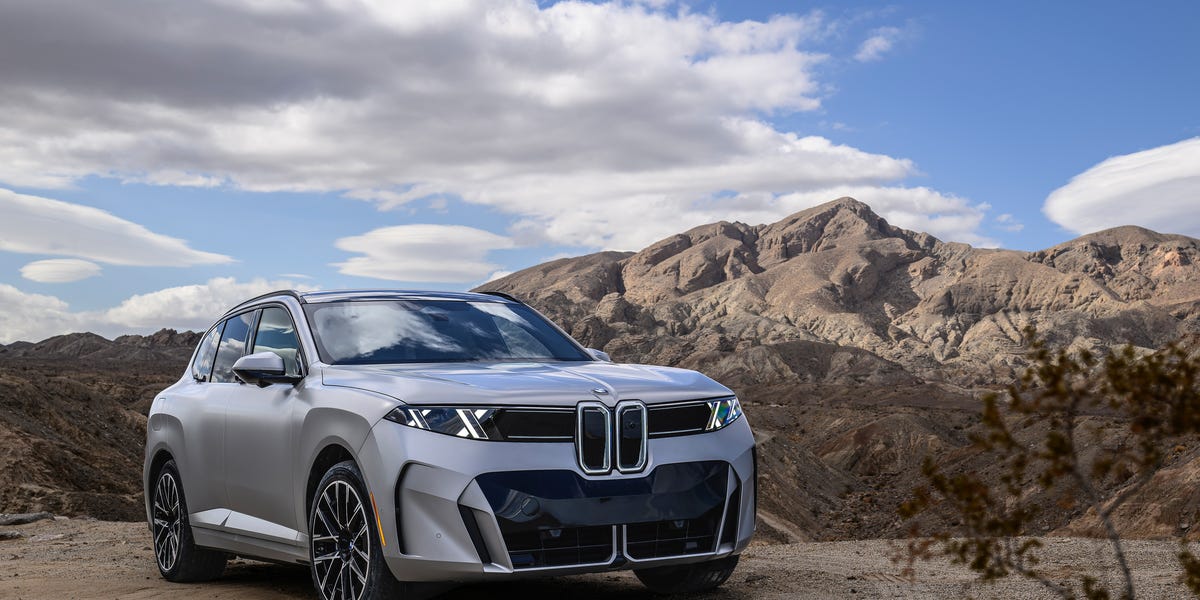
BMW iX5: what’s new and why it matters
This is the first fully electric X5, and it arrives as the fifth generation of BMW’s defining SUV. The formula has been overhauled rather than tweaked. The iX5 adopts BMW’s Neue Klasse styling language, a cleaner, more geometric look that marks a clear break from the current car, and it sits on the company’s new 800-volt Gen6 electrical architecture.
It is not an EV-only model. The new X5 range offers diesel and plug-in hybrid powertrains alongside the electric version, with pure-petrol and hydrogen variants planned for foreign markets. That breadth matters: BMW is hedging its bets while it works out how quickly buyers will move across.
At launch, there is just one iX5: the xDrive60, badged “60 xDrive” in some markets. Cheaper single-motor versions and a faster M model are expected later. There is no confirmed coupé-styled X6 or iX6 for this generation, so fans of the sloped-roof variant will have to wait and see.
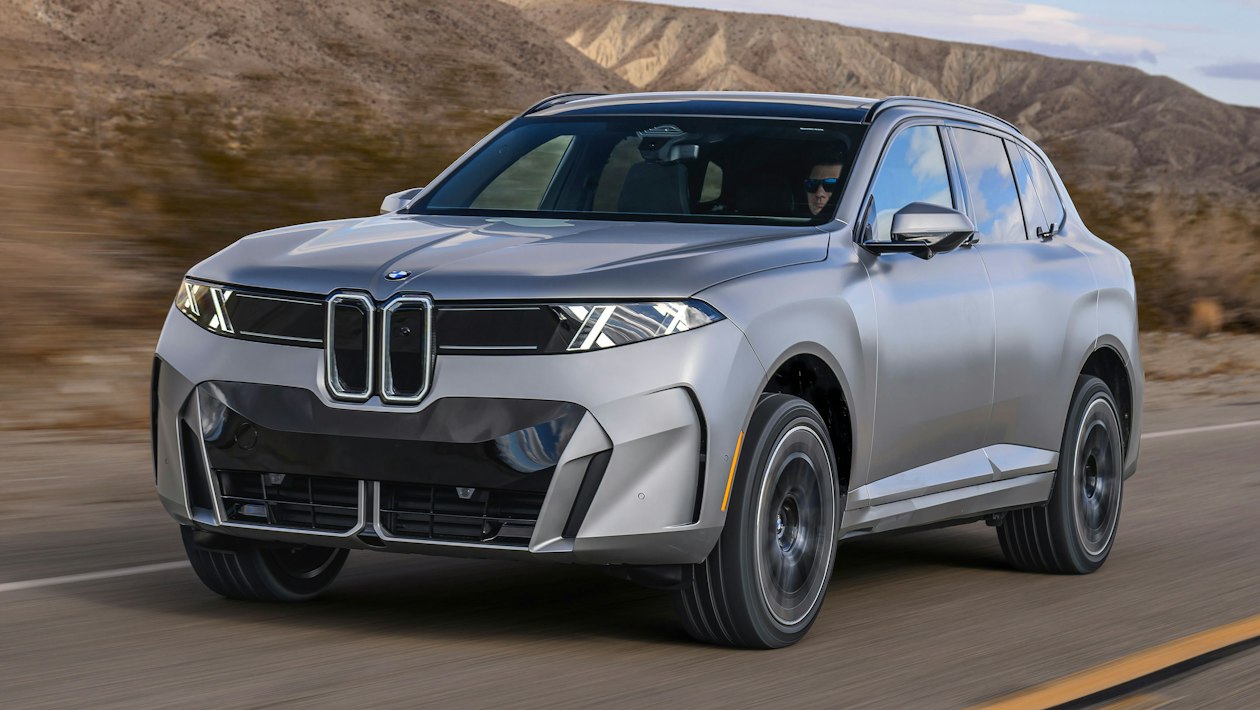
Powertrain and performance
The xDrive60 runs a dual-motor all-wheel drive setup producing 570bhp. The rear motor is the primary drive unit at 325hp, with a 245hp front motor that can decouple under low load to save energy on a cruise. BMW quotes 0-62mph in 4.6 seconds, and the top speed is limited to 130mph where legal.
Those are serious numbers for a family SUV, and they come with a serious weight penalty. The iX5 tips the scales at 2.8 tonnes, which is a lot of mass to manage through a corner and a lot of momentum to haul back down again. BMW’s engineers have clearly worked hard on body control, but physics remains undefeated.
Battery, range and charging
The range story needs careful reading. BMW’s 528-mile headline is a WLTP claim on the European cycle, and the US EPA estimate of around 435 miles gives a more realistic sense of what to expect in mixed driving. Treat the bigger number as a best case on a favourable test loop and the smaller one as closer to everyday life.
The iX5 uses a 141kWh to 144kWh cylindrical-cell battery pack, depending on whose measurement you take. Charging is the real party trick. Peak DC charging is rated at 460kW, which BMW says is enough for a 10-80% top-up in 22 minutes and 170 miles of range in just 10 minutes on a suitably powerful charger. Bidirectional charging is supported, so the car can power your home or run tools off the pack.
It is worth keeping perspective on those numbers. A 460kW peak only lasts for part of the charge curve, and chargers that can deliver that kind of power are still thin on the ground. The 22-minute figure is impressive, but you will need to find the right hardware to experience it.
Interior and technology
Inside, the iX5 is dominated by a 17.9-inch trapezoidal central touchscreen, with an optional 14.6-inch display for the passenger. Above the dashboard sits “Panoramic Vision”, a full-width thin display at the base of the windscreen showing speed, battery charge and other information in the driver’s eyeline.
Upholstery is Veganza as standard, with optional BMW Individual Merino leather for those who want it. The longer wheelbase, lower roofline and wider body than the outgoing X5 free up extra rear-seat space, so passengers in the back get a noticeably better deal than before.
BMW’s Highway Assistant hands-free driving system is available as an option in some markets. As ever with these systems, the fine print about where and when it can be used is what really matters.
Practicality and dimensions
The iX5 is wider and lower than the car it replaces, which helps both road presence and aerodynamic efficiency. The longer wheelbase pays off inside, and the boot measures 27 cubic feet with the rear seats up and 68 cubic feet folded (US measurements).
Maximum towing capacity is quoted at 6,000lb (US figure), which is useful but short of the 7,716lb claimed for the Porsche Cayenne Electric. If you tow a heavy trailer, that difference may matter more than any of the performance figures.
UK specifications, trims and pricing for the iX5 have not yet been confirmed.
What it’s like to drive
Auto Express found the iX5 quick, quiet and genuinely fun, praising strong body control, direct steering and good ride comfort. It called the handling class-leading, which is a remarkable verdict for something weighing 2.8 tonnes. The same review noted that it felt stable and refined at 70mph, though some road noise and wind whistle around the door mirrors crept into the electric version, sounds that the petrol model’s engine would otherwise mask.
Car and Driver was less convinced. It found power delivery smooth and quiet, but judged the ride stiffer and the handling more ponderous than the petrol X5, blaming the extra weight. That is the trade-off in a nutshell: the iX5 controls its mass impressively, but it cannot hide it entirely.
One frustration flagged by Auto Express is that brake recuperation settings are buried in menus. For a car so focused on efficiency, making drivers dig through screens to adjust regen feels like a misstep. Auto Express was also careful to note that its urban driving assessment took place in southern California, and that UK conclusions must wait until it tests the car here. Given how different British roads are from Californian freeways, that caveat is worth taking seriously.
Rivals and positioning
The iX5 arrives into a crowded and increasingly electric segment. It will face the Mercedes GLE, the Audi Q7, the Porsche Cayenne including the Electric version, and the Volvo EX90. Land Rover is also pushing hard at the top end, as shown by the Range Rover Sport Electric Revealed: 378-Mile Range, 542bhp and a 2027 Arrival, which gives BMW another well-armed rival to think about.
But the most interesting competition comes from within. Auto Express scored the iX5 4.0 and observed that the gap to the smaller iX3 is narrower than ever, advising buyers to try the iX3 first. That is a striking thing to say about a flagship electric SUV. The iX3 offers much of the same technology and polish in a smaller, cheaper package, and for many buyers it will simply make more sense.
The verdict: a brilliant electric SUV that may have outgrown its own case
The iX5 is a deeply impressive piece of engineering. A 528-mile WLTP range claim, 460kW charging, 570bhp and class-leading handling from a 2.8-tonne SUV is a remarkable achievement, and BMW deserves credit for making the electric X5 feel like a proper X5 rather than a compromised conversion.
Yet the first drives suggest a car caught between its own ambitions. The ride is stiffer than the petrol model, the handling more ponderous according to one tester, and the brake recuperation settings are buried where they should not be. Meanwhile, the iX3 has grown so good that the case for stepping up to the larger car is no longer automatic.
Our recommendation is straightforward. If you regularly tow, cover big motorway miles or genuinely need the rear space, the iX5 is a fine choice and worth shortlisting. If none of those apply, the iX3 is the smarter buy, and it is the car we would look at first. The electric X5 is excellent, but for most buyers it is more SUV than they need.
Related: pavement charging green light.