
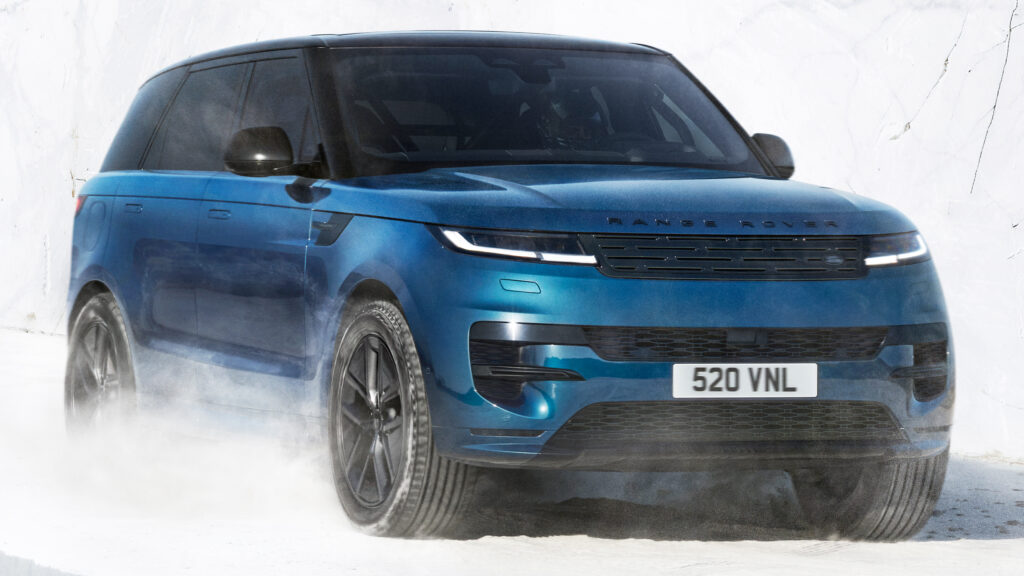
Land Rover’s electric offensive is gathering pace at a rate few predicted. Barely a month after the covers came off the full-size Range Rover Electric, the company has revealed the Range Rover Sport Electric, and on paper it is the more compelling of the two. That may sound counterintuitive. The Sport has always been the junior partner in the showroom, the slightly smaller, slightly cheaper, slightly less opulent alternative. This time the hierarchy has been quietly inverted.
The Driver’s Range Rover
Range Rover’s managing director, Martin Limpert, framed the launch in terms that leave little doubt about the intent: “Range Rover Sport is the most dynamic expression of Range Rover. With Range Rover Sport Electric we’re taking that spirit of visceral engagement and desire into the electric age. It is first and foremost a Range Rover Sport. The seamlessly-integrated electric propulsion system means we’ve been able to unlock new levels of responsiveness and precision, with a uniquely tuned chassis set-up, performance-focused torque delivery, and distinctive sound profiles that ensure our clients enjoy the very best driver engagement in a sporting luxury SUV.”
Strip away the corporate language and the claim is straightforward: the Sport Electric is the sharpest, most responsive Range Rover yet. The numbers support it. It is quicker than the larger Range Rover Electric, travels further on a charge, and sits on a chassis tuned to a sharper brief. For buyers who have spent the past decade choosing between a supercharged V8 Sport and its plusher big brother, the electric era appears to have preserved the distinction rather than erased it.
Performance: 542bhp and V8 Pace
At launch, the Range Rover Sport Electric comes in a single powertrain configuration: a dual-motor all-wheel-drive setup producing 542bhp and 850Nm of torque, with each motor rated at 349bhp. Land Rover quotes 0-62mph in 4.5 seconds using Dynamic Launch Control, which matches the supercharged V8 Range Rover Sport it effectively replaces in spirit. InsideEVs reports a figure of 4.3 seconds, which would make it 0.2 seconds quicker than the full-size Range Rover Electric and half a second quicker than the top-spec petrol Range Rover Sport SV.
A less powerful 444bhp dual-motor variant will follow, but only the flagship is offered at launch. That is a deliberate choice, and a telling one: Land Rover wants the first impression of the Sport Electric to be one of performance rather than economy. It is the same logic that has seen Ford push its most potent combustion hardware into halo models, as with the Ford Mustang Dark Horse SC: 795bhp Supercharged V8 Is Ford’s New Halo Pony Car. Electric or not, the fastest version goes first.
Range and Charging: 378 Miles, 800 Volts
The battery is a 118.5kWh lithium-ion pack running an 800-volt electrical architecture, and the headline WLTP range is 378 miles. That is fractionally more than the larger Range Rover Electric’s 373 miles, a quirk of aerodynamics and weight that will not have gone unnoticed internally.
DC fast charging runs at up to 350kW, good for a 10-80% top-up in 22 minutes, or up to 137 miles of range in 10 minutes. AC charging is accepted at up to 22kW, which is generous by class standards and useful for owners charging overnight on a three-phase supply. It is a charging package that keeps the Sport Electric competitive with the best of the current large electric SUV crop, even if it does not quite match the fastest charging rivals on the market.
Chassis and Capability
Underneath, the Sport Electric uses an updated version of the MLA-Flex platform shared with the Range Rover Electric. The wheelbase is identical at 2,997mm, while overall length of 4,946mm makes it 107mm shorter than its bigger sibling. The body structure is 61% stiffer than a current plug-in hybrid Range Rover Sport, and the centre of gravity sits 73mm lower.
Hardware includes Dynamic Air Suspension, Active Roll Control, twin-valve dampers and an adaptive dynamics system that monitors 100 parameters 500 times per second. All-wheel steering is fitted, wading depth is rated at 900mm, and Land Rover says the car can tackle 45-degree inclines. The Intelligent Traction Management system has been updated to its latest version.
Perhaps the most evocative detail is where the development work took place: the open-air marble quarries at Carrara in Italy, where engineers tested the car on slippery surfaces and steep inclines and declines. It is a fitting backdrop for a brand that has always sold capability as much as luxury, and it signals that the Sport Electric has not been softened into a pure road car.
Design and Interior
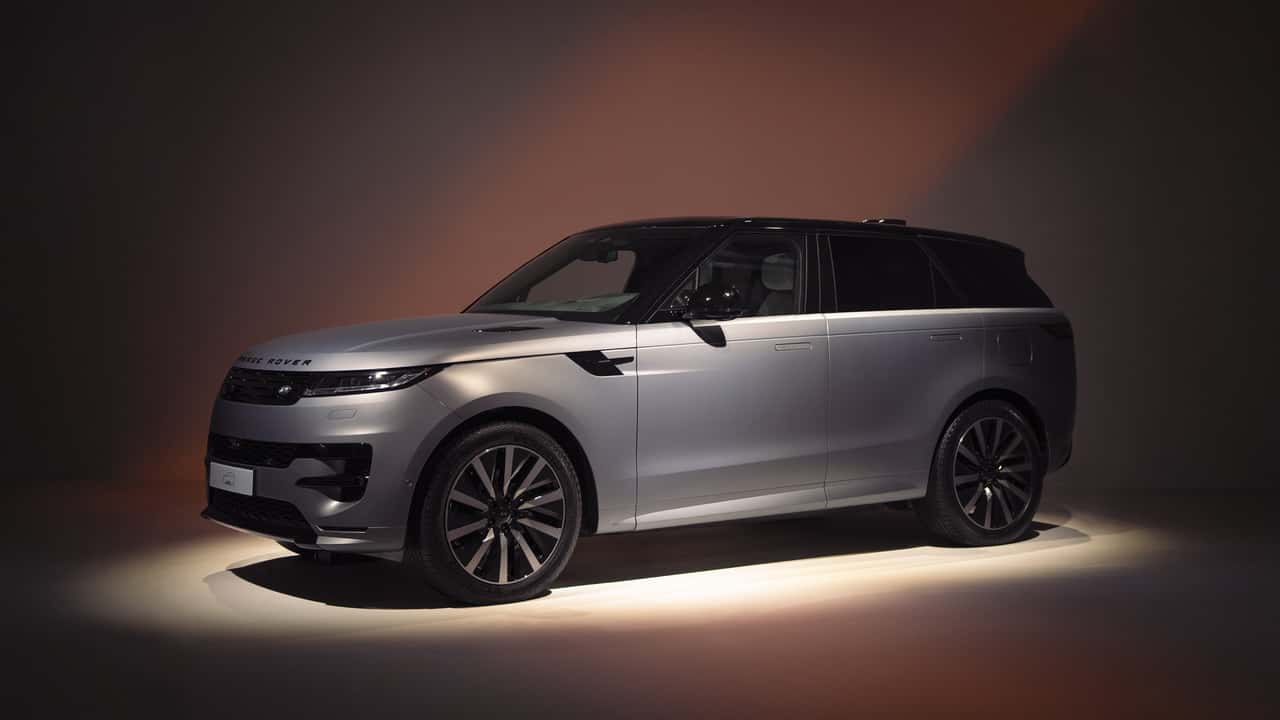
Visually, the Range Rover Sport Electric is near-identical to the combustion-powered model. The giveaways are the absence of exhausts, a slightly more aerodynamic grille and a set of unique alloy wheels. It is a conservative approach, and a sensible one: the current Sport is a handsome machine, and Land Rover has resisted the temptation to dress the electric version in novelty styling.
Inside, it is a five-seater only, with no seven-seat option. Engineers have also developed a bespoke soundscape for the model, described as blurring the lines between music and engineering. Whether that proves a selling point or a curiosity will depend on how it sounds in the metal, but it is a clear acknowledgement that silence is not universally regarded as a luxury.
Trims and Arrival
The range is simple: Dynamic HSE and Autobiography, with the latter unlocking access to Range Rover’s Bespoke commissioning service. Customer deliveries begin in select markets in Q1 2027. No pricing has been announced, though the Sport Electric is expected to undercut the Range Rover Electric. That positioning matters, because it preserves the traditional relationship between the two models even as the performance gap narrows. The Sport Electric will not be offered for the 2027 model year in the US, with a company representative telling InsideEVs it may arrive later, possibly as a 2028 model.
The Rival to Beat
The most obvious rival is the Lucid Gravity, which offers 450 miles of range from a 123kWh battery, charges at up to 400kW for roughly 200 miles in as little as 11 minutes, and seats up to seven adults in the US market. The two SUVs are roughly the same size, which makes the comparison unavoidable, and on raw range and charging speed the Lucid has the edge.
Why the Sport Is Now the One to Have
The real story here is not that Land Rover has built another electric SUV. It is that the company has made the smaller, cheaper model quicker, longer-legged and more dynamically focused than the flagship. That is a deliberate inversion of the usual hierarchy, and it tells you something about how Land Rover reads the electric performance market.
Buyers in this segment are not short of choice, and they are increasingly well informed about range, charging curves and chassis hardware. A Sport Electric that undercuts the Range Rover Electric while beating it on range and acceleration is a compelling proposition, particularly for drivers who never needed the extra rear-seat space or the seven-seat option in the first place. The 61% stiffer body and 73mm lower centre of gravity suggest the dynamic claims are not just talk, and the Carrara testing programme hints at a car that has not abandoned the mud-plugging credentials that built the brand.
There are caveats. The 2027 arrival is a long wait, and pricing remains a blank. Rivals such as the Lucid Gravity offer more range and faster charging on paper. But on the evidence so far, Land Rover has done something rarer than simply electrifying a popular model. It has given the Sport a genuine reason to exist alongside its bigger brother, and made the case that the driver’s Range Rover is now the electric one.




3 Comments