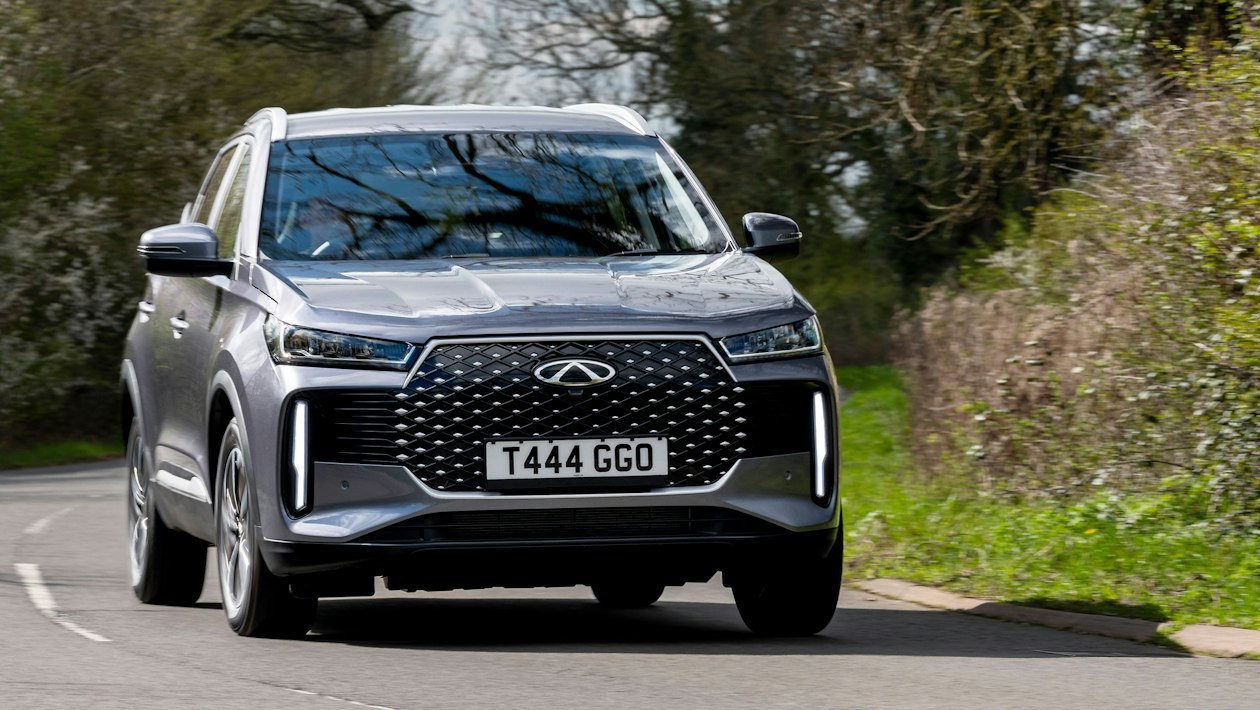
Chery has spent the past few years doing what most Chinese car makers have done in Britain: shipping cars in, pricing them sharply and watching the sales charts respond. Now its chairman says the company wants something more permanent. Yin Tongyue told Auto Express that Chery wants to “become British”, with products “designed in the UK, engineered in the UK and produced in the UK, but to sell worldwide.”
It is a striking shift in language. Chinese brands have generally talked about market entry, distribution and volume. Yin is talking about putting design studios, engineering brains and eventually assembly lines on British soil. Whether the ambition survives contact with UK industrial costs is another matter, and Yin is candid that it may not come cheap.
From exporter to embedded manufacturer
Chery is not a newcomer. Founded in the late 1990s, with Yin at the helm from the start, it has grown into one of China’s largest car exporters and now sells in Britain under the Chery and Jaecoo badges. The group’s momentum here is real: according to Carwow’s own enquiry data, Chery accounted for 16 per cent of all car purchase enquiries on the platform, second only to the Volkswagen Group on 18 per cent. That is a remarkable position for a brand with no UK factory and a relatively short history in the market.
The “become British” pledge is best read as a response to that success. Importing gets you volume; it does not get you political goodwill, engineering talent or protection from shifting trade rules. Building here would do all three, at least in theory.
The UK footprint is already taking shape
Chery is not starting from zero. It already runs an engineering centre at UTAC Millbrook in Bedfordshire, a test and development facility with a long history in UK vehicle proving. Yin has floated expanding that operation, and he went further by suggesting Chery is “thinking [of moving] the Chery Design Center HQ to the UK” and is “in talks with [British] design masters.”
Moving a global design headquarters to Britain would be a significant statement. It would also put Chery’s stylists within reach of the talent pool that has shaped generations of British-designed cars, from the obvious premium marques to the volume brands that once defined the market.
Sunderland and the Nissan memorandum
The manufacturing question is where the plan gets concrete. Earlier this year Chery signed a memorandum of understanding with Nissan to potentially use spare capacity at Nissan’s Sunderland plant. The wording matters: an MoU is not a production deal, and neither side has committed to volumes, timelines or investment.
Still, the logic is easy to follow. Sunderland is one of the UK’s most established car plants, with a skilled workforce and an existing supply chain. Spare capacity there is a ready-made route to local assembly without the years and billions required to build a factory from scratch. The caveats are substantial, though. Any arrangement would need to work for Nissan’s own production plans, and the commercial terms of sharing a line are rarely simple.
The wider industry is watching how Chinese brands internationalise. As Nissan Warns Chinese Car Brands Will Build in Mexico Within Three Years, the assumption across the sector is that local production is coming, and soon. The only question is where.
The cost problem Yin is not hiding
Building cars in Britain costs far more than building them in China, and Yin does not pretend otherwise. He said Chery would “adjust the price and margin to suit the competition” if it manufactures here.
Read that carefully. It is an admission that UK-built Cherys would either be dearer or less profitable, and that the company is prepared to absorb some of that gap. For a brand whose appeal rests heavily on value, sacrificing margin is a meaningful concession. It also suggests Yin sees UK production as a strategic investment rather than a near-term profit centre.
Tariffs change the arithmetic
The backdrop to all this is trade policy. Business Secretary Jonathan Reynolds is rumoured to be considering tariffs on Chinese car imports, a move that would follow similar thinking in other major markets. If tariffs arrive, the maths on local production shifts sharply. A car built in Sunderland avoids the levy entirely, which can tilt the comparison in favour of a higher-cost UK factory against an imported alternative carrying a duty. The UK plant does not become cheap in absolute terms; it simply stops being the more expensive option once the levy is added to the import.
This is the pattern playing out globally. Tariffs do not just raise prices; they redraw where it makes sense to build. Yin’s timing looks less like sentiment and more like contingency planning.
The JLR relationship runs deep
Chery’s ties to Britain go back further than most buyers realise. The Chery Jaguar Land Rover joint venture has operated since 2012, assembling Jaguar and Land Rover models for the Chinese market, and it has given Chery a close-up view of how JLR engineers and builds premium SUVs. Earlier this year the partners introduced the Freelander brand, with Chery licensing JLR expertise and intellectual property.
Yin now wants to widen that conversation. “We want to have a discussion: how can we help JLR to resume volume scale as it used to?” he said. He described the collaboration as “deep in many perspectives” but declined to give details without JLR’s agreement. He also said Chery wants “to find more UK capability in terms of engineering to handle the dynamics”, and a potential investment in, or buyout of, a UK brand has not been ruled out.
That last point will set tongues wagging. JLR has had a bruising period, including a production pause following a cyber attack, and any hint of Chinese involvement in a British heritage marque is politically sensitive.
A brand, a racetrack and a personal ambition
Yin is unusually open about the emotional pull. “I have a personal, deep emotion with the UK as a country,” he said. “I kind of want to revitalise a UK brand, for example, could we find a sports car company that we could help?”
He also hinted at an ambition to go motor racing. Jaguar has been suggested as a possible target, though nothing has been confirmed and the speculation should be treated as exactly that. Reviving a British nameplate is a romantic idea, but it is also a costly one, and the list of failed attempts is long.
Design credibility is the real battleground
There is a more immediate reputational issue. Chery and its subsidiaries have long faced accusations of copying British designs, and the top-selling Jaecoo 7 has been nicknamed the “Temu Range Rover.” It is a jibe that stings precisely because it lands. Yin’s response was blunt: “I really dislike the nickname.” But he conceded the wider point, saying “UK design beats the world.”
That concession explains a lot. If Chery wants to be taken seriously as a design-led company rather than a value imitator, hiring British talent and basing a design HQ here is a credible route. The Jaecoo 7’s sales performance shows the products already resonate. As UK New Car Sales Hit Near-Decade High as Jaecoo 7 Tops the 76 Plate, the brand is now a genuine force in the market, which makes the design question more urgent, not less.
Chery has also been working on the ownership side of the equation, with Chery Launches UK Approved Used Scheme as Chinese Brands Move to Shore Up Residuals. Stronger residuals and a local industrial footprint would reinforce each other.
What Yin’s social responsibility line reveals
The context for all of this is a UK car industry under strain. UK car production fell to a 73-year low in 2025, following US President Donald Trump’s import tariffs and the manufacturing pause caused by the cyber attack on JLR. Plants need volume. Supply chains need anchor customers. A Chinese manufacturer looking to build here would find a warm welcome in many quarters.
Yin framed his ambition in terms that go beyond sales charts. “If we want to become a great company, it’s more than just market share,” he said. “It’s more like a social responsibility: the value we can provide to the customers, and also contribute to the economy for a country.”
That is the language of a company positioning itself for the long term, not a quarterly result. Whether Chery actually builds cars in Britain remains unproven, and the obstacles around cost, capacity and politics are considerable. But Yin has put his name to the ambition, and for a UK industry that has spent years losing volume, that is a conversation worth having.