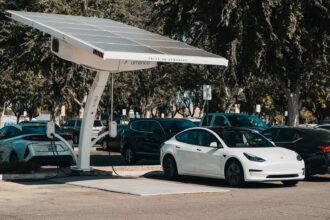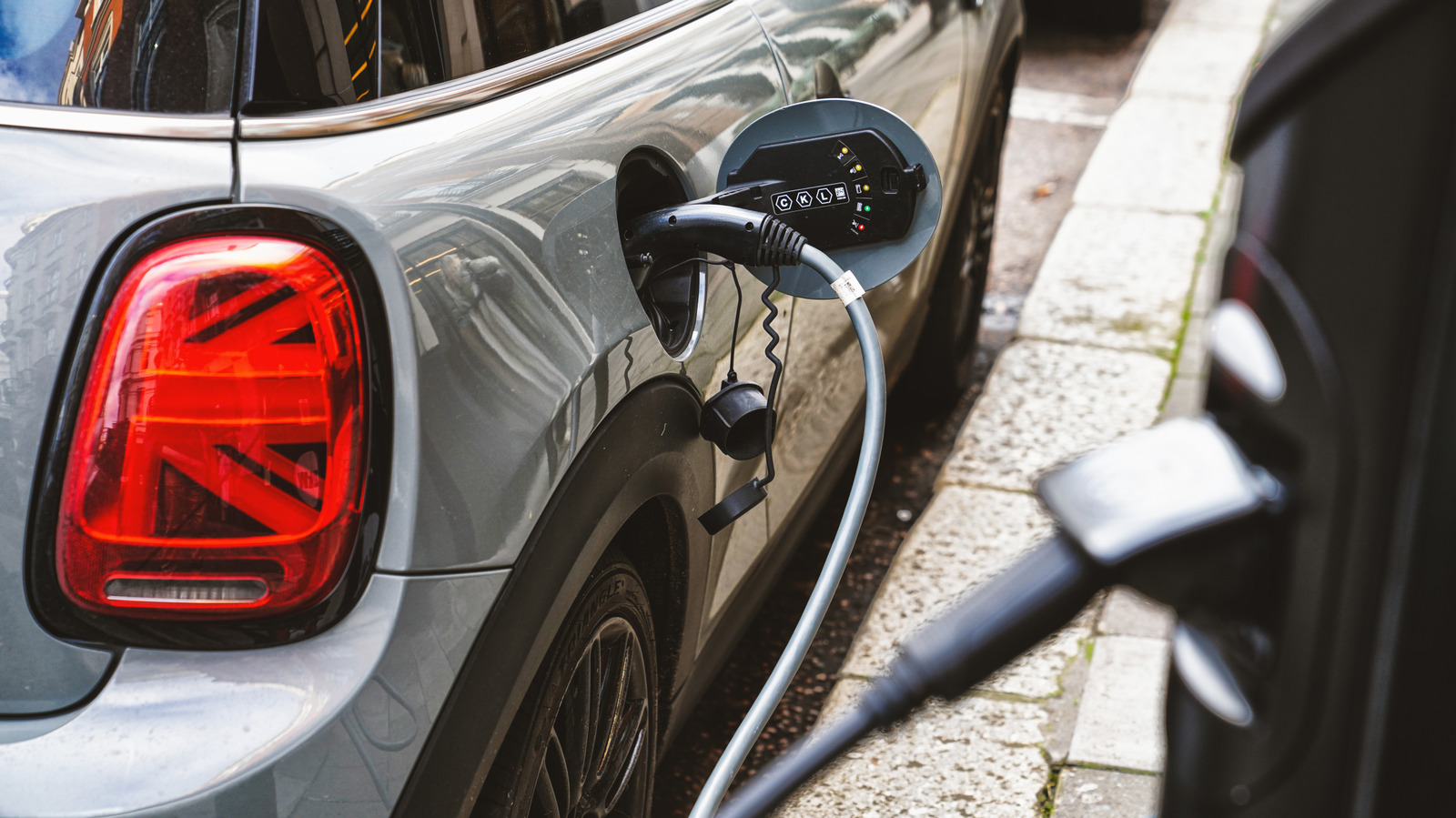
The price of filling up has always had a way of starting arguments, and a recent Jalopnik reader roundup shows just how personal those arguments get. The prompt was simple: have recent petrol price rises, linked in the piece to the bombing in Iran, changed your mind about petrol cars? What followed was less a debate about batteries and more a catalogue of specific swaps, specific costs and specific frustrations, told by drivers who had already done the maths. Read the thread closely and you get something more useful than another survey: a snapshot of the moment everyday buyers stop talking about range and start talking about money, maintenance and whether the person behind the desk knows anything about the car they are selling.
The $4,500 Nissan Leaf that replaced a Dodge Charger
The story that anchors the piece belongs to the author’s friend, a self-described dyed-in-the-wool car nut who swapped a low-mileage used all-wheel-drive Dodge Charger for a used Nissan Leaf costing $4,500 in the United States. That is roughly £3,500 at recent exchange rates (approximate), and the figure applies to the US market, not UK forecourts.
What makes the swap interesting is the reasoning. This was not an environmental conversion. It was a running-cost decision. Insurance rates on the Charger, oil changes, tyres and what the author calls mounting Stellantis maintenance bills had turned a car he liked into a car he resented paying for. The Leaf, meanwhile, came with an extra set of winter tyres and a Level 2 wall charger included. Factor those in and the author reckons the car would pay for itself in short order.
That is the kind of arithmetic that actually moves people. Not a comparison of WLTP range figures, but a calculation involving a set of tyres you would otherwise have to buy and a home charger you would otherwise have to install. Buyers are pragmatic. When the sums are laid out that plainly, the emotional attachment to cylinders tends to soften.
It is worth keeping one caveat in view, because the thread is a collection of anecdotes rather than a dataset. US EV sales fell sharply in 2026 once tax credits were withdrawn (see linked report), which shows how much demand still depends on incentives. And high fuel prices have not reliably pushed American drivers into EVs on their own, even though polling suggests plenty of interest (see linked report). Individual swaps can be perfectly rational and still not add up to a market trend.
From GT-R to Ioniq 5 N
If the Leaf swap shows the financial case, reader W.M. Rees shows the emotional one. He reported selling a beloved R33 Skyline GT-R after three years and buying a Hyundai Ioniq 5 N. For anyone who grew up worshipping the RB26, that is a significant admission. The R33 is not a car you part with casually.
Yet the replacement is telling. The Ioniq 5 N is not a compliance car or a compromise. It is a high-performance electric model with simulated gearshifts and a drift mode, built specifically to persuade enthusiasts that electric performance can be entertaining. That a former GT-R owner chose it suggests the performance EV pitch is starting to land with the very people who were most sceptical. The attachment to combustion does not disappear, but it can be redirected when the alternative is quicker, cheaper to run and still capable of raising a smile.
The rationing thought experiment
Reader Rick C. took the question somewhere else entirely. Rather than debating range or charging speeds, he reframed it around a hypothetical return to petrol rationing, with limited purchase days per week, and asked how people would get to work, school, the market or the doctor.
It is a clever inversion. Most EV scepticism assumes plentiful fuel as the default and treats charging as the disruption. Rick C. asks what happens if the disruption lands on the other side. The thought experiment exposes how much of the petrol car’s appeal rests on an assumption of unrestricted access to fuel at a predictable price. Once that assumption wobbles, the case for an electric daily driver stops looking like a lifestyle statement and starts looking like resilience.
The long-term owners
Two of the thread’s veterans make a similar point from different directions. Phil Klemmer says he has used no petrol for 22 years, excluding methane or hydrogen, and that he drove an EV1 back when General Motors was still experimenting with the idea. He describes today’s EVs as dream vehicles and expects range, efficiency, comfort and safety to keep improving. Another commenter, posting as Former Autoblog, put it more bluntly, saying the long-term assessment on volatility and societal damage was a foregone conclusion and decision back in 2018, and that they are never going back.
Crucially, Klemmer still admires petrol cars. That combination matters. The most convincing EV advocates in this thread are not anti-car. They are people who like cars enough to want the better version of one.
Reader Yowza added a detail that changes the running-cost equation entirely: solar panels and an electricity bill of negative $375 in the United States. Not a reduced bill. A negative one, with the home system generating more than the household consumed. Most drivers will never see that, and it depends on climate, roof space, tariffs and a hefty upfront outlay. But it illustrates why running-cost comparisons are so sensitive to circumstances. For a household with home generation, motoring becomes almost free once the capital is spent. For everyone else, the calculation depends on their electricity tariff, their mileage and whether they can charge overnight. The common thread is volatility. Petrol prices swing with geopolitics, as the original prompt demonstrated. Electricity prices move too, but a home charger and a solar array give a driver more control over the number at the bottom of the page.

Eight years and still like new
The durability argument runs quietly through the whole discussion. Reader StalePhish reported an EV daily driver that had just turned eight years old and still feels like new. His wife replaced her only car with an EV three years ago and uses it exclusively for road trips. He argues that much of the remaining resistance stems from a misunderstanding of how EVs actually work.
That is the point range anxiety keeps missing. The fear is usually about the occasional long journey, while the reality of ownership is mostly short ones. A household running an eight-year-old EV alongside a road-trip EV is not an edge case any more. It is what mature ownership looks like, and it undercuts the assumption that batteries degrade into uselessness within a few years.
The dealer knowledge gap
Perhaps the most practical complaint in the thread was about dealerships. One commenter argued that manufacturers should mandate EV training for sales staff, so that customers are not left knowing more about the product than the person selling it. Anyone who has walked into a showroom and asked about charging speeds, heat pump availability or real-world winter range will recognise the frustration.
The thread’s proposed remedy is refreshingly simple: butts in seats. Test drives were cited as the most effective way to sell an EV, which makes sense. A short drive answers the questions a spec sheet cannot, from regenerative braking feel to how quickly the cabin warms on a cold morning. The obstacle is often not the car but the confidence of the person presenting it. That gap is fixable, and it is cheaper than any advertising campaign.
What this means for buyers
Strip away the politics and the thread is really about three things: running costs, confidence and time. The Leaf buyer did the arithmetic and found the numbers worked. The GT-R owner accepted that performance had moved on. The eight-year EV owner found that durability was never the problem. And the dealer complaints show that confidence, on both sides of the desk, still needs work.
For anyone weighing up a switch, the useful questions are unglamorous. Can you charge at home, and what does your tariff actually cost overnight? What is the insurance group compared with your current car? Does the model you are considering come with the charging hardware and tyres you would otherwise pay for? How far is the nearest trained technician, and does the dealer seem to understand the product? And how many of your journeys are genuinely long?
The debate around electric cars is often framed as a technology argument, as if the cars themselves are still on trial. The drivers in this thread suggest otherwise. They are arguing about costs and confidence, and both of those can be settled with a calculator, a home charger and a salesperson who knows what they are talking about.