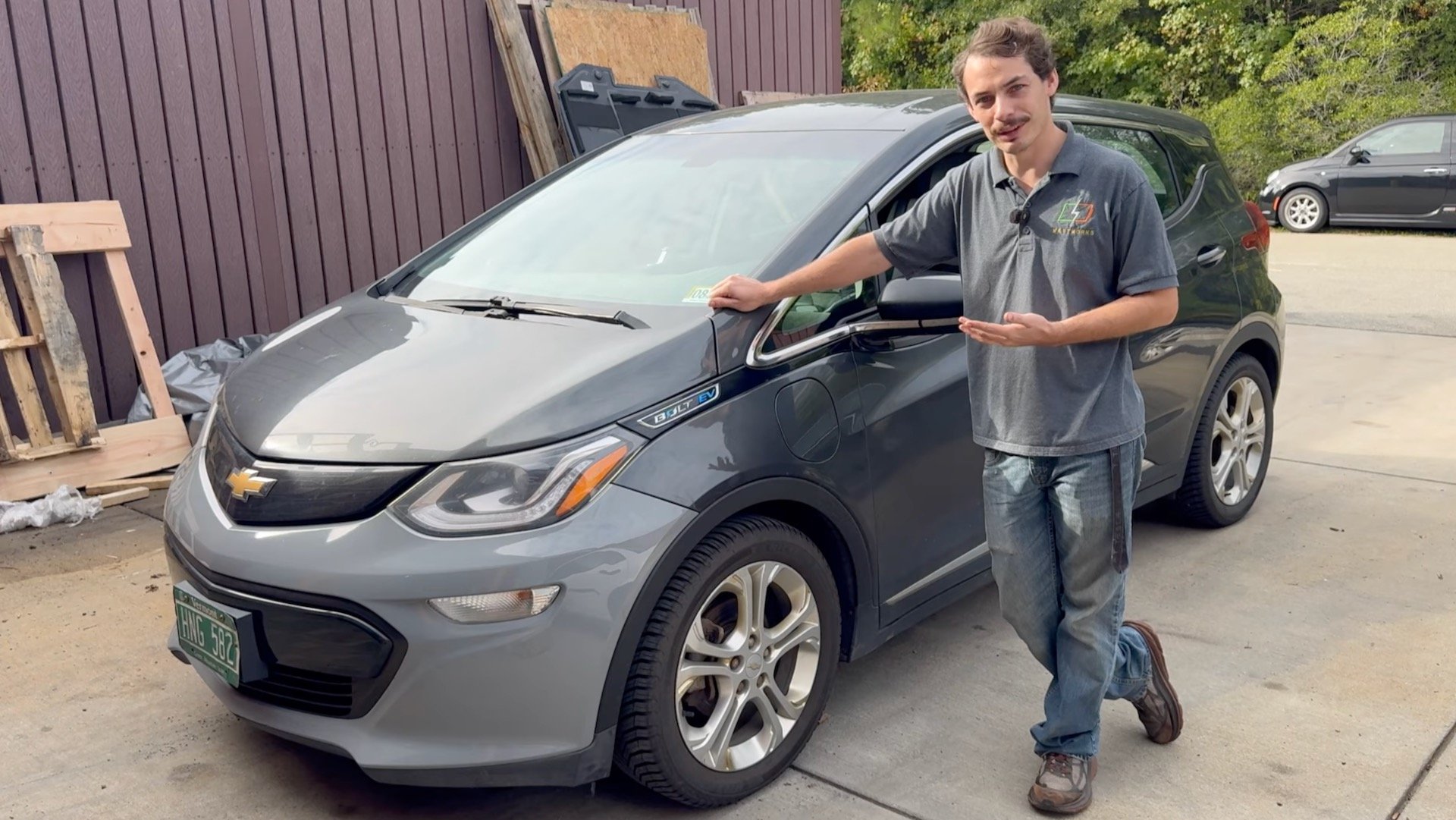
A 2019 Chevrolet Bolt EV arrived at the Out of Spec Renew workshop showing 471,616 miles on the odometer. It would not shift into drive, and the dash displayed a battery fault warning. Nearly half a million miles, a dead pack, and a car going nowhere.
The reality, once the team got underneath it, is more interesting than the headline suggests. This is a rare real-world stress test of EV battery longevity, and the twist is that the pack that failed was not the one the car was born with. It was a recall replacement, and it had done the heavy lifting for most of those miles.
One note on geography: the Bolt was a North American model and was never sold in the UK, so this is a story about a car most British buyers will never see on a forecourt. The engineering lessons still travel.
The car that made it to 471,616 miles
The Bolt arrived with a battery fault message on the instrument cluster and no drive. That is the symptom that gets attention, but the number on the odometer is the story. Fewer than a handful of electric cars anywhere have been documented at this mileage, and almost none have been torn down and inspected in public.
Out of Spec Renew is no stranger to this kind of work. What makes this particular car worth watching is that it is not a one-off engineering curiosity. The Bolt was a mass-market EV in its home market, and this is what one looks like after a lifetime of hard use.
Wear and tear that wasn’t battery-related
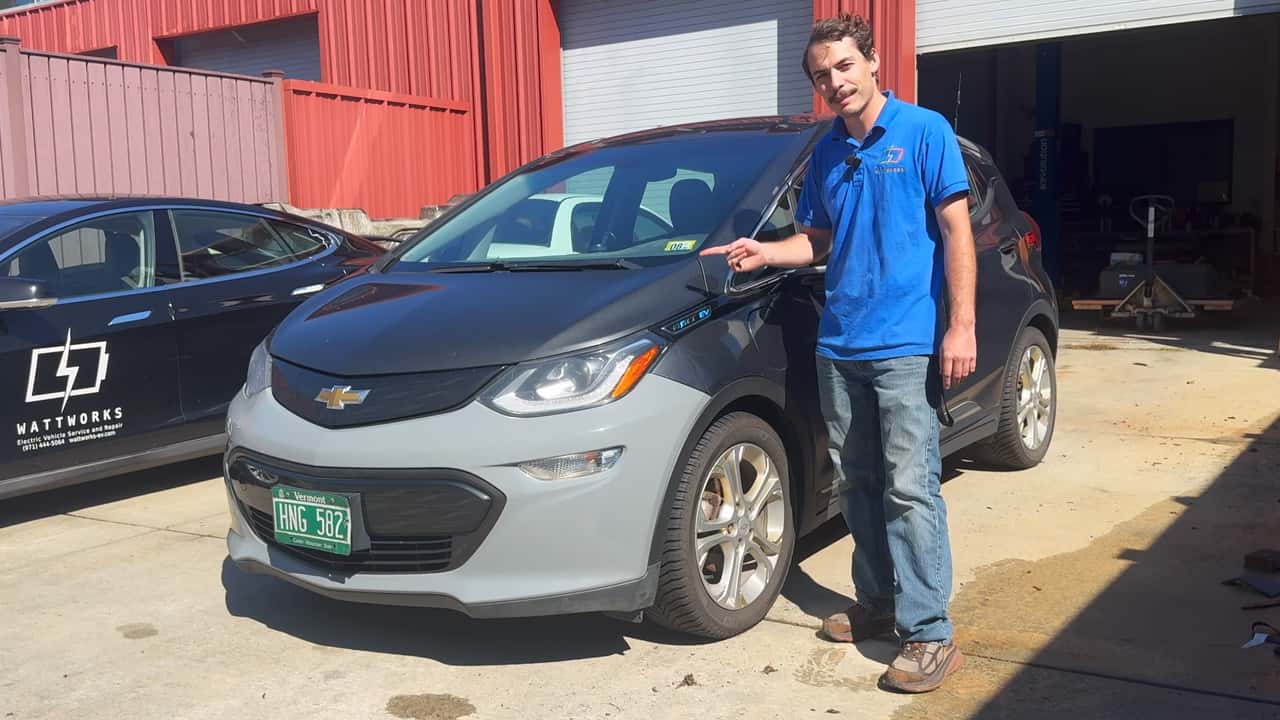
Strip away the battery fault and the car tells a reassuringly ordinary story. The rear bumper was scraped, the front bumper was mismatched, and the car had previously had work done on its suspension, wheel bearings and steering rack.
That is exactly the list you would expect from any car that has covered close to half a million miles, electric or otherwise. Chassis components wear out. Bearings grumble. Steering racks develop play. None of it is a scandal, and none of it suggests the car was falling apart around its battery. If anything, the fact that the mechanicals needed routine attention while the body and structure held together is a point in the Bolt’s favour.
The battery fault is the only genuinely EV-specific failure here, and even that comes with a significant caveat.
The recall pack that did the heavy lifting
This Bolt had already received a replacement battery under the recall announced in 2021. That campaign eventually covered all roughly 140,000 Bolt EV and Bolt EUV models in North America, and it stemmed from manufacturing defects that created a fire risk. Depending on the car, the remedy involved replacing individual modules or the entire pack.
It is worth being clear about what that means. The original battery in this car did not cover 471,616 miles. It was replaced years ago under warranty, and the pack that failed had been installed in 2022. That second pack covered more than 330,000 miles before it gave up, a figure the Out of Spec team estimates as roughly the upper limit for these packs without a major overhaul. It is an assessment rather than a measured odometer reading for that pack, but it is a long way past what most owners will ever ask of a battery.
That is not a story about EV batteries dying young. It is a story about a battery living a very long second life and then reaching a point where a rebuild or replacement becomes the sensible call.
330,000 miles on one replacement pack
The failure mode matters too. The car did not catch fire, and it did not strand its owner in a dangerous way. It displayed a battery fault and refused to shift into drive, which is precisely the behaviour you want from a battery management system that has detected a problem. A car that protects itself is a car that has been engineered with failure in mind.
There is also a quieter positive buried in the recall history. Some 2017 to 2019 Bolt owners received new packs with increased range because of later chemistry changes, effectively getting a better battery than the one their car was built with. At least some owners were also eligible for compensation under a class-action settlement against General Motors and LG Energy Solution.
So the recall that hung over the Bolt for years has, in practice, left a lot of cars with newer, longer-legged packs than they started with. This particular car is the extreme example: a 2019 model whose second battery outlasted most cars’ first.
The donor-pack swap
The fix is a neat illustration of how the EV aftermarket is maturing. The pack fitted in the video is the same recall-replacement specification as the one removed. It was originally installed in a 2017 Bolt EV in 2023 and had only an estimated 10,000 to 15,000 miles on it, which makes it a remarkably fresh unit for its age.
Some parts had to be swapped over from the old pack, which may have been damaged during transport or during removal from the donor car. Otherwise, the swap is described as straightforward. That is a significant detail. When a battery replacement becomes a parts-matching exercise rather than a bespoke engineering project, high-mileage EVs become viable to keep on the road rather than destined for the scrapyard.
The Bolt’s afterlife
There is a bittersweet quality to all this. The Bolt EV and Bolt EUV remained popular right up to the end of production, and GM has since brought the Bolt back temporarily for the 2027 model year. It was a last-minute decision with a hard time limit, because GM has no long-term home for Bolt production.
That makes cars like this one more important, not less. When a model leaves the line-up, the fleet already on the road becomes the living record of how well it was built. A 471,616-mile Bolt with a fresh donor pack is that record in physical form.
For anyone following how the broader electric market is filling in its gaps, from volume models to premium ranges, our breakdown of the electric car line-up across Audi, BMW, Cadillac and Chevrolet is a useful companion read.
The verdict is simple enough. A car covered nearly half a million miles, wore out its suspension and bearings like any other, and then had its second battery reach the end of a very long life. That is not a warning about EVs. It is a maintenance schedule, delivered at unusual scale.