Ferrari’s first series-production electric car is sold out through 2027, and the first example to leave the line raised $40 million at auction. Whatever the purists make of it, the money has already decided.
Ferrari has spent decades selling emotion: the shriek of a V12, the crackle of a downshift, the theatre of a prancing horse on a low-slung nose. So when the marque confirmed its first EV, the predictable chorus followed. It would be a betrayal. It would be a novelty. It would sit unsold on forecourts while the faithful queued for one more combustion-engined special. The order book says otherwise.
Ferrari Luce sold out: what we know about orders and waiting times
Speaking on Ferrari’s Q3 earnings call, chief executive Benedetto Vigna was blunt about demand: “the Luce that we plan to sell next year basically are all allocated.” Anyone placing an order today should expect to wait roughly a year for delivery.
Ferrari has not published planned volumes or a regional split of orders, which is standard practice for a company that manages scarcity as carefully as it manages horsepower. What it has confirmed is that the car hit its 2026 sales target by July, only a few months after order books opened.
Reports in the Financial Times, citing two unnamed sources, put Ferrari’s 2026 plan at just under 500 cars. The longer-term ambition is around 2,500 Luces by 2030, roughly 600 a year, though the company has not released a ramp-up schedule. Those numbers are tiny by any normal industry measure and entirely deliberate by Ferrari’s. Given the volumes involved, existing customers will almost certainly get first refusal on early build slots.
Price and positioning: a $560,800 start and a five-seat first
The Luce starts at $560,800 in the United States, or about £440,000 at current exchange rates, a figure that landed lower than most observers had guessed when Ferrari confirmed the Luce’s starting price. That positions it above the brand’s front-engined grand tourers but below its limited-run hypercars, which is exactly where a new flagship four-door belongs.
It is also Ferrari’s first five-seat car. That matters more than it might sound. Every road-going Ferrari until now has been a two-seater or a 2+2 with token rear pews. The Luce asks buyers to accept a genuinely usable family Ferrari, which is a bigger conceptual leap than the electric powertrain itself.
Design controversy: Jony Ive’s LoveFrom studio and the Montezemolo backlash
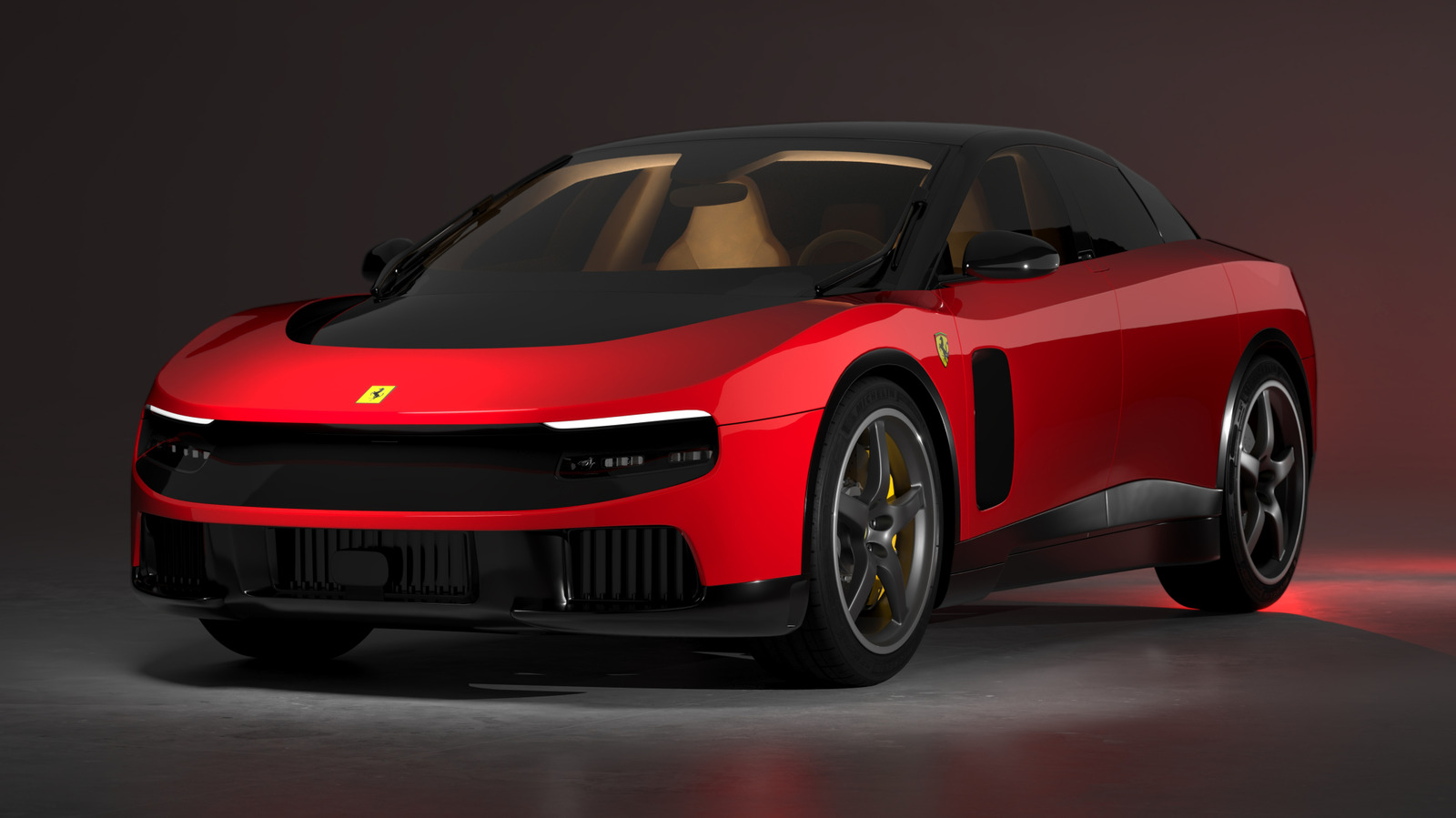
The Luce was developed with Jony Ive’s studio LoveFrom, and the result is unlike anything to wear the badge. It adopts a taller, more upright silhouette and an industrial-design aesthetic in place of Ferrari’s traditional long-bonnet, cab-rearward proportions. At launch, the reaction was ferocious.
The most quotable criticism came from Luca di Montezemolo, the former Ferrari chairman who presided over some of the marque’s most revered road cars. He said speaking his mind about the Luce would “be doing Ferrari a disservice” and risk “destroying a legend,” adding that he hoped Ferrari would “at least remove the prancing horse from that car.”
That is about as damning as it gets from within the family. Yet it is worth remembering that Ferrari has survived controversial shapes before. The 12Cilindri divided opinion on launch too, and the company has since gone further still, adding a clutch pedal and an open-gate shifter to the 12Cilindri Manuale for buyers who want their V12 served with maximum nostalgia.
Performance and specs: quad motors, 1,035bhp, 329-mile WLTP range and 350kW charging
Underneath the debate is serious engineering. The Luce runs four motors, one per wheel, producing a combined 1,035bhp and 730lb ft (990Nm) of torque. Ferrari quotes 0-62mph in 2.5 seconds. There is rear-wheel steering, and the suspension is derived from the F80 supercar. Steering wheel-mounted paddles let the driver adjust torque delivery or the strength of regenerative braking, a neat nod to the flappy-paddle interface that Ferrari popularised in the first place.
The battery is a 112kWh unit using SK On pouch cells, good for 530km (329 miles) on the WLTP cycle. On the tougher EPA test used in the United States, expect under 300 miles. Peak charging power is 350kW, which puts it among the quicker-charging cars on sale.
Early reviews: why the driving experience is changing perceptions
Ferrari’s defence of the Luce has never been about the styling. It has been about what happens once someone gets behind the wheel. “We see when and how the perception changes when the people drive the car,” Vigna said.
The early evidence supports him. First drives have been largely positive, with MotorTrend describing the dynamics as “beguilingly natural in its responses, fluid and concise in its change of direction, and beautifully balanced through all phases of a corner.” That is not the language of a compromised compliance car. It is the language of a Ferrari that happens to be electric.
Controversial design fades from memory quickly once a car proves itself on the road, and Ferrari’s chassis engineers have historically been given more credit than its stylists.
Chassis 0 auction: the $40m first production car
In August, the first production Luce, known as Chassis 0, sold at auction for a reported $40 million, a figure understood to make it the most expensive new car ever sold at auction. The number is staggering even by the standards of a brand that has made a business of limited editions.
Collectors do not pay eight figures for a car they believe will be forgotten. Chassis 0 is now part of Ferrari lore in the way that early, divisive models often become: the one that started something.
Ferrari has form here. The company once turned its most maligned road car into a pace car at vast expense, a story told in the tale of Ferrari’s $1 million secret pace car, the Mondial T. Oddities have a habit of becoming artefacts.
Market context: Lamborghini’s EV U-turn and the wider luxury EV debate
Ferrari’s confidence is not shared universally. Rival Lamborghini has shelved plans for its first EV, sticking with hybrids and combustion models for now. That U-turn underlines how unsettled the supercar end of the market remains about electrification.
The design conversation is running hot elsewhere too. Jaguar’s Type 01 and the electric Mercedes-AMG GT have both provoked argument, and each shows how hard it is to translate a heritage brand into a shape dictated by battery packaging and aerodynamics.
Against that backdrop, Ferrari’s sold-out order book looks less like luck and more like a bet placed early. The Luce is not cheap, not conventionally beautiful and not what traditionalists asked for. It is, however, the only electric super-saloon on the market with a prancing horse on the nose, and that remains the most valuable badge in the business.