Ferrari has built some strange cars in its time, but few are as odd as a Mondial converted into a pace car at a reported cost of $1 million. In 1987, the company took its most maligned road car, handed it to a styling house that was not Pininfarina, and turned it into a pace car for an American racing series it had just walked away from. Then the car disappeared for the better part of three decades.
It has now resurfaced as part of The Caretakers Collection, a private US collection, and its story says as much about the economics of 1980s motorsport as it does about Ferrari’s willingness to do something completely out of character. All dollar figures here are 1987 US-dollar sums reported by the collection.
The PPG Pace Car Programme
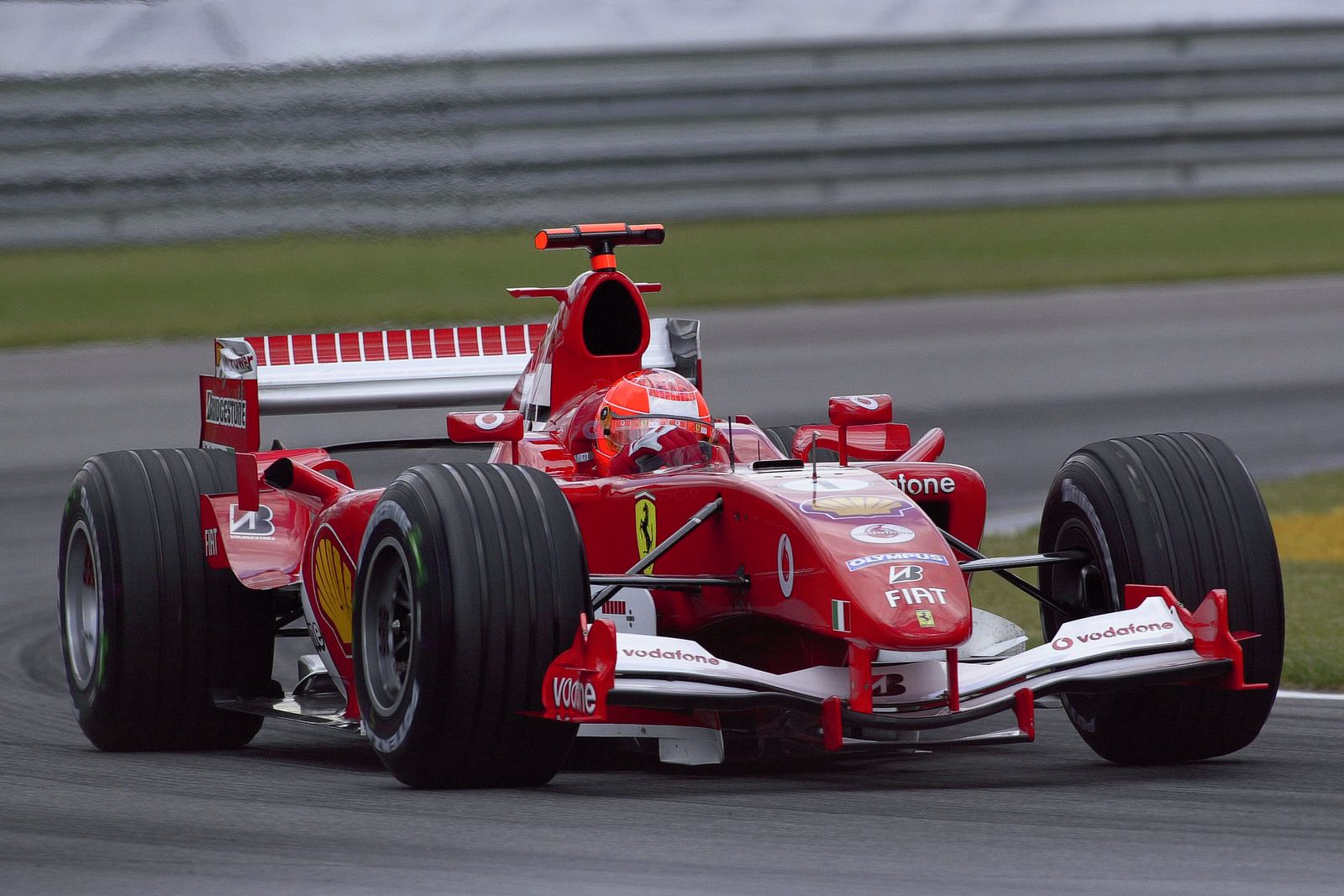
Through the 1980s and into the 1990s, PPG Industries sponsored the CART Indy Car World Series, then the summit of American open-wheel racing. Part of that arrangement was a fleet of one-off pace cars, each built by a different manufacturer and each intended to lead the field at a handful of high-profile events.
These were not production cars with a light bar bolted to the roof. They were bespoke machines, often with stretched wheelbases, custom bodywork and interiors reworked from scratch. The programme gave manufacturers a shop window in front of a huge American audience, and it gave PPG a rolling billboard unlike anything else on a racetrack.
The trouble is what happened afterwards. Most of these cars were crushed or simply lost once their promotional duties ended. They were curiosities with no homologation value and no obvious collector market, so they were treated as disposable. That makes any survivor notable, and it makes the most extreme car of the bunch considerably more than that.
Ferrari’s Unlikely CART Detour
Ferrari’s chosen form of open-wheel racing was, and remains, Formula 1. The idea of the marque building a pace car for CART needs some context, because it was not a random act of generosity.
Ferrari had been exploring a CART programme of its own, and it was cancelled roughly a year before this car was unveiled. The pace car project therefore landed at an awkward moment: the company had just stepped back from the series it was now being asked to adorn. It was a curious piece of timing for a manufacturer whose racing identity was entirely wrapped up in F1.
The car was unveiled in October 1987 at Laguna Seca, in front of exactly the audience PPG wanted to reach. According to a video produced by The Caretakers Collection, Ferrari spent $1 million on the conversion, a figure worth roughly $3 million in today’s money. That is an extraordinary sum for a promotional vehicle with no racing purpose, and it explains why the project has the whiff of a favour being called in.
Inside the $1 Million Build
The most surprising detail is who styled it. Every Ferrari production car of the era carried Pininfarina lines, but this one was designed by I.DE.A., the Turin-based Institute of Development in Automotive Engineering, which had previously worked with Ferrari’s parent company Fiat.
The transformation was extensive. The Mondial’s wheelbase was stretched, more streamlined front and rear ends were added, and corrugated trim was wrapped around the body to tie the two ends together visually. Safety lights were integrated into the bodywork itself rather than mounted on top of it, including clear plastic flying-buttress sections around the engine cover that let the lights show through.
Inside, the cabin was redone in Kevlar and suede, with a new steering wheel and a dashboard that clustered more gauges and controls around the driver. The collection’s account also describes chassis work to suit the pace car role, which makes sense: a pace car has to be capable of sustained high speeds with a full field of open-wheelers behind it, and that is a very different brief from a road car’s occasional burst of acceleration.
The Mondial T Beneath the Bodywork
Strip away the pace car hardware and you find a Mondial T, the later and considerably better-developed version of Ferrari’s mid-engined 2+2. Its 3.4-litre V8 produced 300bhp from the factory, enough for a claimed 0-62mph time of 6.3 seconds and a top speed of 158mph.
Those are respectable numbers, but the Mondial name carried baggage. The original car was unveiled at the 1980 Geneva Motor Show and was widely regarded as lacking both the style and the performance of its contemporaries. It was the Ferrari that enthusiasts loved to criticise, and no amount of mid-life development could fully shake that reputation. Turning it into a million-dollar pace car was, to put it mildly, a bold choice of donor.
Duty, Reliability and Disappearance
The car served from 1988 until 1991, according to a 2025 article in Forza magazine. By the standards of the PPG fleet, that is a long and productive career.
It was not, however, a trouble-free one. The same source records that the pace car was not very reliable, which will come as little shock to anyone who has run a Ferrari of that vintage. A car built to lead a field of Indy cars at speed, with custom electrics for the integrated lighting and a hand-built interior, was always going to be a demanding thing to keep running.
Once its service ended, the car slipped out of view. For decades there was no public trace of it, which is the usual fate of promotional machinery that outlives its purpose. Its reappearance in The Caretakers Collection puts it alongside some genuinely remarkable company: a Tucker sedan, number 29 of the 51 built, and one of just 12 GM Futureliners. That is a collection with a taste for the ambitious and the nearly forgotten, and this Ferrari fits the brief perfectly.
What makes it worth more than its specification sheet is the moment it represents: a major manufacturer spending the equivalent of $3 million on a vehicle with no commercial logic whatsoever, purely to put on a show. For Ferrari historians, it is a rare documented example of the company working outside its own conventions, from the choice of I.DE.A. over Pininfarina to the decision to build a CART pace car at all. For IndyCar followers, it is a tangible link to a sponsorship programme that shaped the presentation of American open-wheel racing for more than a decade. And for anyone who follows the collector market, it is a reminder that the cars which survive are not always the ones that were expected to. A Ferrari 550 Maranello with a famous first owner can command more than double its estimate on provenance alone, but a one-off factory build with almost no surviving siblings operates in a category of its own.
Ferrari’s modern output shows the same appetite for the unexpected, whether that is a Luce EV priced at $560,800 or its continuing presence at the top of motorsport. The difference is that today’s bold moves are announced, priced and photographed within minutes. In 1987, a car like this could be built for a fortune, raced into the background of a few television broadcasts, and then quietly vanish for 30 years.
That it came back at all is the story. Most of its siblings did not.