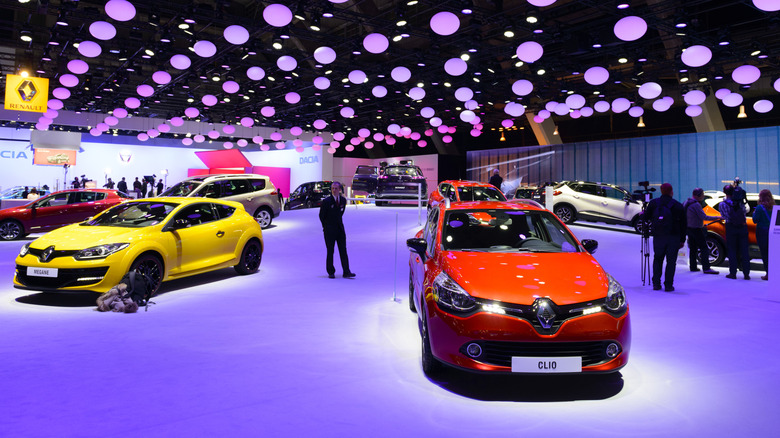
The Geneva Motor Show is gone. Livestreams have replaced more launches than anyone in the industry cares to count, and plenty of once-unmissable conventions have quietly slipped into digital obscurity. And yet the motor show is not dead. It has simply consolidated.
Setting up a pavilion at a reputable, long-running show is an expensive business, which is precisely why the events that survive tend to be the ones worth the outlay. Hundreds of automotive exhibitions take place around the world every year. Only a handful sit in the upper echelon, the tier where manufacturers save their best reveals: the production debuts that matter, the concepts that preview a decade of design, and the technology that filters down to the cars people actually buy. Here is a tour of the shows that still set the agenda.
Paris Motor Show: where it all began
The Mondial de l’Auto dates back to 1898, making it one of the oldest automotive conventions on earth. It runs biennially, and for well over a century it has been the stage on which French manufacturers reveal their latest models to a home crowd.
The roll call of debuts is extraordinary. The Peugeot 402 arrived in 1935, one of the first European cars with a genuinely curvy, streamlined shape. The Renault 4CV followed in 1946 and the Citroën 2CV in 1948, two models that put post-war, cash-strapped France on wheels. The Renault 5 Turbo landed in 1978, a 160 hp mid-engined supermini that rewrote what a small hatchback could be. Later years brought the Ferrari 250 Europa GT in 1954, the Porsche Carrera GT concept and Koenigsegg CC8S in 2000, and the Lamborghini Sesto Elemento in 2010.
The 2024 edition showed why the event still carries weight, as we argued after the 2024 show. The most recent running leaned heavily on concepts: an all-electric revival of the Citroën 2CV, the Alfa Romeo Cuorerosso, the Peugeot E-T16 and RCZ Vision, the Alpine A310 Vision, the Renault E-Space and the Fiat Multiplay. Heritage and reinvention, side by side.
IAA Mobility: 129 years and still moving
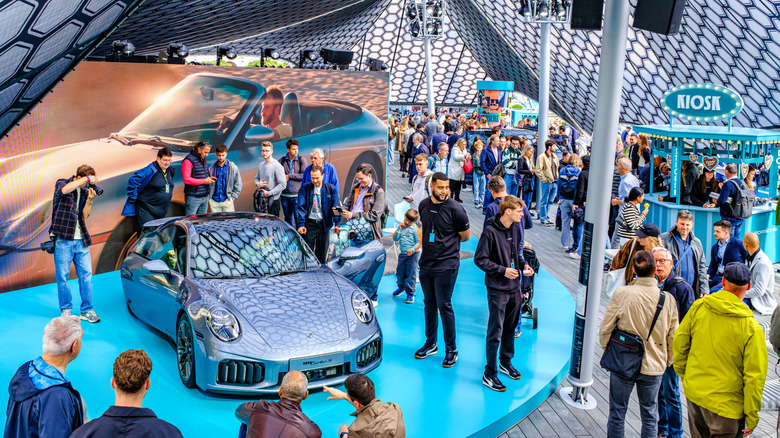
IAA Mobility beats Paris by a single year to claim the title of the world’s oldest surviving car show. Its 129-year history has taken it through Frankfurt am Main, Berlin, Leipzig, Cologne and now Munich, where it has settled into a biennial rhythm. It remains the principal showcase for Germany’s biggest names: BMW, Volkswagen, Mercedes-Benz, Audi and Porsche.
The historic debuts read like a history of German engineering. The BMW 1500 broke cover in 1961 and introduced the Neue Klasse line that saved the brand. A concept version of the Volkswagen Golf GTI appeared in 1975 and is widely regarded as the forefather of the hot hatchback. The Mercedes-Benz 190E 2.3-16 arrived in 1983 as the record-breaking pioneer of the sporty compact executive saloon, the Audi RS6 Avant brought a V10 and an estate body in 2007, and the Porsche 918 Spyder turned up in 2013 as one third of the hybrid hypercar trio, alongside the McLaren P1 and Ferrari LaFerrari, that defined the era’s fastest machinery.
The most recent edition demonstrated that the event has lost none of its pulling power: the BMW iX3, the electric Mercedes-Benz GLC and Concept AMG GT XX, the Audi Concept C, the Porsche 911 Turbo S and a near-production version of the all-electric Volkswagen ID. Polo supermini all made their motor show debuts in Munich.
Japan Mobility Show: Tokyo’s biennial burst of invention
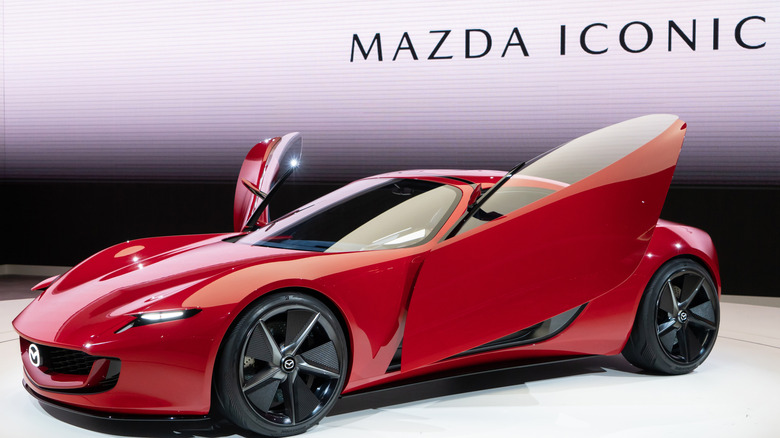
Held since 1954 and now a biennial event, the Japan Mobility Show (formerly the Tokyo Motor Show) is where Toyota, Honda, Mazda and Nissan have consistently chosen to show their most experimental thinking.
Its history is studded with landmarks. The Mazda Cosmo Sport debuted in 1963 as the world’s first mass-produced sports car powered by a two-rotor rotary engine. The Toyota 2000GT followed in 1965 as one of Japan’s strongest answers to European performance cars, and the Nissan Skyline GT-R arrived in 1968. A concept version of the Toyota Prius appeared in 1995, previewing the world’s first mass-produced hybrid passenger car. The Lexus LFA broke cover in 2009 and remains, for many, the most sensational supercar Japan has ever built.
The latest running kept the tradition alive with a rakish next-generation Toyota Corolla concept, the Century Coupé, the Honda 0 Alpha and a six-wheeled Lexus LS luxury van. Not every idea will reach production. That has never been the point.
China’s twin giants: Shanghai and Beijing
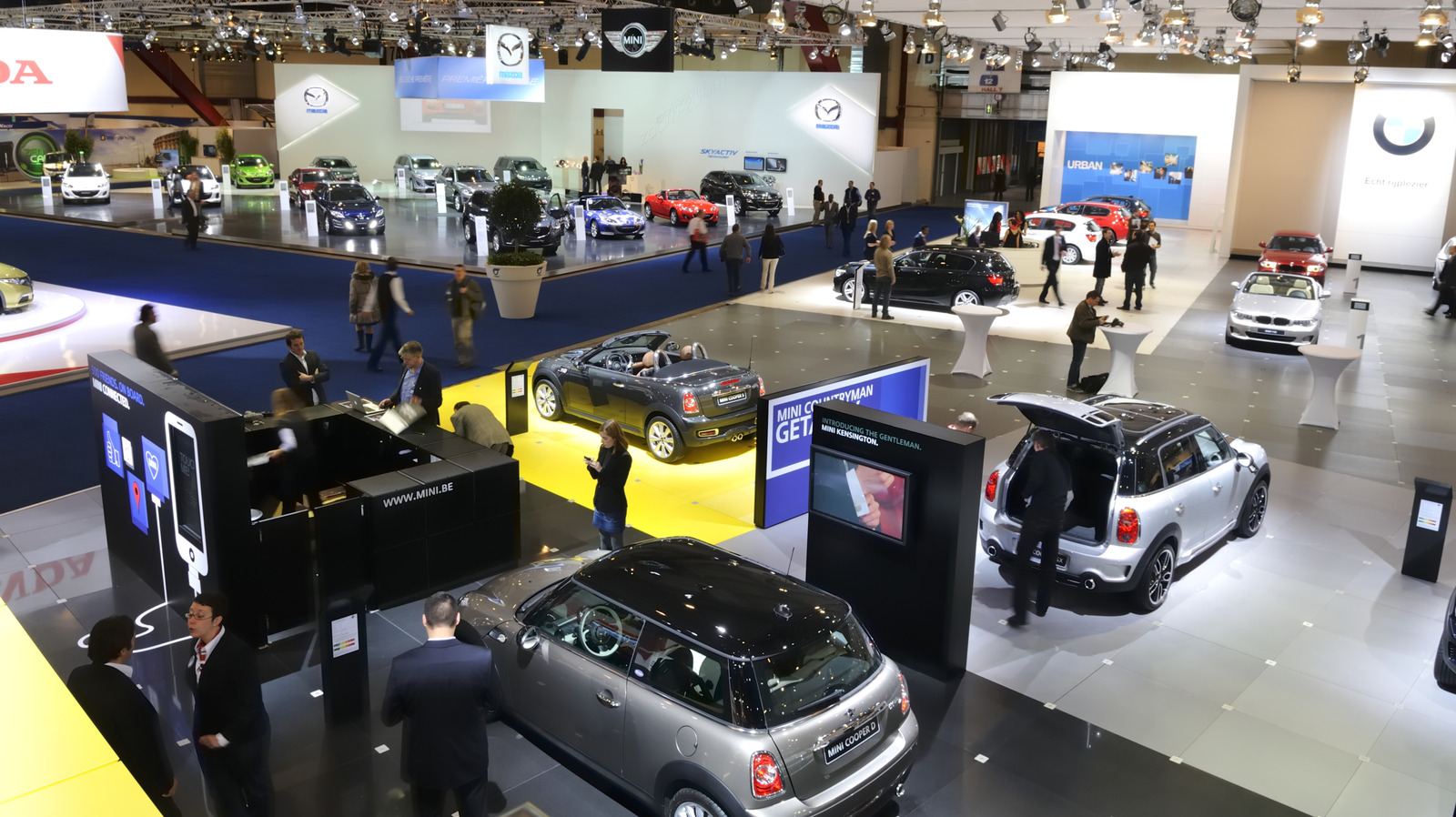
China now holds not one but two major global motor shows: Auto Shanghai and the Beijing show. Both have moved from regional showcases to events that draw genuine global attention, and for obvious reasons. Chinese manufacturers are scaling up at a pace that has reshaped the industry’s balance of power, and their home shows are where that scale becomes visible.
For European and Japanese brands, the significance cuts both ways. Shanghai and Beijing are where they must compete for attention in the world’s largest car market, and where the cars that will eventually reach these shores are often seen first. Any manufacturer serious about global volume now treats both as fixtures rather than options.
Monterey Car Week: the show without a hall
Monterey Car Week is not a convention at all. It is a week-long series of prestigious automotive events on California’s coast, and it proves that the calendar’s most exclusive gatherings do not need a convention centre.
Where traditional shows trade in volume and footfall, Monterey trades in rarity and atmosphere: the concours lawns, the auctions, the hillclimbs and the gatherings where the world’s most valuable cars are shown, judged and sold. It is the spiritual opposite of a trade hall, and it has become just as important to the industry’s image-makers. For a certain kind of manufacturer, a presence at Monterey says more about brand ambition than a stand in Munich ever could.
What the surviving shows reveal about the industry
Look at the events that have endured and a pattern emerges. Each combines genuine heritage with a live news hook, whether that is Paris reimagining the 2CV for the electric age, Munich building its roster around the electric transition, or Tokyo previewing a next-generation Corolla. Shanghai and Beijing have scale. Monterey has exclusivity.
What they share is relevance. The shows that disappeared, Geneva included, lost the ability to guarantee that a reveal there would travel further than a livestream. The survivors offer something a webcast cannot: the physical presence of the car, the crowd around it, and the sense that something has actually happened.
The 2026 calendar shows no sign of that changing. The venues have shifted, the formats have loosened and the guest lists have been redrawn in favour of China. But the upper tier of motor shows remains exactly what it has always been: the place where the industry gathers to tell the world what comes next.