The record, and the one it replaced
The U9 Xtreme’s previous best was 308.3 mph (496.2 km/h), set at the Automotive Testing Papenburg facility in Germany. Both figures have been recognised by the FIA and Guinness World Records as the highest speed achieved by a production car on a single-direction run.
The margin at the very top of the table is now stark. The next closest car is the Bugatti Chiron Super Sport, which recorded 304.8 mph (490.5 km/h) in 2019, also on a one-way run. For years that number looked like the outer edge of what a road car could do. It has now been passed by an electric car from a brand most drivers outside China have never seen in a showroom. We covered the immediate aftermath of the run in our report on how the Yangwang U9 Xtreme became the first production car past 500 km/h, including the question of how much a one-way run should count for.
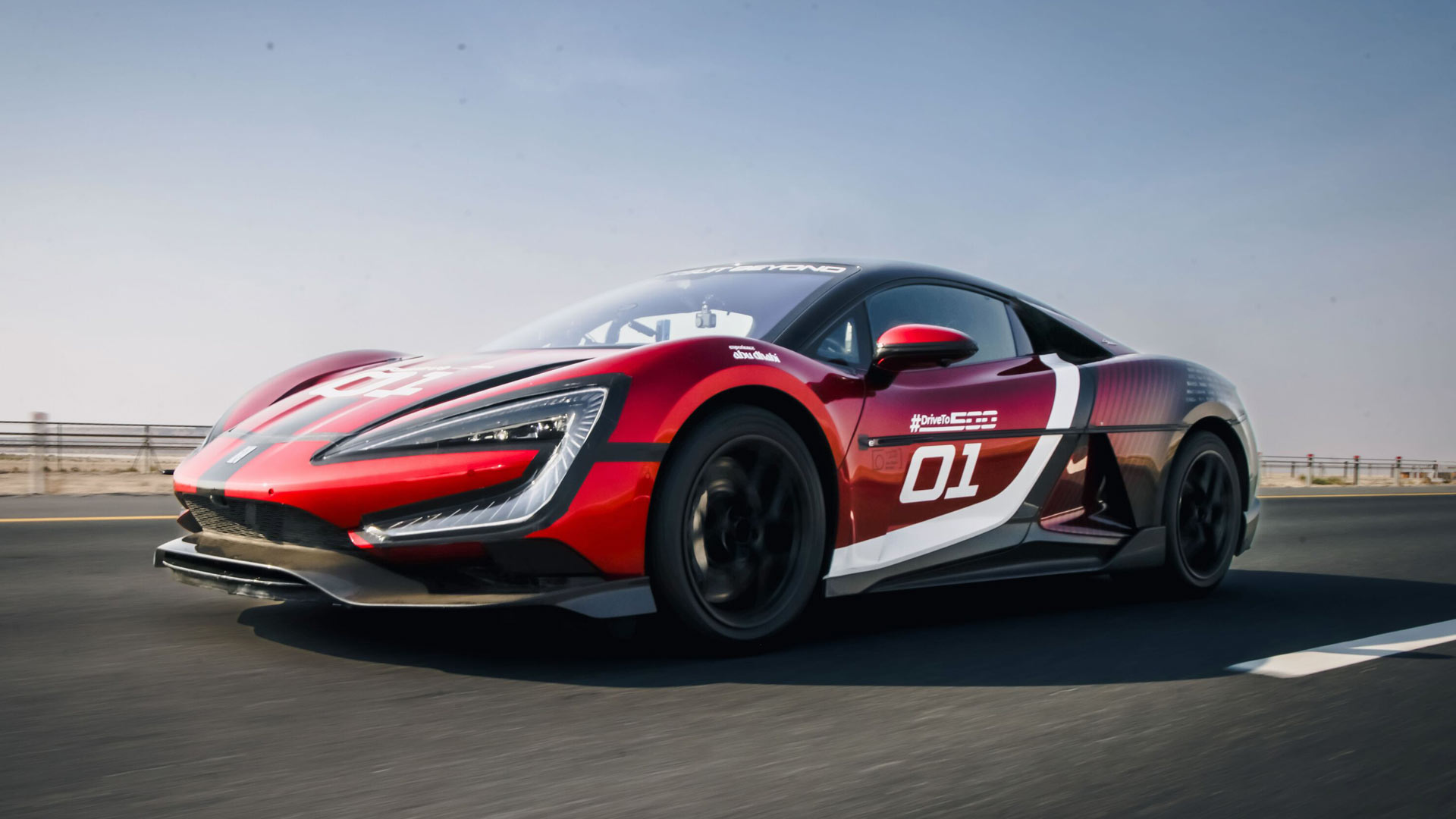
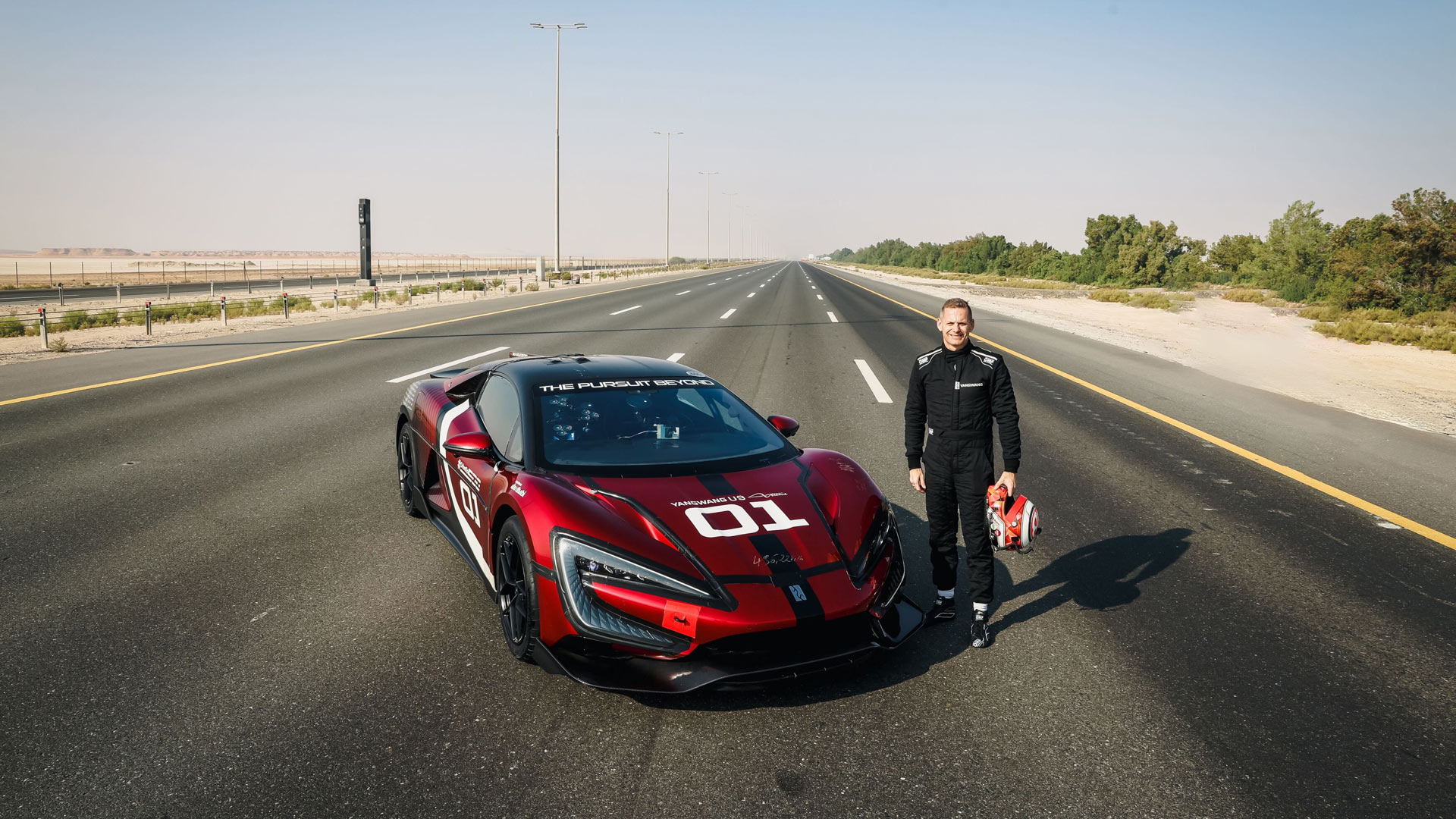
Six miles of desert highway
The venue is part of the E11, the road that runs through the Emirates and carries, in sparsely populated sections near the Saudi border, the highest posted speed limit in the world at 100 mph (160 km/h). Roughly six miles were closed for the attempt.
Closing a road is the easy part. Making it fit for 312 mph is not. Yangwang swept the surface before each run and inspected every metre of the route for debris, down to picking up stray wire particles left behind by cleaning brushes. The team spent two days running at the site before the record fell on the final pass.
That detail matters more than it might first appear. A test track is a known quantity: consistent surface, known cambers, run-off in the right places. A highway is a highway. It was built for lorries and commuters, and it carries the gentle undulations that come with that.
Basseng on why a road changes the job
Marc Basseng was at the wheel, as he was at Papenburg. The German won the 2012 FIA GT1 World Championship, so he is not a stranger to speed, but he was clear that the setting changed the task.
“Unlike a dedicated test track, a public road presents a different set of challenges, making precision, stability and confidence in the vehicle more important than ever,” he said. “Breaking a world record once is extraordinary but doing it again in such a different environment is truly special.”
His comment after the earlier German run is worth revisiting, because it explains part of why an electric car is suited to this particular discipline. “Technically, something like this is not possible with a combustion engine,” he said. “Thanks to the electric motor, the car is quiet, there are no load changes, and that allows me to focus even more on the track.”
No gears means no interruption. The driver holds about half throttle until past 236 mph (380 km/h), then goes to full throttle to 298 mph (480 km/h), then creeps the last 14 mph or so out of it. In a combustion hypercar that final phase is a battle against gearing, aero drag and the limits of the surface. Here it is a long, steady push.
What changed to find the last four mph
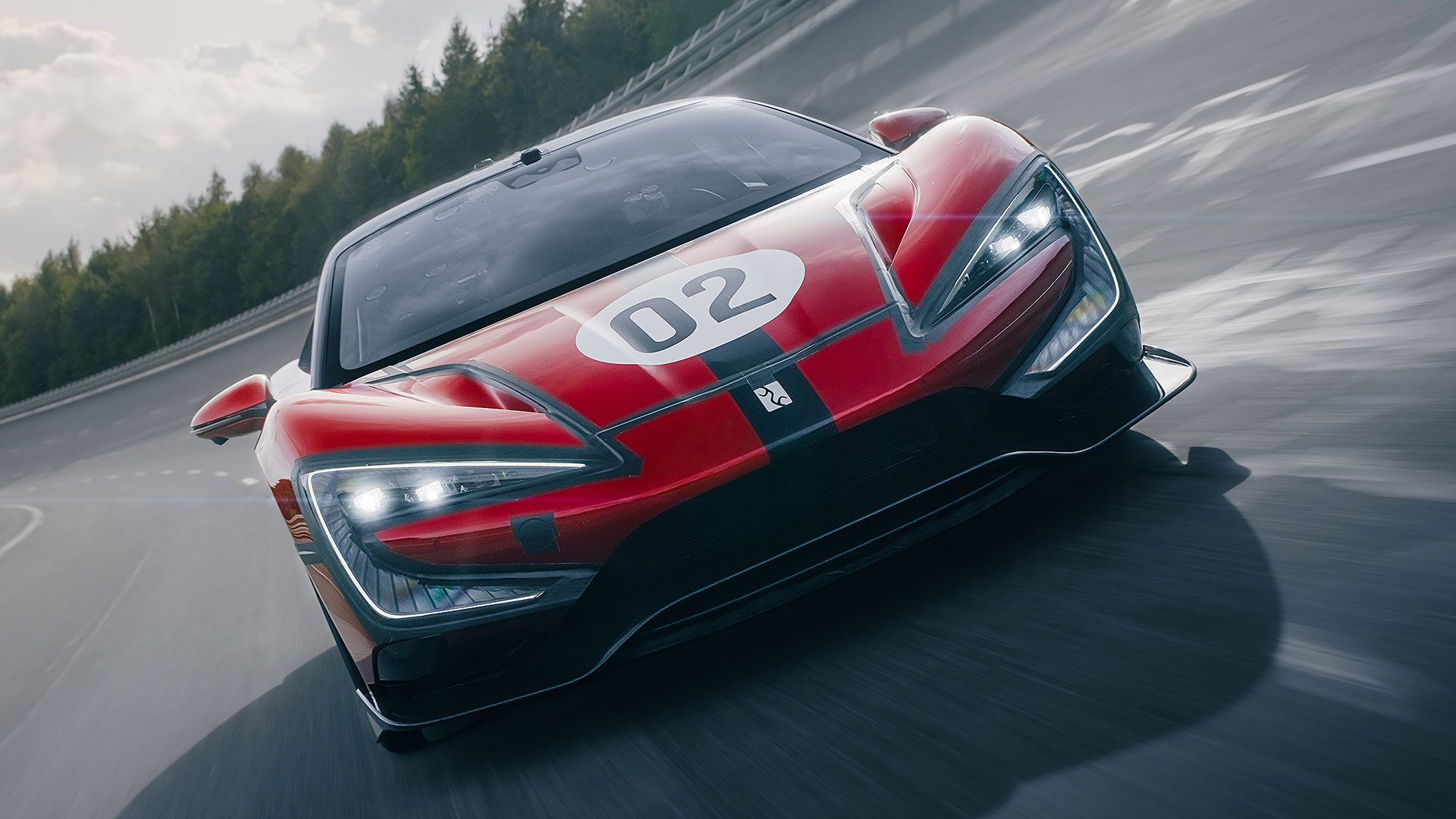
The car that ran in Abu Dhabi was not the car that ran at Papenburg. Three changes were made, all of them small and all of them aimed squarely at the road rather than the track.
- The rear wing angle was adjusted to increase rear downforce.
- Suspension software was tweaked to increase rebound damping “in response to subtle undulations in parts of the road”.
- Tyre pressures were altered to improve high-speed stability.
None of that is exotic. It is the sort of calibration work a chassis engineer does over a long weekend. What is unusual is doing it for a surface that was never designed to be driven at 312 mph.
The car underneath
The U9 Xtreme uses four electric motors producing more than 2,958 bhp (roughly 3,000 PS), with the motors revving to 30,000 rpm. It runs a 1,200-volt electrical system, an upgrade over the 800-volt pack in the regular U9, fed by a lithium iron phosphate Blade Battery. The tyres are specially designed Giti rubber.
Up to 30 examples will be sold to customers. No price had been confirmed at the time of writing, and given the scale of the engineering involved, it will not be a small number.
Yangwang is the upmarket performance and luxury division of BYD, China’s largest carmaker. That is the context that makes this record more than a curiosity. BYD has spent the past few years moving from budget electric cars into the mainstream, and Yangwang is the tip of that spear. A record like this is a statement of engineering capability as much as a marketing exercise.
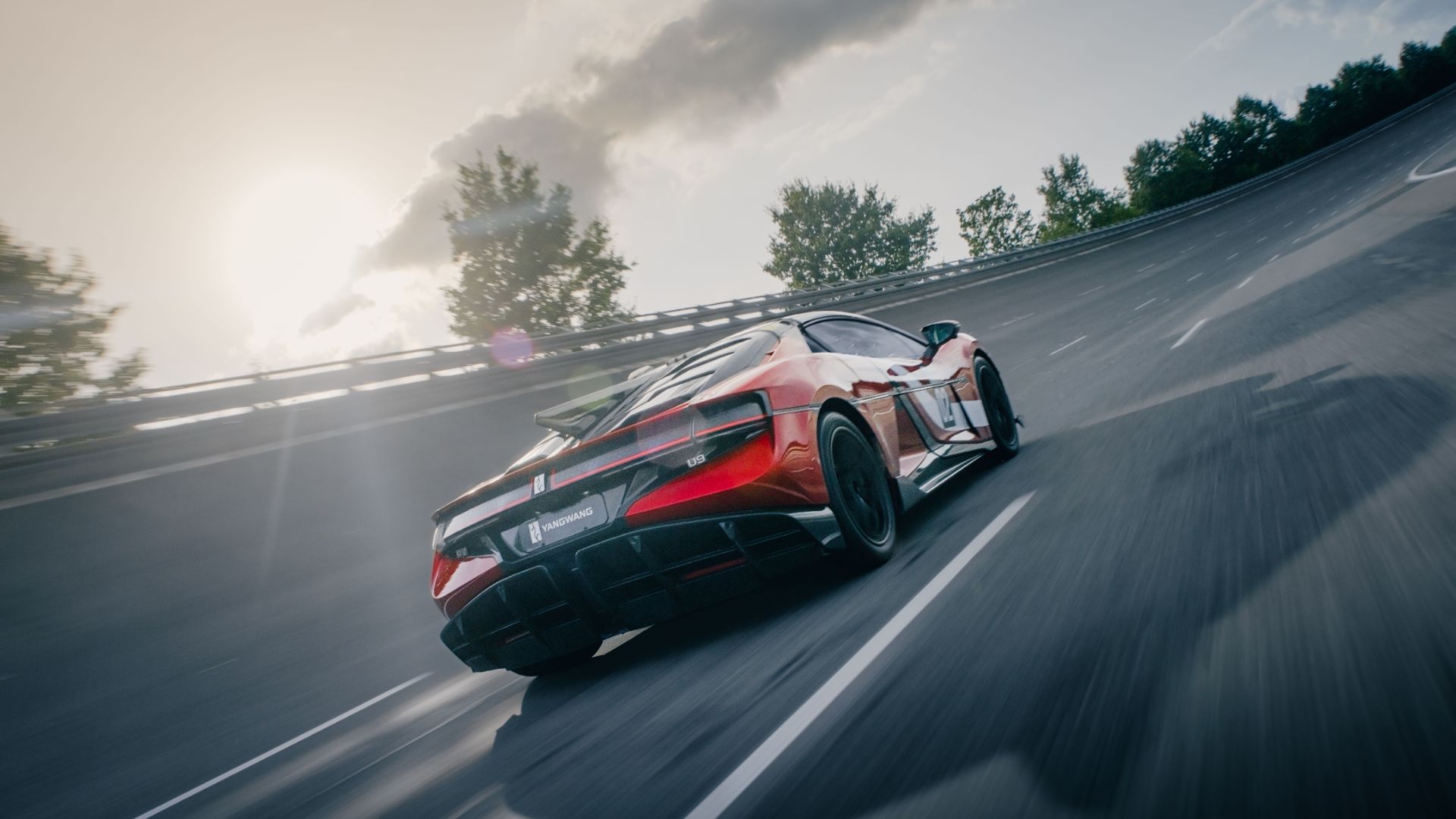
Why the top of the table now looks different
For more than a decade, the production car speed record has belonged to combustion-engined Bugattis, with the odd challenge from Koenigsegg and SSC. The names at the top were synonymous with enormous engines, bespoke tyres and very small production runs.
That has changed. An electric hypercar from a Chinese manufacturer now leads the field, and it did so on a road rather than a track, which removes one of the traditional caveats attached to record runs. The gap between first and second is no longer a rounding error: 312.7 mph against 304.8 mph is nearly eight mph, an enormous margin at this level.
There is a broader point about the pace of development. The U9 Xtreme beat its own record within months, on a surface that demanded new suspension calibration and a different wing setting. That is a car still being developed, not one at the end of its life. The question now is not whether a production car will pass 500 km/h again, but how much further past it someone will go, and whether a combustion car will ever be the one to do it.
The bottom line
A 312.7 mph run on a closed Abu Dhabi highway is a remarkable piece of engineering, and it deserves to be taken seriously rather than dismissed as a stunt. The car was inspected, the road was swept, the FIA and Guinness World Records signed it off, and the driver had already set a record in the same car on a proper test track.
What it proves is narrower than the headlines suggest. It proves that an electric powertrain can sustain speeds that combustion engines struggle to reach, and that a Chinese manufacturer can now build a hypercar capable of beating the best Europe has produced. Whether the U9 Xtreme is a great car in any other sense remains unknown, because nobody has driven one at anything resembling normal speed on a normal road.
But as a marker of where the industry is heading, it is hard to ignore. The fastest production car in the world is now electric, it comes from BYD, and it was set on a public road. The next chapter of this record is going to be worth watching.