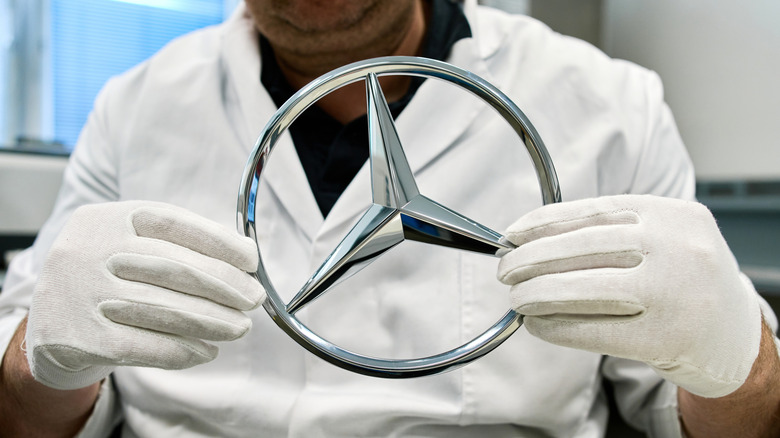
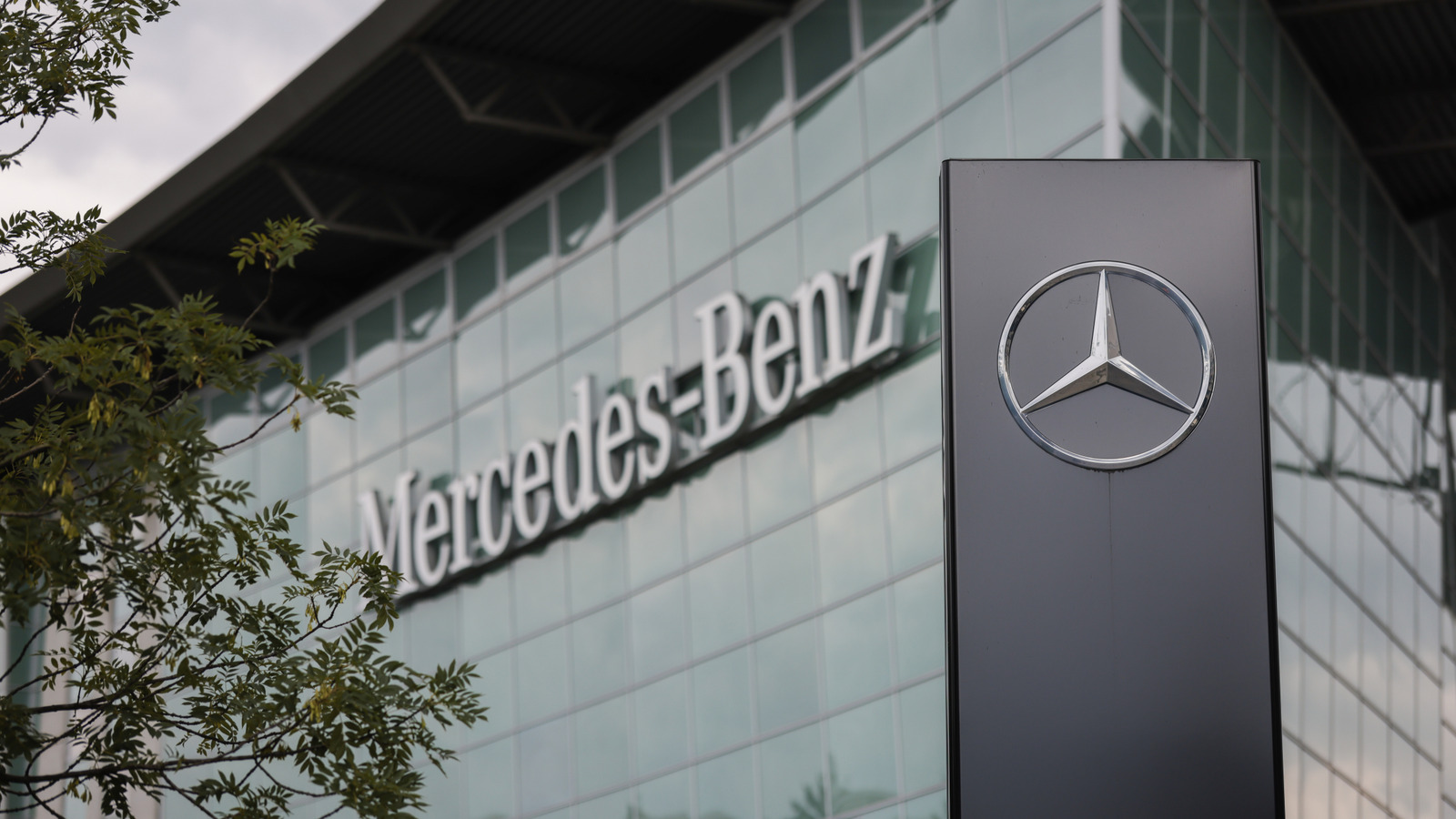
Mercedes-Benz freezes new German investment
Michael Schiebe, the board member responsible for production, quality and supply chain management, did not dress the decision up. In an internal interview with board members, details of which were reported by the Financial Times, he said: “the current cost structures do not allow us to invest in Germany.”
That is a remarkable sentence from a company that has treated its home market as the centre of its industrial identity. A freeze is not the same as a closure, but it is close enough to worry the workforce. No new money means no new lines, no new tooling and no new model allocations beyond what has already been committed. In practice, the three passenger car assembly plants in Germany are now competing for future work against a Hungarian site that costs a fraction as much to run. Schiebe has already suggested that two German plants are on the chopping block.
The freeze lands hardest on Sindelfingen, the historic heart of the brand and its largest plant by far. Bremen and Rastatt face the same uncertainty with less political weight behind them.
The 40-hour week without extra pay
The investment freeze is the headline, but the standoff underneath it is about hours. Mercedes has asked employees at its German plants to work 40 hours a week without extra pay, five hours above the standard in the German automotive sector. Unions have rejected the idea, and IG Metall and the Mercedes General Works Council have both vowed to fight any closures.
The demand is unusual for a sector where shorter hours and generous shift premiums have long been the norm. Mercedes argues that German labour costs are too high to compete, pointing out that they can run up to five times those at Eastern European plants. That comparison points directly at Hungary, where the company already builds cars for a fraction of the German cost.
From the company’s side, the logic is simple: if a worker in Kecskemét can build a car for a fifth of the cost of a worker in Sindelfingen, why commit new investment to Sindelfingen? From the union’s side, the answer is that the German plants build the cars that carry the badge’s reputation, and that a 40-hour week without pay is a cut dressed up as flexibility. Neither side has much room to move.
The numbers behind the squeeze
The financial picture explains the urgency. Mercedes expects returns of just 2% to 3% this year, against the double-digit projections it had hoped for. That is a thin margin for a company carrying the fixed costs of a premium manufacturer.
Two forces are squeezing it at once. First, heavy investment in electric vehicles has not paid off on the schedule the company assumed, with slower-than-anticipated adoption in Europe and the US leaving expensive capacity underused. Second, China, Mercedes’ largest market, has turned. Passenger car sales there fell 31% in the third quarter, a slump that removes both volume and profit from the group’s most important region.
The result is a company that needs to cut its cost base quickly and has concluded that Germany is where the cost base is highest. The freeze is the logical consequence of those numbers, not a separate decision.
Which plants are exposed
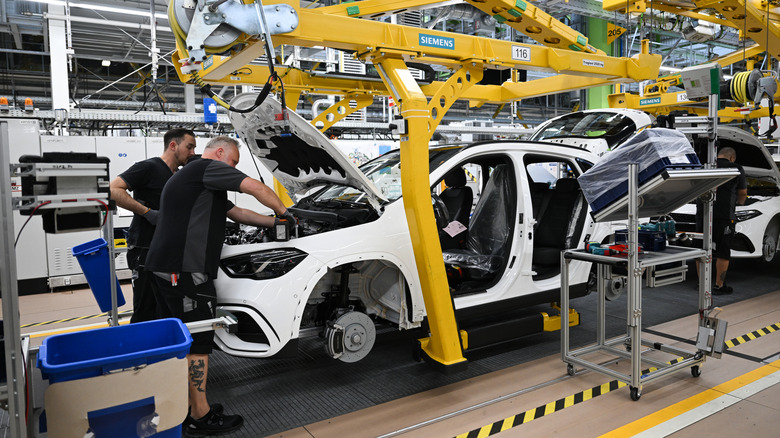
Mercedes runs three passenger vehicle assembly plants in Germany, and each has a different profile in this fight.
Sindelfingen is the giant, with 31,500 employees. It builds the flagship models and carries the most symbolic weight, which makes it the most politically sensitive site to touch and the most expensive to keep.
Bremen employs 10,500 and has long been a high-volume assembly site. Rastatt, with 7,000 staff, is smaller and more exposed to the compact models that face the fiercest competition from cheaper rivals.
Beyond the assembly plants, seven other German sites handle drivetrains and components at Untertürkheim in Stuttgart, Berlin and Hamburg, commercial vehicles at Düsseldorf and Wörth, lithium-ion batteries at Kamenz and AMG at Affalterbach. These sites feed the assembly lines, so a reduction in German vehicle production would ripple through them too. Component plants rarely survive the loss of the assembly plants they supply.
The Hungary question
Kecskemét sits at the centre of this story. The Hungarian plant employs 5,000 people and ranks among the largest employers in its region. It already builds internal combustion, plug-in hybrid and electric passenger vehicles, including the current GLB and the electric A-Class and C-Class models.
That last point matters. Kecskemét is not a low-cost site restricted to older or simpler models. It builds electric cars, the very product Mercedes has bet heavily on. If the company can assemble EVs profitably in Hungary and cannot do so in Germany, the argument for new German investment collapses.
Mercedes also has plants in China, South Africa and the US, plus knock-down assembly joint ventures in India, Thailand, Malaysia, Indonesia and Vietnam. The footprint is already global. What is changing is the willingness to keep funding the German end of it.
What it means for buyers
For anyone shopping for a Mercedes, the practical effects will take time to surface. Model cycles could stretch as investment decisions are deferred, and the allocation of future models between Germany and Hungary becomes the thing to watch. Build quality is unlikely to fall off a cliff, since Kecskemét already produces cars to the same standards.
A company betting against its own backyard
The significance of this week’s announcement is not that Mercedes wants to cut costs. Every carmaker does. It is that the company has said out loud what the numbers have implied for some time: it can no longer justify new investment in the country that built its reputation.
Unions will fight, and some of this will be walked back in negotiation, but the direction of travel is clear. German carmaking is being asked to prove it can compete on cost with its own eastern neighbours. On current evidence, Mercedes is not convinced it can.