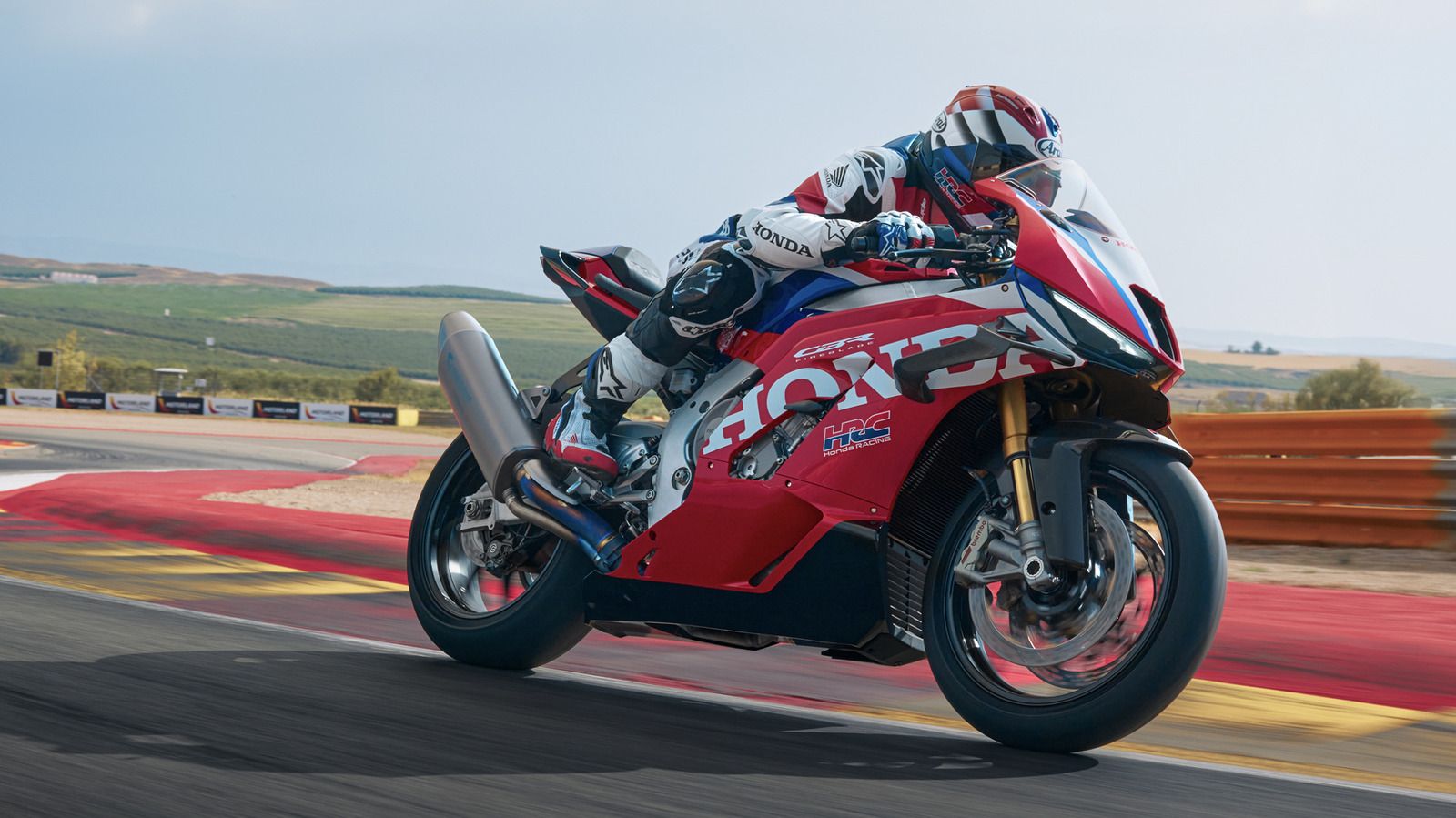
Honda has never been a company to do things by halves, and the 2027 Fireblade proves it. Revealed at EICMA, the new CBR1000RR-R range is not a light tweak of the outgoing bike: Honda claims roughly 75% of its parts are new, and the range now splits three ways with the standard Fireblade, the Fireblade SP and a new Fireblade HRC Works Edition at the top. The headline figures are a 999cc inline-four quoted at 215PS and 113Nm of torque, but the more interesting story is in the chassis and the aero, where Honda has deliberately built two different kinds of superbike under one name.
Three bikes, one engine, two philosophies
All three versions share the same 999cc naturally aspirated inline-four, quoted at 215PS, peaking at 14,000rpm with 113Nm arriving at 10,500rpm. Honda also claims stronger midrange than the outgoing model, which matters more than a peak number on a bike that spends most of its road life between 4,000 and 9,000rpm.
The clever bit is the intake. A two-piece funnel adjusts both the length and the diameter of the intake passage according to road speed, shortening and widening as the revs and speed build to feed the top end, then reverting to a longer, narrower path to protect low-rev grunt. Honda has also revised the throttle-by-wire for sharper response and better engine braking control. It is the sort of invisible engineering that rarely makes a spec sheet but shows up immediately the first time you open the throttle out of a second-gear hairpin.
A frame that bends on purpose
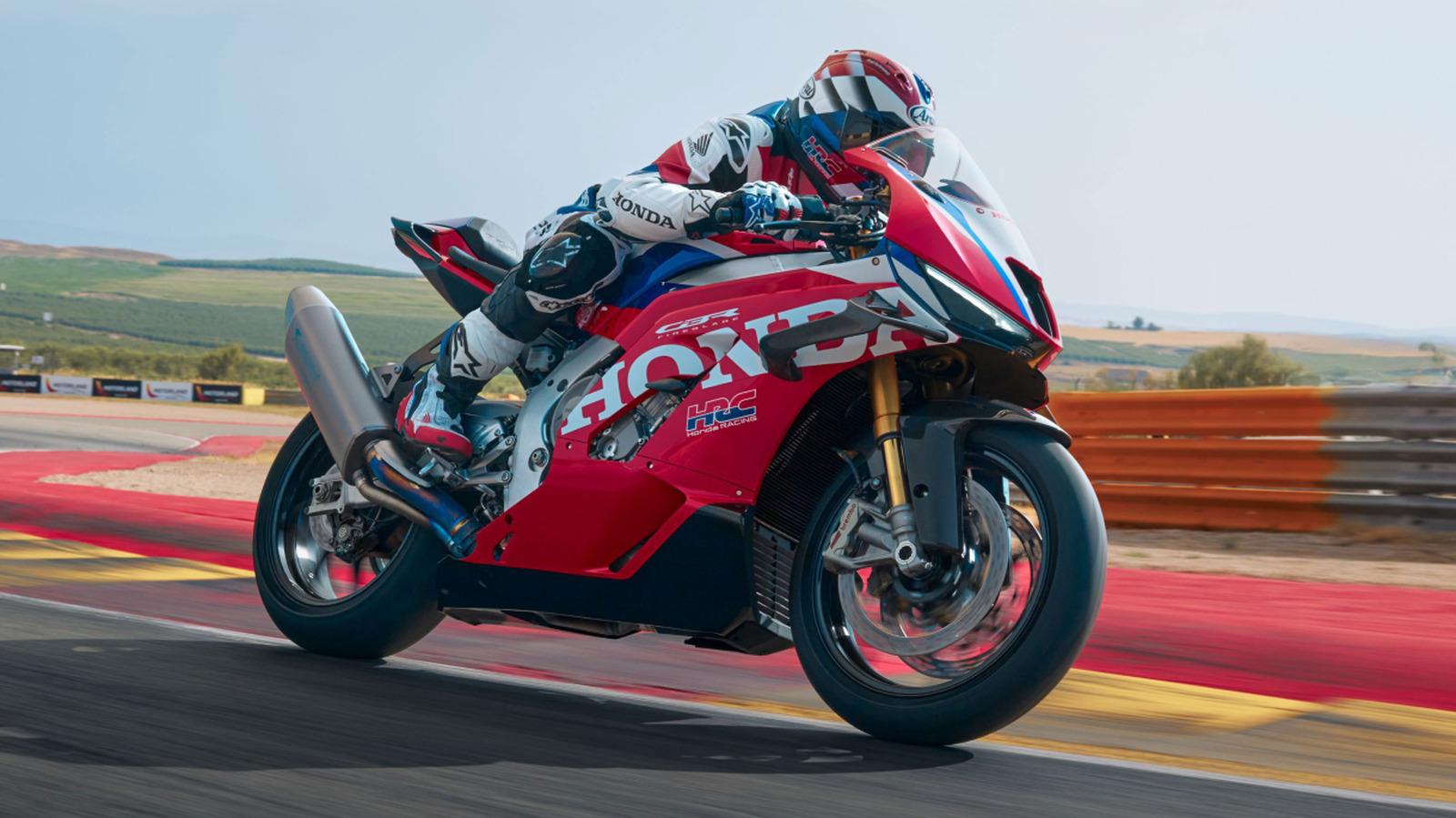
The chassis is where the 2027 bike diverges most from its predecessor. Honda has retained torsional rigidity in the new twin-tube aluminium frame but cut lateral rigidity by 20%. That is not a cost-saving measure or a weight-loss trick; it is a deliberate choice to let the frame flex slightly in corners so the bike absorbs mid-corner bumps rather than transmitting them to the rider.
The new swingarm follows the same logic, with lateral rigidity down 12% to improve tyre feel. In plain terms, Honda is chasing front-end communication and cornering confidence over lap-record stiffness. It is a philosophy that has served the Fireblade well since the original 1992 model, and it is the sort of change you feel through the bars long before you see it in a lap time.
Suspension and brakes by model
The three bikes are separated most clearly by their running gear. The standard Fireblade runs updated Showa suspension, which is a sensible road-focused package. The SP steps up to updated electronically controlled Öhlins, the sort of semi-active setup that lets you soften the damping for a motorway slog and stiffen it for a track day without reaching for a spanner.
The HRC Works Edition goes a different way entirely, with mechanically adjustable Öhlins NPX front forks and a TTX36 rear shock, plus Brembo Hypure Sports brakes. Manual adjustment on a homologation special is not a downgrade; it is a deliberate choice for riders who want to set the bike up once for the track and know exactly what it will do, without electronics second-guessing them.
Titanium tanks, sharper bodywork and a winglet divide
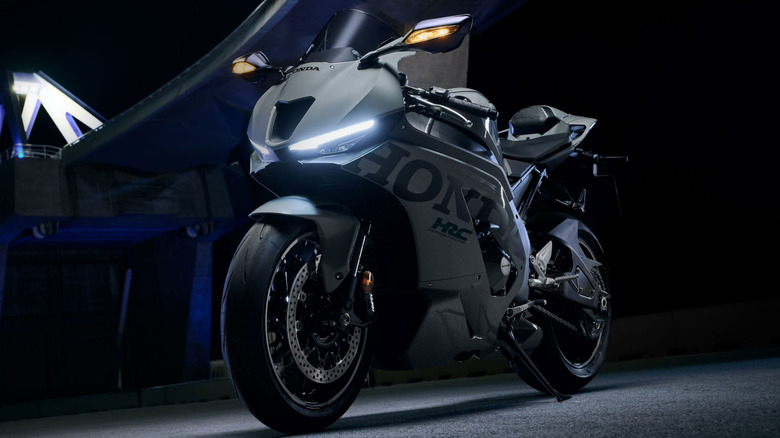
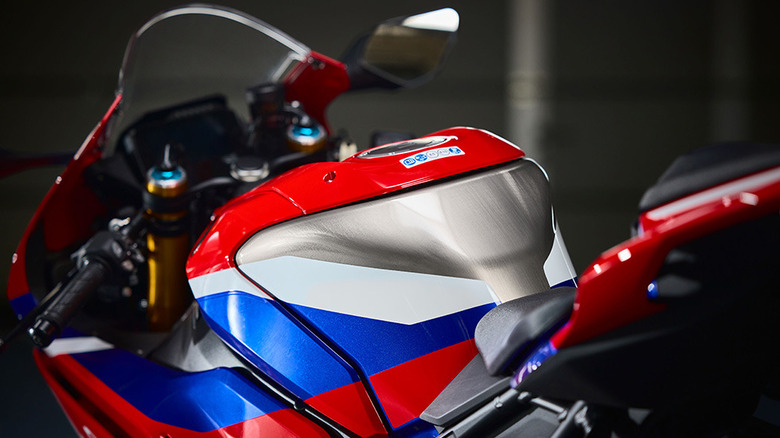
All three bikes get a new titanium fuel tank, a genuinely unusual touch at this price point. Only the SP gets an area of exposed titanium on the tank, which is the sort of detail that will sell the mid-range model to a certain kind of buyer. The front end is sharper and the headlights sleeker, and the lower cowl opening has been widened to improve airflow.
Then comes the winglet question. The standard Fireblade and the SP have no front wings at all. Only the HRC Works Edition gets carbon fibre front winglets, along with a carbon front fender and carbon rear fairing. That is a clear statement of intent: Honda has decided that road riders do not need downforce hardware, and that the aero kit belongs on the race-homologation bike. The Works Edition is also single-seat only and comes in red and nothing else, which removes any pretence of practicality.
The HRC Racing Kit and the warranty catch
Honda describes the HRC Works Edition as a true World Superbike homologation special when fitted with the HRC Racing Kit. The kit adds a bottom-neutral shift system, a head pipe collar, swingarm pivot collars and revised fuel injection and ignition systems. It is the hardware that turns a fast road bike into a race base.
There is a catch, and it is a significant one: fitting the kit voids the warranty. That is worth reading twice if you are considering a Works Edition as a road bike, and it is the single most important line in this article for anyone weighing up a purchase. It is a track tool first and a road bike second, and Honda is being refreshingly honest about that. If you want a road-biased Fireblade, the standard or SP is the sensible buy.
2027 Fireblade weights and UK availability
Honda quotes claimed weights of 199kg for the standard Fireblade, 200kg for the HRC Works Edition and 201kg for the SP. The Works Edition and SP carry a little more mass for their extra hardware, which is a fair trade for the suspension and aero on offer. For context, that puts the standard bike in the same ballpark as the outgoing model, so the gains here are in chassis behaviour and intake design rather than on the scales.
UK pricing and an on-sale date have not been confirmed. The bike is already listed on European sites as a 2027 model, but Honda has yet to publish figures for this market, so treat any dealer estimate with caution until it does. In the US, the 2027 Fireblade is reported as a carryover model, with availability and timing there still unconfirmed.
Where the 2027 Fireblade lands
The superbike class is brutally competitive, and the 2027 Fireblade arrives into a market where Ducati, BMW and Aprilia all offer road bikes with race-derived electronics and aero. Honda’s answer is to split the range rather than chase the downforce war on every model, and the 20% cut in lateral frame rigidity plus the 12% cut in the swingarm are the changes that will matter most to everyday riders.
For anyone chasing a race-ready base, the HRC Works Edition is the obvious starting point, provided you accept the single seat, the red-only paint and the fact that the Racing Kit ends your warranty. For everyone else, the standard Fireblade at 199kg with its titanium tank, variable intake and more forgiving chassis looks like the sweet spot of the range.