
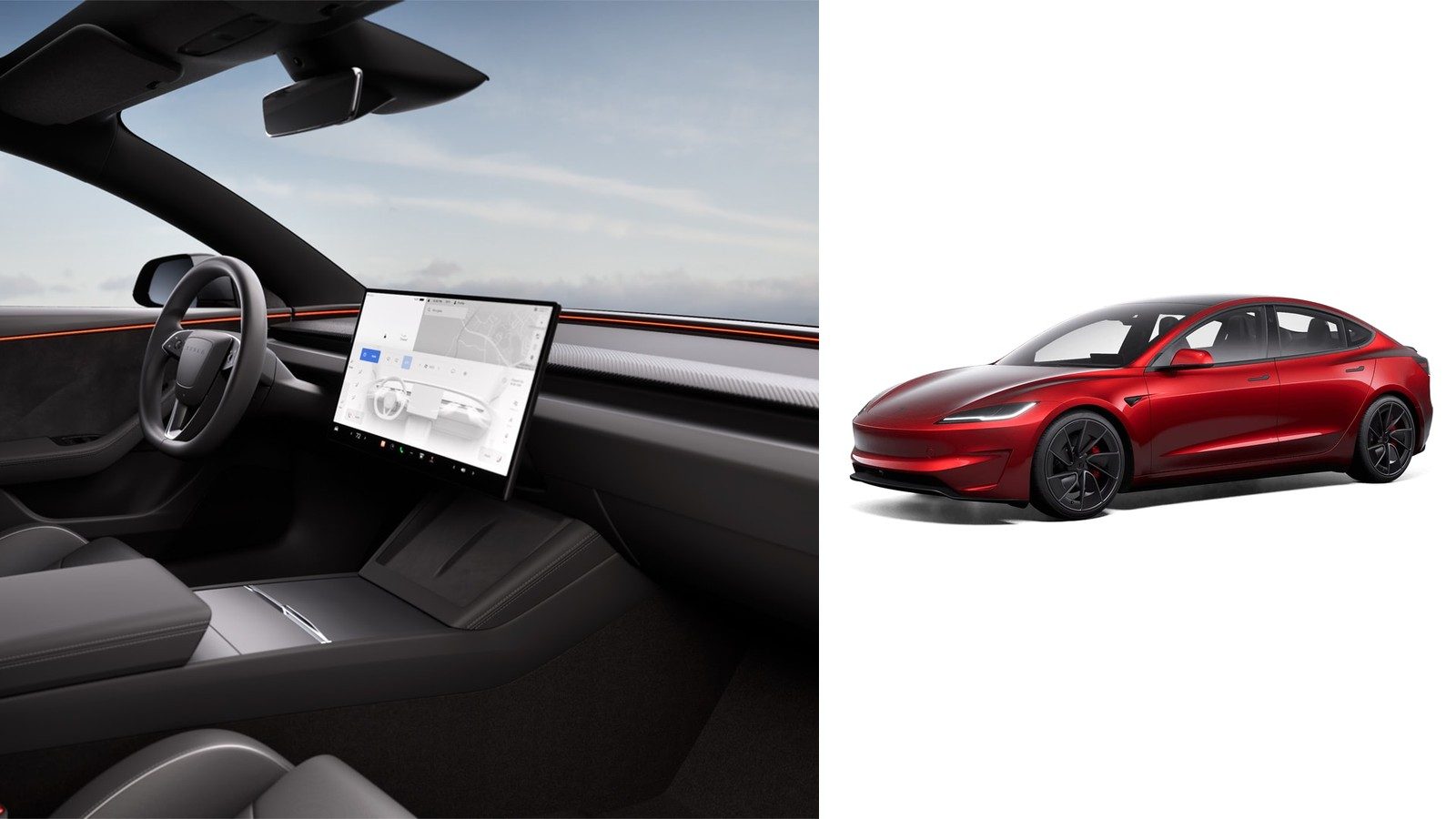
Tesla has quietly refreshed the Model 3, and the headline change is a bigger central touchscreen. The display has grown to 16 inches, replacing the 15.4-inch unit that has served since the current-generation car arrived. There is more power, more range on paper and a new black headliner. The update applies to cars sold in the United States, Puerto Rico and Mexico, and it leaves one much-requested feature still missing from American cars.
The Model 3 update at a glance
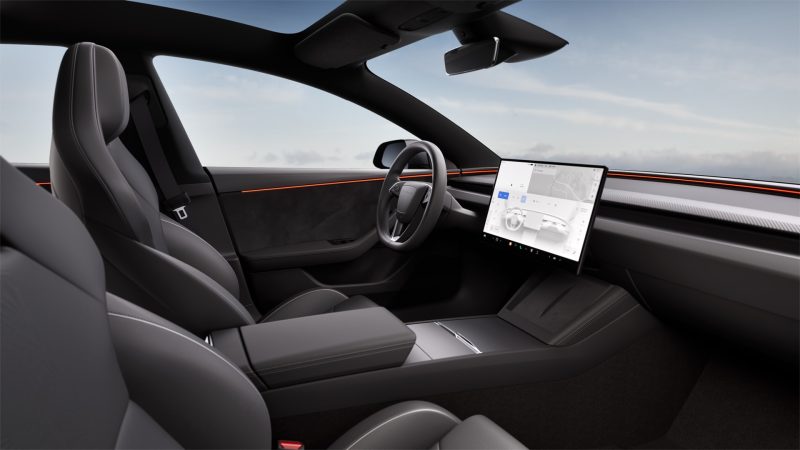
Every Model 3 sold in those three markets now ships with the larger 16-inch display, including the entry-level Rear-Wheel Drive trim. That is a notable move from Tesla, which has historically reserved its biggest cabin upgrades for pricier variants or newer nameplates. Buyers stepping into the cheapest Model 3 now get the same screen real estate as those spending considerably more.
The new panel also carries a higher pixel density than the outgoing display. Tesla has not published detailed specifications, and it has not confirmed which unit is fitted. Model 3s built for the Chinese market received the larger screen a day earlier, according to reports, which suggests the supply chain was primed well before the North American announcement.
A larger screen across the range
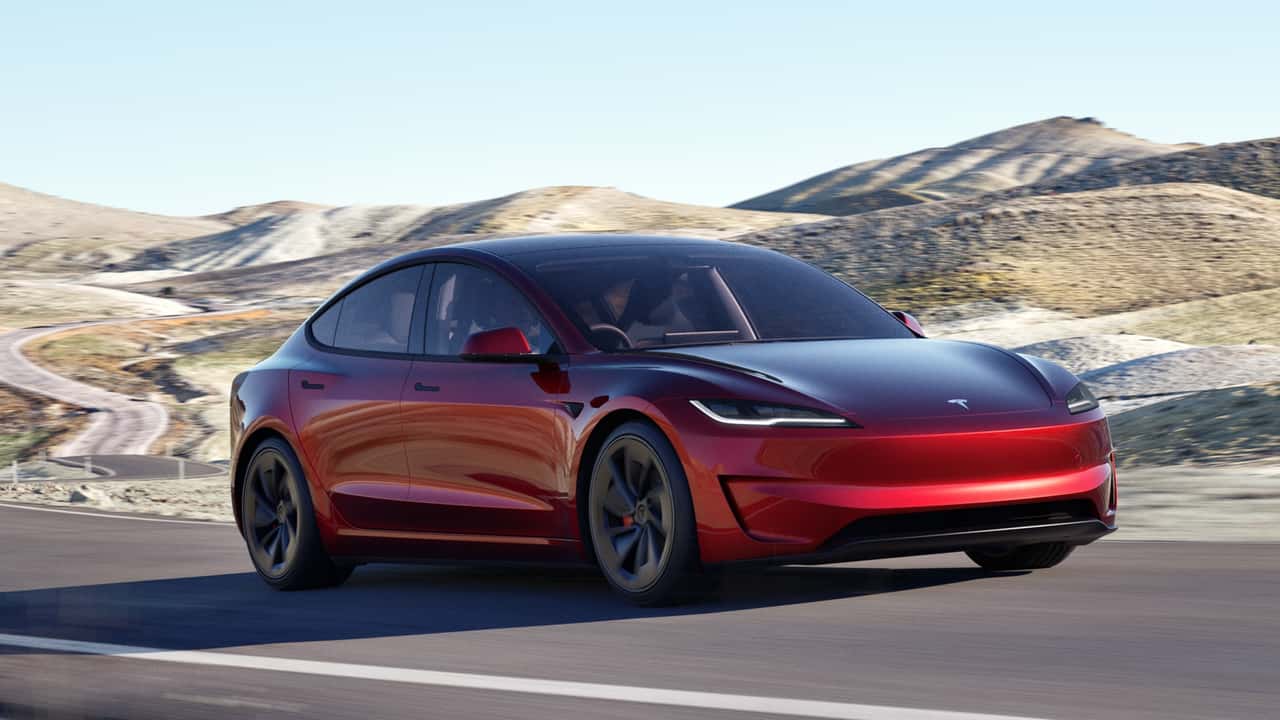
A 0.6-inch diagonal increase might sound trivial on paper. In practice, the jump in pixel density matters more than the raw size, because it sharpens everything from navigation maps to the reversing camera feed and the arcade games Tesla insists on bundling. The cabin has always leaned on that central display for almost every function, so any improvement to clarity and responsiveness is felt constantly rather than occasionally.
Tesla North America announced the changes on X on Thursday evening, and the US configurator was updated to match. There was no press release, no livestream and no staged reveal. That has become the company’s preferred method for rolling out running changes, and it means buyers often learn about updates from social media rather than a dealer.
Performance trim gets quicker on paper
The Model 3 Performance benefits from a modest set of gains. EPA-estimated range, which uses the US test cycle and is not directly comparable with the WLTP figures quoted in the UK, climbs from 309 miles to 316 miles, while peak power rises from 510 hp to 528 hp (roughly 380 kW to 394 kW). The 0-60 mph time is unchanged at 2.9 seconds, which suggests the extra output is being managed carefully rather than unleashed for outright acceleration bragging rights.
The Performance also picks up a black headliner, a small but welcome touch that darkens the cabin and gives the flagship variant a bit more visual distinction. It is the kind of detail that costs Tesla very little and tends to land well with enthusiasts who notice interior trim.
Premium All-Wheel Drive sharpens up
The bigger surprise is the Premium All-Wheel Drive. Its 0-60 mph time drops from 4.2 seconds to 3.8 seconds, a meaningful improvement for a car that is not marketed as the fast one. Estimated range holds steady at 346 miles on the same US cycle, so the quicker acceleration has not come at the cost of efficiency on the official figures.
That combination is unusual. Typically, extracting more performance means sacrificing some range, whether through gearing, thermal management or simply the way the car is driven. Tesla has not explained how it managed the gain, and the absence of any technical detail leaves room for speculation about software calibration, motor revisions or battery chemistry tweaks.
Pricing stays put, but the numbers do not agree
Tesla did not raise prices alongside the update, which is arguably the most newsworthy part of the whole affair. What the car actually costs depends on where you look. InsideEVs lists the base Rear-Wheel Drive at $38,630, the Premium at $44,130 and the Performance at $56,630, while Electrek lists the base at $36,990, a Premium Rear-Wheel Drive at $42,490, a Premium All-Wheel Drive at $47,490 and the Performance at $54,990. All figures are US prices. The two outlets are working from the same configurator, and the most likely explanation is that one set includes destination and order fees while the other reflects the pre-fee list price, but Tesla has not clarified. For buyers in the US, Puerto Rico and Mexico, the configurator is the only number that counts.
More importantly, Tesla has not said where the extra power and range come from, or whether cars already delivered will receive any of it. That second question will frustrate owners who took delivery weeks before the change. Tesla has previously pushed performance improvements over the air, but it has made no commitment here. Anyone hoping for a free bump should treat it as unconfirmed until Tesla says otherwise.
Vehicle-to-load is still missing from US Model 3s
Here is where the update gets genuinely uneven. Vehicle-to-load, the feature that lets an electric car power tools, appliances or camping gear from its high-voltage battery, was announced for Model 3s in China, Australia, New Zealand and South Korea alongside the 16-inch screen and black headliner. In China, every Model 3 can now output 2.2 kW of AC power with an adapter.
An adapter plugged into the mobile charger allows owners to export up to 2.4 kW from the charging port. That is not enough to run an entire house during a power cut, but it will keep a fridge and the essentials going, and it turns the car into a genuinely useful piece of equipment on a campsite or a job site.
US-spec Model 3s still list no external power feature at all. Tesla’s comparison tool makes no mention of it, and bidirectional charging in the American lineup is currently limited to the Cybertruck, Model Y Premium, Model Y Performance and Model Y L. Electrek reported that Tesla restricted V2L to the Model Y Premium, Model Y Performance and Cybertruck back in August. V2L may eventually reach the US Model 3, but nothing has been confirmed, and the silence is telling given how loudly rivals are promoting the same capability.
Market differences and what is still unclear
The rollout raises more questions than Tesla has answered. Canada is excluded from the update, despite Canadian cars being built at Giga Shanghai, the same factory that builds the Chinese-market cars which received the 16-inch screen. That is a peculiar outcome for a production line that clearly has the parts.
The light grey interior that launched in China is still absent from the US configurator, where buyers continue to choose between black and black-and-white. The black headliner is available only on the Performance in the US, even though it was announced more broadly elsewhere. These are small distinctions individually, but together they paint a picture of a company managing regional supply, regulation and demand with far less uniformity than its single-platform approach might suggest. Buyers in the US, Puerto Rico and Mexico can order the updated car now, and the configurator reflects the changes. Everyone else, including anyone hoping to run a kettle off their Model 3, will have to keep waiting.




2 Comments