
What the scheme actually covers
The mechanics are familiar to anyone who has bought from a rival approved used programme. Every car must have a full Chery service history, and must meet what the brand describes as stringent age, mileage and condition requirements. Each one goes through a comprehensive inspection and preparation process before it is offered for sale.
Every Approved Used Chery then comes with at least two years’ warranty cover. That is the baseline, not the ceiling, and the detail of how Chery stacks its warranties is where the scheme gets interesting.
Warranty transfer and the hybrid battery guarantee
Chery sells its new cars with a seven-year warranty. Under the Approved Used programme, that cover carries over to the next owner if its remaining duration is longer than the standard used-car warranty. In practice, a nearly new Tiggo bought from a franchised dealer could come with several years of manufacturer cover still attached, rather than the two-year minimum.
For hybrid models, Chery adds a battery health certificate guaranteeing a minimum 90 per cent state of health. That is a direct response to the anxiety that has followed electrified cars into the used market, where buyers have spent years being told that a replacement battery can, in the worst cases, cost more than the car is worth. A certificate stating that the pack is at 90 per cent or better is a blunt but effective way of closing that conversation.
The scheme also includes £350 of excess cover for insurance. It is a smaller sweetener than a warranty, but it is the sort of extra that tends to appear on established premium approved used programmes rather than on the launch materials of a brand that only arrived in Britain last year.
The view from the top
Farrell Hsu, managing director of Chery UK, described the launch as “the natural next step” for the brand, adding: “The very high standards we set offer customers the confidence and reassurance they need, and provide our retailers with a strong platform for building long-term customer satisfaction and loyalty.”
That mention of retailers is worth pausing on. Approved used schemes are as much a tool for dealer networks as for customers. They give showrooms a reason to hold stock, a story to tell on the forecourt and a way to keep a customer inside the brand when the first car goes back. For a newcomer still building its retail footprint, that matters.
From newcomer to nearly two per cent
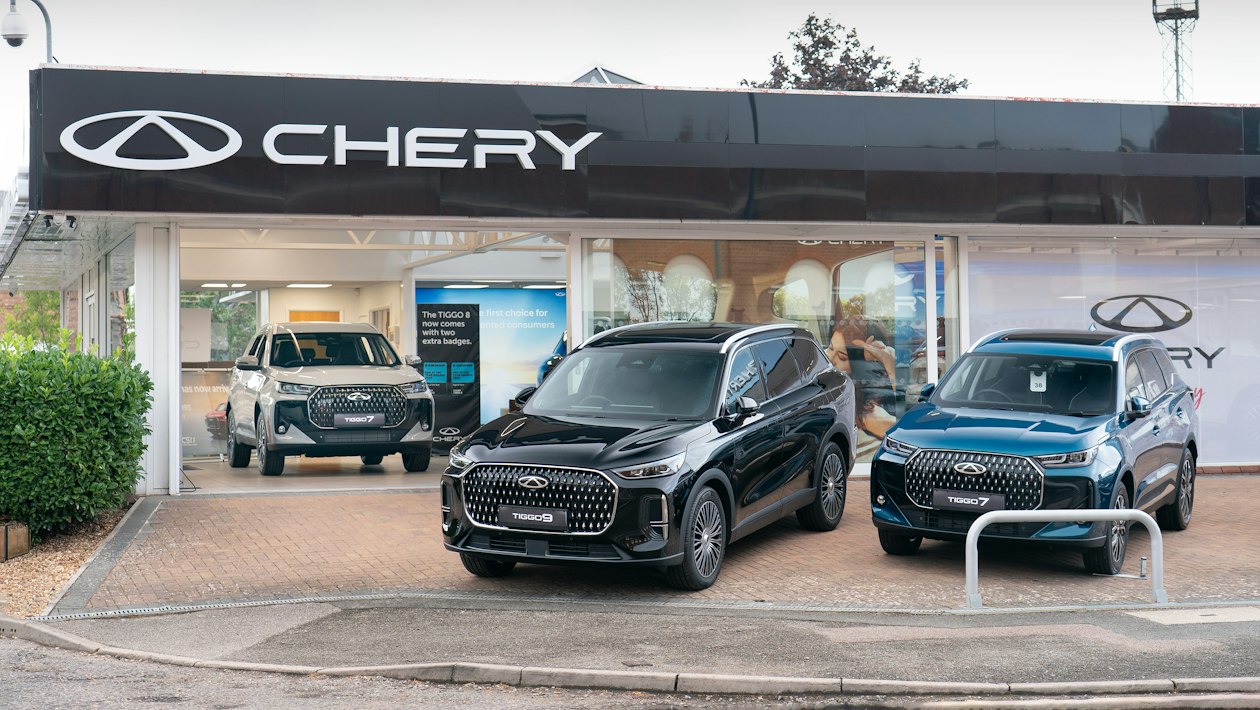
Chery’s UK story has moved quickly. The brand arrived in summer last year with the Tiggo 7 SUV, and its line-up now runs from the Tiggo 4, a Ford Puma rival, up to the larger Tiggo 8 and Tiggo 9. According to industry registration data, it has taken almost two per cent market share so far this year, outselling Dacia, Fiat, Citroën and Cupra, and has sold more than 39,000 cars in the UK to date. September’s registrations delivered a jolt few forecasters saw coming, with more than 350,000 cars registered, a jump of over 12 per cent year on year and the strongest September since 2017, according to industry registration data, as covered in our report on UK New Car Sales Hit Near-Decade High as Jaecoo 7 Tops the September Sales Chart.
Jaecoo wrote the template first
Chery is not the first brand in its own stable to make this move. Sister marque Jaecoo launched its approved used scheme in January, offering eligible Jaecoo and Omoda models a two-year warranty, a battery health certificate for hybrids and EVs, two years of free servicing and 12 months of roadside assistance.
Jaecoo has since become one of the more remarkable stories in the UK market. The Jaecoo 7 was the country’s best-selling car in September, and according to industry registration data the brand now holds 3.4 per cent market share, close to Nissan and alongside fellow Chinese manufacturer BYD. When a brand can point to that kind of volume, a used scheme stops being an optional extra and starts being infrastructure.
Why residuals are the real battleground
Residual values have long been the quiet weakness in the Chinese brand proposition. Low list prices and generous equipment levels make the new car easy to sell. They do less for the second owner, and the trade has been cautious about what a three-year-old example of a brand it barely knew five years ago will fetch at auction.
That caution feeds back into the new car market through monthly PCP payments, which depend on forecast future values. Weak residuals mean higher finance costs, which erode the very price advantage that brought buyers through the door. A manufacturer-backed used scheme is one of the few levers a brand can pull to interrupt that loop, by putting its own warranty and its own inspection standards behind the cars it takes back.
There is a wider context too. Chinese manufacturers are expanding into Europe and beyond at a pace that has prompted policy responses, including proposals for tariffs on Chinese cars in the UK, while industry figures have openly speculated about how quickly those brands will localise production, as Nissan’s American leadership did when it warned that Chinese car brands will build in Mexico within three years. Against that backdrop, a used car scheme is a statement about longevity as much as it is a retail offer.
A signal that Chery intends to stay
Manufacturer-backed used programmes are not cheap to run. They require dealer training, inspection regimes, parts supply and a warranty fund that has to be honoured years down the line. The reasonable inference is that brands planning to be here in a decade invest in them, while brands testing the water usually do not.
Chery’s scheme is small at launch, at 110 cars across 100 showrooms, and it will not transform residual values on its own. But combined with a seven-year warranty that transfers, a 90 per cent hybrid battery health guarantee and the example set by Jaecoo, it points to a manufacturer that is thinking past the first sale. For buyers weighing up a Tiggo against a more familiar badge, that may prove to be the most persuasive specification of all.






One Comment