The Paris Motor Show has never been short of drama, but the 2026 edition arrives with a storyline that would have seemed implausible a decade ago. When the doors open next week, the most striking presence in the halls will not be a European legacy marque unveiling a flagship. It will be the sheer weight of Chinese brands using the show as a springboard into Europe.
One in Three Exhibitors Is Now a Chinese Brand
Of the roughly 100 exhibitors with stands at this year’s show, about 60 are automakers. A record 20 of those are Chinese brands, according to Reuters. That is one third of the manufacturer presence, and double the 10 Chinese brands that attended the previous Paris event in 2024.
The jump is not a rounding error. It reflects a deliberate strategy: Paris has become the single most effective shop window for Chinese manufacturers looking to establish credibility with European buyers, dealers and, crucially, the press. The biennial show remains one of the largest automotive gatherings on the continent, and the brands turning up clearly believe the cost of a stand is worth the exposure.
The Established Players Consolidating Their Ground
The Chinese presence in Paris is not a uniform block of unknowns. Several of the brands exhibiting already hold meaningful European market share and will use the show to reinforce positions they have spent several years building.
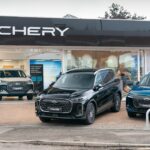
BYD, Geely, Chery, Jaecoo and Leapmotor all fall into this category. Their names are increasingly familiar to buyers who would not have recognised them at the start of the decade, and their momentum shows no sign of easing. Chery, in particular, has moved to address one of the persistent concerns about Chinese brands in Europe: residual values. The company recently took a familiar page from the established playbook with a certified used car programme, as covered in Chery Launches UK Approved Used Scheme as Chinese Brands Move to Shore Up Residuals. Every car in the scheme must have a full Chery service history and meet stringent age, mileage and condition requirements. It is a signal that the leading Chinese brands are now thinking beyond the initial sale.
The Next Wave: Li Auto, Aito, Aion and 212
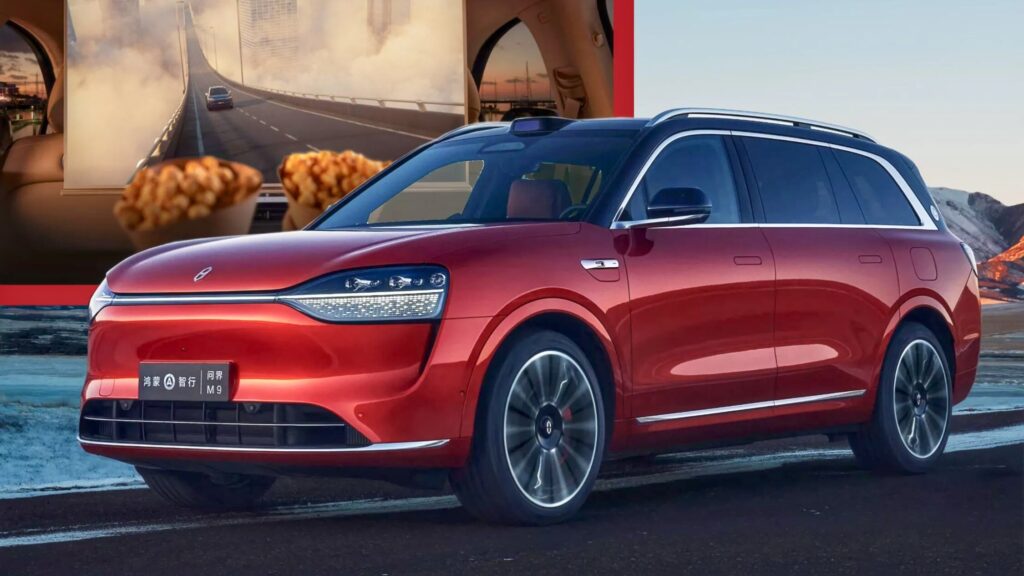
Beyond the household names, Paris will host a cohort of lesser-known Chinese marques using the event as a European launchpad. Li Auto, Aito, Aion and 212 are among those exhibiting, and their presence points to something important: the pipeline of Chinese entrants is nowhere near exhausted.
For European buyers, these names will be unfamiliar. For the industry, they represent the next phase of a competitive wave that has already reshaped pricing, technology expectations and product cycles across the continent. The fact that so many are willing to invest in a European motor show presence before they have meaningful sales here suggests they are playing a long game.
A Market Shift That Tariffs Have Not Slowed
The context for all of this is a market shift that has happened faster than most forecasts anticipated. Chinese cars now account for more than 10 per cent of all new car sales across Europe.
That figure has been achieved despite the EU imposing anti-subsidy tariffs of up to 35 per cent on Chinese electric cars entering the bloc. The tariffs were designed to slow the influx and protect European manufacturing. On the evidence of Paris 2026, they have not achieved that aim.
Part of the explanation lies in product mix. Chinese manufacturers have broadened their European line-ups well beyond battery electric vehicles, and that diversification has blunted the impact of tariffs aimed squarely at EVs.
The Hybrid Loophole the EU Wants to Close
The most significant structural advantage for Chinese brands right now concerns hybrids. Chinese hybrids are currently exempt from the anti-subsidy tariffs and face only the standard 10 per cent import duty. That is a substantial gap, and it has made plug-in and conventional hybrid models an attractive route into Europe for manufacturers facing steep tariffs on their electric offerings.
The EU is working on legislation to close that loophole. Until it does, hybrids remain the path of least resistance for Chinese brands expanding in Europe, and the product plans on display in Paris will reflect that reality.
The competitive pressure is being felt well beyond Europe’s borders too. As Nissan Warns Chinese Car Brands Will Build in Mexico Within Three Years, the industry’s assumption that Chinese manufacturers would remain export-only is being steadily dismantled. That warning comes from Nissan’s American operation and concerns production plans in North America, so it sits outside the European story, but the implications for established players were unmistakable.
European Debuts Still Matter
For all the focus on Chinese expansion, Paris 2026 has a substantial European product story of its own. Several production models are expected to make their debut, including the Audi A2 e-tron, the Skoda Peaq, the Dacia Striker and the Fiat Grizzly. Each targets a different segment, but collectively they show that European manufacturers are still fighting for attention with new metal.
The concept side is equally notable. Renault will show the E-Space, while Citroën revives one of the most famous names in motoring history with a new 2CV concept. Heritage reinvention has become a reliable way for European brands to generate headlines, and Citroën’s decision to revisit the 2CV is unlikely to go unnoticed.
BMW’s Empty Stand
The most talked-about absence in Paris will be BMW. The German manufacturer will not attend the show, despite having a new 3 Series, iX4 and X5 ready to display.
It is a notable snub to one of Europe’s biggest motor shows, and it raises awkward questions about the format’s pull with established premium brands. BMW has increasingly favoured its own standalone events and digital launches over traditional exhibition halls, a calculation that many manufacturers have made in recent years.
But the timing is striking. With three significant new models in the pipeline, Paris would have offered BMW a captive audience of European media and industry figures. Its decision to stay away hands that attention to the brands that did turn up, and a growing share of those are Chinese.
What Paris 2026 Tells Us About the Next Five Years
The exhibitor list at Paris 2026 is more than a scheduling curiosity. It is a snapshot of where the European car market is heading. Tariffs have not reversed the advance of Chinese brands, the hybrid exemption keeps a significant portion of their product flowing into Europe at the standard 10 per cent duty, and the pipeline of new entrants shows no sign of running dry.
European manufacturers are still bringing credible new models to the show, from the Audi A2 e-tron to the Citroën 2CV concept. But they are no longer guaranteed top billing. The story of Paris 2026 is one of a market opening up faster than its regulators and incumbents can respond, and of a show that now belongs as much to Shenzhen and Hangzhou as it does to Munich, Paris and Turin.
We covered bmw ix3 m60 603bhp in more detail elsewhere.