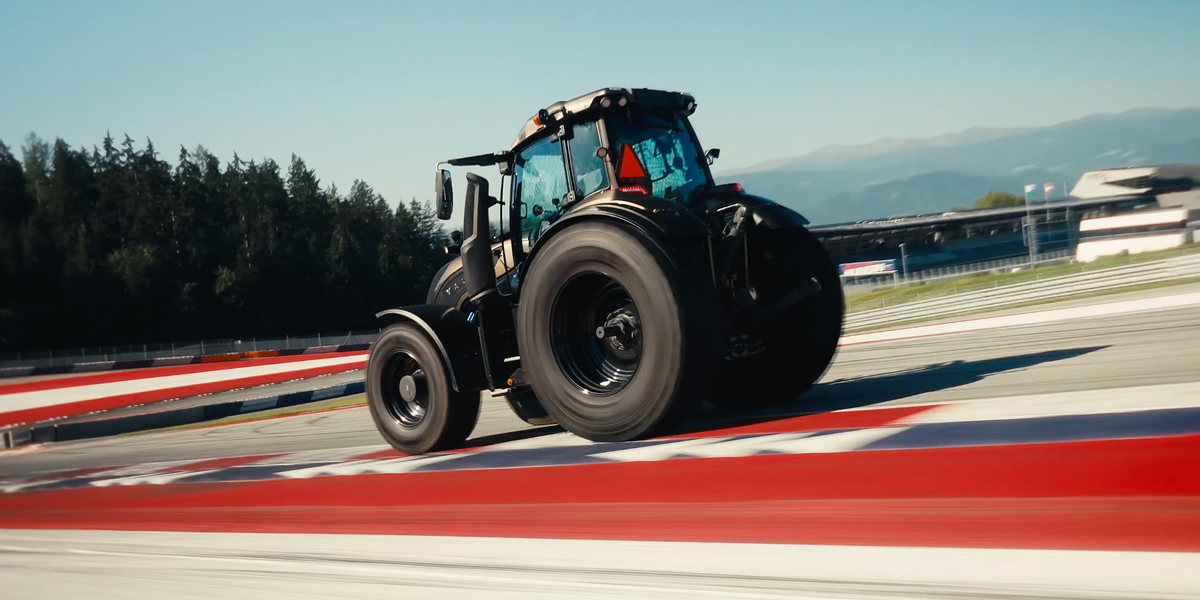
A 245 hp farm tractor has lapped Austria’s Red Bull Ring, the circuit that hosts Formula 1 and MotoGP, at a top speed of 54 mph. Valtra is calling it a tractor lap record, and technically it is. It is also the only tractor lap record in existence, which tells you most of what you need to know about how much competition there was.
The stunt is good fun, and the video is worth watching for the noise alone. But buried in the same press material is a far more interesting number, one that has nothing to do with tarmac and everything to do with why anyone buys a tractor in the first place.
The machine that did the lap
The tractor in question is a sixth-generation Valtra T Series, a Finnish-built workhorse that sits in the middle of the company’s range. Under the bonnet is an AGCO Power CORE75, a 7.5-litre inline-six diesel producing around 245 hp. That is a serious amount of torque delivered at very low revs, which is exactly what you want when you are pulling a heavy implement through wet clay, and rather less obviously what you want when you are pointing a two-and-a-half-tonne machine at the first corner of a Grand Prix circuit.
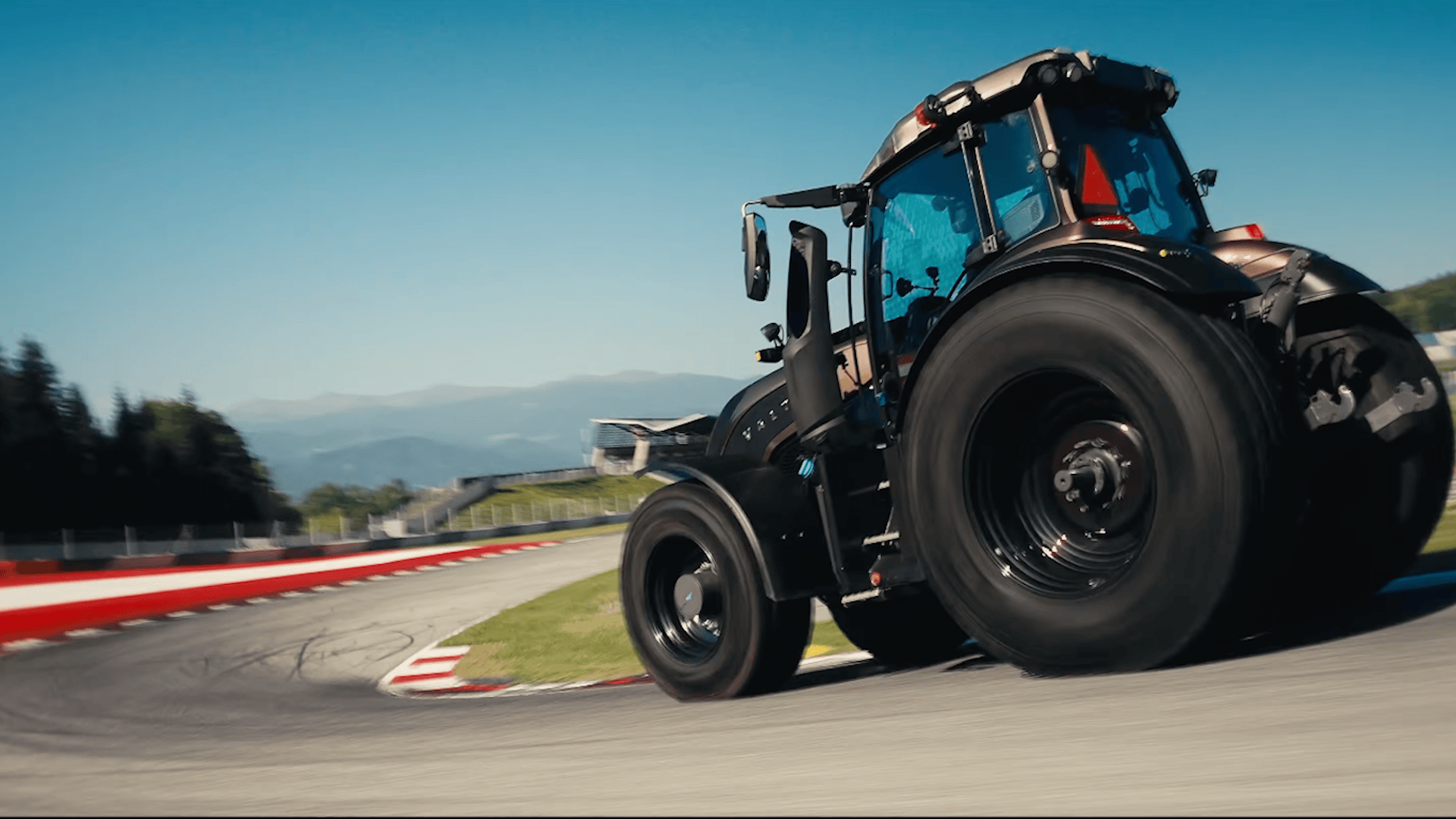
It ran on large rear wheels fitted with Nokian tyres, and on the main straight it reached 54 mph. For context, that is comfortably faster than a tractor has any business going, and a fraction of the speed a Formula 1 car manages through the same section. The Red Bull Ring itself is a 2.7-mile circuit in the Styrian mountains, a layout with big elevation changes and long straights, which is a strange place to take a machine designed for fieldwork.
The record that only exists because nobody else wanted it
The YouTube caption for the run claims a tractor lap record at the Red Bull Ring. On the face of it, that sounds like a meaningful achievement. Dig a little and it becomes clear that no other tractor lap records appear to exist, at the Red Bull Ring or anywhere else.
That does not make the lap fake or unimpressive. It does mean the word “record” is doing a lot of heavy lifting. Setting a record requires a field of attempts to beat, and nobody has ever bothered to establish a benchmark for agricultural machinery around a Grand Prix circuit. Valtra has effectively created a category, entered it, and won it, which is a legitimate marketing move but not quite the same thing as beating anyone.
Records in motorsport generally mean something because of the depth of competition behind them. A decade-long commitment to put a new Grand Prix on the calendar, like the Rwanda to Host Formula 1 African Grand Prix from 2030 in Landmark 10-Year Deal, matters because of the field of rival bids it beat. A tractor lap record carries weight because Valtra decided to call it one.
So why do it at all? Because capability is hard to demonstrate in a brochure. A video of a tractor lapping a famous circuit at 54 mph communicates robustness, power delivery and stability in a way that a spec sheet cannot. Nobody watching expects a T Series to handle like a sports car, and Valtra is not pretending it does. The point is that the machine has reserves of power and grip far beyond what a circuit lap demands, and if it can do that, it can certainly handle a long day in a wet field. It is also, plainly, a marketing exercise designed to get the brand in front of people who would not otherwise watch tractor content. On that measure it has worked.
The T Series is positioned as a serious workhorse, not a lifestyle machine. It is the tractor you buy when you need it to start every morning, pull whatever you attach to it, and not cost a fortune to run. Farmers care about reliability, fuel consumption, dealer support and the cost of a replacement part, in roughly that order. Lap times at a Grand Prix circuit do not feature, which is precisely why the record is a hollow one and the field figures below are not.
The record that actually matters
Here is the number worth paying attention to. According to Valtra’s own press material, the same T Series hit a top speed of 25 mph in the field while towing a seed planter, and maintained 95 per cent planting accuracy at that speed. Those are manufacturer figures rather than the result of an independent test, so treat them accordingly, but the claim itself is the interesting part.
That is the stat a farmer will read twice. Planting accuracy is not a marketing flourish, it is the difference between a field that yields properly and one that does not. Every seed that goes in the wrong place, too deep or too shallow or too close to its neighbour, is yield left on the table. Seed is expensive, diesel is expensive, and the window for drilling is narrow and dictated entirely by the weather. A machine that can cover ground at 25 mph with a planter on the back and still put 95 per cent of seeds where they belong is doing something genuinely useful.
Speed matters in fieldwork for the same reason it matters anywhere else: it lets you cover more acres in the available window. If a farmer can drill at 25 mph, the same tractor and the same operator can get through more land before the rain arrives. That is a real commercial advantage, and it is the kind of capability that sells tractors to people who have never watched a lap of the Red Bull Ring and never will.

Tractors on track are a small but noble tradition
Valtra is not the first to point agricultural machinery at a famous circuit. German magazine Auto Motor Und Sport took one of the country’s most powerful tractors around the Nürburgring, a stunt that produced the same mix of absurdity and genuine engineering interest. And rally legend Walter Röhrl, a man with two World Rally Championship titles and a reputation for extracting impossible speed from anything with wheels, once drove a vintage Porsche Junior tractor for a lap.
That last one is the most telling. Porsche built tractors before it built sports cars (the Porsche-Diesel range of the 1950s), and Röhrl’s lap was as much a piece of brand history as a driving demonstration. There is a long tradition of manufacturers using unlikely vehicles on famous circuits to make a point about engineering competence, and Valtra is working squarely within it.
What the lap proves, and what the planter proves
The Red Bull Ring run proves that a modern 245 hp tractor can be driven at 54 mph on a race circuit without falling over, which is mildly remarkable and entirely irrelevant to the job it was built for. It proves Valtra has a sense of humour and a marketing department willing to spend money on a good idea. It does not prove the T Series is a better tractor than its rivals, because a lap record against no competition cannot demonstrate that.
The planting figure does. Twenty-five miles per hour with a seed planter on the back and 95 per cent accuracy is a claim about work rate, precision and control, and those are the qualities that determine whether a machine earns its keep. It is a harder number to put in a YouTube title, and a much harder number for a rival to match.
Valtra has set a tractor lap record at the Red Bull Ring. The record that will actually shift tractors off forecourts is the one set in a field, at half the speed, with a planter in tow.