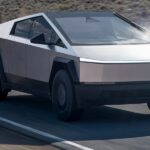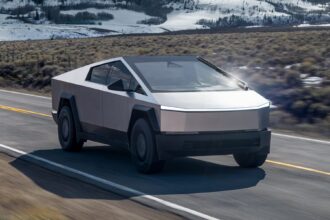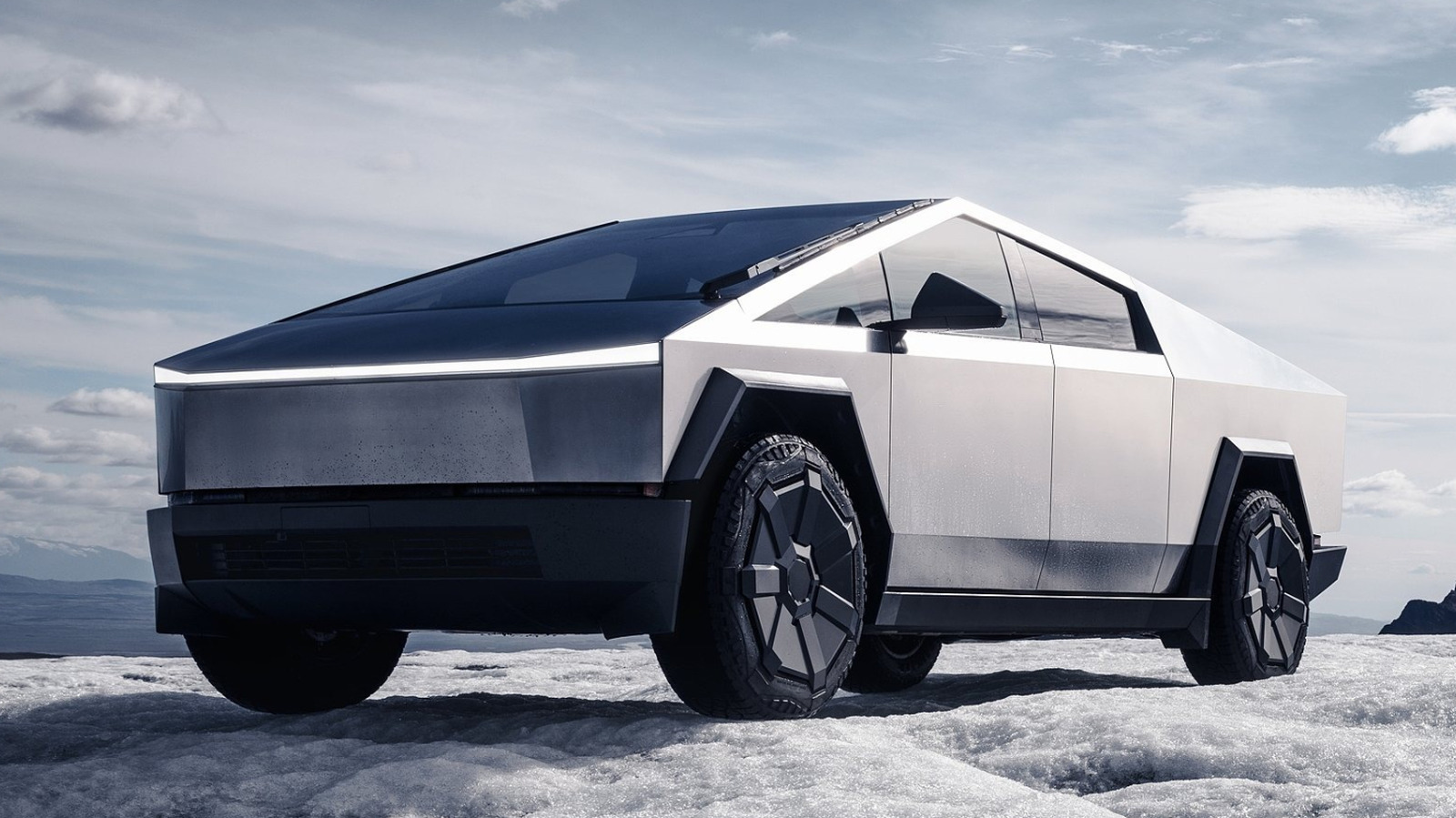
Elon Musk chose the small hours to deliver the news. At 12:30am on Friday, the Tesla chief executive posted on X that the company will wind down Cybertruck production at Gigafactory Texas around the middle of 2027, freeing capacity for a sharp increase in Cybercab output. The Austin plant is the only place in the world that builds the pickup, so the decision amounts to a full stop rather than a pause.
The announcement had been trailed, and the confirmation is now in. What is clear is the shape of the swap: the same line that produced a stainless steel wedge weighing around three tonnes will be retooled for a two-seat robotaxi with no steering wheel, no pedals, no side mirrors and no brake lines.
A truck that arrived late and left early
The Cybertruck’s public life has been short and unusually bruising. It was revealed on 21 November 2019 with a staged demonstration that cracked a supposedly unbreakable window, and the production version did not reach customers until July 2023. By then the specifications had drifted a long way from the concept, and prices at launch sat far above the figures originally announced on stage.
The sales arc followed the same pattern. Volume rose briefly after launch, then fell sharply and never recovered, and the Cybertruck never came close to overtaking the Ford F-Series in US pickup sales. That is a striking outcome for a vehicle pitched as a radical rethinking of the pickup truck, and it fits the wider picture of a segment that has struggled to convert hype into registrations, as we noted when US electric pickup sales stalled.
Recalls, car washes and a snapped frame
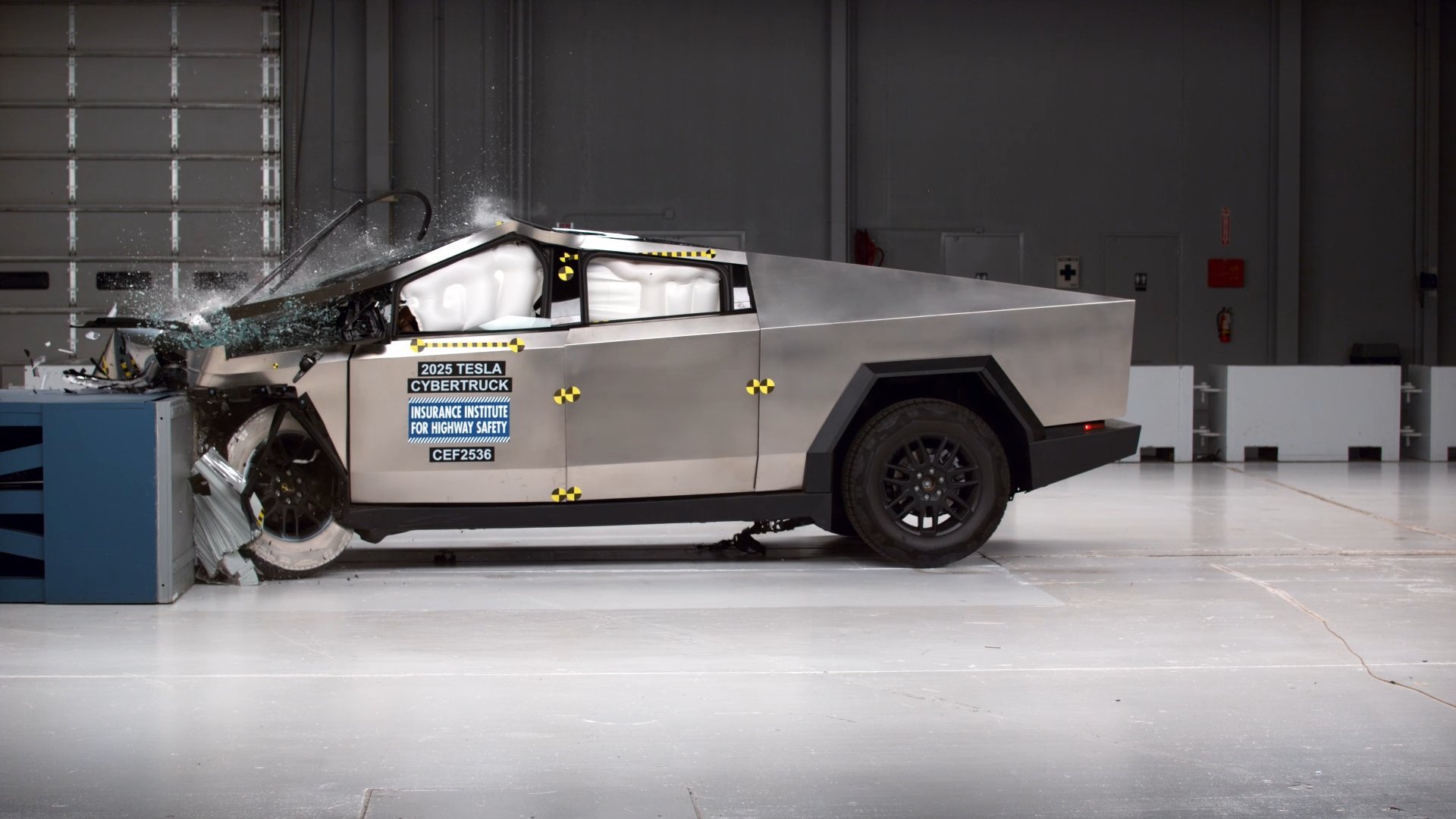
The engineering record has not helped. The Cybertruck has been subject to multiple recalls, including one in May over wheels falling off, alongside others covering parts that detach in use. Owners have reported poor performance in a car wash, an area where the flat panels and sharp edges have proved less than forgiving.
Off-road, the truck has also taken public knocks. It was outperformed by a Ford F-150 in a head-to-head test, and a frame snapped during off-road testing. For a vehicle whose marketing leaned heavily on toughness and capability, those are the sort of stories that travel further than any specification sheet.
Wes Morrill, the Cybertruck’s lead engineer, offered a more generous framing in his own post. The Cybertruck, he wrote, was “an incredible technology development platform and lives on through Cybercab.” It is the most coherent explanation of the programme’s value that anyone at Tesla has given, and it reframes the truck as a test bed rather than a product line.
What happens to the Cybertruck fleet?
Musk was asked directly about the end of the line by a fan who called it the “end of an era.” His reply: “True, but the Cybertruck fleet will be around for a long time.” Quite what that means is unclear. It could refer to the roughly three years of vehicles already on the road, to service and parts obligations, or to something else entirely. Tesla has announced no plans to move Cybertruck production to another plant, so the model’s future outside Texas appears to be one of support rather than renewal.
One buyer has done more than most to keep the line busy. SpaceX, which Musk also runs, is the largest purchaser of Cybertrucks. The sight of a fleet of them at the company’s Starbase facility in Texas has become familiar, and it is a reminder that a meaningful slice of demand has come from within Musk’s own business empire rather than from the retail market the truck was designed to conquer.
The wider reset at Tesla
The Cybertruck decision is not an isolated move. The company’s centre of gravity is shifting decisively from cars sold to individuals towards autonomous hardware, and the Cybercab is the clearest expression of that.
Cybercabs are already operating in several US states, and in October Tesla said it was weeks away from selling them to private buyers. That ambition has met a more complicated reality, as we reported when the Cybercab sales target hit a regulatory roadblock. The National Highway Traffic Safety Administration opened a formal investigation into the Cybercab in September, and it was reported on Thursday that Tesla wanted its sworn answers to the agency kept secret. A vehicle without a steering wheel or pedals raises questions that existing federal motor vehicle safety standards were never written to answer, and the outcome of that process will shape how quickly the Texas line’s new product can reach private customers.
The Cybertruck’s real legacy is a robotaxi
Strip away the theatrics and the Cybertruck ends as something other than a failed pickup. It was a rolling laboratory: a stainless steel exoskeleton, 48-volt electrical architecture, steer-by-wire and a production system built around large castings. Those are precisely the ingredients a steering-wheel-free robotaxi needs, and the fact that the Cybercab inherits the same building and much of the same engineering says plenty about what Tesla thinks the truck was for.
The irony is hard to miss. A vehicle sold on the promise of revolutionising the pickup ends up as a footnote in the development of a vehicle that does not even have a driver’s seat. For buyers who put down deposits in 2019 on the strength of a US launch price of $39,900, the legacy will feel rather less generous. For Tesla, the calculation is simpler: a low-volume, recall-prone truck makes way for a product the company believes can be built and sold in far greater numbers, if the regulators allow it.
The Cybertruck will not disappear in 2027. The vehicles already sold will stay on the road, and SpaceX will keep adding miles to its own. But the line that built them will belong to the Cybercab, and the pickup that was meant to change everything will be remembered as the test mule that did.
We covered tesla end cybertruck production in more detail elsewhere.
We covered rimac nevera production end in more detail elsewhere.
We covered tesla cybercab goes sale in more detail elsewhere.