A Coordinated Strike Against Organised Car Crime
Operation Alliances is not a one-off. This was the third national crackdown of its kind, and the scale reflects how police now view vehicle crime: not as opportunistic nuisance offending, but as organised criminality with supply chains, customers and significant profits.
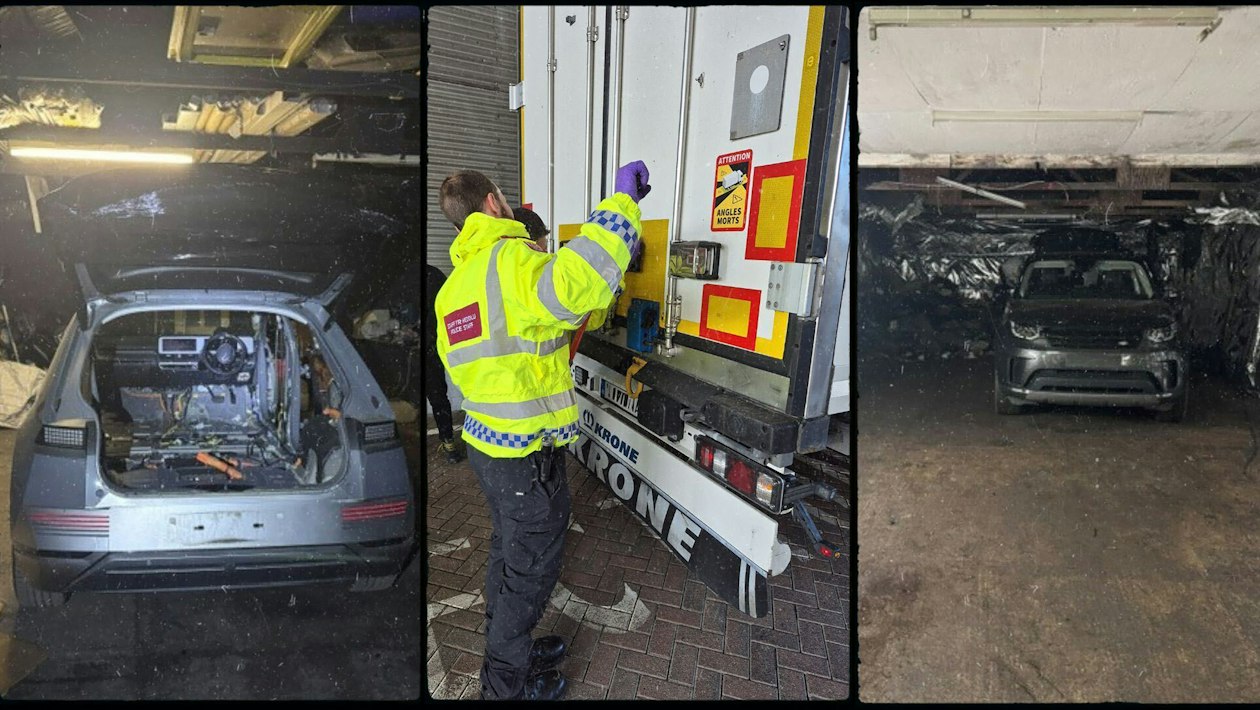
The 286 arrests covered more than just car theft. Forces also detained people for drugs and weapons possession, violence, and attempts to avoid court by leaving the country. The week-long push was designed to hit the networks that make stealing cars worthwhile, from the thieves themselves to the premises where stolen vehicles are broken down and the plates that mask them.
Assistant chief constable Sarah Grahame, the NPCC’s vehicle crime lead, said: “The results of the third Operation Alliances demonstrate what can be achieved when police forces and our partners work together, sharing intelligence and targeting our resources where they can have the greatest impact.”
She added: “Vehicle crime is not a low-level crime with minimal consequences. It affects people and communities every day and, as the range of arrests during this operation demonstrates, is often linked to other serious offending.”
Chop Shops and Cloned Plates: The Engine Room of Car Theft
Among the headline figures, 18 arrests were specifically linked to chop shops, the illicit workshops where stolen cars are dismantled and their components sold on. Police recovered more than 300 stolen parts worth in excess of £100,000 during the operation. These are the operations that turn a stolen hatchback into a pallet of doors, engines and alloy wheels that are far harder to trace than the car they came from.
The second front is cloning. A cloned plate is a copy of another vehicle’s registration, typically fitted to a stolen car so it can pass ANPR cameras without raising an alert. The stolen vehicle then travels the road network wearing the identity of an innocent driver’s car, and every camera it passes logs a journey that driver never made.
This is not a fringe problem. As our coverage of Ghost Plates: One in 15 UK Cars Said to Dodge Cameras as AI Crackdown Begins sets out, the British number plate system has long allowed private businesses to manufacture plates with limited oversight, and that gap is now being exploited at scale. Operation Alliances is, in part, an attempt to close it from the enforcement side.
The Cloning Menace Facing Innocent Drivers
The most troubling consequence of cloning is what happens to the people whose registrations are copied. An RAC freedom of information request found that 11,402 drivers contacted the DVLA in 2025 after receiving fines they did not recognise. That is a nine per cent increase on the previous year and almost double the total recorded in 2018.
For those drivers, the fallout is a bureaucratic nightmare: penalty charge notices, congestion charge bills, speeding tickets and even court summonses for journeys made by a stranger in a stolen car wearing their identity. Proving you were not there falls to you, often while the real offender remains untraceable.
Simon Williams, head of policy at the RAC, said: “The continued rise in the number of cloned vehicles is alarming and confirms that cloning has become the menace of modern-day motoring, as it leaves innocent drivers having to fight to prove they weren’t driving their own vehicle at the time and place camera evidence shows.”
He pointed the finger at the supply side: “If number plate suppliers were carrying out all the checks they’re supposed to, it would be much harder for dodgy drivers to buy cloned plates in the first place.”
Number Plate Suppliers Under Scrutiny as the DVLA Promises Action
Williams’s criticism lands on a genuine weak point. A BBC investigation found reporters were able to buy dodgy plates for £40 in just eight minutes at a market, with none of the document checks the law requires for legitimate plate supply. Registered suppliers are supposed to verify that a customer is entitled to the registration they are ordering, checking documents such as the V5C logbook and proof of identity. When those checks are skipped, a cloned set can be in a thief’s hands within minutes.
The DVLA said it was “cleaning up the register, strengthening compliance and enforcement” and working with authorities to “tackle suppliers who break the rules”. That is welcome, but the RAC’s data suggests the problem is growing faster than the clean-up. Cloning sits at the intersection of two failures: suppliers who do not check, and a registration system that is only as secure as the businesses licensed to print its plates.
Stolen Car Numbers Fall, But the Problem Has Not Gone Away
There is some encouraging news in the broader statistics. Almost 55,000 stolen cars were reported to the DVLA in 2025, an 11 per cent decrease on 2024. Fewer cars are being taken, and operations like Alliances are part of the reason.
Yet 55,000 is still a vast number, equivalent to around 150 vehicles a day. And the fall has not stopped police from ramping up their response. Several dedicated vehicle crime taskforces have been launched recently, reflecting a recognition that theft gangs are adaptable, well organised and often connected to other criminal enterprises.
The NPCC’s message is that this is not a victimless or minor offence. A stolen car can mean a family left without transport to work or school, an insurance claim that pushes premiums up for everyone, and, in the worst cases, a vehicle used in further crime. The links between vehicle theft and drug dealing, weapons offences and violence run through the Alliances arrest figures.
What Drivers Can Do to Protect Themselves
The operation shows police are taking the fight seriously, but drivers can reduce their own exposure. The basics still matter: park in well-lit, overlooked locations, use a steering lock or wheel clamp as a visible deterrent, and consider a tracker, which also helps police recover a vehicle if the worst happens. Keyless entry cars are particularly vulnerable to relay attacks, so storing fobs in a signal-blocking pouch at home is a sensible, cheap precaution.
On cloning, prevention is harder because the crime targets your registration, not your car. But the warning signs are worth knowing. If you receive a penalty charge notice, congestion charge demand or speeding ticket for a location you have never driven to, do not simply pay it. Contact the issuing authority promptly, explain that you believe your plate has been cloned, and report it to the police. Keep photographs of your car showing its plates and any distinguishing features, and check your vehicle’s MOT and tax records for anything unexpected.
The DVLA and police can flag a cloned registration once it is reported, which helps protect you from repeat notices. Acting quickly also preserves the evidence needed to challenge future fines.
The Wider Fight Against Car Theft and Cloned Plates
Operation Alliances is a snapshot of a two-front battle. On one side, police are dismantling the chop shops and theft gangs that turn stolen cars into profit. On the other, they are grappling with a cloning epidemic fuelled by plate suppliers who are not doing the checks the law demands.
The 286 arrests and £2.6m in recovered vehicles are a genuine result. But the RAC’s rising figures and the BBC’s eight-minute plate purchase show that enforcement alone will not close the gap. Until every supplier verifies every order, and until the register is robust enough to make cloning difficult, drivers will keep receiving fines for journeys they never made. The third Operation Alliances has shown what coordinated policing can achieve. The next step is making the plates themselves harder to abuse.
Related: jam sandwich police cars.
Related: chelsea mirror theft spree.