Polaris RZR Pro R Boost: The Most Powerful Side-by-Side on Sale
Polaris has never been shy about pushing the boundaries of what a side-by-side can do, but the new RZR Pro R Boost represents a genuine leap. With 275hp on tap from a turbocharged four-cylinder engine, it claims the title of the most powerful side-by-side on sale, and it does so with a level of engineering sophistication that would have seemed implausible in this segment just a few years ago. US pricing starts at $51,994 for the two-seat model, rising to $55,994 for the four-seat version.
The Boost builds on the existing Pro R platform, but the headline change is under the engine cover. This is not a mild fettling exercise. Polaris has taken the naturally aspirated ProStar Fury 2.0-litre inline-four and bolted on a 60mm turbocharger developed in partnership with Garrett, revising the internals to cope with forced induction. The result is 275hp and 223 lb-ft (around 302Nm) of torque, a 22% increase over the standard Pro R’s 225hp.
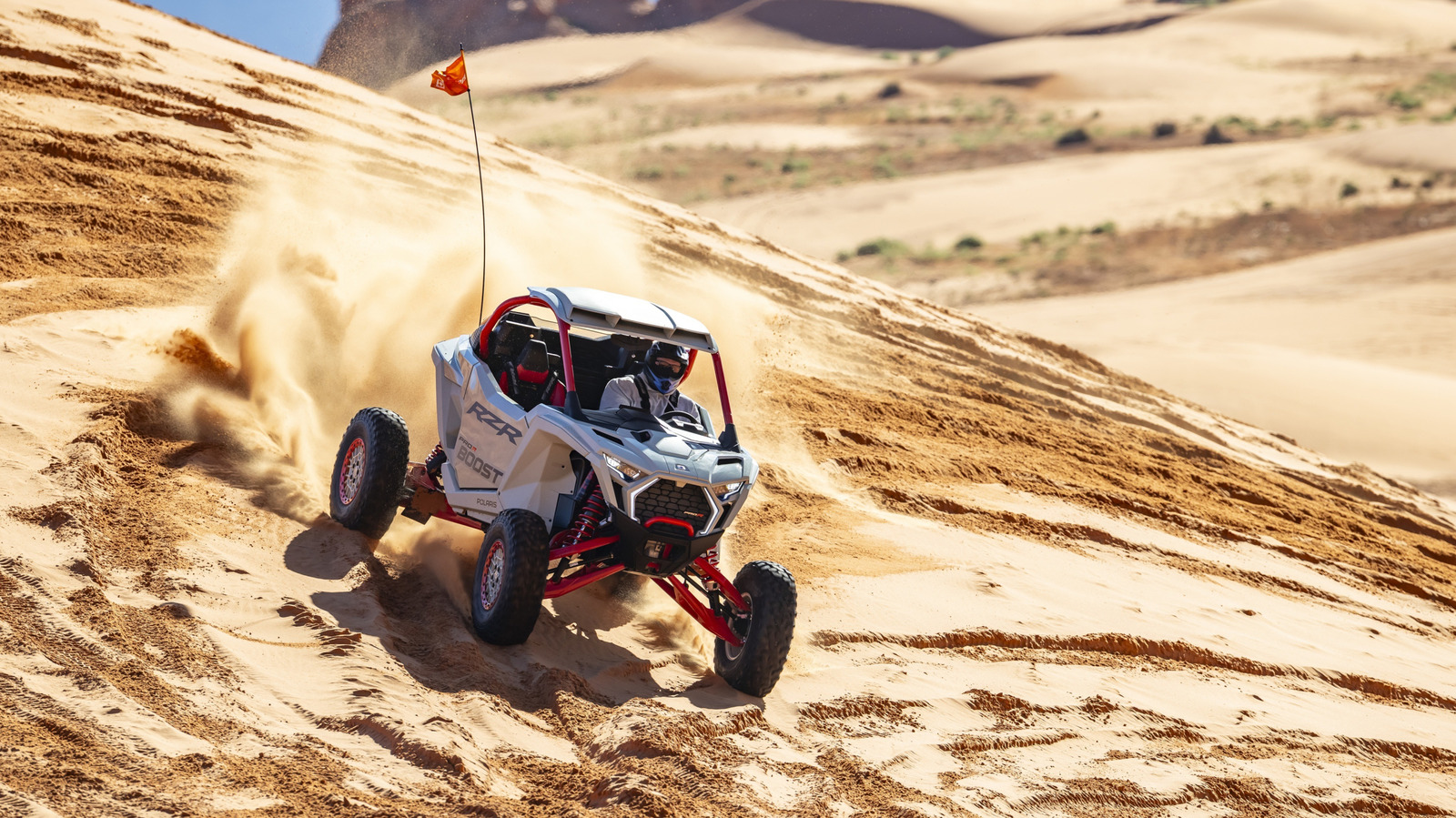
A broad torque curve and no derating
What matters more than the peak figure is how the power is delivered. Peak torque arrives at 6,000rpm, but 215 lb-ft is already available from 4,000rpm and holds flat through most of the rev range. The engine revs beyond 8,000rpm, so there is usable performance wherever you are in the rev band.
Polaris also claims the Boost maintains full output at elevations up to 10,000 feet (around 3,050m) and ambient temperatures up to 115°F (46°C) without derating. That is a significant point for anyone who has driven a turbocharged vehicle in extreme heat or at altitude and felt the power drop away. The turbo is integrated with the exhaust manifold, and residual boost pressure is used to keep the turbo spinning rather than being vented, which helps reduce lag.
The power advantage over rivals is clear. The Can-Am Maverick R produces 240hp, and the Kawasaki Teryx H2 manages 250hp. Neither matches the Polaris on torque. The turbocharged engine is also a few decibels quieter than the naturally aspirated Pro R, and Polaris has improved engine isolation to cut vibration in the cabin.
CVT with a Boost-specific tune
Power reaches the ground through a continuously variable automatic transmission, but this is not the same CVT found elsewhere in the range. The Boost gets a specific tune with a larger secondary clutch featuring more cooling fins, a stronger drive belt and half-shafts, and a beefier front differential. Three air intakes keep the drive belt cool under sustained full throttle, which is exactly the kind of scenario this vehicle is built for.
A toggle switch shifts from rear- to four-wheel drive and can lock the front differential, while low range is provided for slow-speed technical work. The Can-Am’s dual-clutch automatic is widely regarded as the more engaging gearbox in this segment, but the Boost’s CVT is a strong performer with linear power delivery and only slight initial turbo lag.
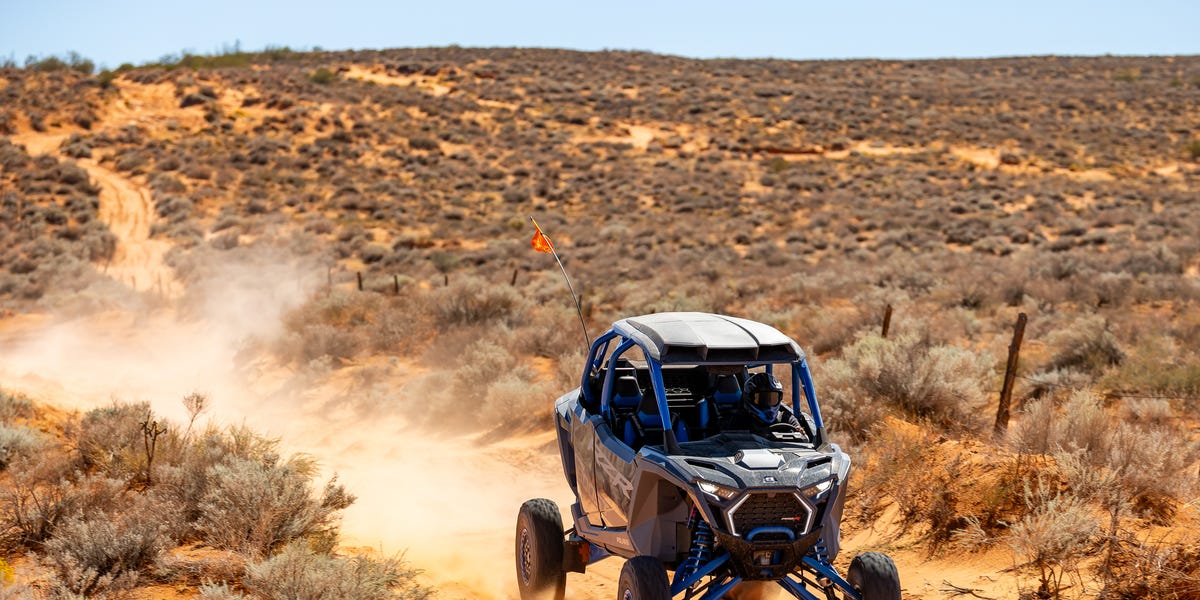
Adaptive dampers and two feet of travel
The chassis is where the Pro R Boost really distinguishes itself. Adaptive Fox Live Valve dampers with electronic compression and rebound adjustment work up to 200 times per second, and there are four modes: Comfort, Rock, Baja and Track. Comfort proved the best all-round setting in testing, which says something about how well sorted the default mode is.
A steering-wheel button temporarily switches the dampers to their firmest setting for big impacts, a useful feature when you see a serious obstacle approaching and want maximum body control. There is around two feet of front and rear wheel travel, and the wide track places the tyres at the outermost corners, giving very steep approach and departure angles.
Rock mode numbs throttle response for low-speed manoeuvres, and the low-end torque restarts the vehicle cleanly from a standstill on near-vertical rock. That combination of low-speed control and high-speed composure is not easy to achieve, and it speaks to the breadth of capability Polaris has engineered into this machine.
Cooling and packaging improvements
One of the more thoughtful changes is the relocation of the radiator behind the occupants, fed by a roof scoop. This removes the front-mounted heat source that previously blew hot air into the cockpit, a genuine comfort improvement during hard driving. The roof scoop has no physical connection to the intake or radiators, which would block rear visibility and airflow, but instead directs high-velocity air down towards the rear-mounted radiators and intake tract.
It is the kind of detail that separates a machine designed for serious use from one that merely looks the part. Anyone who has spent a long day in an off-road vehicle will appreciate the difference.
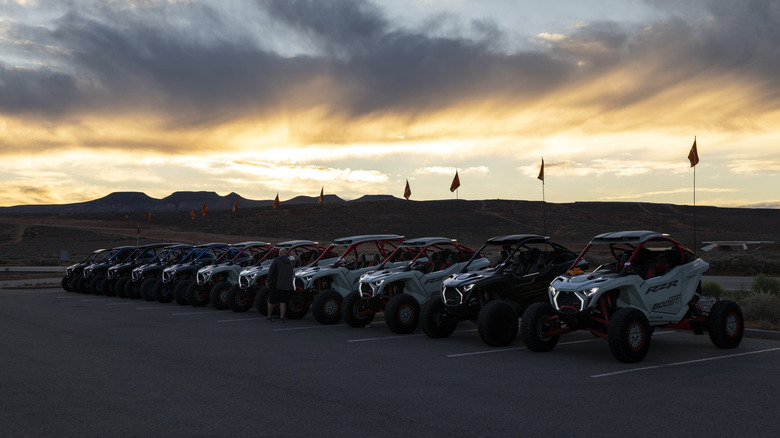
Interior and equipment
The cabin is well equipped for this class. A 10.4-inch touchscreen runs Apple CarPlay, and there is a Group Ride feature for tracking other riders, ventilated seats and a Rockford Fosgate stereo. Jalopnik’s tester, at 6ft 2in and 290lb (around 131kg), fitted comfortably, though his right knee occasionally contacted the centre console, for which padding was suggested, and the ignition key caught his leg on rough sections.
That is a minor criticism in the context of what the vehicle does well, but it is worth noting for taller drivers considering a purchase. The interior is spacious enough for adults to spend a full day aboard without complaint, which is more than can be said for some rivals.
Driving impressions from Sand Mountain
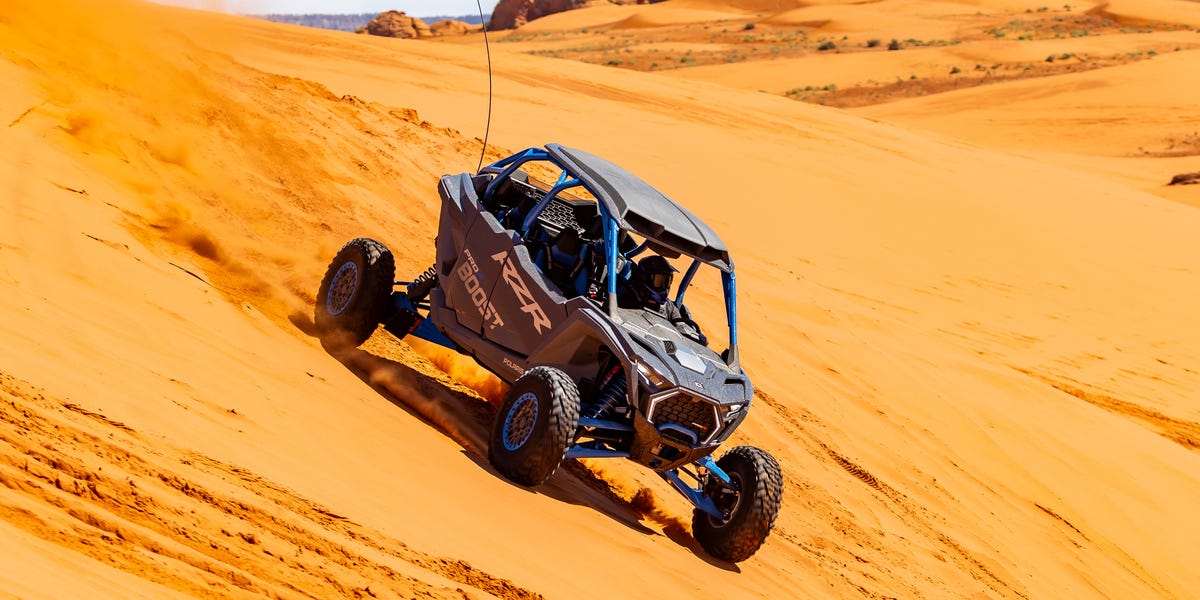
Testing took place in the Sand Mountain off-road area near St. George, Utah, and the verdict from those who drove it was uniformly positive. Car and Driver found the Boost handles moguls and dunes best at speed, describing its capability on terrain resembling the surface of Mars as “truly impressive.” Jalopnik went further, calling it an “off-road cheat code.”
The extra power over the naturally aspirated Pro R is most noticeable in high-speed sections, where the Boost simply carries more momentum across rough ground. There is only minor turbo lag to contend with, and the broad torque curve means you are rarely caught out of the power band.
Pricing and availability
US pricing starts at $51,994 for the two-seat configuration and $55,994 for the four-seat. Ultra models add adaptive anti-roll-bar links for an extra $3,000, though neither outlet tested this feature. For context on what else that money buys in the US market, the 2027 Ford Bronco RTR: US Pricing Confirmed for Ford’s Raptor Alternative starts at just over $50,000 before destination and delivery [verify against linked article], which shows how closely this side-by-side is priced to a serious road-going off-roader.
UK availability has not been announced.
What the RZR Pro R Boost Gets Right
The Polaris RZR Pro R Boost is not a subtle machine, and it is not meant to be. Polaris claims it as the most powerful side-by-side on sale, and the torque curve makes that power usable, while the chassis has the travel and adaptive damping to cope when the terrain turns hostile.
The CVT is not the most engaging gearbox in the segment, and the Can-Am Maverick R has its own considerable charms. But the Polaris makes a compelling case as the most complete high-performance side-by-side available, one that is as happy crawling up near-vertical rock as it is flying across dunes at speed.
For buyers in the US market, the pricing is competitive with the upper end of the road-going off-roader segment. For everyone else, the RZR Pro R Boost remains a fascinating statement of intent from a manufacturer that continues to define what this category can be, and the engineering on display here is worthy of attention regardless.