Bigger battery, longer range
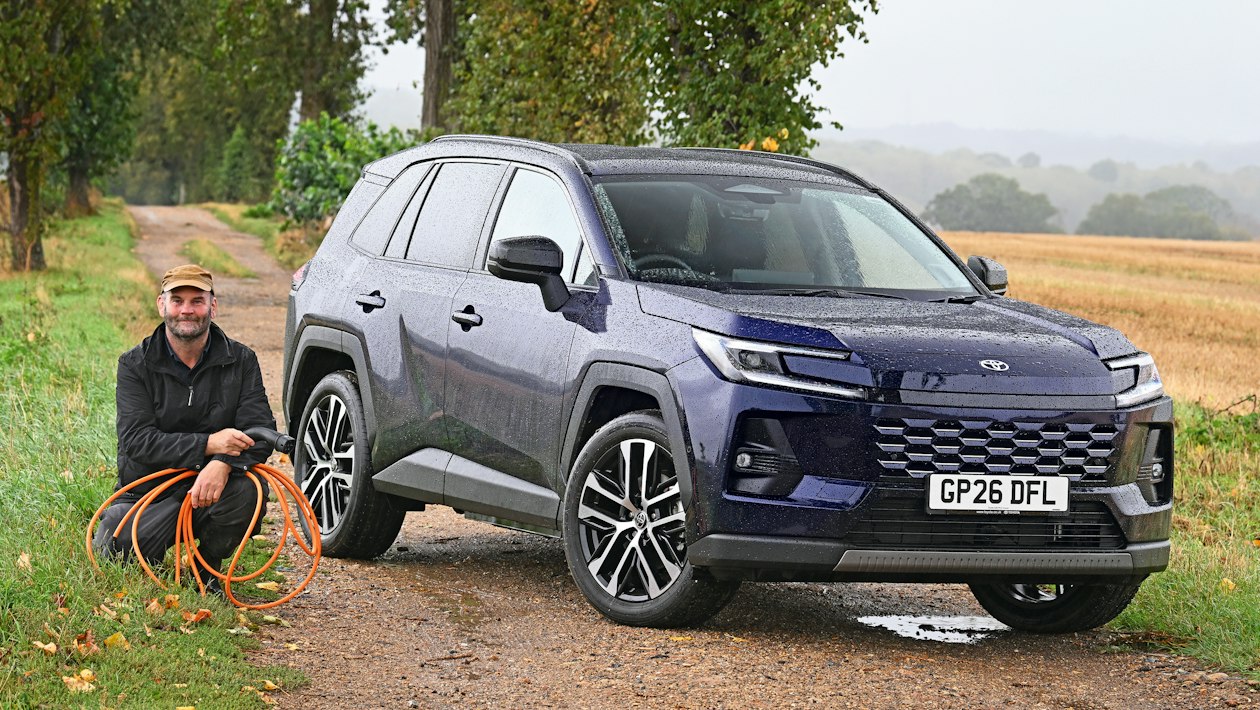
The numbers tell the story of the generational leap. The battery grows from 18.1kWh to 22.6kWh, and the electric motors have been uprated to match. The result is a claimed electric range of 85 miles, which is a full 39 miles more than the previous model could manage.
That is not a marginal improvement. It is the difference between a plug-in hybrid that can handle a commute and a plug-in hybrid that can handle most of a week’s local driving without troubling the petrol tank. The 2.5-litre petrol engine remains, of course, serving as back-up for longer journeys and providing the combined output that makes the RAV4 feel brisk when both power sources are working together.
Real-world fuel and efficiency
Claims are one thing; real-world data is another entirely. In the first few weeks of our test, we covered 786 miles and still had two-thirds of the original tank of fuel remaining, equating to roughly 325 miles of back-up range. The trip computer reported an average of 85 mpg over that distance, a figure that reflects a car used predominantly on electric power rather than one running mostly on petrol. We will calculate our own brim-to-brim figures at the next fill-up to see how the indicated number holds up.
Efficiency in pure-electric mode has been measured at 3.7 miles per kWh. We have charged five times so far, and the battery has been fully depleted on only two occasions. That pattern of use suggests the RAV4 is doing exactly what a plug-in hybrid should: covering the bulk of its mileage on electricity while keeping the engine available for the occasions when it is genuinely needed.
It is worth noting that verifying manufacturer claims is rarely straightforward, and the industry has a mixed record on the subject. The work of publications like Car and Driver, whose Inside Car and Driver’s Testing Regime: 400 Cars a Year, 200 Data Points and the Claims It Has Disproved has exposed discrepancies between official figures and reality, serves as a useful reminder that independent long-term testing remains essential. Our own data will accumulate over the coming months.
Living electric
Charging has proved straightforward. A 7.5kW home charger takes around three hours to replenish the 22.6kWh pack from empty, which is a notable improvement on the previous car. The Mk5 took two and a half hours to add roughly half the range that the new model delivers in a similar timeframe, which puts the progress into perspective.
The added range has already changed the way the car is used. A round trip from our London base into the countryside, almost reaching the coast, was completed entirely on electric power. That is precisely the kind of journey that would have required petrol in the previous-generation car, and it demonstrates that the RAV4 PHEV can function as an EV for far more than the school run.
What it’s like to drive
On the road, the RAV4 Plug-in Hybrid behaves like an electric vehicle in daily use. Pulling away from a standstill is smooth and immediate, and at town speeds the petrol engine stays silent unless you ask for serious acceleration. On a motorway run at 70mph, wind and road noise are well contained, and the upright driving position gives a commanding view that suits the car’s family brief.
The transition between electric and hybrid operation is smooth enough that most drivers will rarely notice it. It is only when the battery is depleted or when significant acceleration is demanded that the engine makes its presence felt, and even then it does so without the drone that afflicted some earlier Toyota hybrids. The continuously variable transmission is at its best under gentle throttle; press harder and the engine note rises in a way that is effective rather than enjoyable.
Cabin and tech
The interior represents a significant step forward. A 12.3-inch driver’s display and a 12.9-inch touchscreen are now standard across the entire RAV4 range, and the infotainment system is a clear improvement on the previous generation’s offering. Response times are quicker, the interface is more logical and the graphics are sharper.
The parking camera deserves particular praise, incorporating a virtual overhead transparent outline of the car that makes manoeuvring in tight spaces considerably easier. It is the sort of feature that sounds like a gimmick until you use it in a cramped multi-storey car park.
It is also reassuring that Toyota has kept a sensible balance of physical and digital controls. The climate controls remain physical buttons, which is welcome, and the result feels more usable on the move than the touchscreen-heavy layouts favoured by some rivals.
Excel trim highlights
Our test car sits in Excel specification, which brings leather seats and a generally higher-quality interior that feels a step up from what went before. It is a comfortable place to spend time, with supportive seats that should prove their worth on longer journeys.
The head-up display, fitted to Excel and GR specifications only, projects sat-nav directions clearly onto the windscreen, complete with roundabout icons and arrow directions. The mapping is equally legible on the central touchscreen and the driver’s display, making it easy to follow a route without taking your eyes far from the road.
Gripes so far
No car is perfect, and the RAV4 has already revealed a few irritations. The driver-attention warning system is infuriating in urban driving, beeping and prompting in a manner that seems oblivious to the reality of town driving, where looking around is not merely advisable but essential.
Adjusting the head-up display requires a sequence of steering-wheel button presses and toggle movements that is far from intuitive, though it becomes second nature once learned. More persistent is the cable storage issue carried over from the previous model. Two charging leads are awkward to stow under the boot floor, and the automatic tailgate will not close and lock unless the cables are properly stowed and the underfloor lid folded flat. It is a small thing that becomes wearing over time.
Price and what’s next
At £50,045, the RAV4 Plug-in Hybrid Excel sits firmly in premium territory. Whether it justifies that outlay depends on how the next few months unfold, and we will be tracking fuel consumption, electric range in varying conditions and the overall ownership experience.
The early signs are promising. An 85-mile electric range that translates into genuine electric-only journeys, 85 mpg over the first 786 miles and an interior that finally feels worthy of the price tag all point in the right direction. But the real test will come as the miles accumulate and the novelty fades. We will report back with the full verdict in due course.
Spec at a glance
- Model: Toyota RAV4 Plug-in Hybrid Excel
- Price: £50,045
- Battery: 22.6kWh (up from 18.1kWh)
- Claimed electric range: 85 miles
- Observed electric efficiency: 3.7 miles per kWh
- Indicated average economy: 85 mpg over first 786 miles
- Charging: Around three hours on a 7.5kW home charger
- Test period: Ongoing
Related: 471 616 miles dead.