
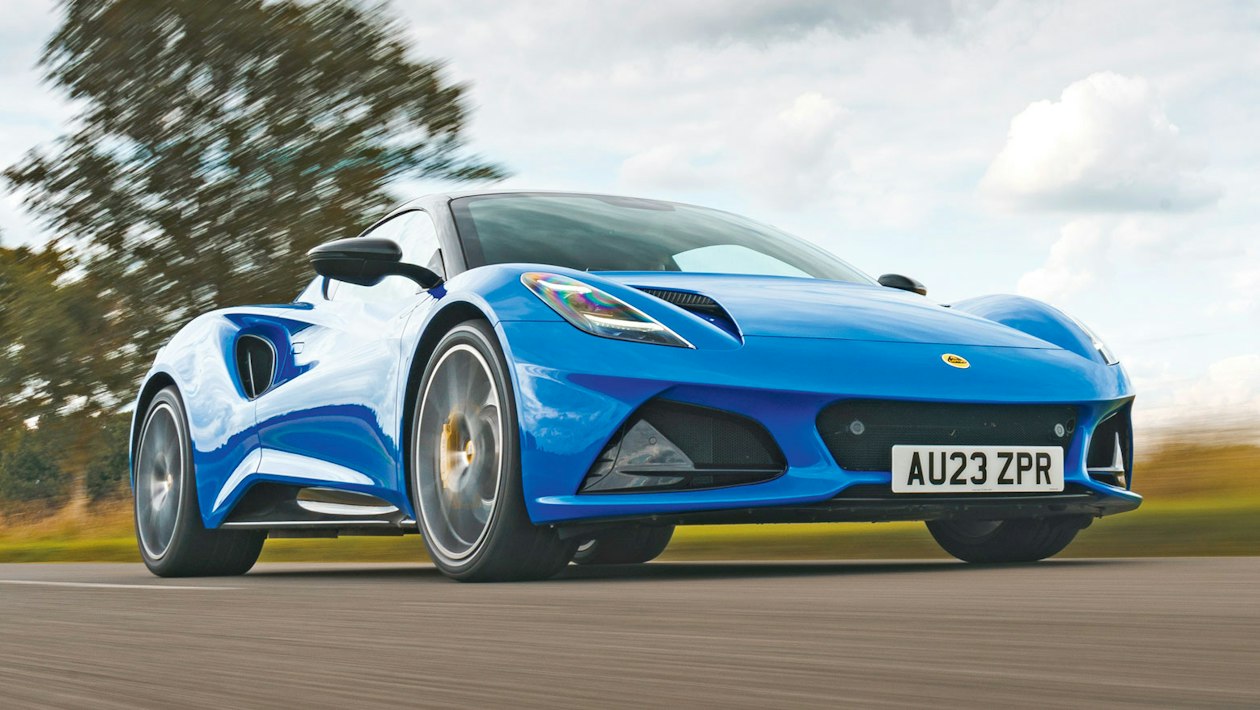
The Emira’s place in the Lotus story
Lotus has had a turbulent few years, and critics have argued that its attempt to go electric-only has backfired. The Emira sits right at the pivot point of that story: a conventionally powered mid-engined sports car built to compete with the Porsche 718 Cayman and the Alpine A110, and the last of its kind from Hethel. The broader direction of performance brands has been anything but settled, as our look at how Jaguar and Lotus chart divergent electric futures makes clear. The Emira is the car that closes one chapter while the next is still being written.
Model timeline and engines
At launch, there was only one powertrain: a supercharged 3.5-litre V6 of Toyota origin, mounted in the middle and producing 400bhp, paired with either a six-speed manual or a paddle-shift automatic.
From July 2023, Lotus added a second option: a 2.0-litre turbocharged four-cylinder supplied by Mercedes-AMG. This all-alloy unit produced 360bhp and came exclusively with an eight-speed dual-clutch automatic. Initially, every four-cylinder car was a generously equipped First Edition.
The range was then reshuffled in stages. In March 2025, the 2.0-litre became the Turbo SE, with power raised from 360bhp to 400bhp, and the 3.5-litre was renamed simply the V6. The high-spec V6 SE joined the line-up in June 2025. The Emira 420 Sport followed in 2026, its 2.0-litre engine tuned to 414bhp. For used buyers, the practical upshot is simple: early four-cylinder cars are 360bhp, the Turbo SE is 400bhp and the 420 Sport is 414bhp, which is worth knowing before you start comparing adverts.
What it’s like to drive
On the road, the Emira delivers 0-62mph in around four seconds, sharp steering, plenty of grip, superb stability and a strong mid-range punch. It feels every inch the junior supercar, and the chassis is widely regarded as one of the finest in its class.
The one significant caveat concerns the suspension. The standard set-up is judged too firm for British roads, and the Touring specification is the one to seek out. If you plan to use the car regularly rather than save it for sunny Sundays, that is arguably the single most important option to check on any prospective purchase.
V6 or four-cylinder?
This is the decision that will define your ownership. The two engines are close on paper, with 400bhp for the V6 against 360bhp for the early four-cylinder and 400bhp or 414bhp for later versions, but they behave very differently.
The V6 wins on character. It has the better soundtrack and noticeably stronger low-down torque, and it is the only route to a manual gearbox. That manual is not the slickest transmission in the business, so do not expect the rifle-bolt precision of a Honda Type R, but it remains the purist’s choice and the one that will likely hold its following longest.
The four-cylinder is the more modern-feeling car in some respects, but it has been criticised for a shortage of low-rev urge and a less satisfying soundtrack. If you spend a lot of time on motorways or in traffic, the dual-clutch automatic makes a strong case for itself. If you buy a sports car for the sense of occasion, the V6 is hard to argue against.
Trim and option packs
Standard equipment is generous by sports car standards. Every Emira came with powered folding door mirrors, rear parking sensors, heated seats, climate control, cruise control, Apple CarPlay and Android Auto, and a 10.25-inch touchscreen.
Three option packs were offered, and all were fitted as standard to First Edition cars:
- Driver’s Pack: a choice of Goodyear or Michelin tyres and suspension settings
- Design Pack: privacy glass, aluminium pedals, painted brake calipers and a black Alcantara headlining
- Convenience Pack: front parking sensors, a rear camera and automatic wipers
Because so many used cars are First Editions, you will often get all three whether you want them or not. That is no bad thing, but it does mean the Convenience Pack’s parking aids are worth confirming on lower-spec later cars, where they may not be present.
The used market
Later models do appear on the used lists, though many are effectively new and unregistered, sitting with dealers rather than in private hands. Entry to Emira ownership currently starts at just under £60,000. Typical stock includes 2024 cars, most sitting between 5,000 and 17,000 miles, in both 2.0-litre automatic and 3.5-litre manual forms. That spread matters: a low-mileage manual V6 and a higher-mileage automatic four-cylinder can appear at similar money, so decide which you want before you start haggling.
Living with one
Practicality is limited, and the Emira is not a car for touring unless you pack very light. There is enough space for a weekend bag, but not much more, and anyone expecting grand tourer usability should look elsewhere.
Build quality and reliability remain the bigger question mark. The Emira has not shaken off Lotus’s long-standing reputation for variable fit and finish, and some would argue it has reinforced it, although plenty of owners report trouble-free ownership. The sensible approach is to check everything carefully: panel gaps, trim fit, electrical functions, roof condition and the operation of every switch. A pre-purchase inspection by a specialist is money well spent.
Rivals and the AutoPulse verdict
The obvious alternatives are the Porsche 718 Cayman, including its six-cylinder predecessors, and the Alpine A110. The Porsche is the more polished all-rounder and holds value accordingly, while the Alpine is lighter and more playful, a philosophy the brand continues to celebrate in concepts such as the Alpine A310 Vision design study shown in Paris. French charm of a different sort, perhaps, and a reminder that lightweight sports cars remain a niche worth protecting.
None of that diminishes the Emira. It remains one of the best sports cars on sale, flawed in places and all the more characterful for it. Buy a V6 manual with the Touring suspension, check it thoroughly, and you will own a genuine piece of Lotus history, the last of the petrol line and a car that rewards the careful buyer. For those weighing up the wider landscape of performance machinery, our round-up of Alfa Romeo’s greatest hits is a reminder of how few brands get to sign off a petrol era on their own terms. Lotus just did.


One Comment