
Jaguar Type 01: the four-door GT that isn’t a sedan
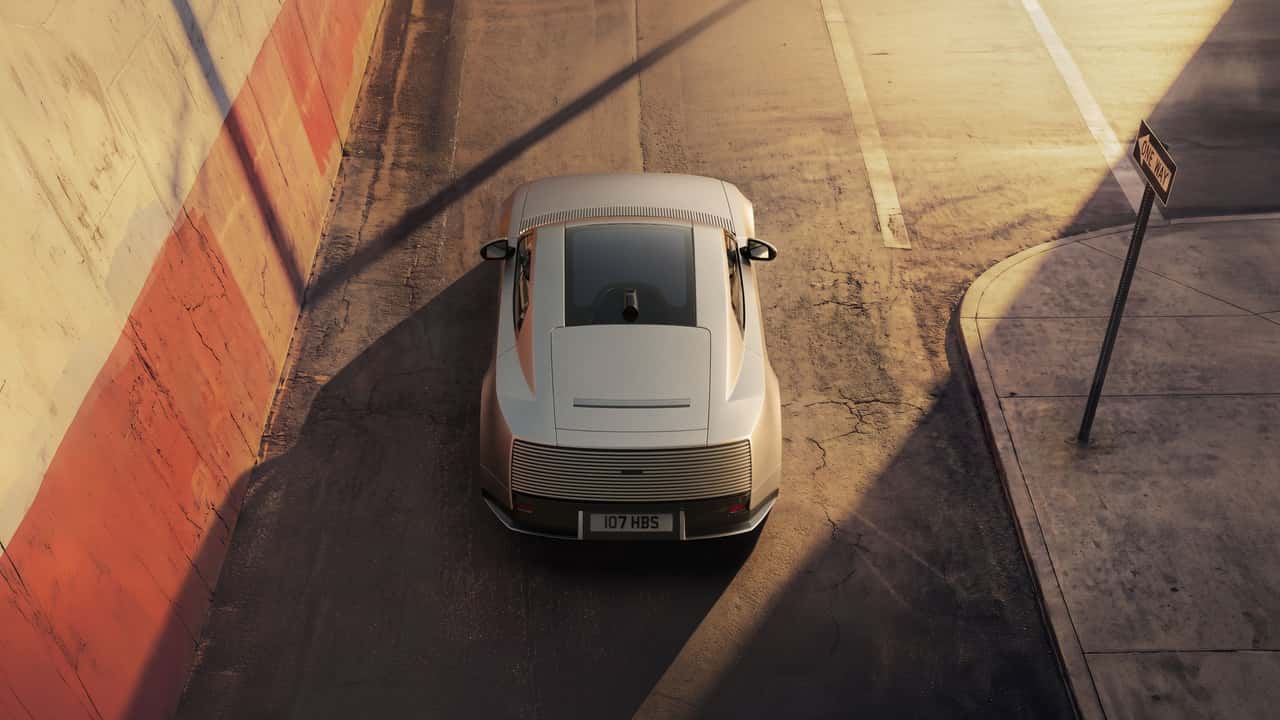
Jaguar’s reinvention begins with a car that executives are unusually protective about. At a briefing in Gaydon, JLR bosses corrected the record on one point in particular: the Type 01 is a four-door GT, not a sedan. It is a small distinction with a large purpose. Jaguar wants this car read as a grand tourer in the classic sense, a long-legged, low-slung flagship rather than a conventional three-box saloon with an electric motor where the engine used to be.
The numbers attached to it are substantial. The Type 01 is described as a 1,000bhp electric car, with pricing expected to start around $130,000 in the United States. That is the market Jaguar has identified as the most important for the new electric flagship, and it sets the tone for everything that follows. No UK price has been announced. For a fuller picture of the car itself, our Jaguar Type 01: Everything We Know About the 1,015bhp Electric GT Leading Jaguar’s Reinvention covers the reveal and the technical detail behind it.
Just as significant is what the Type 01 previews. Its design language will inform every future Jaguar, making this car a template rather than a one-off statement. Executives confirmed at Gaydon that the Type 01 is only the beginning of the brand’s rebirth, and that the next vehicle is coming soon. Announcements on the brand’s next moves will come at a later date; for now, the flagship holds the spotlight.
Jaguar’s rebirth strategy: aiming above BMW and Audi
Jaguar’s ambition is not to compete with the German premium mainstream on price. The plan is to be seen as a high-dollar luxury brand positioned above BMW and Audi, with marketing aimed squarely at wealthy younger buyers who may have no memory of Jaguar’s past models.
That shift extends to how the cars are sold. Jaguar intends to offer white-glove service, including test drives lasting days that could start or stop at locations such as a country club. It is a long way from a Saturday morning spin around a retail park.
Rawdon Glover, Managing Director of Jaguar, framed the strategy in terms of conviction rather than features.
“It’s very modern, it’s very bold,” he said. “We’re marketing the sense of the big idea; it’s about being unafraid to break convention, or refuse to compromise.”
Glover added that brands sometimes get too granular too quickly, which prevents people from buying into the big picture of what a brand stands for.
The next Jaguar is not expected to be cheap, and it will not sit anywhere near the price of the old E-Pace budget luxury crossover. That model represented the previous era. The new one has no room for it.
Lotus’s electric rethink
Lotus took the opposite gamble and found the ground shifting beneath it. The company bet its future on electric models including the Emeya and the Eletre, only to conclude fairly quickly that the approach was not a wise one. It is now offering hybrids and preparing a V8-powered supercar for 2028, positioned above the Emira in its two-door range.
The retreat is starkest in America, where Lotus has said its $233,000 electric SUV no longer makes sense to sell. That is a notable admission for a brand that had staked its revival on battery power, and it reflects a broader cooling in demand for high-priced electric performance cars in key markets.
Lotus is far from alone in rediscovering the internal combustion engine as a bridge technology rather than a relic. The wider market has been recalibrating on price and powertrain throughout the year, a trend visible across the market as buyers weigh up what they are prepared to pay for electrified motoring.

Lotus’s V8 supercar for 2028
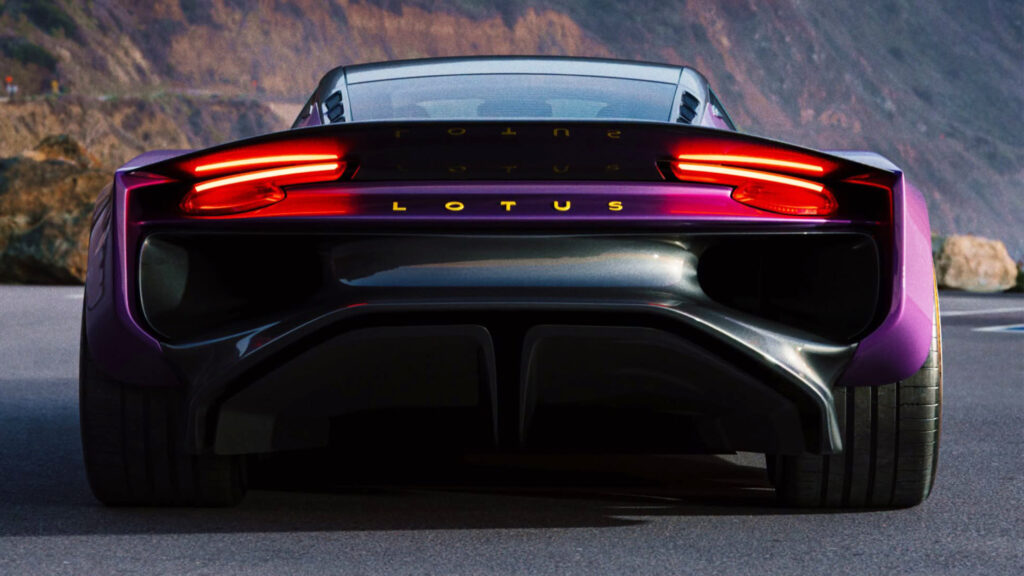
The new Lotus flagship is expected to draw heavily on the 2024 Theory 1 concept, a design study that pointed toward a more dramatic, aerodynamically aggressive future for the marque. Renderings by Khyzyl Saleem, a digital artist known for extreme reinterpretations of production cars, imagine an Emira-based machine with considerably more radical bodywork: a distinctive bonnet, a carbon fibre splitter and intakes similar to the Theory 1’s, enlarged side air intakes and new skirts.
At the rear, the rendered car carries a new decklid spoiler and a custom diffuser with two large venturi tunnels, the kind of underbody aerodynamics that signal serious downforce ambitions rather than styling flourish. Whether the production car follows those renderings closely remains to be seen, but the direction of travel is clear: this will be a more extreme machine than the Emira, and it will sit above it in the range.
The powertrain question
Lotus has not confirmed where the V8 will come from, though reports point to Mercedes-AMG as the most likely supplier. The timing fits. Mercedes-AMG recently launched a 4.0-litre twin-turbocharged flat-plane crank V8 that would suit a mid-engined application, offering the kind of high-revving character a Lotus flagship would need to justify its position.
The V8 is expected to be supplemented by a traditional hybrid system, possibly with an electric motor at the front axle. That arrangement would give the car all-wheel drive, instant low-down response and a degree of electric-only capability, without committing Lotus to the pure-electric path that has proven so difficult to sell at the top of the market.
Two brands, two bets on the same uncertain future
The contrast between Jaguar and Lotus is sharper than a simple difference of opinion. Jaguar has stripped its range back, abandoned the volume end of the market and committed fully to electric luxury, accepting that it must win over a new generation of wealthy buyers with a single, uncompromising flagship. Lotus, having tried the same leap, has stepped back to hybrids and a V8 supercar, keeping a combustion heart in its most important product.
Both approaches carry risk. Jaguar’s wager depends on whether enough buyers will pay six figures for an electric GT from a brand still rebuilding its prestige, and whether the white-glove, big-idea marketing lands with an audience that has plenty of established alternatives. Lotus’s wager depends on whether a hybrid V8 supercar can still command a premium in a market increasingly scrutinised for emissions, and whether the Emeya and Eletre can hold the line while the new flagship arrives.
What the two strategies share is a recognition that the electric transition is not a straight line. For all the industry’s confident timelines, the last few years have shown that demand at the top end is uneven, that price matters even in the luxury tier and that heritage brands cannot simply swap a powertrain and expect loyalty to follow. Jaguar has chosen to go first and go fast. Lotus has chosen to hedge. By 2028, when the V8 arrives and the Type 01 has had time to find its audience, we will have a much clearer idea of which reading of the market was right. Timing, as ever, is everything.






2 Comments