Tesla’s Cybercab plan: small at first, then scale
Speaking to analysts after the company’s third-quarter results, Tesla’s vice president of vehicle engineering, Lars Moravy, said public sales of the Cybercab would begin by the end of 2026. The approach would be deliberately cautious, he suggested, with Tesla starting small and scaling up as it learns about “delivery and ownership and fleet management of autonomous vehicles in customer hands.”
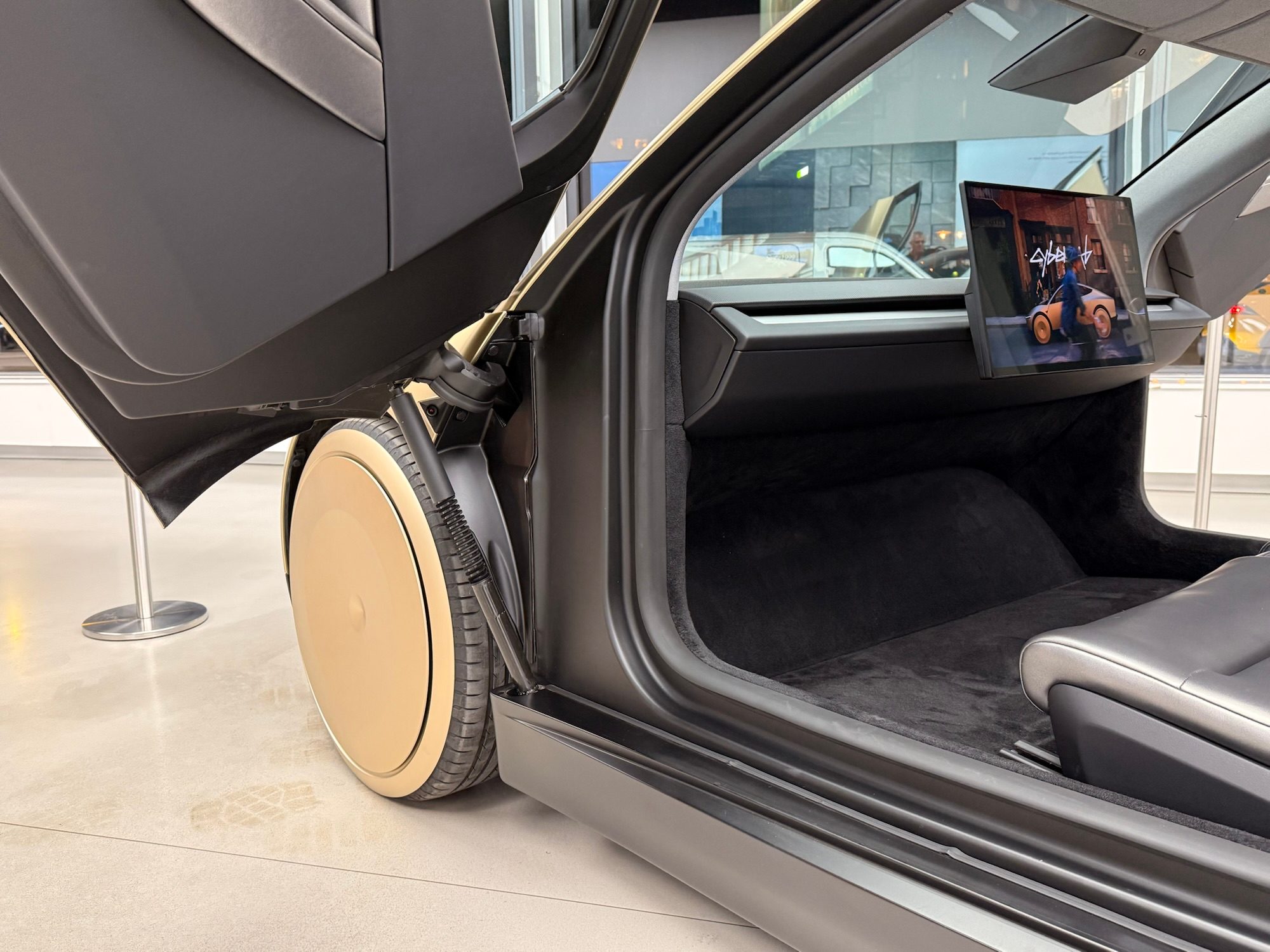
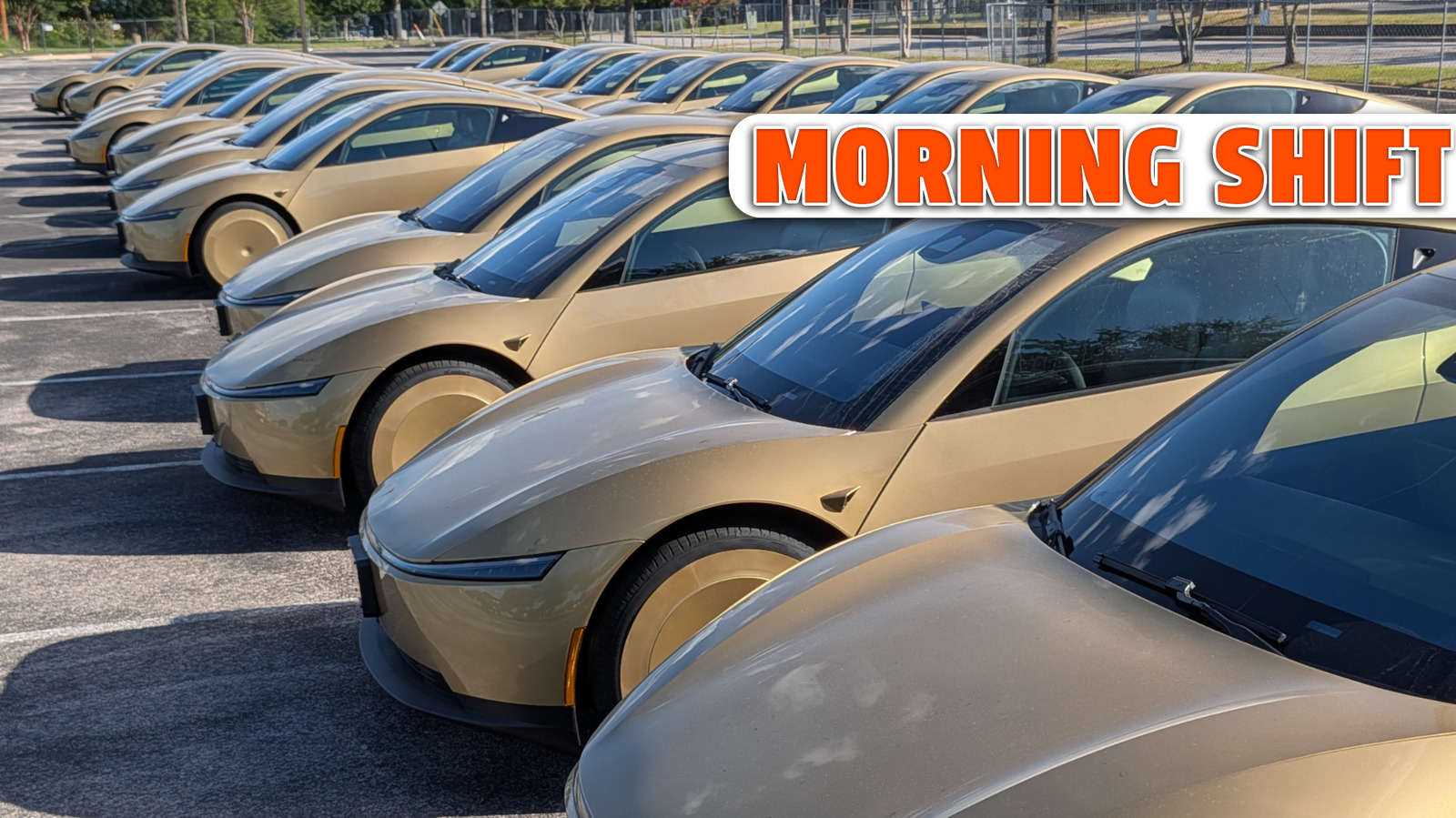
That is a sensible-sounding hedge, and it is also a revealing one. Tesla is not describing a conventional model launch, with dealers holding stock and buyers collecting keys. It is describing a slow, supervised handover of a technology it has never put in private hands before. Moravy confirmed that the Cybercabs currently being built in Texas go to Tesla’s own Robotaxi fleet, and that the Cybercab would be the first fully autonomous vehicle the company delivers to customers.
The safety question regulators have not answered
The Cybercab’s defining feature is the absence of manual controls. There is no wheel to grab and no pedal to stamp on if the software gets something wrong. Federal safety standards in the United States generally assume a human can take over, and the National Highway Traffic Safety Administration is investigating whether the Cybercab can meet those rules as they stand. Tesla says it complies.
This is not a formality. A vehicle without controls changes the nature of the recall, the nature of the insurance policy and the nature of the liability question when something goes wrong. Tesla’s own record is part of the context: a Tesla travelling at highway speed drove through a closure of flares and cones on eastbound Interstate 80 in Fairfield, California, and into an occupied patrol car, in an incident covered in our report on the Tesla Driver Asleep at the Wheel: FSD Crash Seriously Injures Two CHP Officers. Regulators weighing whether to allow a car with no manual override will have that file open.
There is also the matter of what the software is called. As we reported at the time, Tesla has already retreated from the “Full Self-Driving” name in some markets, renaming it “Tesla Assisted Driving” in Europe after German pressure. The gap between marketing language and regulatory reality is one Tesla has crossed before.
Robotaxi reality check
The gap between promise and footprint is stark. Tesla’s robotaxi service is available only in small parts of six cities across two states. The Austin fleet, the most developed market, is estimated at around 300 cars including Model Y units. Elon Musk had previously predicted robotaxis would cover half the US population by the end of the previous year. They do not.
None of this means the technology is not progressing. It does mean the commercial base on which the Cybercab sales plan rests is very thin. Selling a driverless car to a private buyer is a different proposition from running a tightly controlled fleet in a handful of geofenced city districts where Tesla knows the roads, the mapping and the operating conditions. Customers will drive these cars wherever they like.
The six-month gap in the software timeline
Here is where the plan becomes genuinely awkward. On the same earnings call, Tesla said unsupervised Full Self-Driving would reach customer cars in the middle of next year, which in practice means the second quarter of 2027. Public Cybercab sales are supposed to begin by the end of 2026. That leaves a window of roughly six months in which a customer could own a Cybercab that has neither manual controls nor the software needed to drive itself.
Electrek spotted the inconsistency, and it is hard to explain away. Either the sales date slips, or the software arrives early, or some customers take delivery of a car they cannot use. Tesla has not said which.
Who actually owns the Cybercab?
Musk’s framing has shifted, and that shift matters for anyone who thought they were being invited to buy into a robotaxi business. He has described Cybercabs as mostly Tesla-owned transport-as-a-service vehicles, which sits awkwardly with Tesla’s earlier call for fleet buyers to purchase cars and put them to work. The pitch to individual owners and small fleet operators appears to have softened into something closer to: Tesla owns the fleet, and you use the service.
That is a very different investment case, and it raises the obvious question of why Tesla needs to sell the Cybercab to the public at all if the plan is to keep them. The answer may be that a public sales date is useful for the narrative even when the operational model points elsewhere.
Investor nerves as capital spending is trimmed
The market’s reaction was not warm. Tesla lowered its 2026 capital spending forecast to about $20 billion in US dollars from more than $25 billion, after spending less than expected on AI and robotics in the third quarter, which produced surprise positive free cash flow. Shares fell 5% in premarket trading on 22 October as the reduced forecast raised questions about the pace of investment behind Musk’s AI, robotics and autonomous-driving ambitions.
That is the tension in one line. Tesla wants to be valued as an AI company, but the spending that would justify the valuation is being cut. Positive free cash flow is normally a good thing. Here it landed as a signal that the ambitious bits of the business are moving more slowly than advertised, while the car business, which still generates nearly all the revenue, faces its own pressures. A quietly refreshed model line, such as the Model 3’s 16-inch screen and power bump, shows where the volume still comes from.
Three forces are squeezing at once. Regulation is asking whether a car without controls can legally be sold, and NHTSA has not said yes. Engineering is asking whether the software will be ready when the sales contract is signed, and the dates do not match. Capital is asking whether the spending makes sense, and Tesla has just trimmed its 2026 capital spending forecast by roughly $5 billion.
Moravy’s promise of a small start and a careful scale-up is the right instinct. But the gap between “we will start selling by the end of 2026” and “unsupervised FSD arrives in mid-2027” is the kind of detail that decides whether a launch is a milestone or a marketing line. Tesla has a habit of eventually delivering things it promises late. The question for buyers and investors alike is how many more deadlines can slip before the AI narrative starts to look like a distraction from the business of building cars.
We covered tesla cybercab goes sale in more detail elsewhere.