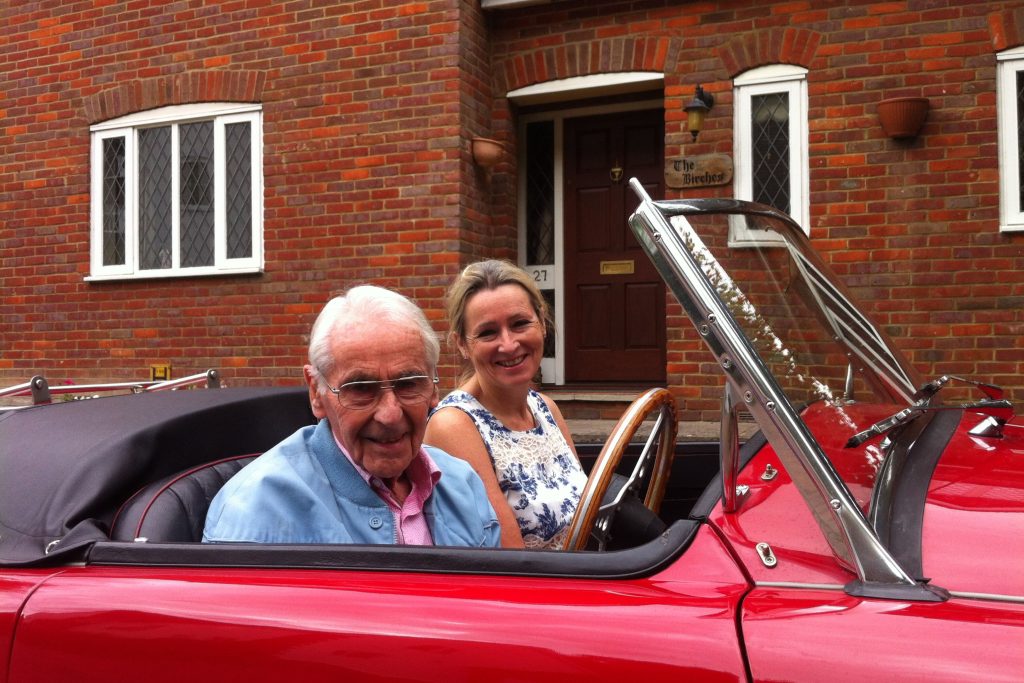
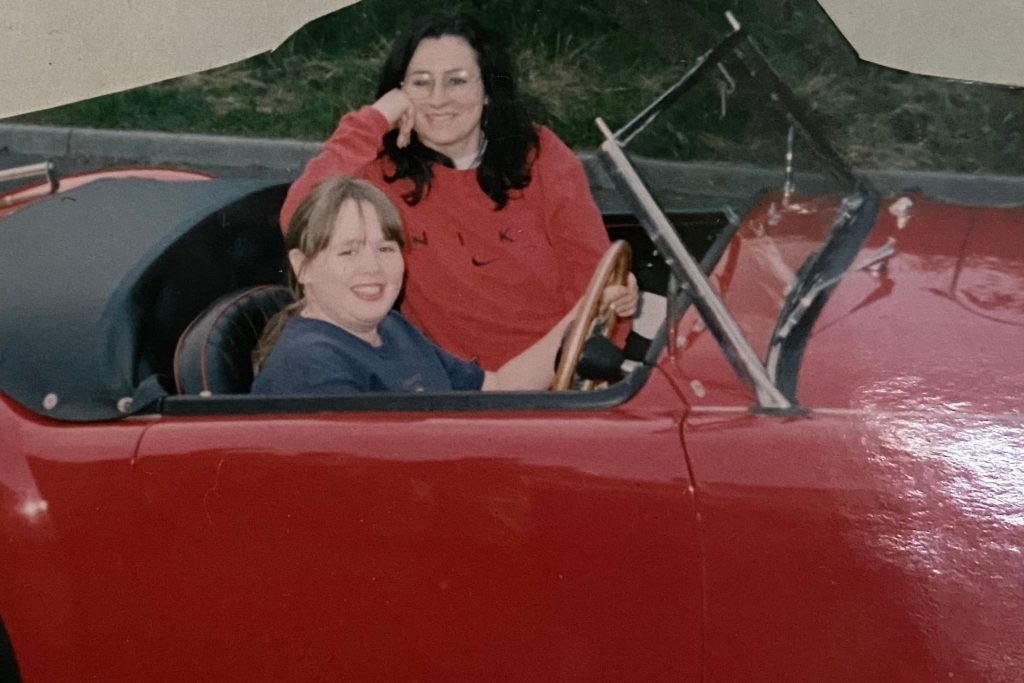
The photograph, if it still exists, would horrify a modern parent. A toddler in the early 1960s, perched on the transmission tunnel of an open-top MG, wedged between her mother and father, no seatbelt, no child seat, nothing but optimism and a father’s enthusiasm for his pride and joy.
That toddler was Janet, and she is my mother. Her father loved that MG with a devotion that shaped family decisions: he insisted the family home have a large garage so he could work on the car, and he stripped and rebuilt it several times before eventually selling it for something more practical. The replacement was an Austin A40, which had a back seat but, according to my mother, still no seatbelts.
The story came up recently, as family stories do, and it sparked a debate that classic car owners across the country will recognise. Was that just how things were? Or does nostalgia do too much work when we talk about children in old cars? The honest answer is both, and the law has a clear view on which one matters today.
When seatbelts became law
The timeline is worth getting straight, because myths have grown around it. Seatbelts became a mandatory factory fit in 1965, but wearing them was not compulsory at that point (according to historical records). Fitment and use were two separate battles, fought years apart.
It took until 1989 for UK law to be updated so that children travelling in the back of cars had to wear seatbelts (according to historical records). That is the pivotal date for this conversation. Anyone picturing a 1960s child sliding across a bench seat is not imagining things, but anyone assuming the rules stayed that way is wrong.
My own MGA, which my grandfather bought in retirement as a replacement for the original MG, was built in 1960 without seatbelts. It is a rolling reminder that the car predates the regulation by five years. It is also, for the purposes of this article, the car at the centre of the argument.
The rules and under-threes
Here is where the nostalgia meets a hard edge. Under the Highway Code, children under three are not allowed to travel in a classic car without seatbelts (according to the author’s understanding; readers should check current guidance). That is not a grey area or a matter of interpretation. Passengers aged three and over may sit in the back of a vehicle that was originally built without seatbelts, unrestrained, which is a workable arrangement in a four-seat classic, but it is no help at all to the owner of a two-seater.
My son is eight months old. Putting him in the MGA would break the law. There is no clever workaround, no grandfather clause for grandfathers’ cars, and no exemption that covers a parent’s wishful thinking. The car simply was not built for him, and the law agrees.
This is the uncomfortable truth at the heart of classic car family life. The vehicles we love were designed in an era when child safety was not a design consideration at all, and the rules have since caught up in a way that leaves some of those vehicles unable to carry the youngest members of the family. Two-seater owners feel this most acutely, because the back-seat option that rescues other classic owners is not available to them.
Retro-fit options and their limits
The obvious question is whether you can simply upgrade an older car. To a point, yes. Retrofitting seatbelts in a classic is possible, and many owners have done it, fitting inertia or static belts to mounting points that were never part of the original design. Child seats can be installed where belts exist, and specialist firms exist to help owners navigate what is feasible for their particular car.
But retro-fitting has limits, and owners should be honest about them. A 1960s shell was not engineered around crash structures, crumple zones or the loads a modern child seat transfers in an impact. Bolting a belt to an old floorpan does not turn an MGA into a family hatchback. It improves the situation, and it may satisfy the legal requirement, but it does not rewrite the physics.
I would be willing to make retro-fit safety modifications in principle. What I am not willing to do is treat a modification as a magic wand. The law sets a floor, not a guarantee, and every owner has to decide where their own comfort level sits above that floor.
The emotional pull vs the legal reality
My grandparents were not reckless people. They were doing what everyone did, in a car that was my grandfather’s pride and joy, and the way they transported my mother was acceptable at the time. It is also totally unfathomable now. Both things are true, and holding them together is the whole point.
The pull of the classic car experience is real. There is a photograph waiting to be recreated, a grandchild in an MG, three generations connected by the same marque. That image is powerful, and it is exactly the kind of thing that makes people bend the rules in their heads before they bend them on the road.
The legal reality is less romantic. Until my son is old enough to travel safely, he does not travel in the MGA. I am determined to keep at least one of my two two-seaters, and I plan to wait until he can share the classic car experience properly, belts fitted, seat appropriate, law satisfied. The wait is the price of doing it right, and it is a small one against the alternative.
It helps to remember that the classic world is full of cars that were never meant to be practical, and that the rare machines that defined American performance show how deep that attachment runs. None of it changes what happens when a child is in the passenger seat.
What owners should check
If you are weighing up whether to carry a child in a classic, work through the basics before you go anywhere near a car seat.
- Age matters most. Children under three cannot travel in a classic without seatbelts. No exceptions, no workarounds. If your car has no belts and your child is under three, the answer is no.
- Three and over means the back seat. In a vehicle originally built without seatbelts, passengers aged three and over may travel unrestrained in the back. That rules out most two-seaters for younger children entirely.
- Belts first, seats second. A child seat needs a belt to attach to, so retro-fitting belts is the prerequisite for any child seat installation. Speak to a specialist about what is structurally sensible for your car.
- Know your exemptions. The rules for classics are specific, and the details matter. Check the current Highway Code guidance and gov.uk, and if in doubt confirm with the DVLA or a marque specialist rather than relying on forum folklore.
- Do not let nostalgia sign the permission slip. The fact that our parents and grandparents travelled unrestrained does not make it safe or legal now. It makes for a good story, told from a safe distance.
The law is the floor, not the finish line
My grandfather’s MG is gone, sold for something more practical, and the MGA that replaced it sits in my garage waiting for a passenger it cannot legally carry yet. That is the honest position for a lot of classic owners with young families.
The law is clear enough once you strip away the myths: belts became a mandatory fit in 1965, children in the back had to wear them from 1989, and under-threes cannot travel in a classic without seatbelts at all. Retro-fitting can help, but it cannot undo the design of a car built in 1960.
So the MGA waits, and my son grows. One day he will be old enough to travel safely, and the photograph will get its sequel, taken on the right side of the law. Until then, the story of a toddler on a transmission tunnel stays exactly where it belongs: in the past, told with affection, and never repeated.
Hagerty is gathering stories of growing up unrestrained in classic cars, and of family cars passed down through generations. If you have one, you can share it by emailing [email protected].