Jaecoo is a Chinese SUV brand owned by Chery, positioned as a sister marque to Omoda source and pitched at buyers who want the look of a rugged off-roader without the running costs or bulk of a proper 4×4. It sells the J7 and J8 in Britain, with turbo petrol and plug-in hybrid power source, and a specification list that undercuts most established rivals. The appeal is obvious on paper. The harder question is whether the brand has a coherent identity worth paying for, and whether the whole-life numbers stack up once depreciation is taken into account. This guide works through both.
What are Jaecoo cars? The Chery-owned brand
Chery is one of China’s largest car makers source and has spent the past few years doing what most Chinese manufacturers have done in Britain: shipping cars in, pricing them sharply and watching the sales charts respond. Jaecoo sits alongside Omoda in the group’s export hierarchy, but the two brands are not clones. Omoda leans towards sleek, road-focused crossovers, while Jaecoo trades on a squarer, more utilitarian look with styling cues borrowed from the off-road world.
That “off-road-lite” positioning is deliberate. Most SUV buyers never leave the tarmac, but plenty of them like the idea of a car that could. Jaecoo’s pitch is essentially that promise, wrapped in a package priced below the mainstream. The brand launched here with the J7 and has since added the larger J8 source, backed by a dealer network that has expanded quickly rather than gradually.
The parent company’s ambitions go further than importing cars. Chery has signalled it wants to become British in a more permanent sense, with UK design, engineering and even production on the table. A manufacturer investing in a long-term British presence is a different proposition from one simply chasing volume, and it matters when you are weighing up a badge you have never owned before.
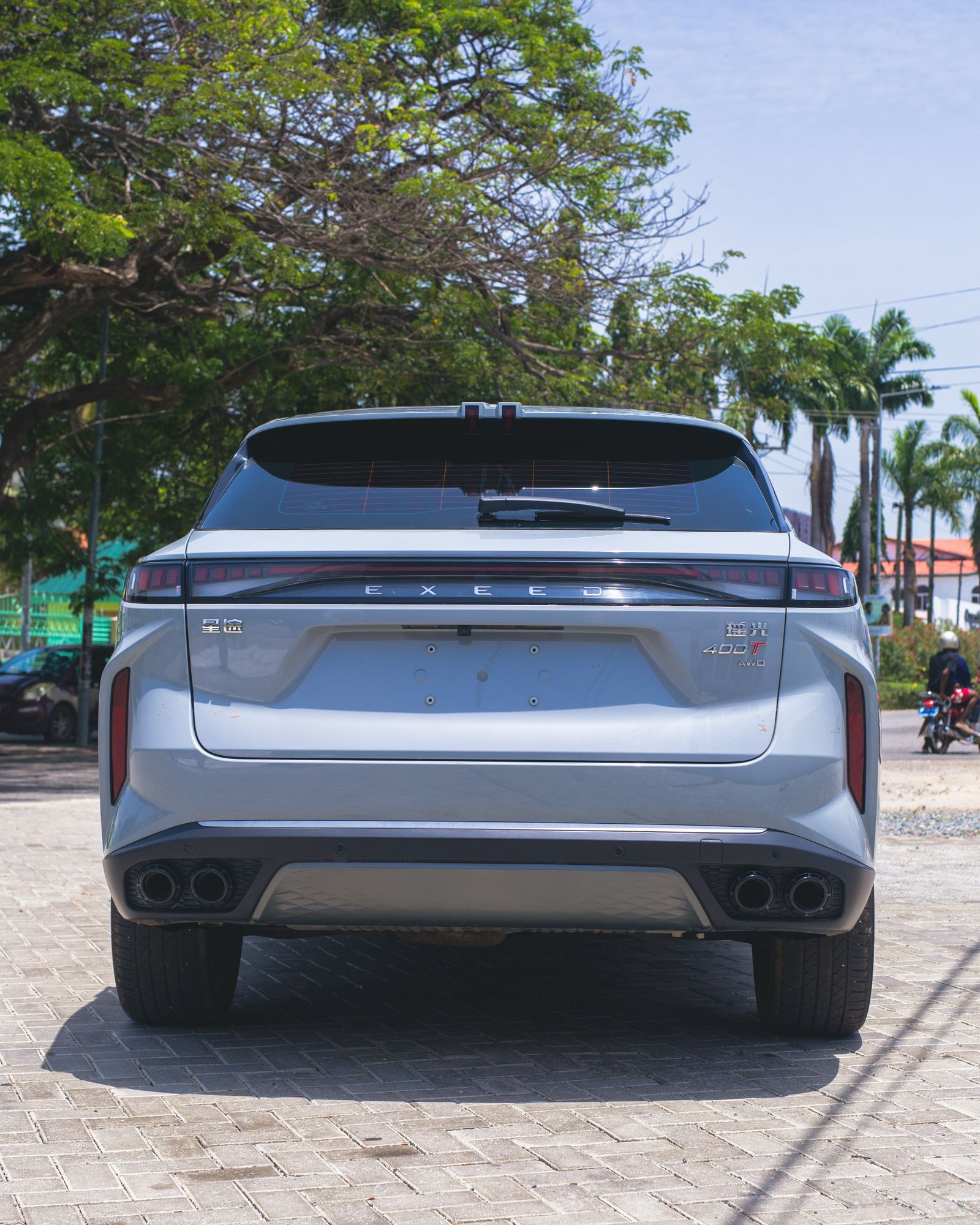
Jaecoo models explained: J7 and J8
The J7 is the mid-size SUV and the car most buyers will encounter first. It competes in the crowded family crossover class, with five seats source, a reasonably generous boot and a cabin that prioritises screens and connectivity over tactile luxury. It is the volume model and the one that carries the brand’s value message most directly.
The J8 is the larger, more expensive proposition, adding a third row of seats source and a bigger footprint. It moves Jaecoo into the territory occupied by seven-seat family SUVs, where buyers tend to be more pragmatic and more sensitive to running costs. The J8’s extra size brings extra equipment, but it also exposes the brand to tougher comparisons against established seven-seat rivals.
Both cars share the same design philosophy: upright grilles, chunky wheel arches, roof rails and a generally boxier stance than the smooth-edged crossovers that dominate the class. Whether that reads as distinctive or derivative is a matter of taste, but it is at least a clear identity rather than a generic one.
Engines and powertrains: petrol and plug-in hybrid
Jaecoo’s range centres on two powertrain families. The first is a 1.6-litre turbocharged petrol engine source, which is the conventional option and the one to choose if you want simplicity and a lower purchase price. It is not a performance engine, but it provides adequate pace for a family SUV and avoids the complexity of electrified hardware.
The second is a plug-in hybrid, which pairs a petrol engine with an electric motor and a battery pack source large enough for meaningful electric-only running. For buyers with off-street parking and a short commute, a PHEV can make real financial sense, particularly given the Benefit-in-Kind treatment of plug-in hybrids for company car drivers. The trade-off is weight, complexity and a higher list price.
Chery has been clear that electrification is central to its export strategy, so expect the balance to shift further towards hybrid and plug-in hybrid variants as the range develops. The direction of travel across the industry is unambiguous, and Jaecoo’s parent has the engineering resources to follow it.
How the pricing and specification strategy works
Jaecoo’s pricing strategy is straightforward: undercut the mainstream. The brand positions its cars below equivalent Kia, Nissan and Toyota models on list price source while loading them with equipment that would be optional elsewhere. That means large touchscreens, camera systems, heated seats and driver assistance tech appearing lower down the range than buyers might expect.
The catch, and it is a real one, is depreciation. New Chinese brands do not yet have the residual value track record of established players, which affects PCP monthly payments and the cost of owning a car outright over three or four years. Chery has moved to address this directly, launching a UK approved used scheme designed to shore up residuals by giving second-hand buyers a certified route into the brand. It is a sensible move, because residual strength is the single biggest obstacle facing any new entrant.
The practical advice is to look at the whole-life cost rather than the sticker price. A Jaecoo may be cheaper to buy, but check finance quotes carefully and compare the monthly figure against a rival with stronger residuals before committing. Ask the dealer for the GFV on the PCP quote, because that single number tells you how much confidence the lender has in the car’s future value.
Design and interior: what to expect inside a Jaecoo
Inside, Jaecoo cabins follow a recognisable modern template: a large central touchscreen, a digital instrument cluster, and a clean dashboard with few physical buttons. Material quality has improved markedly across Chinese brands in recent years, and Jaecoo is no exception, with soft-touch surfaces in the areas you actually touch and harder plastics lower down where most manufacturers economise.
The design language is more restrained than the exterior might suggest. There is chrome, ambient lighting and a general air of wanting to look more expensive than the price tag implies. Whether it succeeds is subjective, but the cabin is unlikely to embarrass anyone at the school gate.
The weak point tends to be software. Infotainment systems from newer brands can feel less polished than those from established players, with menus that take longer to learn and occasional lag. Test the screen thoroughly on a test drive, ideally with your phone connected, because you will live with it every day.
Safety, warranty and ownership
Jaecoo equips its cars with the expected suite of driver assistance systems: autonomous emergency braking, lane keeping, adaptive cruise control and blind spot monitoring source, depending on trim. Euro NCAP has tested models from the wider Chery group source, and buyers should check the specific rating for the car and trim they are considering rather than assuming a group-wide result.
The warranty package is one of the brand’s strongest selling points, with a long manufacturer-backed term that undercuts most European rivals source. For buyers nervous about a new badge, that cover is a meaningful comfort blanket, and it is worth reading the small print on what is excluded and how long the corrosion and paint cover lasts.
Ownership also means considering the dealer network. Jaecoo’s footprint has grown quickly but remains smaller than Kia’s or Nissan’s source, so check where your nearest service centre is before you buy, and ask whether routine servicing can be done locally or means a longer trip.
How Jaecoo compares with rivals
Against the Kia Sportage, Jaecoo competes on price and equipment but loses on dealer coverage, residual values and the polish of a brand that has spent years refining its UK offer. The Sportage remains the safer choice for most buyers, and the seven-year warranty is hard to beat source.
Against the Nissan Qashqai, the argument is similar. The Qashqai is the default family crossover for good reason, with strong residuals and a vast dealer network. Jaecoo’s counter is more equipment for less money and a more distinctive look.
Against Chinese rivals, the picture is more interesting. BYD has pushed hard on electrification and brand-building, while MG has the advantage of a familiar badge and a long-established UK presence source. Jaecoo’s differentiator is its off-road-inspired styling, which gives it a clearer identity than some competitors but also narrows its appeal.
Should you consider a Jaecoo car? Our verdict
Jaecoo cars make most sense for buyers who prioritise space, equipment and a distinctive look over badge prestige, and who plan to keep the car long enough that depreciation matters less. The long warranty and improving dealer network reduce the risk of taking a chance on a new brand.
They make less sense for anyone on a tight PCP budget who needs predictable residuals, or for buyers who value a polished infotainment experience above all else. Test the software, check the finance quote against a Sportage or Qashqai, and confirm your nearest service centre before signing. Do that, and a Jaecoo is a credible choice rather than a gamble.
We covered genesis cars luxury brand in more detail elsewhere.
We covered weighs tariffs chinese cars in more detail elsewhere.
We covered byd cars chinese giant in more detail elsewhere.