Hollywood has always loved a racing driver who looks the part, and nobody looked it more convincingly than Steve McQueen. The bomber jacket, the Persol sunglasses, the Triumph TR6 Trophy motorcycle scrambled across the French countryside in The Great Escape. He built an image of speed and danger so durable that half a century after his death, a watch he wore and a Porsche he drove are still treated as holy relics. But the men who actually raced alongside him, and the ones who shared a call sheet with him, told a more complicated story.
The racing record behind the rebel image
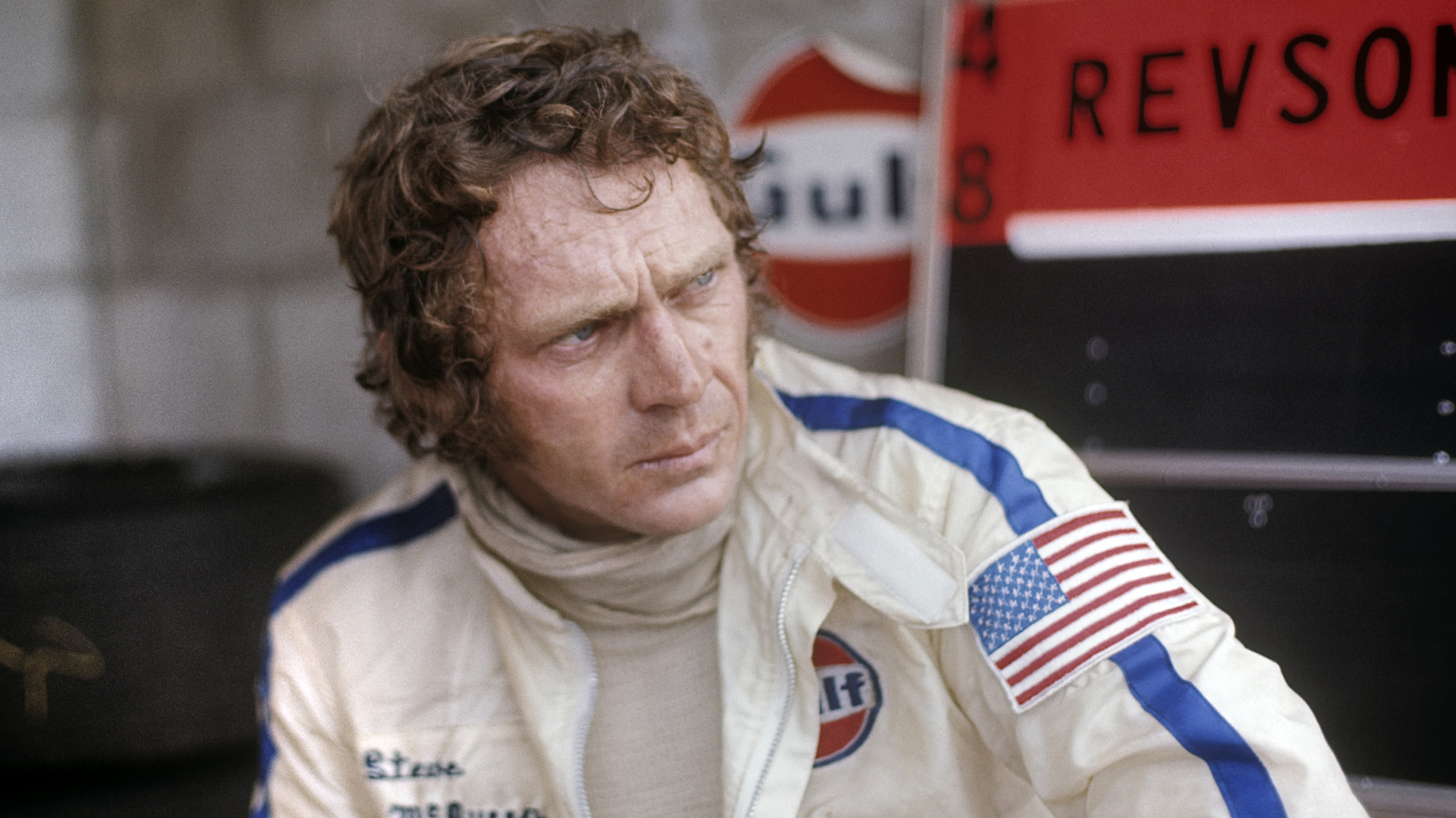
None of this is to say McQueen was a poseur in a racing suit. He had genuine form. He finished second at the 12 Hours of Sebring in 1970, co-driving with Peter Revson, beaten only by Mario Andretti, which is a serious result in anyone’s book. He entered club events under the alias Harvey Mushman, partly to keep his fame out of the paddock and partly, one suspects, because he enjoyed being treated as just another racer. He was handy on two wheels as well, and the motorcycle stunts in The Great Escape were added at least partly at his urging.
Then came Le Mans in 1971, the film that consumed him. The project was his obsession, and the driving sequences remain the most honest depiction of endurance racing ever committed to celluloid. The chase in Bullitt, three years earlier, had taken two weeks to shoot and set a standard for screen car control that still holds up. McQueen could drive. The question was never whether he had talent, but how much, and how much of the legend was engineering.
Newman, the billing war and a choice word
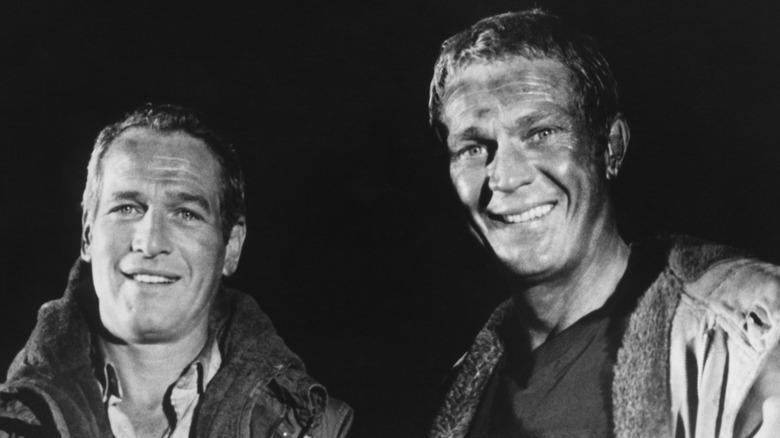
The clearest window into McQueen’s relationship with his own image comes from his rivalry with Paul Newman. When the two were cast in The Towering Inferno in 1974, McQueen discovered that Newman had twelve more lines of dialogue than him. He objected, forcefully. Newman’s response, as reported over the years, was blunt and unprintable in a family newspaper. The row over billing and credits rumbled on until the studio threw up its hands and settled on double top billing, with both names on the poster.
The irony is that Newman was the more accomplished racer of the two, and by some distance. His competition career spanned decades and yielded a string of championships as a driver and team owner, and by his own account he was still racing into his eighties. McQueen’s objection was never really about lines. It was about status, and about a man who had built an entire public identity around being the fastest and coolest in the room discovering that he was sharing the room.
Garner’s verdict: “a poser”
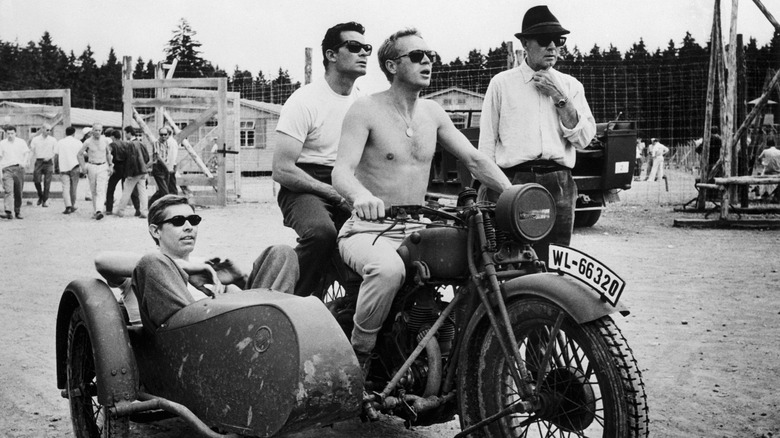
James Garner worked with McQueen on The Great Escape and came away unimpressed by the mythology. He called McQueen a poser who cultivated the image of a macho man, a judgement that carries weight because Garner was the real thing. He is an Off-Road Motorsports Hall of Fame inductee who raced in the Indianapolis 500 and the NORRA Mexican 1000. When Garner said someone was performing rather than racing, he knew what he was talking about.
Garner was also fairer than the headline quote suggests. He described McQueen as a stubborn little cuss, and noted that the director added motorcycle stunts to pacify him and reshaped his character into a man who reconnoitres the countryside and then unselfishly allows himself to be recaptured so he can share what he has learned. In other words, McQueen got his stunts and the film got a better story. Garner saw the whole transaction clearly.
Grand Prix, and eighteen months of silence
The deepest cut came earlier, over 1966’s Grand Prix. McQueen was originally cast in the film but fell out with director John Frankenheimer and was replaced by Garner. According to Garner, McQueen did not speak to him for about a year and a half afterwards, despite the two being neighbours. That is a remarkable grudge, and it says less about Garner than about how tightly McQueen’s sense of self was bound up with being the racing film star.
Garner and Newman, by contrast, got on well enough to star together in Twilight in 1998. The two genuine racers found each other easy company. McQueen, for all his charisma, seems to have found almost everyone a rival.
The men who coached him weigh in
Two figures with no axe to grind offer the most useful comparison. Dick Barbour, who co-drove with Newman and coached McQueen, put it plainly: Paul was a very methodical driver, he wasn’t a natural like Steve, and McQueen picked it up immediately. That is high praise for McQueen’s raw feel, and a reminder that Newman’s speed came from discipline and preparation rather than instinct.
Bob Bondurant, speaking in the 2006 documentary Pushing the Limit: The Making of Grand Prix, was even more generous to Garner: if he was in a real race, he would have been able to beat several drivers, and in a Formula 1 race that’s saying a lot. The picture that emerges is of three men with three different kinds of speed. Newman the technician, McQueen the natural, Garner the one with the racecraft to have held his own against professionals. Only one of them built a global industry on being the fastest, and it was not the fastest.
The Porsche that failed to sell
The market’s view of McQueen is its own kind of verdict. Jerry Seinfeld owned the 1969 Porsche 917K that McQueen drove in Le Mans, and sent it to a Mecum auction in the United States in 2025, where it was bid to $25,000,000 (around £19m) but did not sell. He later sold it privately. A car with that provenance failing to change hands on the block is a useful corrective to the assumption that McQueen’s name adds infinite value to anything it touches. The legend is powerful, but it has a ceiling, and buyers of eight-figure Porsches are a clear-eyed bunch.
That is not to diminish him. It is to place him accurately. The racing world has always been clear-eyed about its heroes, and image counts for less than lap times.
What the legend really tells us
McQueen’s legacy is about charisma as much as lap times, and the two were never separable in his own mind. He was a genuinely talented driver who finished second at Sebring and helped make the greatest racing film ever shot. He was also a man so invested in being the fastest that he stopped speaking to a neighbour for eighteen months over a part he lost, and objected to twelve lines of dialogue because they threatened the story he told about himself.
The men who knew him best were not cruel about it. Newman’s insult and Garner’s “poser” line were blunt, but both understood what McQueen was doing. He was selling a version of speed that the public wanted to buy, and he sold it better than anyone before or since. The King of Cool was never the fastest racer in Hollywood. He was simply the one who made you believe he was.
We covered used evs fastest selling in more detail elsewhere.