Running a new car now costs $12,863 a year, according to AAA’s 2026 Your Driving Costs study, and the cheapest way to do it is not fully electric. Hybrids come out cheapest across every category AAA measured, and the reason has almost nothing to do with fuel.
A note on the figures first: this is a US study, so every dollar, gallon, cent and mpg number below is American. The annual total of $12,863 works out at $1,071.92 a month, a sharp jump from $11,577 ($964.78 a month) in 2025.
The twist is in the detail. Hybrids, not electric vehicles, now come out cheapest to own in every single category AAA measured. And the reason has almost nothing to do with fuel.
The Headline Numbers
AAA’s figures cover the full picture of ownership, not just what you spend at the pump. Ownership costs, which fold in depreciation, finance charges, insurance and fees, add 32.67% on top of the sales-weighted average MSRP of a new vehicle, which now sits at $39,376.
That average sticker price matters. When the typical new car costs the better part of $40,000 before you’ve turned a wheel, every percentage point of depreciation or interest lands harder. AAA attributes the rise in running costs to three forces: surging fuel prices, faster depreciation and higher finance interest rates. It’s a combination that squeezes buyers from several directions at once, and it goes some way to explaining why drivers are keeping old cars longer than ever.
What’s Driving the Increase
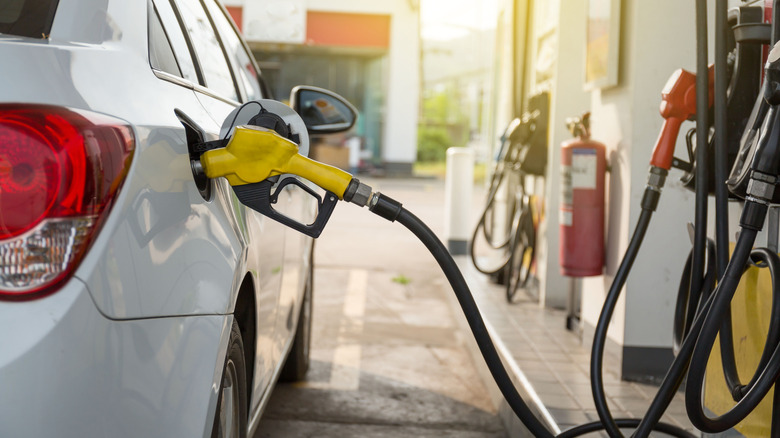
The biggest single mover is fuel. Regular-grade petrol now averages $4.152 a gallon in the US, and petrol costs have risen 31.8% since the 2025 study. That’s a brutal year-on-year swing, and it feeds directly into the running-cost totals for every combustion-engined vehicle in the study.
Electricity, by contrast, has been far better behaved. Home charging in the US averages as little as 18 cents per kWh, and electricity prices rose 7.8% over the same period. Put those two numbers side by side and the energy argument for EVs remains overwhelming on paper.
The other pressures are financial rather than physical. Depreciation has accelerated, and finance interest rates have climbed, both of which inflate the ownership side of the ledger. A car that loses value faster and costs more to borrow against is a more expensive car to own, whatever’s under the bonnet.
Fuel and Energy: The EV Advantage Is Real
It’s worth being precise about this, because the headline finding can be misread. AAA’s study does not say EVs are expensive to fuel. It says the opposite. EVs typically cost 66% to 70% less to run on fuel than petrol cars, a gap that has widened as petrol prices have surged and home charging rates have stayed relatively stable.
So if you drive a lot of miles and can charge at home, the energy maths still stacks up emphatically in favour of electric. The problem is that fuel is only one line in the spreadsheet, and it’s no longer the line that decides the outcome.
Hybrids Come Out on Top
Here’s where the study gets interesting. Hybrids are the cheapest to own in every category AAA examined, including the medium SUV segment. The medium sedan comparison tells the story most clearly:
- Hybrid: $10,204 a year
- Petrol: $10,582 a year
- EV: $13,662 a year
That’s a $3,458 annual gap between the hybrid and the EV in the same segment, and a $378 saving over the petrol car. The hybrid also undercuts the conventional petrol car, which is a notable result in itself. Hybrids have spent years being framed as a compromise, a stepping stone to full electrification. On this evidence they’re the rational financial choice, combining the fuel savings of electrification with the residual values and insurance costs of a conventional car.
The breadth of the result matters too. This isn’t one quirky segment where hybrids happen to win. AAA found them cheapest across the board, which suggests the advantage is structural rather than a quirk of the data.
The EV Problem Is Depreciation, Not Fuel
So why do EVs cost more to own when they cost so much less to fuel? Depreciation. AAA’s data shows some EVs losing value at roughly twice the rate of their petrol equivalents, and that single factor overwhelms the energy savings.
Layer on higher fees and higher finance costs, and EV ownership costs exceed petrol in the medium sedan, compact SUV and pickup truck segments. The pickup result is likely to sting most in the US market, where electrified trucks carry heavy price premiums and where resale confidence is still being built. The pattern is consistent: the more expensive the vehicle and the less settled its residual values, the more depreciation dominates the total.
It’s a reminder that buying an EV is a financial decision with two halves. The running costs are genuinely low. The ownership costs are where the money goes.
The One Segment Where EVs Edge Ahead
There is a single exception in AAA’s data. In the medium SUV segment, the EV costs $14,332 a year against $14,431 for petrol. That’s a win for electric over petrol, albeit by just $99, though the hybrid still takes the segment overall.
It’s a narrow margin, and it shouldn’t be over-read. But it does show that where an EV’s depreciation profile is strong enough and its efficiency advantage large enough, the energy savings can just about cancel out the ownership penalty. The medium SUV segment is where electric crossovers are most established and most competitive, and the numbers reflect that maturity. It’s a glimpse of what the wider picture might look like once residuals settle across other segments.
Depreciation and Resale: The Number That Decides Everything
Depreciation adds a weighted average of $4,422 per year to the cost of running popular models. That’s the single largest component of ownership cost, and it’s the one buyers think about least when they’re standing in a showroom.
Brand matters enormously here. AAA cites Toyota, Subaru and Honda among the best brands for value retention, a reputation built on reliability and steady demand in the used market. Among luxury marques, AAA names Lexus the brand with the best resale value. The flip side is that maintenance and parts are generally more expensive for luxury brands than for mainstream ones, so a strong residual doesn’t automatically make a premium car cheap to run.
Maintenance also protects residuals directly. A full service history and a well-kept car command more at resale, which is why skimping on servicing to save a few hundred pounds a year is usually a false economy. The brands that hold value best are, not coincidentally, the ones buyers trust to have been looked after.
What the Study Says About Choosing a Car
The practical takeaway is that the cheapest car to run isn’t necessarily the cheapest to buy, and it certainly isn’t decided by the fuel type alone. AAA’s numbers point to a few principles that hold regardless of market.
Compare insurance quotes properly rather than accepting the first figure, because premiums vary widely between models that look similar on paper. Prioritise fuel efficiency, and look closely at the numbers: some of the most efficient models are rated as high as 58 mpg (US), and over three or four years that difference compounds.
Weigh depreciation before you commit. Research how the model you’re considering has held its value, and check what the previous generation is selling for now. That single piece of homework is worth more than most of the haggling you’ll do over the sticker price.
Finally, keep up with maintenance. It protects resale value, avoids expensive failures and keeps the car in the strongest possible position when you come to sell. With average costs at $12,863 a year and rising, the difference between a well-chosen car and a poorly chosen one has never been worth more.
The direction of travel across the industry is towards more electrified choice, from established names expanding their line-ups, as Acura has confirmed with three new SUVs, to the more extreme end of the spectrum, like the Honda Passport Baja Spec trophy truck. But for buyers watching the monthly cost, AAA’s 2026 numbers deliver a clear message: the powertrain badge on the boot is only the start of the calculation. Depreciation, finance and insurance finish it.
Related: running car manufacturers recommend.