The order book is full before the first car is built
Walliser’s confirmation that the 2027 allocation is spoken for arrives months ahead of the first customer cars. Bentley has not disclosed how many Torcal orders it has taken, so the sellout tells us about demand relative to supply rather than absolute volume. Still, for a brand that has spent the past few years watching its delivery numbers fall, a fully subscribed launch year is a useful signal.
It also buys Bentley something it has not had much of lately: time. The Crewe line can ramp up at its own pace while the order bank stays healthy, and the brand can shape the mix of cars it builds around the most profitable specifications rather than chasing volume.
What the Torcal actually is
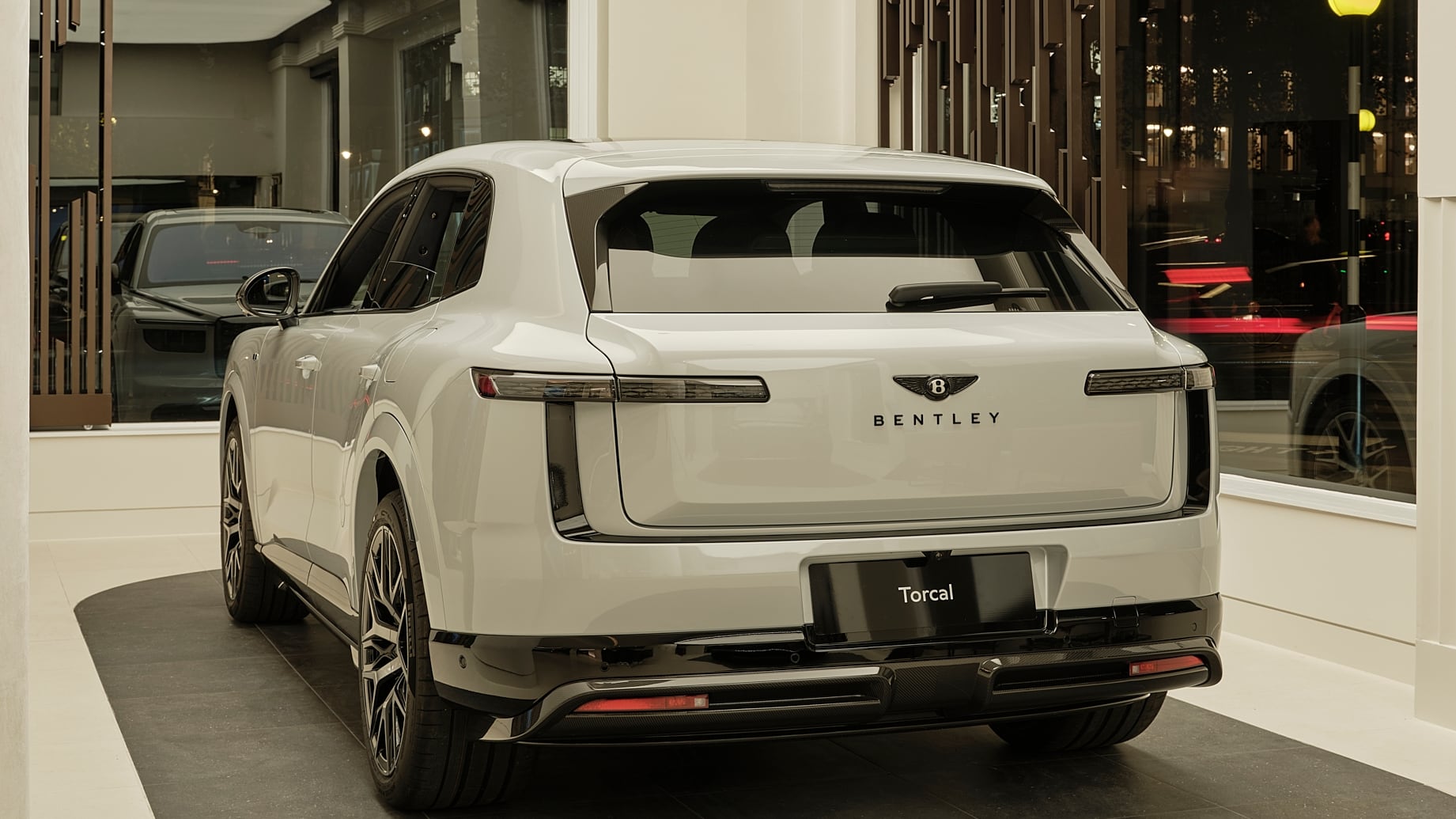
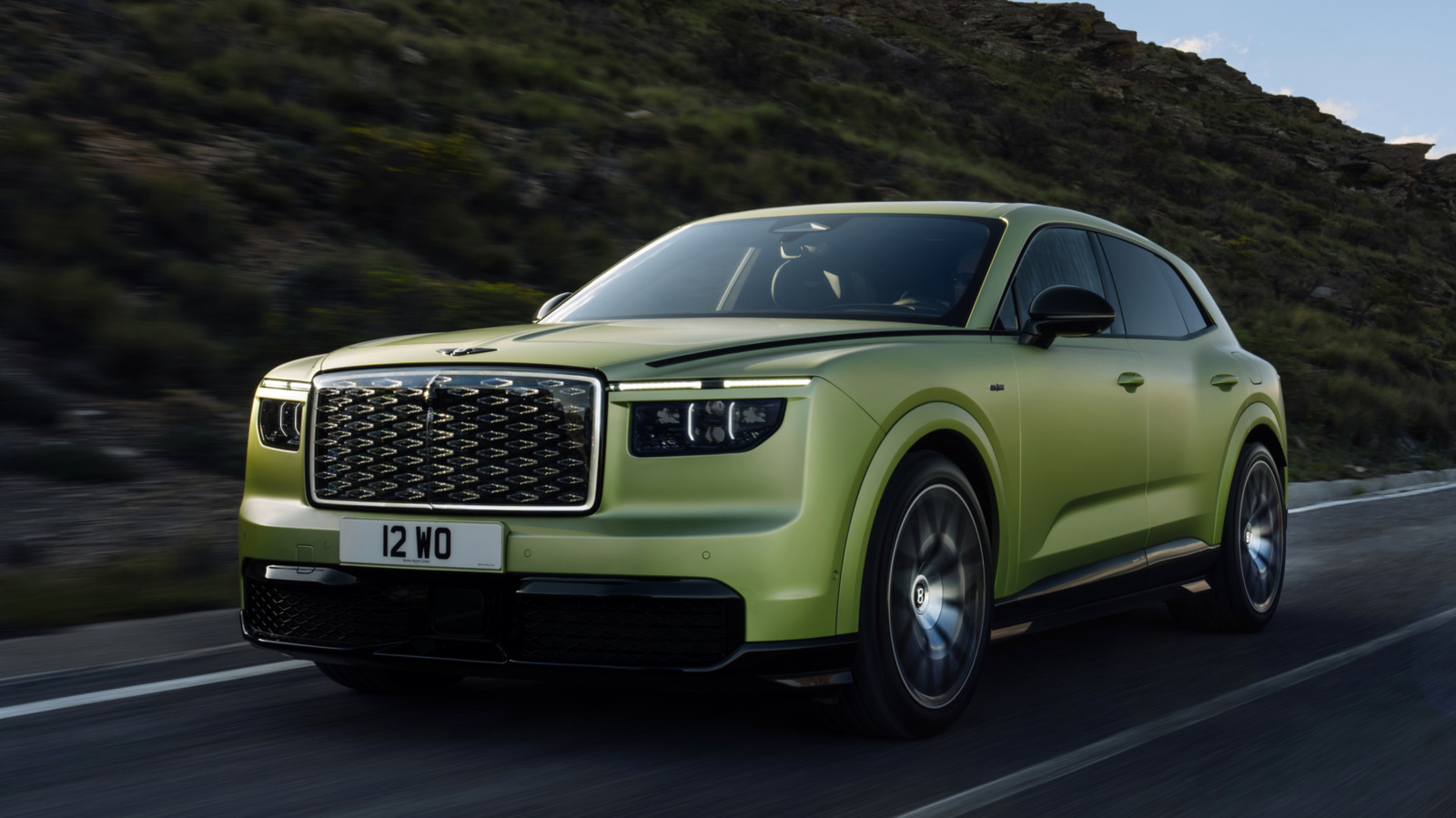
The Torcal is a smaller crossover SUV, positioned below the combustion-engined Bentayga as the most accessible route into new Bentley ownership. That is a deliberate strategic choice. Rather than opening its electric account with a low-volume halo car, Bentley has gone for the part of the market where it can sell in meaningful numbers and reach buyers who have never considered the marque before.
It is also a different approach to the one taken by Rolls-Royce, which went electric with the Spectre coupe. Bentley has no current plans for a two-door coupe to rival the Spectre, keeping its focus on the SUV format that has carried its sales for years. For a fuller picture of how the model fits into the range, our guide to the Bentley Torcal: Everything You Need to Know About Bentley’s First EV sets out the positioning in detail, including why it is a new model line rather than an electric Bentayga.
US pricing starts at $222,495. UK pricing has not been confirmed, though given the car’s positioning below the Bentayga, it is expected to be the cheapest way into a new Bentley.
“It’s Bentley, Bentley, Bentley”
The most revealing part of Walliser’s comments to Automotive News is what he says is driving the orders. Buyers, he explained, are attracted by the badge first and the powertrain second: “It’s Bentley, Bentley, Bentley. Yes, it comes with an electric drivetrain. We see that feedback from people. They trust in the technology. They trust also in Bentley.”
That is a significant distinction. Much of the industry has spent the past few years assuming that luxury EV buyers are motivated primarily by the technology. Bentley’s early order data suggests the opposite: customers are arriving because of what the winged badge has always stood for, and the electric drivetrain is simply part of the package rather than the reason for the purchase.
Walliser says the orders are coming primarily from new and younger customers. That matters enormously for a brand whose traditional buyer base skews older and overwhelmingly loyal. If the Torcal can pull in people who were not previously in the Bentley consideration set, it does more than add a model to the range. It refreshes the customer base for the next decade.
The car itself is no compliance exercise either. The Bentley Torcal First Edition shows what the top of the range looks like, with 888bhp and Mulliner detailing, and it is a genuine statement of intent from Crewe rather than a cautious first step.
The £350 million bet on Crewe
Bentley has invested around £350 million in the Crewe factory to prepare for electric production, a figure the company has reported in dollars as $463 million. The investment covers the obvious industrial groundwork, but it also extends to details that say something about how the brand sees the transition: line workers will wear EV-specific uniforms as the plant shifts to building electric cars alongside its existing combustion models.
That might sound trivial, but it is part of a broader effort to bring the workforce along with a change that touches every part of the business. Crewe has built Bentleys for decades, and the Torcal is the first one that will leave the line without an engine. Getting the culture right matters as much as getting the tooling right.
Why the Torcal has to work
A smaller, more accessible SUV is the logical response to the sales decline. It widens the funnel at the bottom of the range without diluting the flagship models, and it gives dealers something to sell to customers who want a Bentley but cannot stretch to a Bentayga or Continental GT. The sold-out first year suggests the logic is sound. Whether it translates into a lasting recovery is a different question, and one that will only be answered once production is running at full rate.
The competitive picture is shifting too. Jaguar’s reinvention puts a £120,000 electric GT, the Type 01, into the same conversation about British luxury EVs, and it will compete for some of the same buyers weighing a first step into electric luxury. Bentley’s advantage is that it is not starting from scratch on desirability.
Personalisation is still where the money is
The most commercially important detail in the Torcal story is not the sellout. It is what buyers are doing with the configurator once they get there.
Mulliner, Bentley’s personalisation division, offered 46 billion ways to configure a Continental GT last year, according to the company. Customisation has underpinned seven consecutive years of profitability for the brand, and it turns out that electric powertrains do not change that behaviour. Walliser says Torcal buyers are specifying cars north of £300,000 ($397,086). He added that individual content does not stop in the case of an electric car, and that there had been assumptions from some quarters about whether buyers would be ready to spend that way.
Those assumptions have now been tested. The answer is that Bentley customers are just as willing to spend on bespoke trim, paint and detailing in an EV as they are in a V8 or W12. That is the finding that should give the board at Crewe the most confidence, because it means the business model survives the transition intact.
The harder test comes next
The Torcal’s early demand suggests Bentley’s gamble on a smaller, cheaper EV has landed. The brand read its customers correctly: they wanted a Bentley first and an electric car second, and the order book reflects that. Pulling in younger, new-to-Bentley buyers while keeping the personalisation engine running at full tilt is close to the ideal launch outcome.
What it does not prove is that the Torcal can carry the brand through a softening market, nor that the new customers it attracts will come back for a second car. Bentley has staked its near-term recovery on a single model and backed it with a nine-figure rebuild of Crewe. The first year is spoken for. The years after it are the ones that will define whether the Torcal is remembered as a turning point or a bright start to a difficult decade.