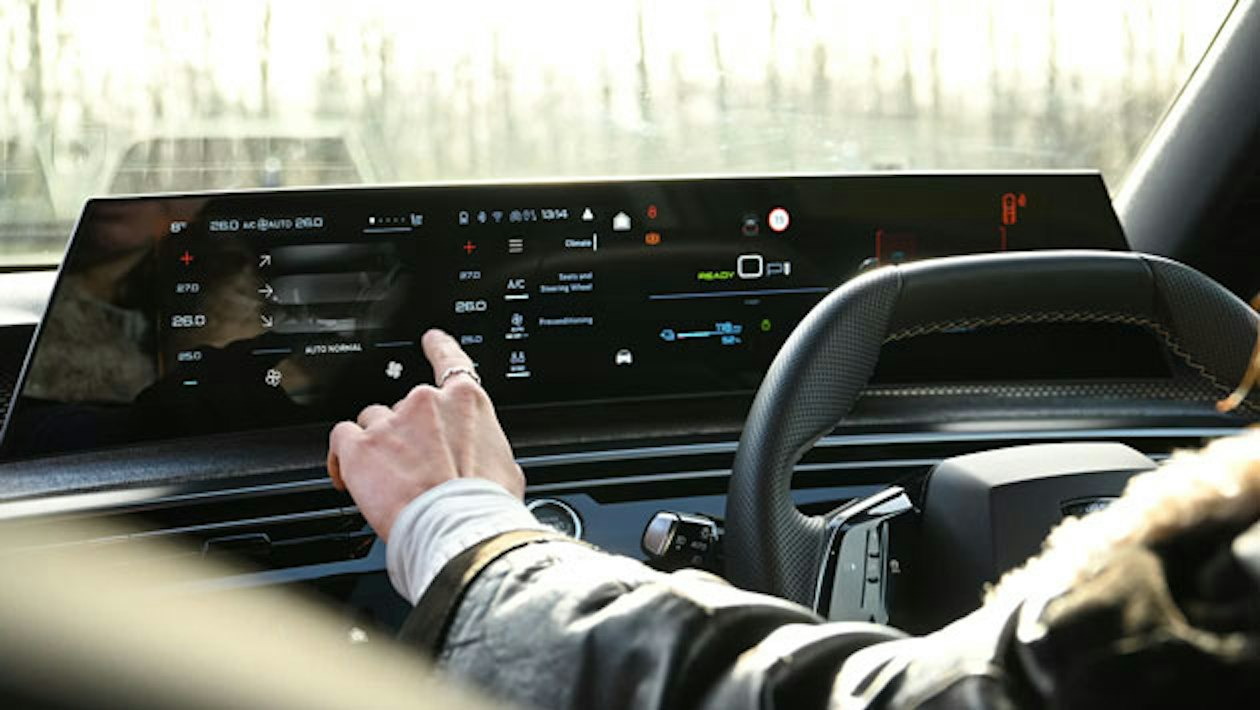
What Euro NCAP has actually said
The organisation’s position is blunt. A spokesperson told Auto Express there are “no plans to require manufacturers to fit physical buttons for climate control and media. These are not time critical tasks under our criteria and it is also not proven that direct physical input is safer.”
That second clause carries the weight. Euro NCAP is not defending touchscreen climate panels on principle. It is saying the evidence base is not there to justify a mandate, and that it does not regulate on vibes. Programme director Dr Aled Williams has been candid about his own instincts, telling Auto Express that “the move toward placing as many driving controls within a car’s touchscreen system is one that has concerned us just as much as it has annoyed consumers.” The same interview is the source for the organisation’s position on climate and media controls, and the wording has since been repeated in coverage by other motoring titles.
So the safety body shares the frustration. It just draws the regulatory line somewhere else. This is a familiar pattern in vehicle safety, where the gap between what engineers suspect and what testing can prove often determines how quickly rules move. A recent Volvo study on crash protection made a similar point in a different area of crash safety, where the data lagged well behind the lived experience.
What Euro NCAP now requires
From 1 January 2026, Euro NCAP factors physical buttons and controls into its scoring of new cars. The list is short and deliberately so. For full marks, indicators, windscreen wipers and washers, hazard warning lights, the horn and the eCall emergency button must be accessible via a traditional button rather than a touchscreen element.
These sit within the Safe Driving segment of the assessment, under an element called key driving controls. The logic is straightforward: these are the things a driver operates mid-manoeuvre, often in poor conditions, sometimes in a panic. Hunting through a submenu for a hazard light while braking hard is a different proposition from tapping a stalk.
Notably absent from the list are climate and media. Also absent is any requirement that a control be a button in the physical sense rather than, say, a fixed and permanently visible touch target. Euro NCAP has left itself room to reward good design without banning screens outright.
Why the score barely dents the overall rating
The key driving controls element carries so little weight that a car can perform badly in it and still take home the maximum rating.
The XPeng G9 scored just 20 per cent in this area and still received the full five stars overall, helped by strong results in Crash Avoidance and Post Crash Safety. That is not a loophole or an error. It is how the weighting works. Euro NCAP’s overall star rating is a composite, and occupant protection and collision avoidance still dominate it. A car that protects well in a crash and brakes itself out of trouble will score highly even if its indicator stalk has been replaced by a screen icon.
The Kia EV2 and Audi Q7 also both received five stars. Williams was complimentary about both, saying Euro NCAP rewards “the intelligent use of physical buttons and controls, as this can reduce driver distraction, and both Audi’s new Q7 and Kia’s EV2 do an excellent job of keeping safety simple.”
Five stars now covers a broad church of interior philosophies.
The Audi Q7 contradiction
The Q7 is the clearest illustration of where Euro NCAP’s line falls. The car is praised for keeping safety simple, and by the standards of the programme it does. But its climate controls still live in the touchscreen, in a fixed position at the bottom of the display.
That arrangement appears to satisfy the criteria, because climate is not on the time critical list and because the controls are permanently visible rather than buried in a menu. Whether it satisfies a driver on a cold morning in February, reaching for the heated seat while pulling out of a junction, is a separate question that no star rating answers.
The distinction Euro NCAP is drawing is between controls that must be found instantly and controls that can be found deliberately. It is a defensible position, and a fairly generous one. Manufacturers know it.
Manufacturers are already rowing back, without a mandate
The most telling development is happening outside the rulebook entirely. The Volkswagen ID.3 Neo has introduced physical climate control toggles, replacing the touch-sensitive sliders fitted to the original ID.3. Those sliders were widely criticised, and the replacement is a direct response to that criticism rather than to any regulatory pressure.
This is customer feedback doing the work that regulation declined to do, and it echoes the pattern in other areas of car design where public and media pressure has moved faster than the formal rulemaking process. The VW ID. Tiguan launch showed how quickly the brand will reposition when the market pushes back on naming. Interiors are following the same logic.
Volkswagen’s reversal is also a reminder that the touchscreen era was never purely about cost. It was about perceived modernity, and buyers are now signalling that they have had enough of it.
Euro NCAP has been honest about the limits of its own evidence, and it deserves credit for that. It has also been honest that touchscreen creep concerns the people running the programme. The gap between those two statements is where the next few years of interior design will be fought, and right now the buyers are winning it faster than the rulebook is.