
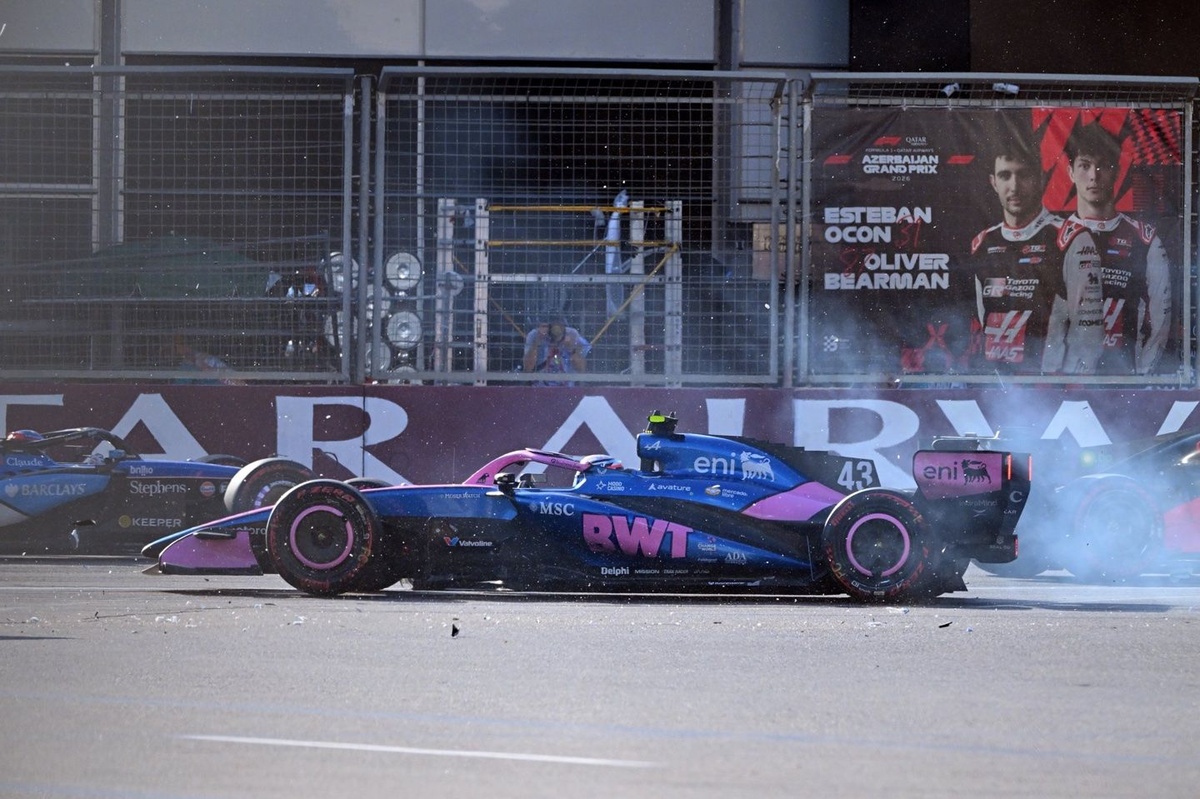
Safety Car Chaos at Turn 1
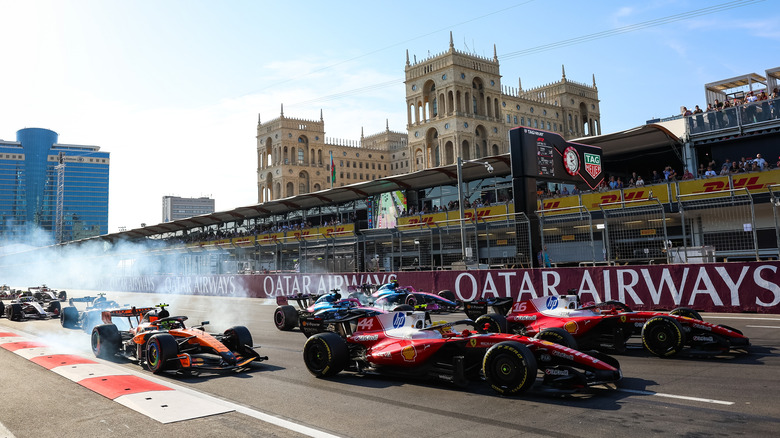
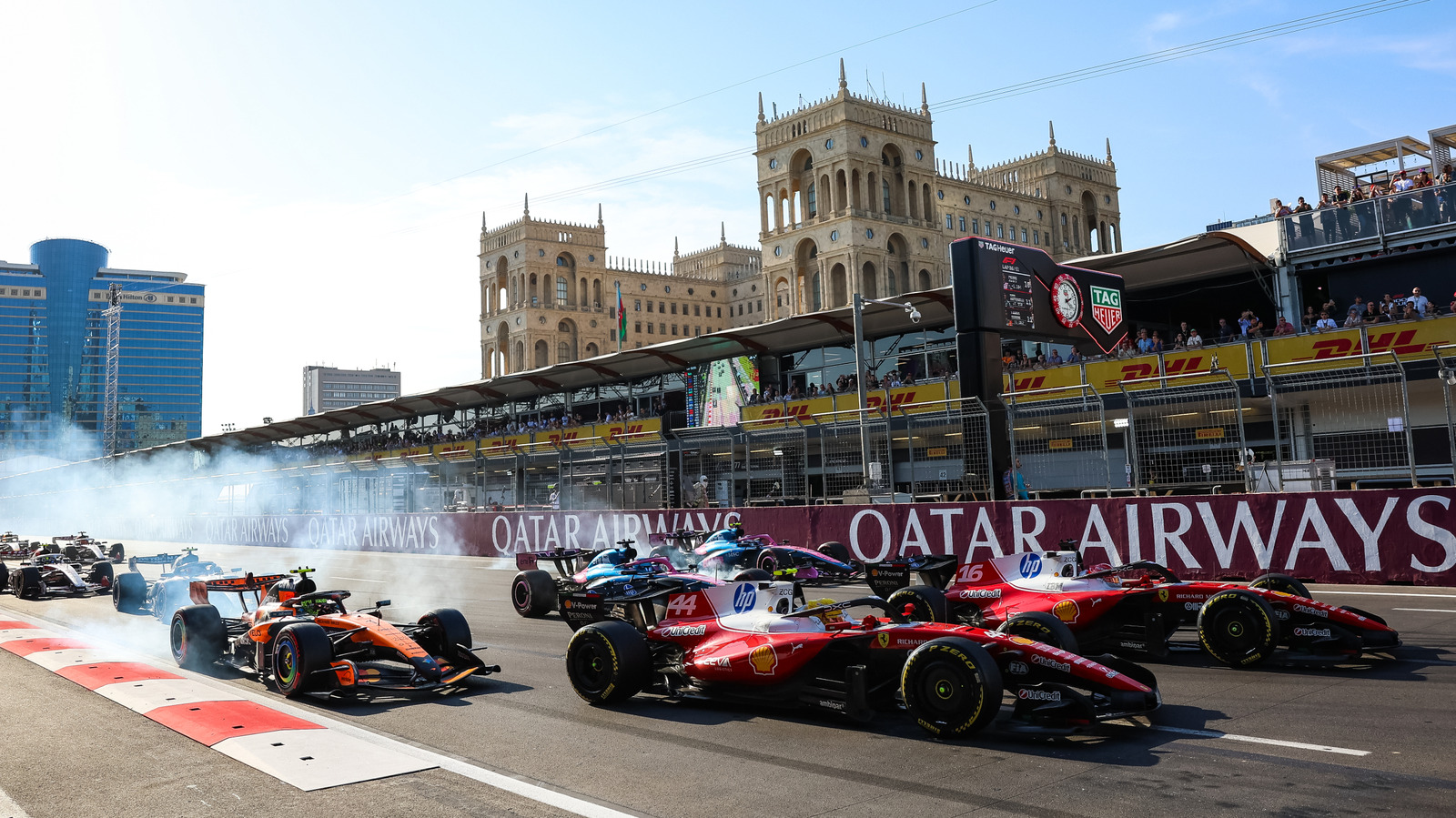
The race had already been disrupted when Alexander Albon crashed out shortly after mid-race, bringing out the safety car. What followed on Lap 36 was the kind of restart that decides weekends.
Colapinto, running on the inside line into Turn 1, locked up. He braked too late, overshot the corner and made contact with his own team-mate, Pierre Gasly. The Alpine pair collided, and Gasly’s car was deflected into Lando Norris’s McLaren. All three drivers were out of the 51-lap race on the spot, with Alpine’s afternoon effectively over and McLaren’s damaged beyond repair.
The stewards were blunt in their assessment. Colapinto, they found, was “wholly or predominantly to blame,” noting that he “braked too late and entered the corner on the inside at a speed which did not allow him to make the corner in a controlled manner.”
It was a restart error rather than a racing incident, and the distinction mattered enormously when it came to the penalty.
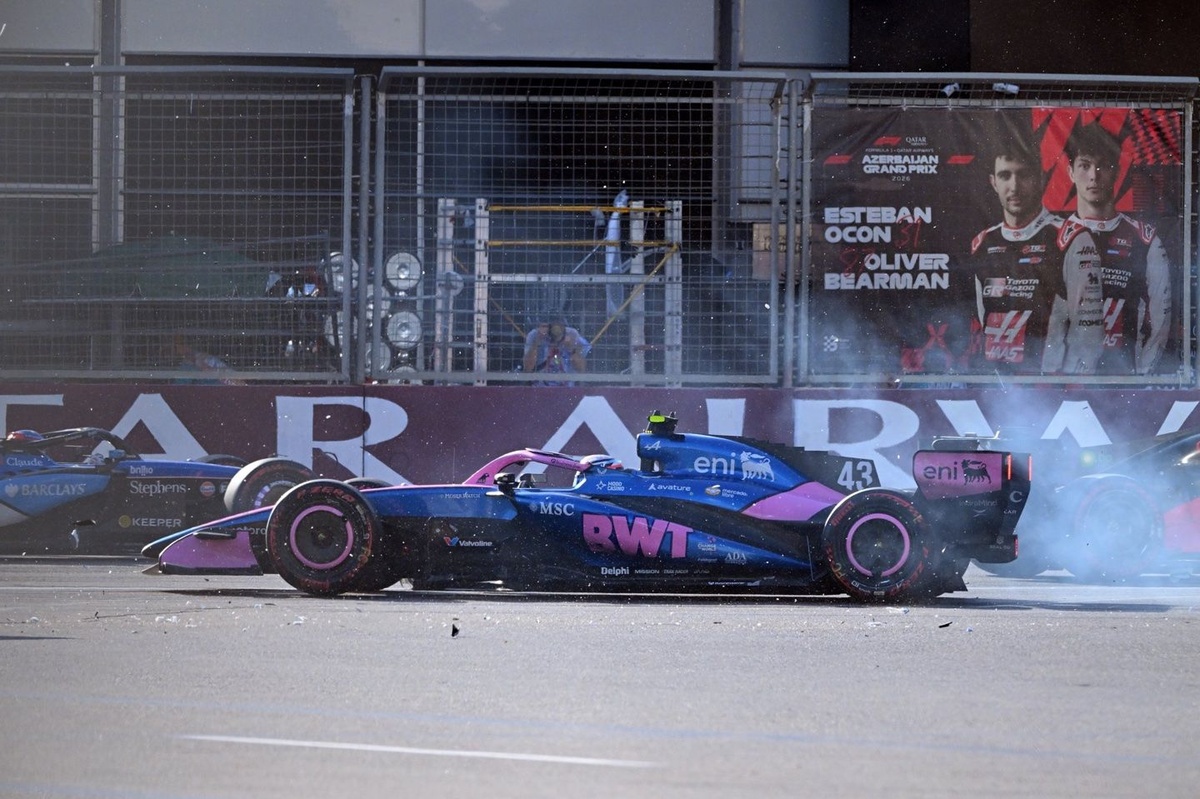
What the Stewards Ruled
Causing a collision carries a standard 10-second penalty, but Colapinto’s retirement meant he could not serve it during the race. The stewards therefore converted it into a five-place grid drop for the next round.
They also rejected any suggestion that the more lenient first-lap, first-corner approach should apply. That guidance exists to account for the chaos of a standing start, where dozens of cars arrive at a corner together and fault is rarely clean-cut. Here, no other driver contributed to the collision. Colapinto simply arrived too fast and too deep, and the consequences were immediate.
The penalty leaves Alpine with a compromised start at the next round, a costly outcome for a team that has already had a trying season. For context on how the weekend unfolded from the very first session, our F1 Azerbaijan Grand Prix 2026: Russell Takes Pole as Antonelli Faces Baku Fightback covered the Baku weekend.
No Further Action for Lindblad
In the same tangle, Arvid Lindblad spun his Racing Bulls team-mate Liam Lawson. It looked, on first viewing, like a second incident demanding investigation. The stewards saw it differently.
They ruled it a typical first-corner restart incident, caused by the chain reaction from the Colapinto crash and the restricted space that followed. No further action was taken against Lindblad. In a field of cars all trying to occupy the same piece of asphalt at once, the stewards judged that his spin flowed directly from the mess ahead of him rather than from a separate error of his own making.
Norris Calls for Bans, Then Apologises
Norris, whose race had ended through no fault of his own, was initially furious. Speaking to Autosport, he did not hold back.
“I think the FIA should be stricter and start handing out bans for this kind of stuff,” he said. “People should just get banned, because that’s not driving that deserves to be in Formula 1.”
It was a striking intervention from a driver who rarely wades into penalty debates. It also, as Norris later admitted, came before he had watched a replay of the incident. He subsequently took to Instagram to say his comments should never have been made, apologised directly to Colapinto, and stressed that the two “are still good friends.”
The episode is a reminder of how quickly a heat-of-the-moment quote can travel. Norris’s initial demand was reported within minutes; the correction took considerably longer to circulate.
Briatore’s Warning and Alpine’s Response
The collision landed in a paddock already braced for a reaction. Flavio Briatore, Alpine’s team principal, had spoken before the race about Colapinto’s Argentinian fanbase, describing it as a problem and threatening to remove the driver from public appearances if the abuse continued.
After the Baku pile-up, Alpine issued a statement condemning social media abuse, framed as a broader issue rather than one attached to a single group of supporters. It said the abuse was “not aimed at any one fan base or the supporters of one team or driver” and was “universal.”
The statement added: “We strongly condemn the reaction of some fans online and stand in solidarity with Formula 1, the FIA, and other teams in wanting to stamp it out.”
A Pattern of Threats
The abuse is not new, and it is not confined to one weekend. Over the last three seasons, Argentinian fans have sent death threats to Esteban Ocon, Yuki Tsunoda and Jack Doohan, according to reporting on the issue.
Doohan’s experience was among the most disturbing. ESPN reported that he said fans emailed threats to cut off all his limbs if he did not give up his seat to Colapinto. Doohan replaced Colapinto at Alpine in 2025, making him a direct target of supporters who wanted the Argentine back in the car.
It has not stopped at drivers. Argentinian fans also sent threats to race stewards over a penalty given to Colapinto at the Dutch Grand Prix, an escalation that strikes at the officials responsible for applying the rules.
Nor is it a Formula 1-only phenomenon. In IndyCar, British driver Callum Ilott received death threats and abuse while team-mates with Agustín Canapino, a parallel that suggests the problem follows a particular dynamic rather than a particular championship.
The cumulative picture is of a small but vocal element attaching itself to a driver’s career and turning every on-track decision into a personal grievance. Teams, stewards and rival drivers have all found themselves in the firing line.
Antonelli Wins as Russell Misses Out
Amid the controversy, there was a race to be won, and Mercedes took it. Kimi Antonelli claimed victory, while team-mate George Russell narrowly missed out on a first career Grand Slam.
Russell had been imperious across the weekend, and his performance deserved more than the record books will show. Our F1 and MotoGP Weekend Review: Russell’s Baku Grand Slam, Colapinto’s Alpine Disaster and Acosta’s KTM Breakthrough looked at how close he came to completing the set.
What Baku Leaves Behind
Baku produced a three-car pile-up, a five-place grid penalty and a public row that moved from the stewards’ room to Instagram within a few hours. But the more significant story sits outside the results.
A single misjudged restart has once again dragged online abuse into the centre of a Formula 1 weekend, and this time the response came from three directions at once: a rival driver who overreached and then apologised, a team principal who had already issued a warning, and a team that described the problem as universal rather than tribal.
The sport has spent years trying to work out how to handle this. Bans, statements and solidarity gestures have all been tried. What Baku showed is that the abuse is now a routine part of the aftermath of any contentious decision involving Colapinto, and that the people absorbing it are not only him. Stewards, team-mates and rivals have all been targeted. Colapinto heads to the next round carrying a grid drop and a controversy he did not ask for, and Formula 1 heads there still searching for an answer it has not yet found.




2 Comments