What Went Wrong at Torslanda
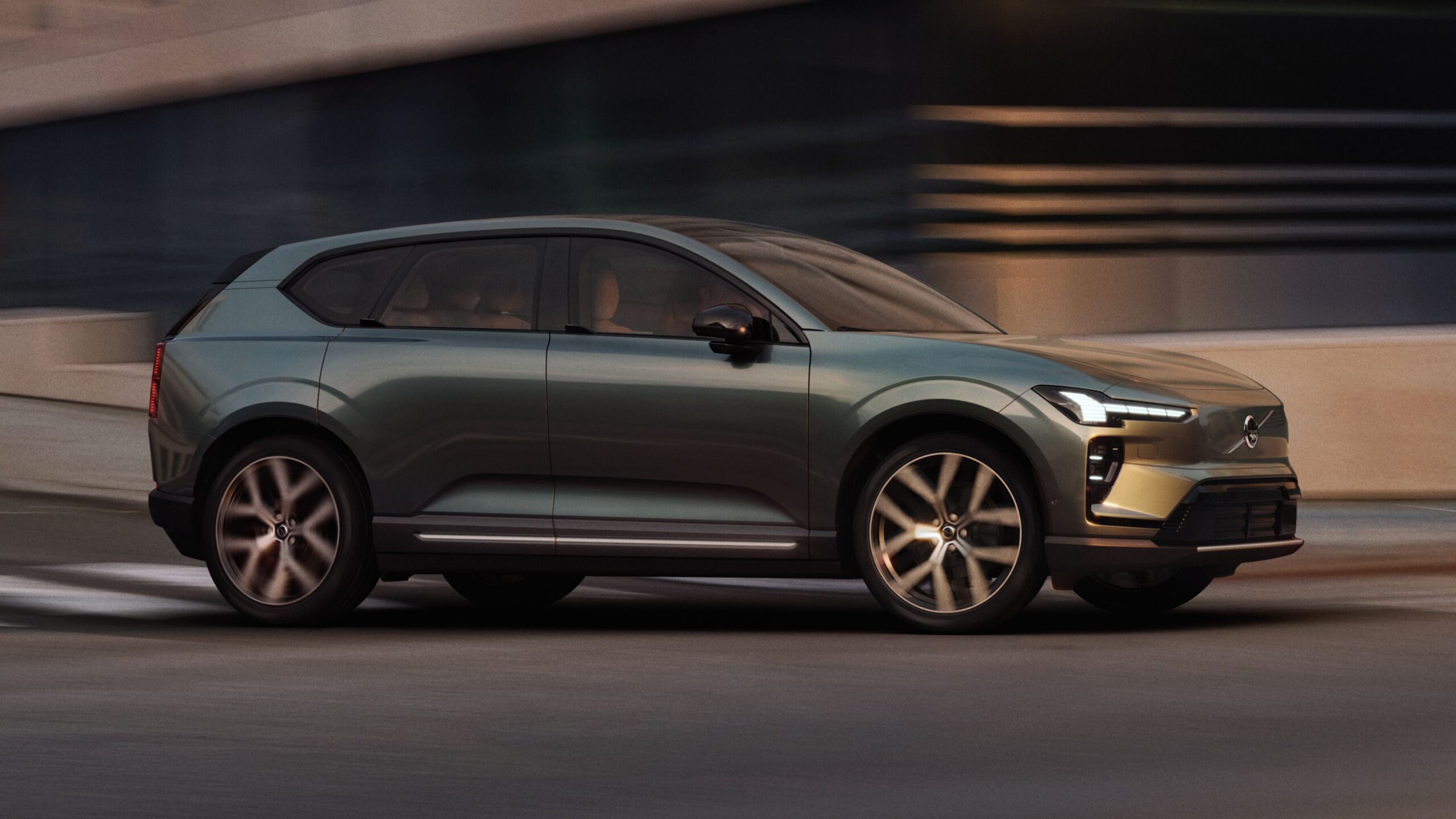
Two distinct manufacturing problems have hit the EX60 line at Torslanda, and both stem from the same source: the car is being built in ways Volvo has never built a car before.
The EX60 is the first Volvo to combine megacasting, a process in which large sections of the body structure are cast as single aluminium pieces rather than assembled from dozens of stamped panels, with cell-to-body construction, where the battery cells are integrated directly into the vehicle’s structure rather than packaged into a separate battery module bolted underneath.
Both techniques promise real benefits: fewer parts, lighter structures, simpler assembly and lower costs at volume. Both are also notoriously difficult to bring up to speed. Tesla has spent years wrestling with megacasting yields, and the list of manufacturers that have stumbled during a complex ramp-up is long. Volvo is not alone in finding this hard. It is simply finding it hard on its most important new model.
Why the EX60 Is So Hard to Build
Volvo is not pretending otherwise. A company spokesperson, Jacquelyn Johnson, offered a candid explanation of the delays, saying the EX60 introduces “industry-first state-of-the-art concepts for which there are no blueprints to copy, therefore, the ramp-up phase takes a little longer than initially planned.”
Volvo did not follow a proven playbook here. It wrote one. Megacasting at this scale and cell-to-body construction are genuine industry firsts when combined in a single volume model, and the engineering teams at Torslanda are effectively learning on the job while the clock runs.
A ramp-up delay is not like a missed deadline on a facelift. It compounds. Every week of lost output is a week of cars that never reach order books, and every month of lost output pushes customers towards rivals who can actually deliver. It is a familiar pattern in the industry: ambitious new production methods meeting the unforgiving reality of volume manufacturing.
The Sales Numbers Tell Their Own Story
The output shortfall translates directly into sales. GlobalData estimates put worldwide EX60 sales at around 500 cars in July 2025, falling to roughly 250 in August 2025. For context, Volvo had targeted 7,000 EX60 sales in the United States this year. The car is not so much underperforming as barely present.
Those figures are global, which makes them even more stark. A model intended to compete at the heart of the electric SUV market is currently trickling out of Sweden in the low hundreds per month. Whatever momentum the EX60 generated at launch has largely evaporated while customers wait.
Where the Cars Are Going
Volvo has made a clear decision about how to allocate the cars it can build: Europe first. Deliveries are being prioritised for European markets, where electric vehicle adoption is stronger and where the EX60’s positioning makes the most immediate sense.
For US retailers, the picture is bleaker. There will be no additional vehicle allocations for the rest of this year, and significant volume is not expected until the second half of 2027. A “significant number” of already-allocated EX60s will reach the US in early 2027, according to Johnson, but that is a long way off for dealers who were promised a volume car this year.
The allocation strategy is understandable. Europe is where the demand and the charging infrastructure are strongest, and Volvo needs to put cars where they will sell fastest. But it leaves dealers in other markets with empty showrooms and nothing to sell.
Dealers: Write Off 2026
The reaction from the retail side is blunt. A Volvo dealership representative told Automotive News that “dealers effectively need to write off 2026, and potentially the first half of 2027” as far as the EX60 is concerned.
That is a remarkable statement from a franchise network about a car that was supposed to drive footfall and profit. It means order books that were opened with fanfare will sit largely static, waiting lists will stretch into the distance, and sales staff will have to manage customer expectations for the better part of two years. Some of those customers will simply go elsewhere.
The Wider Volvo Picture
The EX60 problem is landing at an awkward moment for Volvo more broadly. Third-quarter 2025 deliveries fell 41% in China and 8.7% in the US, a painful combination given how much the brand has invested in both markets.
The company has scrapped its 2026 volume and cash flow outlook and declined to give new short-term guidance, citing rising market uncertainty. That is the language of a business that does not yet know how the next 18 months will look.
Recent troubles have compounded the sense of a brand under pressure. Volvo has suffered repeated software problems across its recent models, and it has ended US sales of the EX30 electric SUV after about two years in the market, a decision that removes a volume electric model from its American line-up. The EX30 was supposed to be the accessible entry point to Volvo’s electric range. Its US exit leaves the EX60 carrying even more weight, at precisely the moment it can least bear it.
What Happens Next
There is a recovery plan, of sorts. Volvo will be hoping that Torslanda’s yield problems are resolved well before US volume returns in the second half of 2027. The company has also refreshed the XC40, XC60 and XC90, with the two larger models gaining new plug-in hybrid systems. Those facelifts are still some way off, but they give Volvo something to sell while the EX60 finds its feet, and the PHEV variants in particular may prove well suited to buyers who are not yet ready to go fully electric.
The wider industry is watching closely, because megacasting and cell-to-body are not Volvo’s ideas alone. Rivals including Tesla are pursuing similar techniques, and every one of them will be studying Torslanda’s struggles for lessons. If Volvo can solve the yield problem, it will have proved the case for a cheaper, simpler way to build electric cars. If it cannot, the case for megacasting takes a serious knock.
The bigger question is whether the EX60 can recover its launch momentum at all. A car that arrives 18 months late, in a market that has moved on, with rivals that have already filled the gap, faces an uphill fight. Volvo’s engineers have to fix the line, and Volvo’s marketers have to rebuild a story that was supposed to be about innovation and has instead become about delay. The EX60 is still a good car with a genuinely advanced platform. But good cars do not sell themselves when nobody can get hold of one. For now, the most important number at Volvo is not the range figure or the charge time. It is the yield at Torslanda, and until that climbs, the EX60’s launch year is being written off one week at a time.