
Trump Unveils the Plant, With Audi’s CEO at His Side
US President Donald Trump announced the factory during a rally in Georgia, bringing Audi CEO Gernot Döllner on stage to share the moment. The framing was deliberately simple: Audi has been exporting to America, and now it will build there.
Trump used the occasion to claim roughly $40bn has been invested in the US automotive industry, creating 30,000 new jobs, and credited his tariffs with sparking a manufacturing resurgence. That figure is his own and has not been independently verified. The Audi announcement, at least, is real and comes with a site, a budget and a timeline.
The Plant and the Numbers
The factory will rise at the Middle Georgia Mega Site, a location built for exactly this kind of scale. Audi puts the investment at approximately $4bn, with construction starting next year and vehicle production following in the early 2030s. All dollar figures here are US dollars for the US market.
Annual capacity is slated at up to 200,000 vehicles a year. The plant is expected to create around 4,500 direct jobs, with further opportunities across suppliers, training partners and service providers as the local ecosystem develops.
Audi is positioning the site as the foundation of North America as the third major pillar of its global production network, sitting alongside Europe and China. That is a significant strategic statement from a manufacturer that has, until now, served its most profitable export market entirely from abroad.
Why Now: Tariffs Are the Trigger
Audi has been evaluating a US plant for well over a year, and the reason is not hard to find. Every car Audi sells in the United States is imported, which makes all of them subject to tariffs. BMW, by contrast, builds thousands of vehicles on American soil. Mercedes-Benz runs a substantial operation in Alabama, where recent investment will lift annual capacity to 340,000 units a year, covering models including the GLE, GLS, EQE SUV, EQS SUV and Sprinter, with the GLC joining late next year.
The cost of that asymmetry is now explicit. Tariffs cost Audi $1.4bn last year alone, a sum the company has acknowledged it cannot absorb indefinitely. A $4bn factory is a large cheque, but against a recurring nine-figure annual penalty, the arithmetic starts to make sense.
It is worth remembering how badly new manufacturing programmes can go when the product and the process are both new. The Volvo EX60 production crisis showed what happens when a car is built in ways its maker has never used before, with megacasting delays leaving dealers facing a lost year. Building a plant from scratch at least gives Audi the chance to design the process around the product rather than the other way round.
What It Will Build
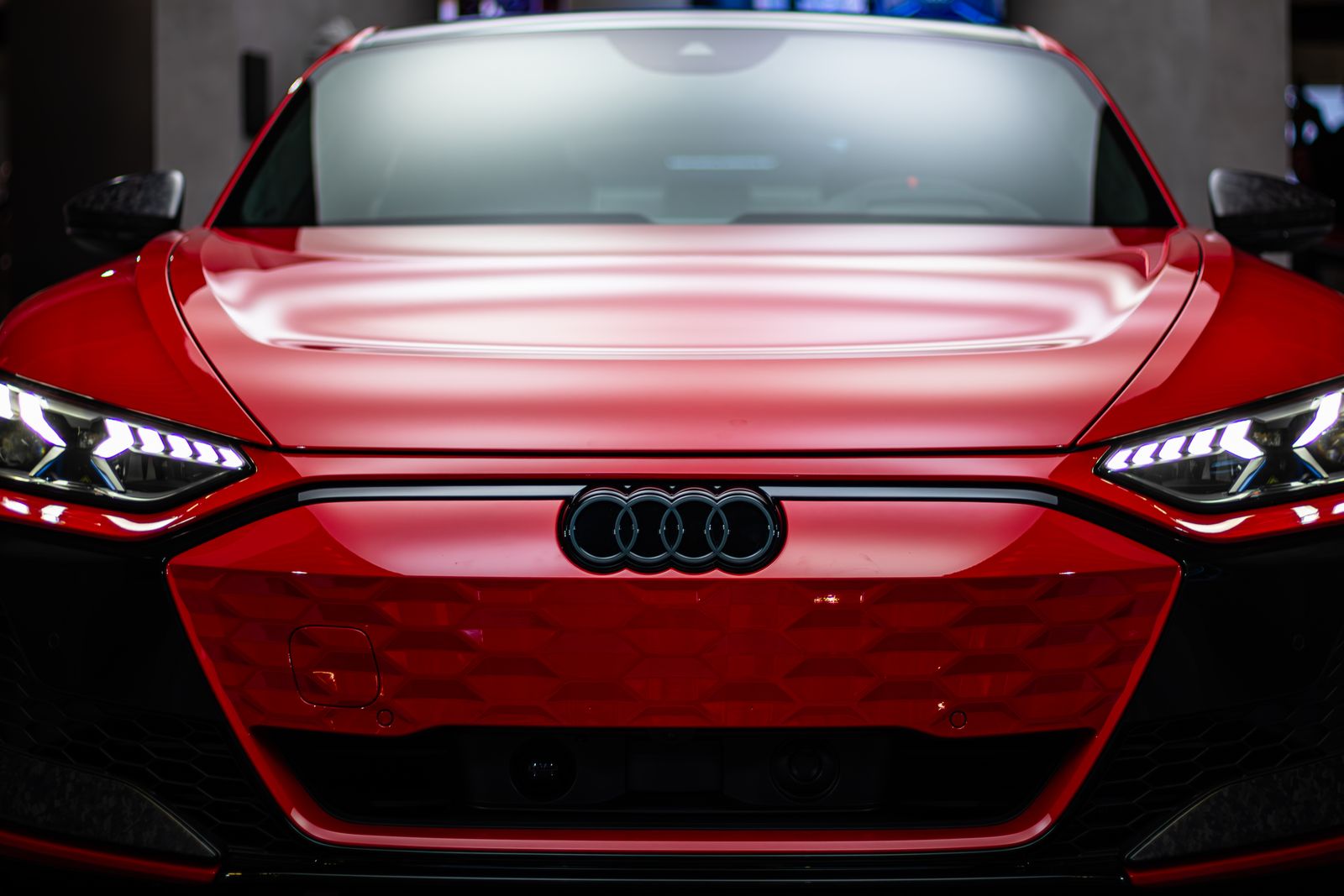
Audi has confirmed the plant will build premium SUVs but has not named them officially. Reuters reports the line-up will comprise the Q7, Q8 and the all-new Q9, and the Q9 was displayed at the Georgia rally, which is about as close to confirmation as these things get before a press release catches up.
There is also a reported side arrangement: Audi could build up to 25,000 vehicles at Scout’s planned South Carolina factory, a useful hedge that spreads risk and volume without committing the Georgia site to a single product plan years before it opens.
Gerd Walker, Audi’s board member for production and logistics, framed the greenfield opportunity in characteristically engineering-led terms: “Building a new plant from the ground up allows us to rethink manufacturing from day one. We can design highly efficient and flexible production processes, integrate advanced technologies and develop a strong local supplier network. Our ambition is to establish a benchmark for premium manufacturing that strengthens Audi’s global production network.”
That flexibility matters, because a plant opening in the early 2030s will be building vehicles designed in the late 2020s, in a market whose powertrain mix nobody can confidently predict.
The Strategic Read
Döllner’s comments went further than the usual plant announcement boilerplate. “We have much greater ambitions for Audi in America,” he said. “The United States is one of the world’s most important premium markets, and we have not yet realized our full potential. We are determined to change that, with premium products, a stronger brand and a competitive local production base. This is about building a stronger Audi business in America, not only about building a factory.”
That distinction is the heart of the story. A factory is a cost centre until it is attached to a brand strategy, and Audi’s US performance has lagged its German rivals for years. Local production removes the tariff drag, shortens the supply chain, and gives the company the pricing room to compete properly in the segment where the margins live: large premium SUVs. The competitive pressure lands squarely on BMW and Mercedes-Benz. Both have enjoyed a local manufacturing advantage that Audi is now spending $4bn to neutralise. Mercedes-Benz’s Alabama hub, with capacity heading to 340,000 units a year, and BMW’s established US footprint were built over decades. Audi is trying to compress that into a single plant and a single product cycle.
It also completes a geographic triangle. Europe and China have carried Audi’s production for decades. Adding North America gives the company three legs, which is a more resilient stance in a world where trade policy can change with an election cycle.
The Verdict
Audi has made the right call for the wrong reason, and that is fine. Tariffs forced the decision, but a $4bn plant in Georgia with 200,000 units of annual capacity and the Q9 attached is a genuine strategic upgrade, not a defensive hedge. The company gets tariff relief, a shorter supply chain to its most profitable market, and a third production pillar to sit alongside Europe and China.
The frustration is the wait. Production does not begin until the early 2030s, so the announcement is unlikely to change UK or European supply, pricing or model availability in the near term, and the Q7, Q8 and Q9 sold in the UK are expected to continue from existing plants. Audi will keep paying to import cars into America until the first SUV rolls out of Middle Georgia. BMW and Mercedes-Benz, already entrenched, have years to respond. Döllner’s claim that this is about a stronger Audi business rather than a factory will be judged on whether the plant delivers cars worth the four billion spent on it. On that, the clock has only just started.
Related: audi finance complete funding.