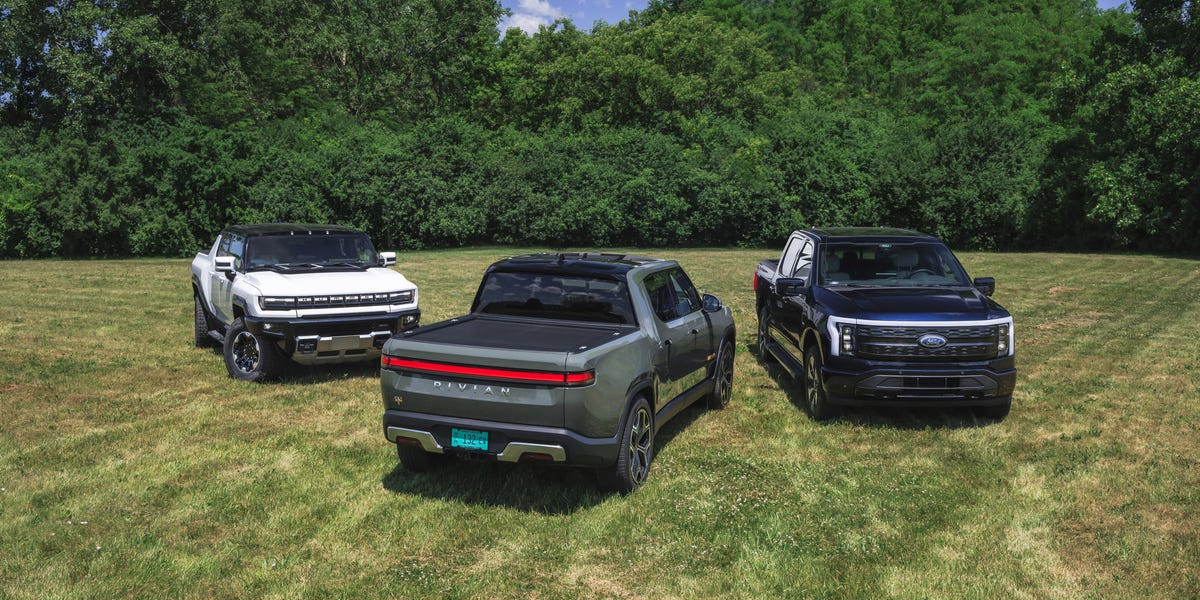
The electric pickup was supposed to carry the EV transition into the mainstream. Instead, nearly three years of sales data tell a more sober story. Across six models, from the Tesla Cybertruck to the Rivian R1T, combined US sales reached 232,809 units from the start of 2024 through the third quarter of 2026, according to figures compiled by Hearst Autos using manufacturer data and Cox Automotive estimates where detailed numbers aren’t published. Over the same 2024 to Q3 2026 window, Ford sold roughly 1.5 million F-Series pickups in the US. The electric pickup segment, in other words, has managed under 30% of one combustion model’s sales over an identical period. That is the reality check the segment has been avoiding.
The headline numbers: a fraction of the combustion benchmark
The gap is not marginal, and it is not closing. Six electric pickups, from six different badges and three different parent companies, have collectively managed less than a third of what Ford achieves with the F-Series over the same stretch. The F-Series has been America’s best-selling vehicle for decades, so it is a demanding yardstick, but the point stands: electric pickups remain a rounding error next to the trucks they were meant to displace.
The broader EV market offers no comfort either. No pickup appears on the list of bestselling EVs of 2026, which is dominated by SUVs of every size and price point. Buyers, it turns out, are happy to go electric in a crossover. They are markedly less keen to do so in a vehicle designed to tow, haul and work.
Tesla Cybertruck: early lead, fading fast
The Cybertruck tops the electric pickup table with 70,788 units, and Tesla deserves credit for shifting that many of anything so unconventional. But the trajectory is the story. 2024, its first year on sale, was its strongest at 38,965 units, a figure driven largely by early adopters who had waited years for the vehicle. Sales fell to around 20,000 in 2025 and an estimated 11,586 through the first three quarters of 2026. That is a collapse of roughly two thirds from the launch peak.
Two factors are hard to ignore. The first is the design, which remains as polarising now as it was at reveal. The second is quality: the Cybertruck endured numerous recalls early in its production run, and each one chips away at the sort of reputation a six-figure purchase depends on. Early adopters will forgive a lot. Mainstream buyers, the ones who decide whether a segment lives or dies, generally will not.
Ford F-150 Lightning: momentum without a future
The F-150 Lightning accumulated 65,587 units, a total that covers only the latter part of its run given it went on sale from the 2022 model year. It was among the earliest credible electric full-size trucks, and for a while it looked like the template: familiar nameplate, familiar shape, electric drivetrain. Production ended in 2025, making it the segment’s clearest case study in early momentum followed by discontinuation.
Ford has since pivoted. The company has spent the past few years learning an expensive lesson about electric pickups: building a brilliant one is not the same as building an affordable one. The Lightning arrived to genuine acclaim and then ran into a wall of cost, demand and production reality. The company’s answer is a smaller, cheaper proposition, and you can read our full breakdown of the Ford Fathom: Everything We Know About Ford’s Sub-$30,000 Electric Pickup for what comes next. That sub-$30,000 figure is the tell. Ford has concluded that the problem was never the electric pickup concept, but the price attached to it.
GMC Hummer EV: a niche within a niche
The Hummer EV accounts for 34,805 units, though that figure includes both the pickup and the SUV body style added for 2024, because GM does not report the pickup separately. That means the true electric pickup total across all six models is slightly lower than the headline figure. Launched for the 2022 model year, the Hummer leans hard into bold styling, enormous horsepower and serious off-road ability. It is also enormous, expensive and entirely unapologetic about both.
As a piece of brand-building it has worked. As a volume proposition it was never intended to. The Hummer’s inclusion in this tally is useful precisely because it shows how wide the definition of “electric pickup” has become: from a sub-$30,000 fleet special to a six-figure statement piece, with very little in between.
Chevrolet Silverado EV and GMC Sierra EV: the scaling problem in miniature
The Silverado EV and Sierra EV share a platform and, broadly, a story. The Chevrolet managed under 8,000 sales in its first year in 2024, rose past 11,000 in 2025 as cheaper fleet-oriented variants were added, then softened to 5,327 units through Q3 2026. Total: 24,030. The GMC, positioned between the Chevrolet and the Hummer and more upmarket in Denali trim, followed the same arc to 14,489 units.
That pattern, slow start, fleet-driven boost, then decline, is the most instructive data in the whole set. The 2025 uptick came from cheaper variants aimed squarely at commercial buyers, which tells you where genuine demand exists. The 2026 slowdown suggests even that demand has limits once the initial orders are filled. Scaling an electric full-size truck is not a marketing problem. It is a cost problem, and adding fleet trims only partly solves it.
General Motors is not retreating, mind. The company has been vocal in defending the concept, and our report on how GM Says Electric Trucks Have a ‘Huge Application’ as It Defends EV Pickup Future sets out the case from the executive who launched its heavy-duty pickup programme. Whether that case convinces retail buyers is another matter.
Rivian R1T: shifting preferences inside the EV tent
Rivian’s R1T recorded 23,110 units. On sale from the 2022 model year, it was the company’s first model and remains its most distinctive, complete with the storage tunnel between cab and bed that no rival has copied. It also shows the clearest internal cannibalisation in the segment: sales have declined steadily since 2024, and the newer, smaller R2 SUV now outsells the entire larger R1 line-up.
That is a remarkable admission about buyer behaviour. Even among people who have already committed to electric driving, and who are shopping within a brand built for adventure, the smaller SUV wins. The pickup is not losing only to combustion trucks. It is losing to electric SUVs.
What the numbers say about the electric pickup’s future
The pattern is consistent enough to be a rule rather than a coincidence, and the explanations are not mysterious. Price is the first: electric trucks carry a premium that commercial buyers cannot justify on total cost of ownership alone, and private buyers baulk at. Capability is the second. Towing dramatically reduces range, charging while hitched to a trailer is awkward, and the buyers who most need a truck are the least able to absorb that compromise. Neither problem is solved by better marketing.
What would change the picture is sequencing, and there are signs the industry has finally worked that out. Ford’s pivot to a cheaper, smaller truck is the clearest signal yet that manufacturers now understand the order of operations: get the price down, get the charging infrastructure right for towing, and let the volume follow. The electric pickup will probably get there. It just will not get there on the timetable the launch hype promised, and the sales figures are finally being honest about that.
The combustion truck, meanwhile, is not standing still. Interest in traditional V8 hardware remains strong enough that Stellantis has confirmed the Jeep Wrangler Scrambler SRT: V8 Desert Truck Confirmed for Production, a reminder that the appetite for big, loud, petrol-powered off-roaders has not evaporated. Electric pickups are competing for attention against a rival that is getting louder, not quieter.
The electric pickup has a future, but it has some catching up to do first.