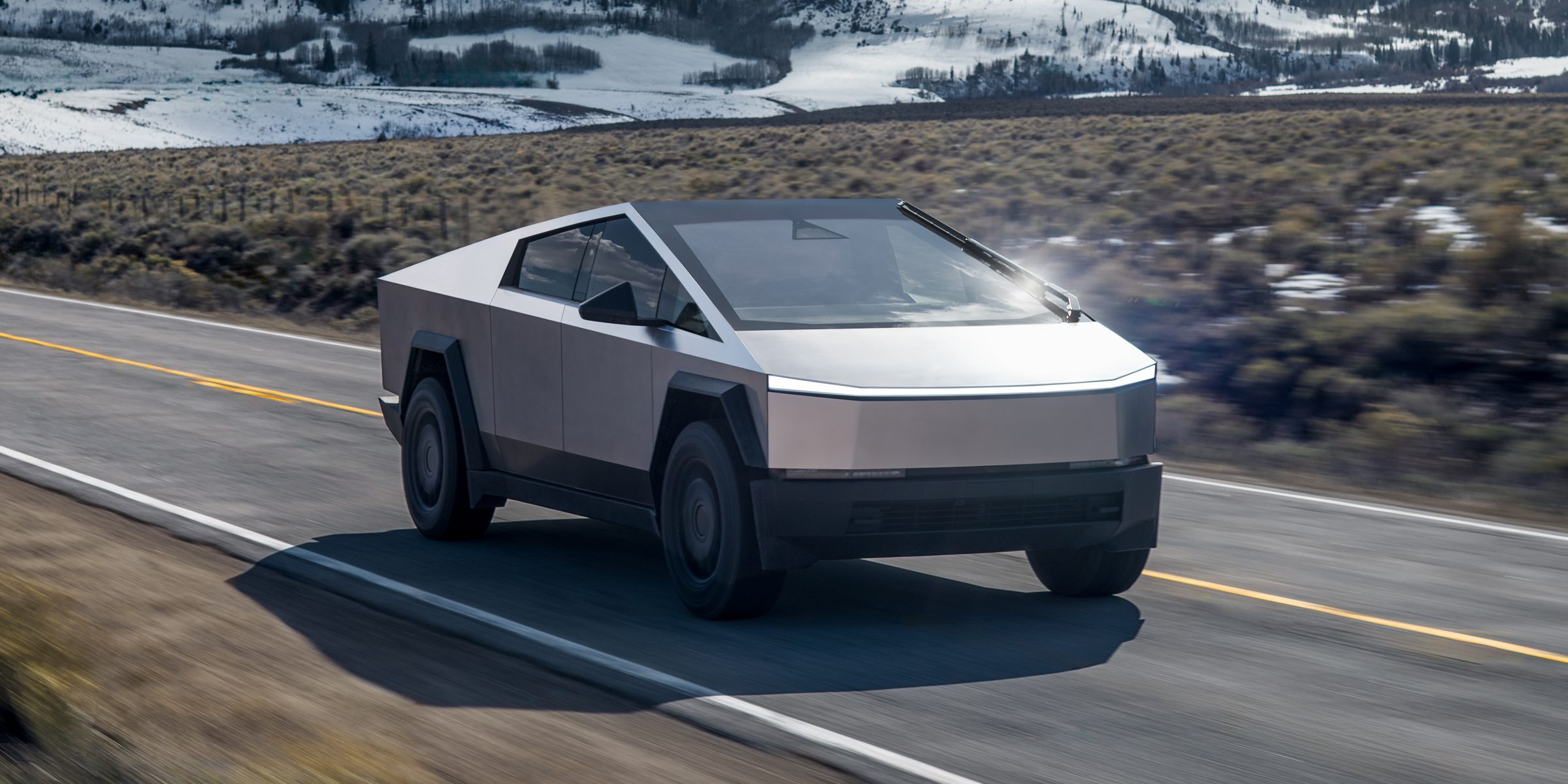
Elon Musk has confirmed the end of the road for the Cybertruck. In a post on X, the Tesla CEO said the company will “wind down production of the Cybertruck at Gigafactory Texas around the middle of next year,” putting the shutdown around mid-2027, roughly three and a half years after the first customer trucks were handed over. The 2027 model year is expected to be the last.
What he did not offer was any reflection on why. Musk gave a single reason for the decision: making room for increased Cybercab production. There was no word on how long remaining inventory will be sold, and no detail on parts and service support for the tens of thousands of owners who already have one on their driveway.
A line built for 250,000 trucks a year
The scale of the retreat is best understood against the original ambition. Tesla tooled the Cybertruck line for 250,000 units a year, and its latest shareholder letter still lists more than 125,000 units of installed capacity. What actually left the factory tells a different story.
Tesla sold 38,965 Cybertrucks in 2024, according to figures compiled by Car and Driver. That fell to 20,237 in 2025, and to 11,586 through the first three quarters of 2026. Tesla does not break out Cybertruck deliveries, folding them into an “Other Models” category alongside the Model S, Model X and Semi. That group totalled 8,295 units in the third quarter of 2026, down 48% year on year and the lowest quarterly figure since the second quarter of 2021. Analysis by Electrek puts 7,000 to 8,000 of those down to the Cybertruck, an annualised pace of about 30,000 vehicles, or roughly 12% of the original plan.
Cox Automotive’s estimates for the US market show the same trajectory: 3,519 Cybertrucks sold in the first quarter of 2026 and 3,744 in the second, against 14,416 in the third quarter of 2024. The electric pickup segment more broadly has had a sobering few years, a pattern we examined in our look at how Electric Pickup Reality Check: Tesla Cybertruck Leads as US Sales Stall.
Discounts, a cheaper trim and then a price rise
Tesla’s attempts to stimulate demand followed a familiar pattern. A cheaper rear-wheel-drive version arrived in 2025 and was pulled within months. A cheaper dual-motor trim was added in the summer, only for Tesla to raise US prices by $5,000 in August. US pricing now starts at $74,990 for the dual-motor, with orders currently limited to the roughly $90,000 Premium All-Wheel Drive and the six-figure Cyberbeast. The dual-motor is still listed on the configurator, though it is not clear whether Tesla intends to take new orders on it before production ends.
None of it changed the fundamental problem. The Cybertruck is a polarising vehicle priced well above the heart of the pickup market, and it cannot be sold in Europe or most right-hand-drive markets. Tesla cancelled the truck for Australia and New Zealand just two weeks before the wind-down announcement.
Questioning the “making room” explanation
The Cybercab rationale does not stand up to much scrutiny. Gigafactory Texas has more than 10 million square feet of factory floor by Tesla’s own figure, about 930,000 square metres, the Cybertruck line is running at about a quarter of installed capacity, and Tesla built a separate line for the Cybercab’s “unboxed” manufacturing process. As of late October, only 463 Cybercabs had been registered in Texas, so the idea that the Cybertruck is being evicted to free up space looks generous.
There is a pattern here. Tesla ended Model S and Model X production in April, freeing Fremont for Optimus robot work. Framing a shutdown as making room for the future is easier than admitting a product did not sell.
Who was actually buying
One of the more revealing data points comes from S&P Global Mobility. SpaceX bought 1,279 Cybertrucks in the fourth quarter of 2025, and Musk’s companies took 1,339 in total, about 19% of US registrations that quarter. When a meaningful slice of your demand comes from affiliated businesses, the retail market is telling you something.
Electrek estimates Tesla invested billions in the programme, between research and development, supplier tooling sized for 250,000 units and a 125,000-unit production line. With roughly 70,000 trucks delivered in about three years, the model probably never generated positive cash flow, and Electrek’s estimate of losses runs to a couple of billion dollars, a figure that has not been confirmed by Tesla.
The engineering Tesla got right
It would be unfair to write the Cybertruck off entirely. Its steer-by-wire system and rear-wheel steering were, at launch, unique in a production pickup, and they genuinely moved the game on for large electric trucks. The 48-volt electrical architecture and stainless steel exoskeleton were bold bets too, even if the latter was widely reported to have caused build-quality headaches.
Musk has previously floated a more conventional electric truck design if the Cybertruck failed. Electrek doubts it will happen, and the reasoning is sound: Tesla is now betting its future on autonomy and robotics, not on another niche lifestyle pickup.
What owners should know, and where this leaves Tesla
For the roughly 70,000 people estimated to have bought a Cybertruck, the immediate concern is support. Tesla has said nothing about how long it will stock parts, how service centres will handle a discontinued model, or whether software updates will continue at the same cadence. Owners of the Model S and Model X, both now out of production, will recognise the uncertainty.
The bigger picture is a company in transition. The Model Y, launched in early 2020, remains Tesla’s last genuinely successful new model launch, according to Electrek. The Cybertruck was meant to prove Tesla could conquer a new segment; instead it proved that a divisive design, a high price and a limited addressable market are a difficult combination to overcome. The wind-down at Giga Texas is the quiet admission of that, whatever the official line about making room for robots and robotaxis.