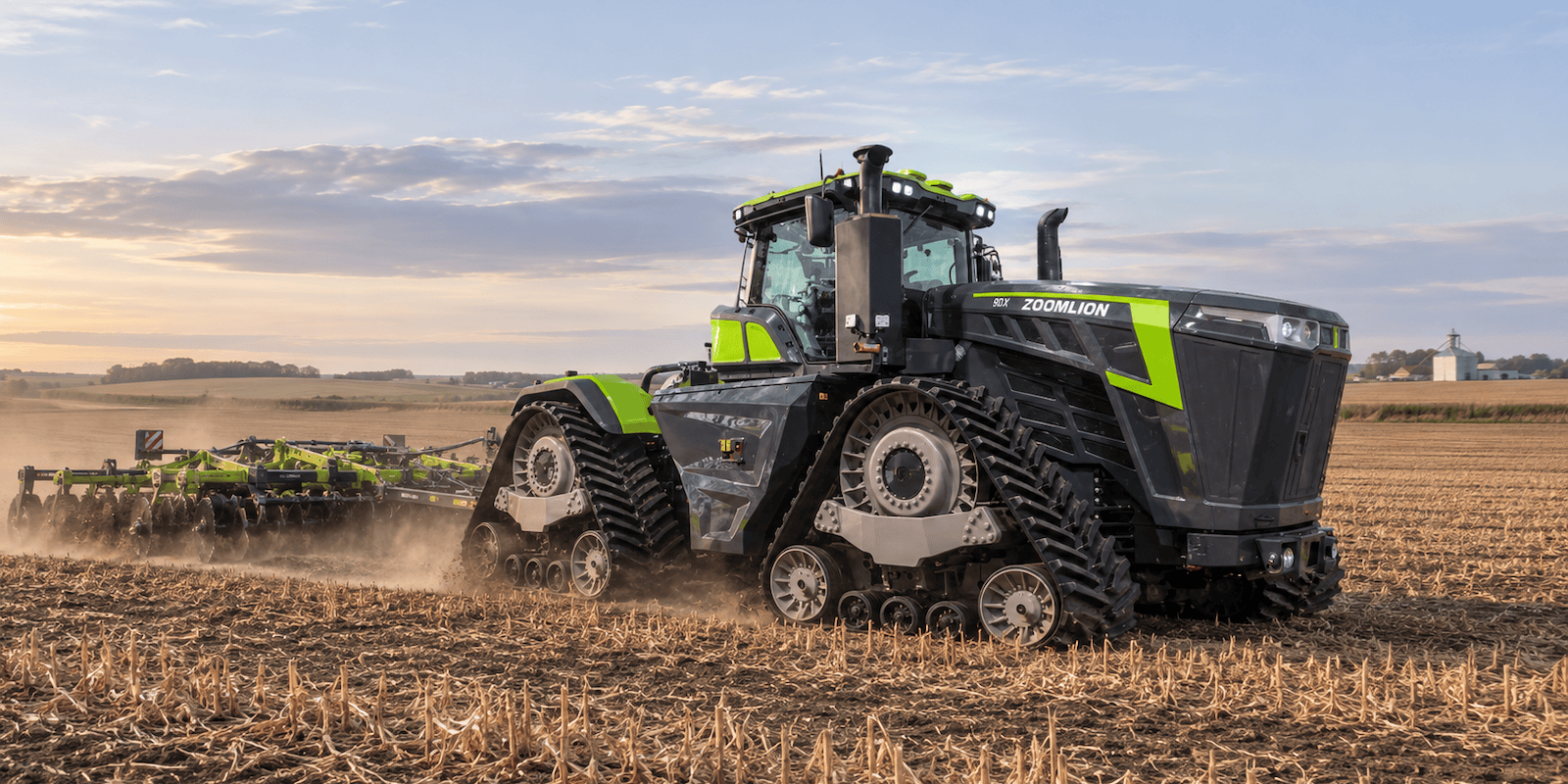
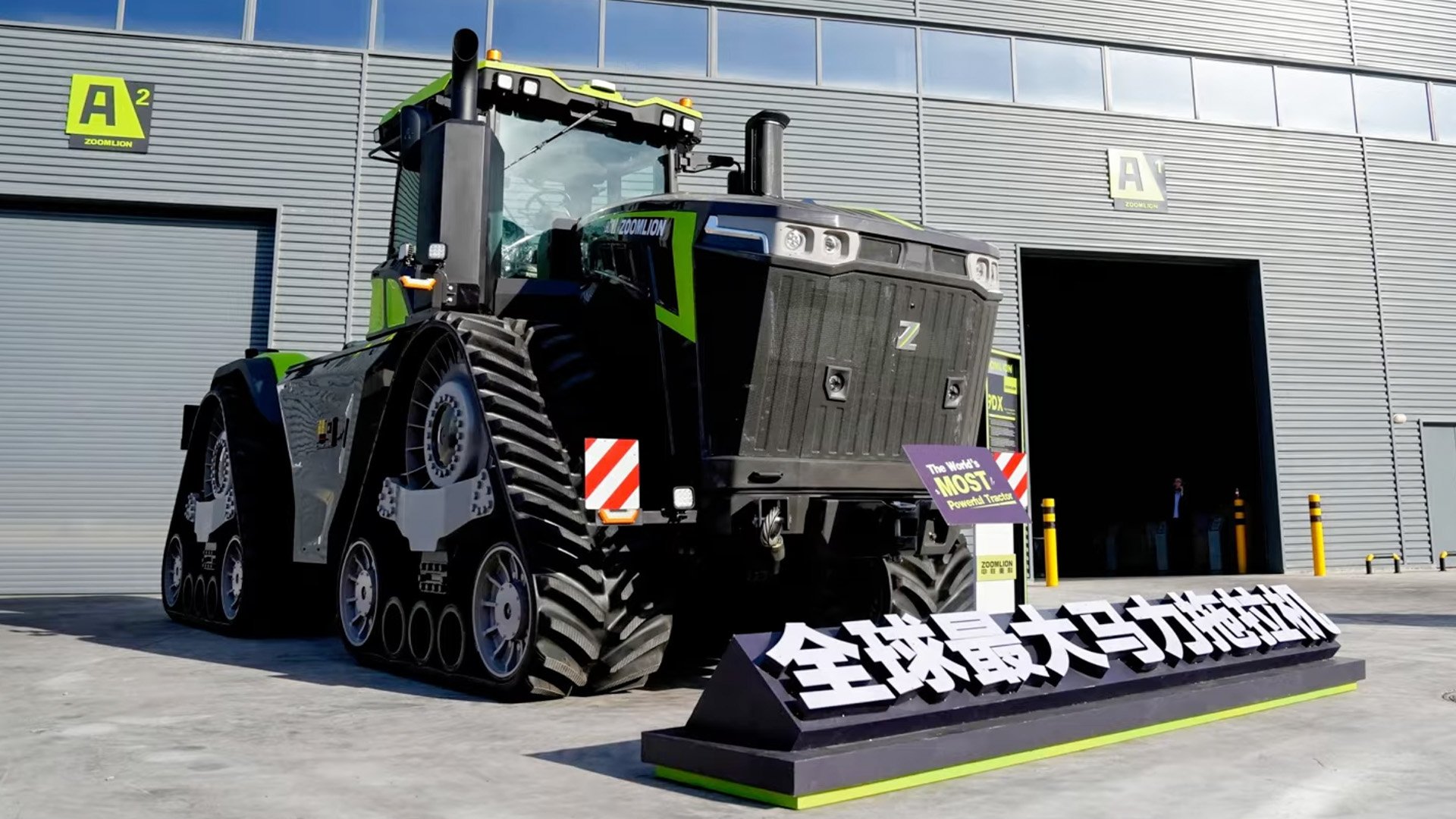
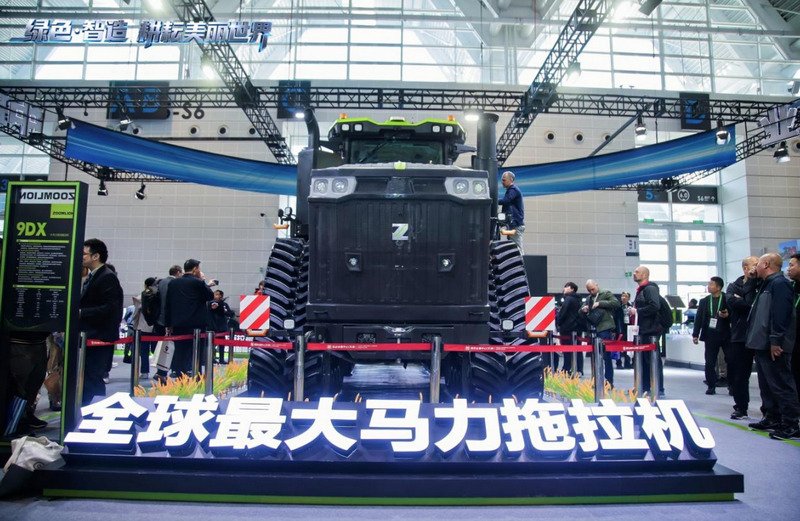
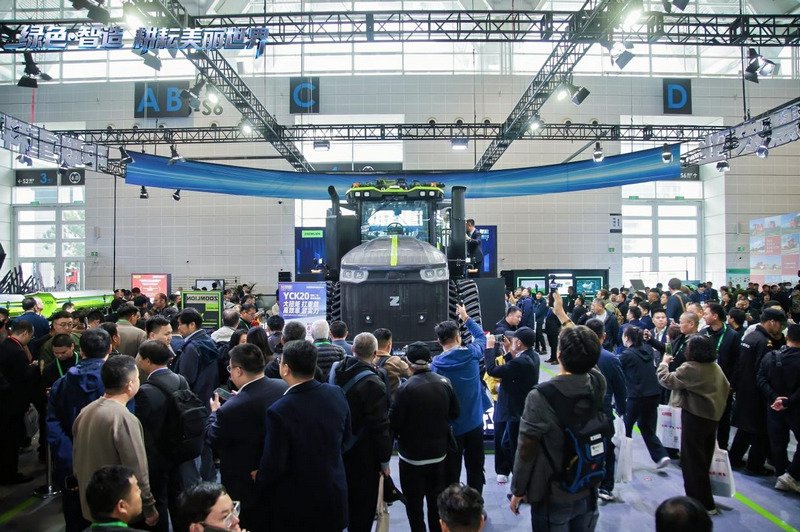
The high-horsepower tractor segment has a new headline act, and it does not wear a familiar badge. At the China International Agricultural Machinery Exhibition, Zoomlion pulled the wraps off the 9DX, a hybrid behemoth it bills as the world’s most powerful tractor. The numbers are not subtle: more than 1,600hp, 7,200Nm of torque and an 800-volt hybrid powertrain. Treat that power figure with caution, because it comes straight from Zoomlion and the full specification has not been published to back it up. Even so, for a sector where a flagship machine from a legacy brand might crest 900hp, this is not an incremental step. It is a different league entirely.
The headline claim
Zoomlion’s central pitch is straightforward. The 9DX is, by its own reckoning, the most powerful tractor on the planet, pairing a diesel engine with an 800-volt hybrid electric system and a continuously variable transmission. Peak torque is quoted at 7,200Nm, the kind of figure that turns heads in any corner of the machinery world.
The caveat bears repeating: the 1,600hp figure is a manufacturer claim, and until the full specification arrives it should be read as an ambition rather than a measured output. But even taken at face value, the claim lands hard. This is a machine built for the largest-scale arable operations, where draft capacity and implement size dictate how much ground a single operator can cover in a season.
How it compares
The benchmark most people reach for is the John Deere 9RX 830, which until recently sat near the top of the production tractor pile at 913 maximum horsepower. The 9DX, if the claim holds, is closing in on double that. That is not a gap you close with a remap.
What does the difference mean in practice? For heavy draft work, it translates into pulling wider, heavier implements at speed, or pulling the same implement through tougher going without the tractor running out of breath. On very large farms, that can mean fewer passes, fewer operators and a shorter working window at the critical points of the season. The 9DX also quotes a top speed of 25mph (40km/h) sustained across grades and slopes of up to 12 degrees, which matters when a loaded machine has to climb rather than cruise.
Under the skin
The 9DX is a four-track machine, using what Zoomlion calls a tank-drive system on its own 762mm wide tracks. The tracks spread weight to generate traction while limiting soil compaction, a balance that gets harder to strike as machines get heavier. The cab is independently suspended, which should take some of the sting out of long days across rough ground.
Hydraulic flow is rated at 636 litres per minute. That figure puts it in the same territory as the range-topping John Deere, and it is the number that matters if you plan to run ultra-wide seeders or variable-rate fertiliser applicators. Big implements need big oil flow, and the 9DX is clearly specified with the largest kit in mind.
What Zoomlion hasn’t said
For all the headline numbers, the specification sheet has some conspicuous holes. Zoomlion has not disclosed the engine, the battery pack size or full technical details. That is a notable omission for a machine whose entire pitch rests on its powertrain.
There are clues. Zoomlion already produces an 800-volt modular battery system for other equipment, scaling from 140kWh to 800kWh. Other top-end Zoomlion tractors use an agricultural version of Cummins’ 15-litre turbodiesel. The Drive has speculated that a variant of the Cummins X15, the engine used in Zoomlion’s ZR400U rotary drilling rig, could sit under the bonnet, but that remains unconfirmed. Until Zoomlion publishes the details, the hybrid architecture is a promise rather than a proven package.
The hybrid argument
The case for hybridising a tractor this size is not about chasing electrification for its own sake. Zoomlion claims reduced fuel consumption, lower emissions and lower operating costs compared with a conventional diesel, without asking farms to abandon diesel entirely. That framing is deliberate, and it is sensible.
Diesel remains the practical backbone of heavy agricultural work, particularly where machines run all day and refuelling infrastructure is built around it. A hybrid that trims fuel burn and emissions while keeping the diesel engine as the primary power source is an easier sell than a wholesale switch to electric, and for operators watching running costs on a 1,600hp machine, fuel is where the money goes. The logic of hybrid as a bridge rather than a leap is familiar from the wider car market.
Export prospects
Zoomlion’s export footprint is limited, and that is the practical question hanging over the 9DX. In the US market the company currently sells only a small range, mainly forklifts and scissor lifts, and The Drive has cast doubt on the 9DX ever reaching American soil. The barriers it cites are instructive: heavy US tariffs on Chinese agricultural equipment, farmer preference for established domestic brands, servicing complexity and the absence of a dealer network. Similar obstacles are likely to apply in Europe, where dealer support and parts availability are not optional extras for a machine that has to be running at harvest.
Zoomlion is reported to be coming off strong early export quarters, shipping into Germany, Australia and the UAE, so the brand is not standing still. But a 1,600hp flagship needs a support structure behind it, and building one is a multi-year project, not a show announcement.
Industry reaction
The show itself drew more than 3,000 exhibitors and vendors, and the high-horsepower machines made a strong impression. Perhaps the most telling reaction came from a competitor. Nicolas Meunier, AGCO’s director of global electronic and electrical engineering, told Chinese state news agency Xinhua that China has moved on from producing mostly low-horsepower tractors to building seriously large machines. That is a notable acknowledgement from a major Western manufacturer, and it frames the 9DX less as a curiosity and more as a marker of how quickly the Chinese industry has scaled its ambitions.
What the 9DX signals
The 9DX is not yet a machine you can buy in Britain, and it may never be. But its significance is bigger than its availability. It shows that the top end of the tractor market, long the preserve of a handful of Western brands, is now contested by a Chinese manufacturer willing to make a very public play for the power crown. Whether or not the 1,600hp figure survives independent scrutiny, the direction of travel is clear.
For buyers, the lesson is to watch the details rather than the headline. Ask about the engine, the battery capacity, the real-world fuel figures and, above all, the dealer and parts network behind any high-horsepower machine. Power is easy to quote. Support is what keeps a tractor working through the season. The 9DX has fired a shot across the industry’s bows; the interesting part will be seeing who answers, and how.