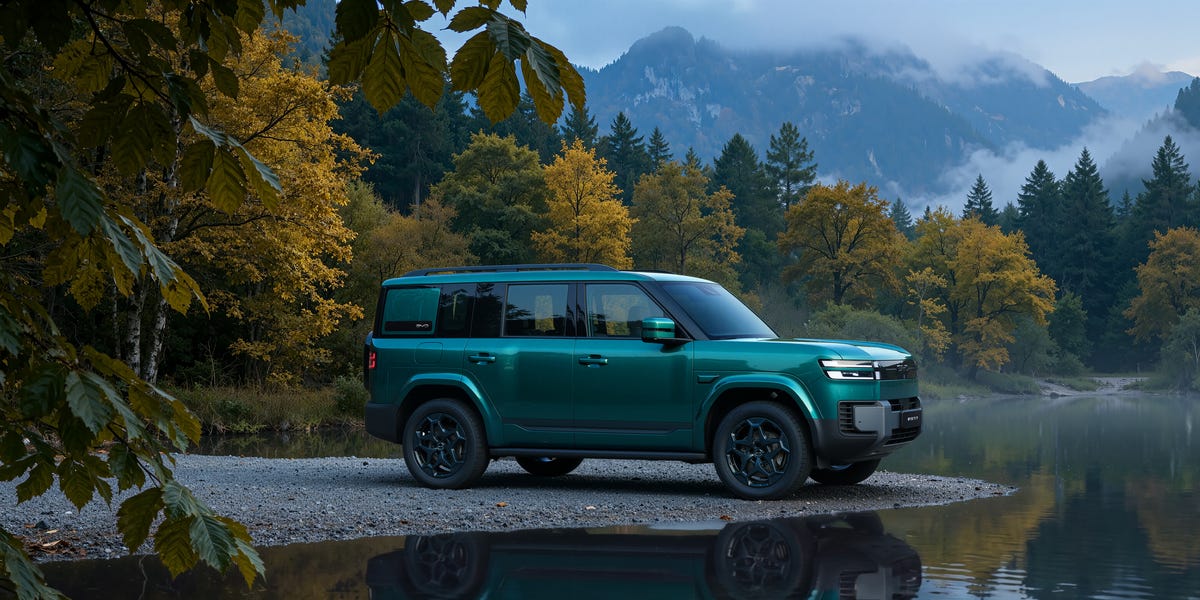
The row between Jaguar Land Rover and BYD has moved from legal paperwork to something considerably more dramatic. Court-ordered bailiffs turned up at BYD’s Dutch offices in Schiedam and Hoofddorp, reportedly aiming to secure documents before they could be destroyed. The dispute centres on the BYD Ti7, a five-metre plug-in hybrid SUV that JLR believes borrows rather too much from the Land Rover Defender. A preliminary hearing at a court in The Hague will decide whether the action proceeds, and both companies have declined to comment while proceedings are ongoing.
What JLR is alleging
The core of JLR’s claim, as reported by The Times, is that BYD stripped down a Defender in order to reverse-engineer elements of its technology for the Ti7. That is a striking accusation: not a vague complaint about a similar silhouette, but an allegation that a physical vehicle was taken apart and studied. The raids on BYD’s Dutch offices were designed to secure files before they could disappear, which gives some indication of how seriously JLR is treating the matter.
For a company with Land Rover’s design heritage, the Defender is close to sacred ground. It is also commercially vital: the Defender 110 is a central model for JLR, and any vehicle that mimics its proportions, stance and detailing chips away at the premium that the brand has spent decades building.
Where the case stands
The preliminary hearing in The Hague is the immediate point of focus. A Dutch court will determine whether the action can proceed, and the outcome will shape how quickly the substantive dispute reaches a full hearing. Neither JLR nor a BYD UK spokesperson would be drawn on the record, both citing ongoing legal proceedings.
That silence is standard practice in live litigation. What is clear is that JLR has chosen the Netherlands as its battleground, with BYD maintaining Dutch offices in Schiedam and Hoofddorp. Court-ordered raids are an unusually aggressive first move, and they suggest JLR’s legal team believes there is documentary evidence worth preserving.
The Ti7 itself
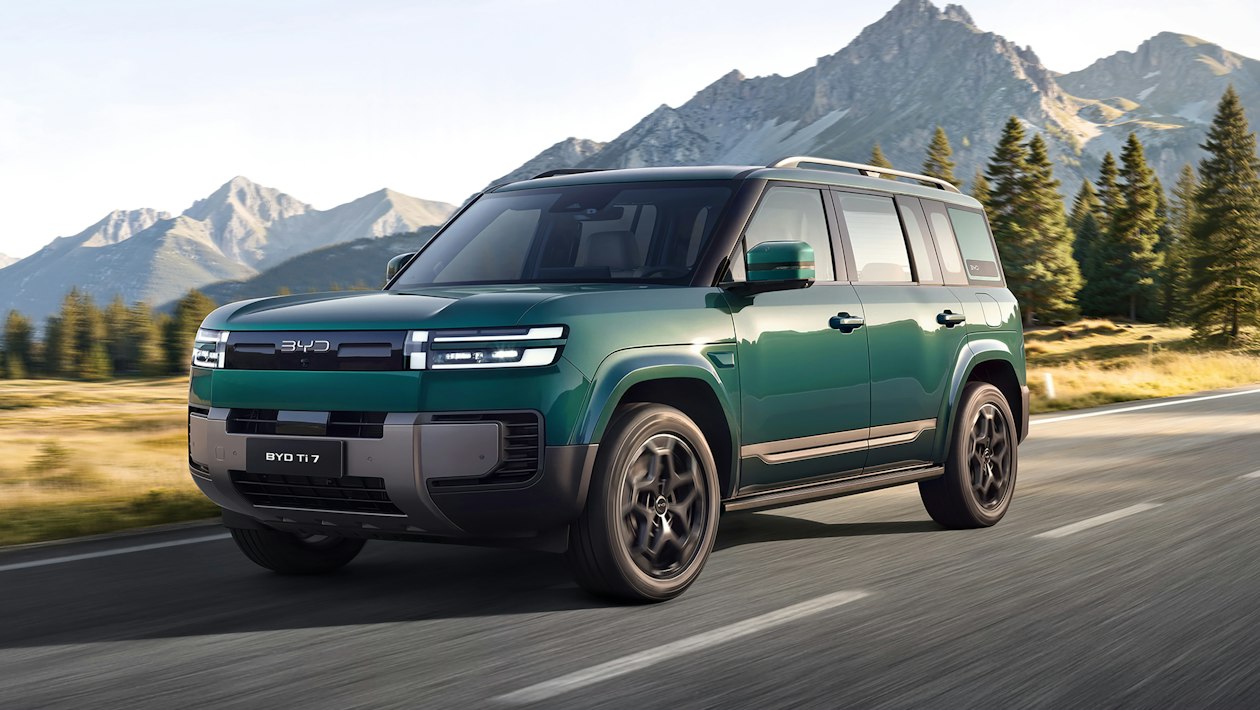
The vehicle at the centre of the storm is a five-metre SUV sized almost identically to the Defender 110. The price gap JLR and BYD are contesting is substantial, with the Ti7 reported to undercut the Defender by roughly a fifth. In powertrain terms, the Ti7 pairs a 1.5-litre petrol engine with electric assistance in plug-in hybrid form. It does not offer anything to match the Defender’s six-cylinder or V8 options, so the undercut comes with a performance caveat.
Practicality is where the BYD makes its strongest case. The Ti7’s plug-in hybrid layout offers seven seats, while Land Rover’s plug-in Defender is only available with six. A fully electric Ti7 has been announced in China, though UK availability has not been confirmed. For families who need three rows and want to keep Benefit-in-Kind costs down through plug-in hybrid running, the appeal is obvious.
Why the stakes are high
A gap of a fifth is not a rounding error. The Ti7 matches the Defender’s footprint almost exactly while asking far less for it, and that combination is precisely the sort of value proposition that pulls buyers out of premium showrooms. JLR’s business model depends on customers paying a substantial premium for design, brand and capability. When a rival arrives with similar dimensions, seven seats and a plug-in hybrid drivetrain at a fifth less, the argument for the Defender has to be made on more than looks.
There is also a reputational dimension. JLR’s design language has been copied before, and the company has shown it will go to court when it believes the line has been crossed. Allowing a direct visual competitor to establish itself in Europe without challenge would set an uncomfortable precedent.
JLR’s form on lookalikes
JLR has form here, and mostly good form. It previously won a legal action against the makers of the Landwind X7, a vehicle that bore an uncomfortably close resemblance to the Range Rover Evoque. That case became a landmark of sorts for design protection in the Chinese market.
The record is not entirely one-sided, though. The Ineos Grenadier was cleared for sale in 2020 despite its strong resemblance to the original Defender, a decision that demonstrated the limits of design rights when a vehicle references a discontinued model rather than a current one. Meanwhile, several Defender-style vehicles are on sale in China, including the Jaecoo 7, which has picked up the nickname “Temu Range Rover” among some British enthusiasts. Imitation, in other words, is now a well-established feature of the Chinese car market’s approach to the SUV segment.
The awkward parallel
Here is where the story becomes genuinely interesting. While JLR is pursuing BYD through the Dutch courts, it has simultaneously entered a joint venture with Chinese giant Chery. The resulting Freelander 8 SUV will be sold in the UK. Chery itself has made no secret of its British ambitions, with its chairman saying the company wants to become British in design, engineering and production terms.
The tension is hard to miss, though it is worth being precise about what it consists of. The BYD action is about alleged design copying. The Chery tie-up is about platform-sharing and brand licensing, with a historic Land Rover nameplate attached to a vehicle built with a Chinese partner. Those are different things, and JLR can argue, reasonably, that one protects its intellectual property while the other gives it access to cost-effective electrified platforms and a route back into the affordable SUV space. But it is still an awkward optics problem, and rivals will not hesitate to point it out.
What happens next
The Hague court’s decision will set the tempo. If the case proceeds, JLR could seek remedies that would affect Ti7 sales in the markets concerned, which would be a significant complication for BYD’s European expansion plans. If the action stalls, the Ti7 arrives with a clean slate and a substantial price advantage over its most obvious inspiration.
For buyers watching the large plug-in hybrid SUV space, the Ti7 is worth following regardless of the legal outcome. It represents the first serious attempt to offer Defender-style presence and seven-seat plug-in hybrid practicality at a price that undercuts the establishment by a fifth. Whether it does so with JLR’s blessing or over its objections will determine how quickly it reaches European showrooms. Either way, the bailiffs have already made one thing clear: this is no longer a polite disagreement about grille shapes.
The wider lesson is about how established premium brands defend their territory when the price gap becomes this wide. JLR’s answer, so far, is to fight in court while hedging in the boardroom. The Dutch court will have the first word.
For more on this, see byd land rover bailiffs.