
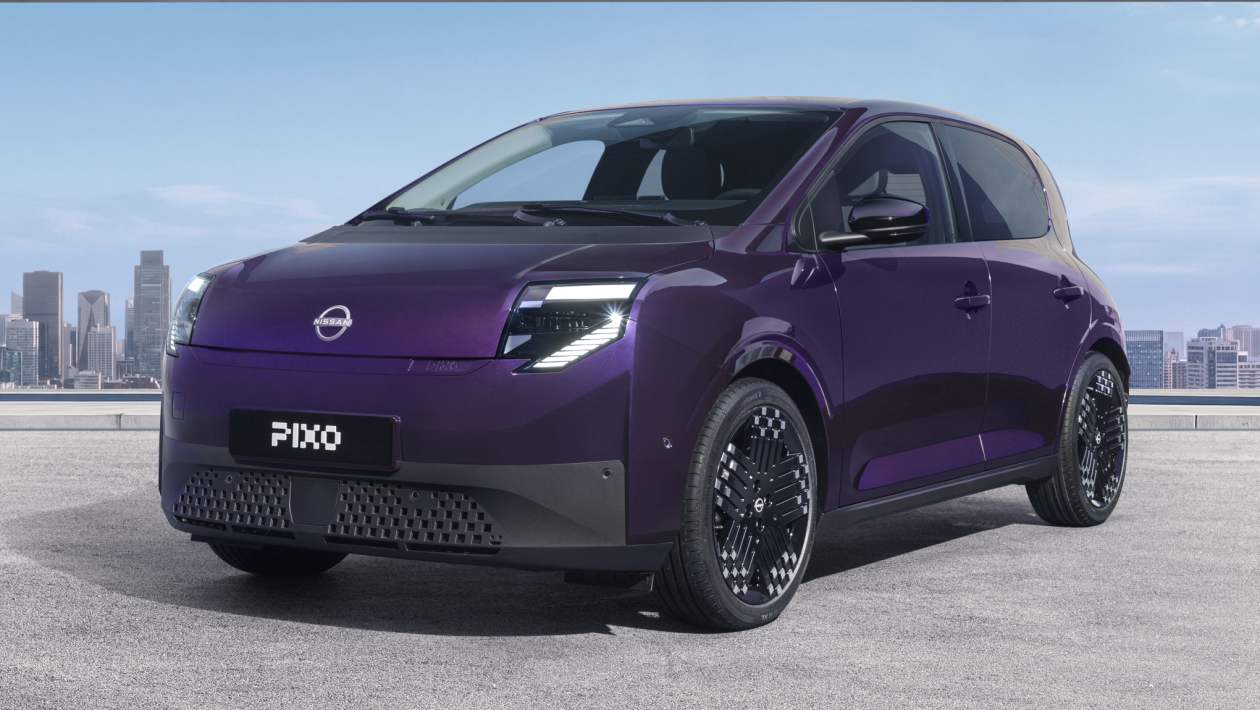
Nissan Pixo Returns: The Comeback Nobody Saw Coming
Let us start with the surprise. The Nissan Pixo, a car that most people probably forgot existed until the headline landed, is reportedly being revived. The original Pixo was a compact city car sold in Europe in the early 2010s. It was affordable, economical, and about as exciting as a lukewarm cup of tea. But it served a purpose.
Its reported return raises immediate questions. What would a new Pixo look like? The compact car segment has been decimated in recent years as buyers flock to crossovers and manufacturers struggle to make small cars profitable. Yet there is a growing recognition that not everyone wants or can afford a bulky SUV. A revived Pixo could position Nissan to capture budget-conscious buyers who still want a new car with a warranty and modern safety tech.
Expect it to be small, efficient, and almost certainly electrified in some form. Whether that means a mild hybrid, a full hybrid, or a budget EV remains to be seen. What matters is that Nissan appears to be betting on the idea that there is still life in the affordable small car. That is a significant statement in a market that has spent the last decade abandoning the segment.
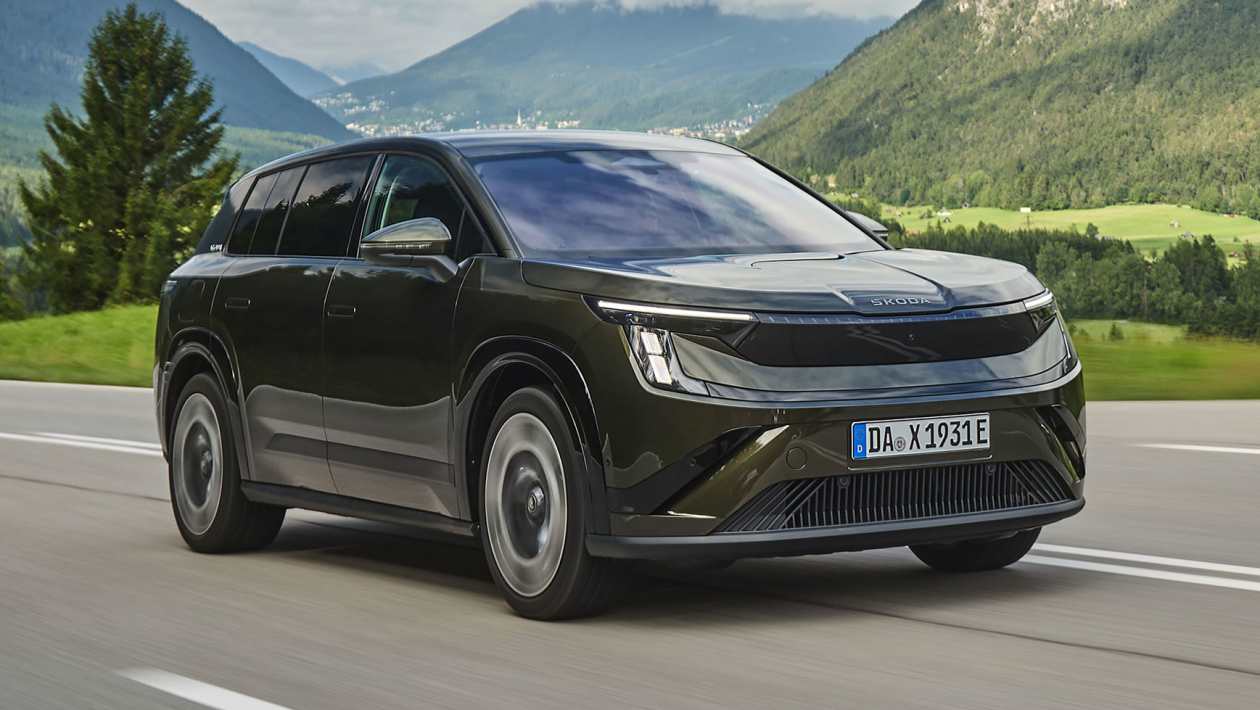
Skoda Peaq: A New Chapter for the Czech Brand
Skoda has been on a roll for years, consistently delivering cars that undercut their Volkswagen Group siblings on price while often exceeding them on practicality and character. The Skoda Peaq, slated for 2026, represents the next step in that evolution.
The name itself is intriguing. Skoda has been moving toward a naming convention that blends familiar sounds with new identities. The Peaq is expected to slot into a growing lineup that already includes the Enyaq and Elroq, suggesting it will be an electric model. Given Skoda’s track record with the Enyaq, which offers generous rear legroom and a boot that rivals larger SUVs, expect the Peaq to deliver similar levels of interior space and clever storage solutions at a competitive price point.
The Peaq will likely arrive as a compact crossover or SUV, the segment where the real volume lies. If Skoda can deliver something that offers genuine range, practical dimensions, and a price that undercuts the likes of the Tesla Model Y and Ford Explorer EV, it could be a quiet game-changer. Skoda has consistently proven that it understands what European buyers actually need, and the Peaq looks set to continue that tradition.
Range Rover Electric vs. Dacia Spring: The EV Market’s Stark Divide
Now to the extremes. Auto Express commentary has highlighted the Range Rover Electric and the Dacia Spring as occupying opposite ends of the electric vehicle spectrum. Never has a comparison been more apt.
The Range Rover Electric represents the pinnacle of electric luxury. It is expected to deliver silent, effortless propulsion with the same go-anywhere capability that has defined the Range Rover name for decades. It is expected to be priced at the upper end of the luxury EV market. It will be loaded with technology, wrapped in leather and wood, and designed to make its occupants feel like they are gliding above the rabble.
The Dacia Spring, by contrast, is the antidote to all of that. It is positioned as an affordable city car with modest range and power. It does not pretend to be anything other than what it is: accessible electric mobility for people who need to get from A to B without spending a fortune.
These two vehicles illustrate the fundamental challenge facing the EV market. On one hand, electric technology enables incredible luxury and performance. On the other, it can also enable affordable, accessible transport. The problem is that the middle ground has been slow to materialize. For every Range Rover Electric, there are thousands of buyers who simply want a reasonably priced EV with decent range and enough space for a family. That is the sweet spot, and it is still surprisingly difficult to hit.
Finding the EV Sweet Spot
So what does that sweet spot actually look like? Based on current market trends and the gaps in the lineup, it is generally understood to sit in the mid-market price range with sufficient range for everyday use. It has space for four adults and a reasonable amount of luggage. It charges quickly enough to make longer journeys tolerable. And crucially, it does not feel like a compromise.
Several models are already circling this territory. The Renault 5 is one. The upcoming Skoda Peaq could be another. Several established models already occupy this territory.
The sweet spot is not about being the cheapest or the most luxurious. It is about being the most sensible. And as battery costs continue to fall and charging infrastructure improves, that spot is only going to get sweeter.
Renault 5: More Range, Same Price
Speaking of the Renault 5, the updated version for 2026 is reportedly unlocking more range without increasing the price. That is a significant move in a market where prices have been creeping upward almost universally.
The Renault 5 has already won plaudits for its retro-inspired design, its engaging driving dynamics, and its competitive pricing. By improving range while holding the line on price, Renault is strengthening an already compelling value proposition. In the competitive EV hatchback segment, that could be the difference between being a consideration and being the choice.
The message is clear: Renault understands that buyers want more for their money, not less. In a climate where inflation has squeezed household budgets, delivering tangible improvements without asking customers to pay more is a powerful statement of intent.
The Bigger Picture: Launch Calendar for 2026, 2027, and Beyond
Auto Express is tracking a broad calendar of major new car launches stretching from 2026 into 2027 and beyond. This is not just about one or two headline models. It is about a wholesale renewal of the automotive landscape.
The next few years will see an acceleration of electrification across every segment. Small cars, family hatchbacks, executive saloons, SUVs, and sports cars will all be touched by the shift to electric power. At the same time, traditional manufacturers will continue to refine their combustion and hybrid offerings, recognizing that not every market or every buyer is ready to make the switch.
The revival of names like the Pixo suggests that manufacturers are also looking to their back catalogues for inspiration. Nostalgia sells, but only if the product underneath is genuinely competitive. Expect more revivals, more reinterpretations, and more attempts to blend the familiar with the futuristic.
Many of these models will likely make their public debuts at the Paris Motor Show in 2026. The event remains one of the most important fixtures on the automotive calendar, a chance for manufacturers to showcase their latest creations to the world’s media and the buying public. Several of these models could feature. Beyond the headline acts, look for concept cars that hint at the designs and technologies we will see in showrooms by 2027 and 2028.
The Paris Motor Show is also a barometer of industry confidence. If manufacturers are willing to invest in elaborate stands and flashy reveals, it signals that they believe the market is heading in a positive direction. If the mood is subdued, that tells its own story.
What This Means for Buyers and the Industry
The overarching theme for the years ahead is diversity. The electric vehicle market is no longer a monolith. It is a spectrum that stretches from the ultra-affordable Dacia Spring to the ultra-luxurious Range Rover Electric, with a rapidly expanding middle ground in between.
For buyers, that is good news. More choice means more competition, and more competition means better products at better prices. The sweet spot that has been elusive for so long is finally coming into focus. Models like the updated Renault 5 and the upcoming Skoda Peaq are proof that you do not have to spend a fortune to get a genuinely capable electric car.
For the industry, the challenge is to manage this transition profitably. Building affordable EVs is difficult. Building desirable ones is even harder. The manufacturers that succeed will be those that understand that value is not just about price. It is about delivering what customers actually want: range, practicality, reliability, and a little bit of joy.
The road ahead is paved with revived icons, electric extremes, and a growing sense that the sweet spot is finally within reach. The next twelve months will tell us whether the industry can deliver on that promise. On the evidence so far, there is every reason to be optimistic.
Related: communist garbage electric icons.
Related: world greatest automotive bucket.





2 Comments