
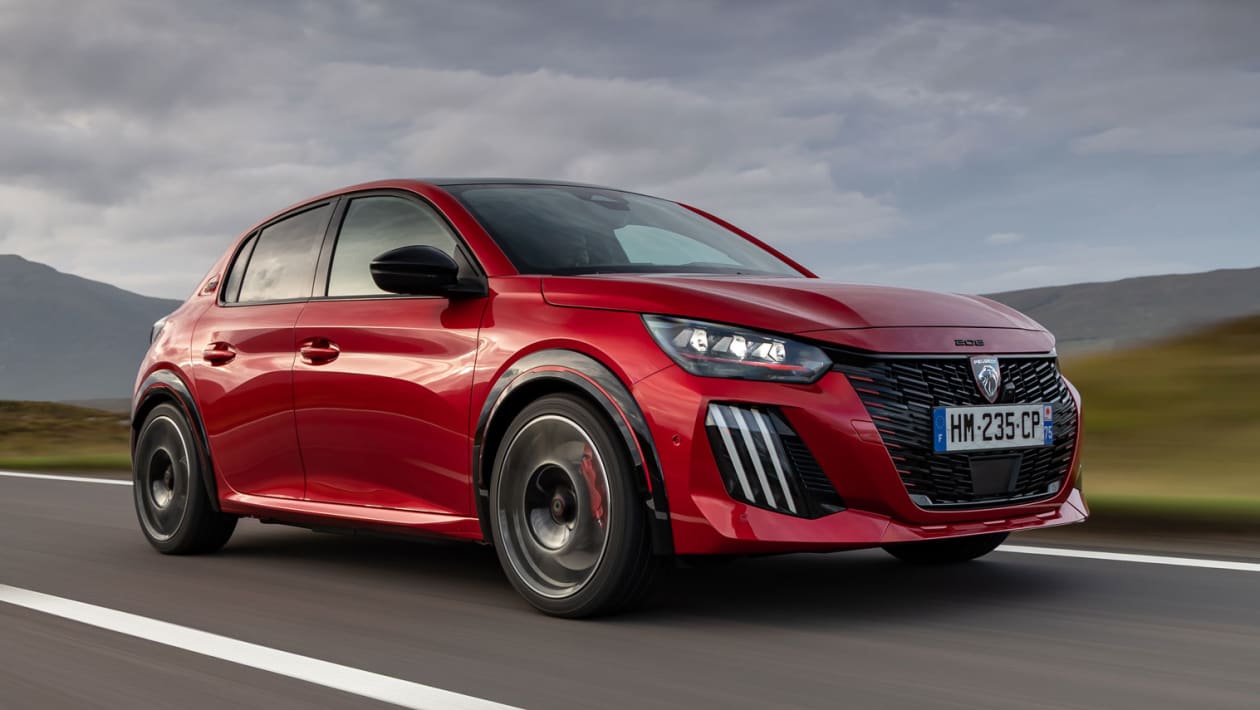
Peugeot E-208 GTi Powertrain and Performance
Motor and Output
At the heart of the Peugeot E-208 GTi sits a front-mounted electric motor producing 277bhp and 345Nm of torque. Those figures place it firmly in the upper echelon of the hot hatch segment, and the instantaneous delivery characteristic of electric propulsion means acceleration feels even more urgent than the numbers suggest.
Key performance figures:
- 0-62mph: 5.5 seconds
- 50-70mph: 3.2 seconds
- Power-to-weight ratio: 182bhp per tonne
That mid-range punch is where the Peugeot E-208 GTi will feel most devastating on real roads, dispatching overtakes with the kind of immediacy that combustion-engined rivals simply cannot match.
Differential and Traction
Peugeot claims a best-in-class power-to-weight ratio of 182bhp per tonne, a statistic that speaks to both the motor’s output and the chassis’s relatively modest mass. Helping to translate that power into forward motion is a mechanical limited-slip differential, a proper performance hardware feature that boosts traction out of corners and helps the front wheels deploy power without excessive scrabbling. In an era where many electric performance cars rely solely on electronic torque vectoring, the presence of a mechanical LSD feels like a deliberate nod to traditional hot hatch values.
Battery and Range
The Peugeot E-208 GTi uses the same 54kWh battery pack found in high-spec standard E-208 models. According to Peugeot, this is the largest battery the chassis can accommodate, which means the GTi’s performance ambitions come with a practical ceiling on energy storage. Official WLTP range stands at 219 miles as standard, though there is a clever twist: if buyers swap the standard Michelin tyres for Hankook Ventus S1 Evo3 rubber, range extends to 233 miles at no extra cost. That 14-mile gain comes purely from reduced rolling resistance, a reminder of how significantly tyre choice affects EV efficiency.
For everyday commuting and weekend blasts, 219 miles should prove adequate for most owners. However, pushing any performance EV hard drains battery reserves quickly, and the E-208 GTi is no exception. Owners planning a lengthy cross-country route with enthusiastic driving would be wise to plan charging stops accordingly.
Peugeot E-208 GTi Chassis and Handling
Suspension and Geometry
Peugeot Sport has not simply dropped a more powerful motor into a standard E-208 and called it a day. The GTi sits 25mm lower than the regular car, and its tracks have been widened by 56mm at the front and 28mm at the rear. A rear anti-roll bar has been added to improve cornering stability, a modification that should help rotate the car and reduce body roll during aggressive direction changes.
Notably, Peugeot has chosen not to fit adaptive dampers. Instead, the suspension is fixed, and the result is a surprisingly pliant ride for a car with this much performance intent. That said, the large wheels do thump into the most severe potholes, a trade-off that comes with low-profile tyres and stiffened suspension.
Drive Modes
Three drive modes are available: Sport, Normal and Eco. These adjust throttle response rather than fundamentally altering the car’s character, allowing drivers to sharpen or soften the powertrain’s reactions depending on conditions and mood. Sport mode presumably unlocks the full 277bhp with maximum immediacy, while Eco prioritises range preservation for longer journeys.
Brakes and Tyres
Stopping power comes from 355mm front brake discs clamped by red four-piston calipers, a setup that should provide strong and consistent retardation. At the rear, standard brakes are retained but supplemented by energy recovery assistance, which uses the motor’s regenerative capabilities to slow the car while feeding energy back into the battery.
The E-208 GTi rides on low-profile 40-section Michelin Pilot Sport 4S tyres, a premium performance compound that balances grip with everyday usability. These tyres are a key part of the car’s dynamic character, offering the kind of steering feel and cornering bite that enthusiasts expect from a proper hot hatch.
Exterior Design
The design team has clearly had fun with this one. The 18-inch “telephone dial” alloy wheels are a direct homage to the wheels fitted to the iconic 205 GTi 1.9, a detail that will delight marque loyalists. Gloss-black wheelarch cladding features red pinstripes, while red highlights appear on the grille, badge and headlight bezels. The front bumper is sharper than the standard E-208’s, and the rear gains a spoiler and diffuser for a more aggressive stance. GTi badging on the C-pillars completes the exterior transformation. The overall effect is a car that looks genuinely racy without resorting to excessive theatrics, though some may find the red accents bordering on garish.
Interior
Step inside and the 205 GTi connection becomes even more overt. Bright red carpeting pays direct homage to the 1980s original, a bold choice that immediately signals this is no ordinary electric supermini. The sports seats are large, with thick side bolsters, and are trimmed in a mix of artificial leather, suede and fabric. Their asymmetric design is unique to the GTi, and red stitching appears across the dashboard and doors. Red seatbelts and red cabin lighting complete the theme, though the lighting can be changed to other colours if the full red experience proves too intense. The touchscreen features a red-themed appearance and additional performance dials, giving drivers access to relevant telemetry. It is a cohesive cabin, but the relentless colour coordination may strike some as trying too hard.
Practicality and Caveats
For all its charms, the Peugeot E-208 GTi demands a few compromises. The i-Cockpit layout, with its small steering wheel and high-mounted instrument cluster, is a try-before-you-buy feature. Tall drivers may struggle to find a comfortable position, and exiting the car can be tricky, a challenge made harder by the GTi’s bigger seat bolsters. The range limitation during spirited driving is another consideration, particularly for owners who plan to use the car for weekend tours or track days. These are not deal-breakers, but they are realities that prospective buyers should weigh carefully.
The Peugeot E-208 GTi succeeds in blending electric performance with genuine hot hatch heritage. It feels like a grown-up sports car, with racy looks, impressive pace and a chassis that has been properly fettled by Peugeot Sport. The mechanical limited-slip differential, widened tracks and heritage-inspired design details demonstrate that this is more than a cynical badge exercise. The caveats around practicality and range are real, but for enthusiasts willing to embrace an electrified future, the E-208 GTi makes a compelling case that the hot hatch spirit can survive without a combustion engine. The GTi badge is back, and it has arrived just in time for the electric era.
Related: nascar legend darrell waltrip.



One Comment