
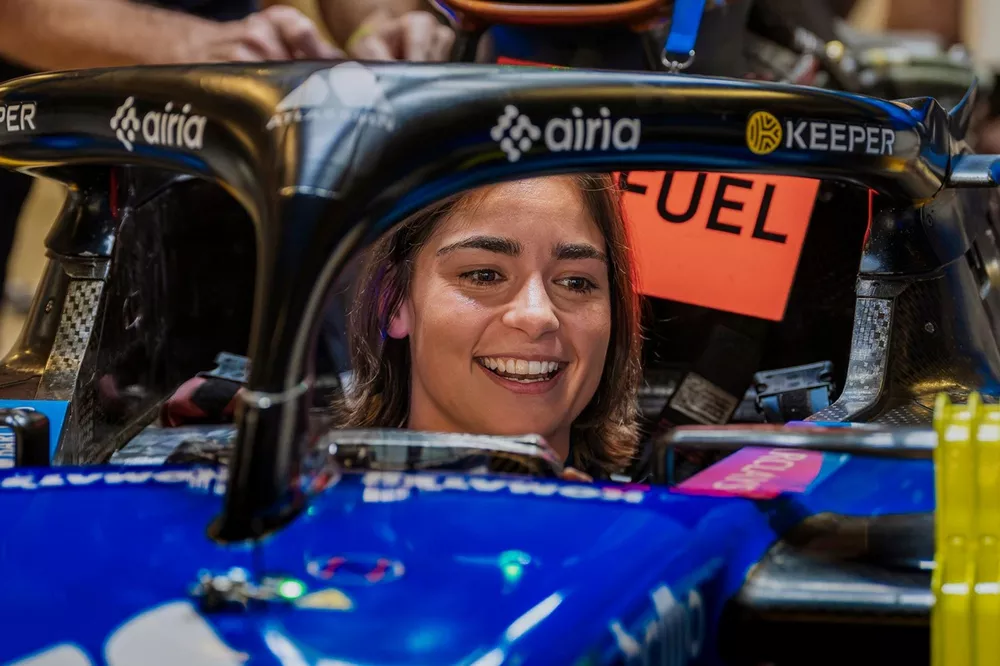
Jamie Chadwick has spent years proving she belongs in the conversation about top-level motorsport. On a sunny day at the Algarve International Circuit in Portimao, Portugal, she removed any lingering doubt. Chadwick became the first woman to drive a Williams Formula 1 car since Susie Wolff in 2015, completing 32 laps in the FW47, the team’s 2025 challenger, under F1’s Testing of Previous Cars (TPC) regulations.
The test, which formed part of her development driver duties for Williams, marks a genuine milestone. More than a decade has passed since a female driver last sat in a Williams F1 cockpit, and Chadwick’s run places her among a very small group of women who have sampled modern F1 machinery in recent years.
The Test Details
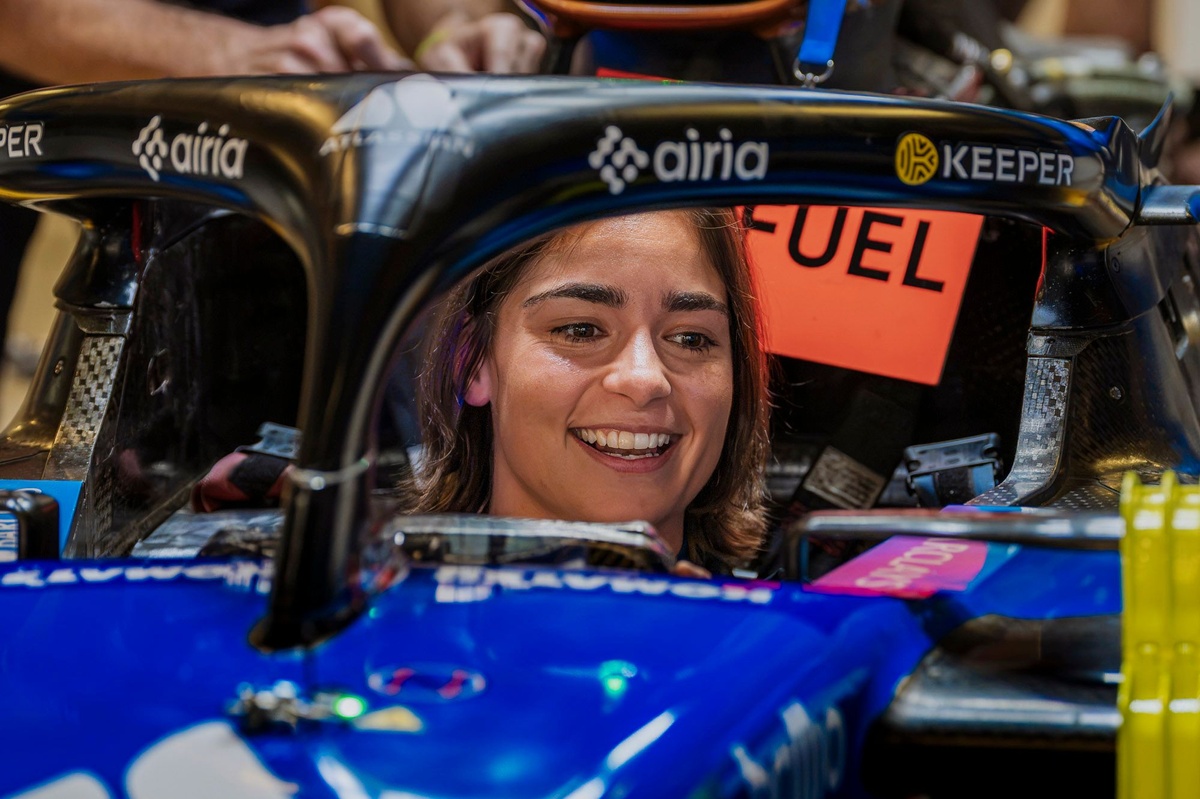
Chadwick’s outing took place at Portimao behind the wheel of the FW47. The car is Williams’ current-season contender, making the test a rare opportunity for a development driver to experience contemporary F1 performance rather than a modified older chassis. She completed 32 laps around the 4.6-kilometre Algarve circuit, a track known for its dramatic elevation changes and blind crests that punish any hesitation.
Running under TPC regulations allowed Williams to field the FW47 outside of official race weekends, giving Chadwick meaningful mileage in a controlled environment. Williams team principal James Vowles noted that Chadwick “gathered important data for the team as F1 prepares to return to Portimao next year,” a detail that adds practical value to what was already a symbolic occasion.
Portimao’s F1 Return Adds Context
The choice of Portimao was not incidental. The Portuguese Grand Prix is set to return to the Algarve circuit in 2026, following its previous appearances on the calendar in 2020 and 2021. Those races, held during the pandemic-affected seasons, produced memorable moments and established Portimao as a popular venue among drivers and fans.
Testing at a circuit that will host a Grand Prix the following year gives Williams useful baseline data, and it gave Chadwick the chance to learn a track that will matter to the team in the near future. It also ties her test to a broader narrative about F1’s expansion and its willingness to revisit circuits that once served as emergency replacements. Portimao’s return signals that the sport values the venue on its own merits, and Chadwick’s laps there add another layer of significance to the weekend.
A Milestone for Women in Motorsport
Chadwick is the second female driver to get behind the wheel of an F1 car in 2025, following Doriane Pin’s test with Mercedes earlier in the year. Pin drove the Mercedes W12 at Silverstone in April, continuing a slow but steady increase in opportunities for women at the pinnacle of the sport.
The list remains short. Jessica Hawkins tested an Aston Martin in 2023, and Pin’s Mercedes run added another name in 2025. Chadwick’s Williams test now sits alongside those efforts. It is worth remembering that Wolff’s 2015 appearance was a landmark moment that many hoped would open floodgates. It did not, at least not immediately. Chadwick’s test is a reminder that progress in motorsport often arrives in increments rather than leaps.
Chadwick’s Career and Williams Connection
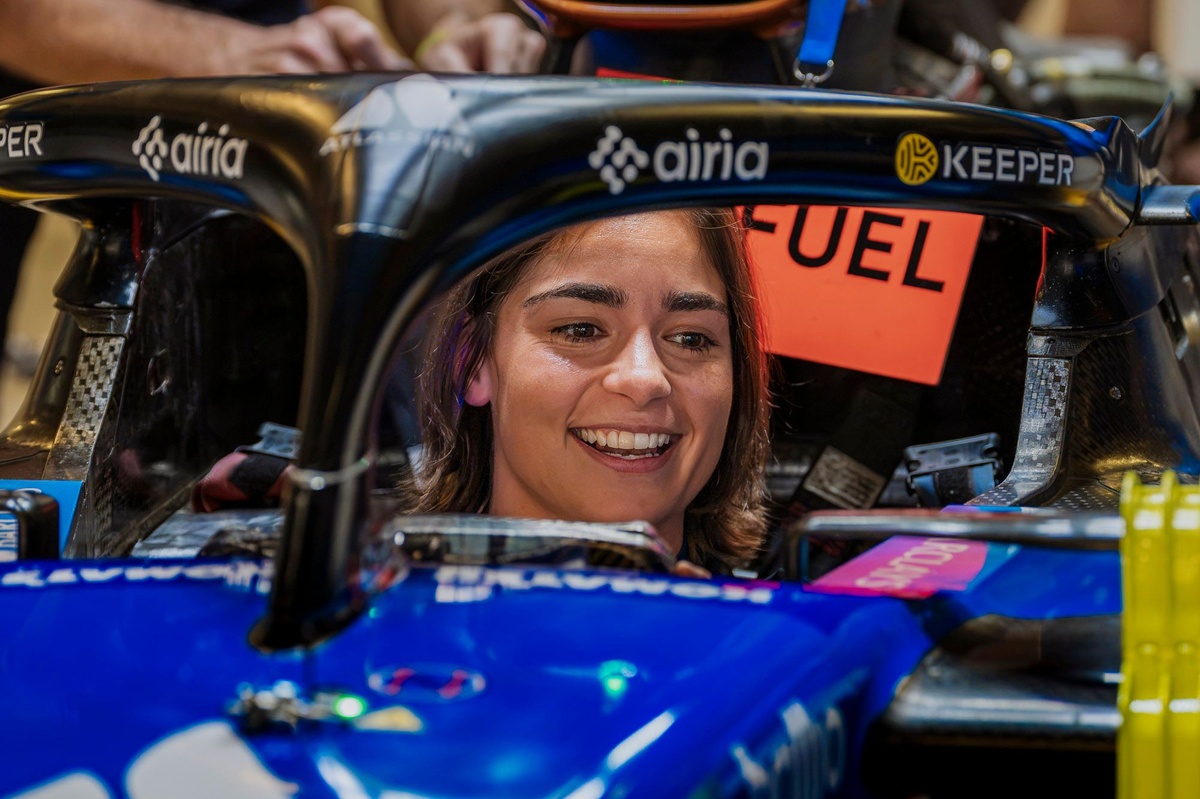
At 28, Chadwick brings a résumé that few drivers of any gender can match at her age. She is a three-time W Series champion, a series that provided a platform for female drivers before its closure, and has since added race wins in Indy NXT and the European Le Mans Series. She also serves as a test driver for the Genesis Hypercar programme, gaining experience in prototype racing that complements her single-seater background.
Her relationship with Williams stretches back to 2019, when she joined the team as an ambassador. That affiliation has now evolved into a hands-on development role, with the Portimao test representing the clearest expression yet of what that partnership can produce. Williams has invested in her development with a patience that reflects genuine belief rather than a publicity gesture.
Chadwick’s Reaction
Chadwick did not hide her emotions after stepping out of the FW47. “It was a phenomenal day and an incredible experience,” she said. “It was everything I imagined and 10 times more.”
She described the physical and mental demands of piloting an F1 car around Portimao, a circuit that offers little respite. “Few things can prepare you for driving a Formula 1 car at speed around a track like Portimao,” she said. “Very surreal. It all went far too quick. The reality of it was what I expected times ten.”
Chadwick also acknowledged the lineage she was stepping into. “I remember being young and watching Susie Wolff step into a Williams F1 car and how much that inspired my own journey,” she said. “I’d go as far as saying it’s been the best day of my life so far.”
That sense of appreciation extended to a renewed respect for the sport itself. “Now my appreciation for this sport, and for Formula 1 in particular, has gone through the roof,” she added. For a driver who has competed across multiple disciplines, that admission carries weight.
James Vowles’ Praise
Vowles has been one of Chadwick’s most vocal supporters, and his comments after the test reflected both admiration and a clear-eyed assessment of what her performance meant. “Jamie Chadwick is an inspiration for millions of women and girls who has broken records at every level,” he said.
He was equally direct about the technical value of her running. “Her feedback and performance were impressive as we knew they would be. This clearly shows there is a path for women to compete at the top level.”
The phrase “there is a path” matters. For years, the conversation around women in F1 has centred on whether a genuine route exists from junior categories to the grid. Vowles’ comments suggest that Williams sees Chadwick’s development as part of a legitimate pipeline rather than a one-off event. Whether other teams follow that lead remains to be seen, but the tone from the Williams camp is notably different from the cautious language that has often accompanied female driver programmes in the past.
Jamie Chadwick’s 32 laps at Portimao represent more than a personal achievement, significant as that achievement is. They mark the first time a woman has driven a Williams F1 car since Susie Wolff in 2015, and they place Chadwick in a small but growing group of female drivers gaining access to modern F1 machinery.
The more instructive question now is what comes next. A TPC outing is a meaningful step, but the natural progression would be a Friday practice session, where Chadwick would run alongside the full grid under competitive conditions. Williams has not signalled whether that is on the table, and her commitments with the Genesis Hypercar programme add complexity to any scheduling. What the Portimao test does establish is that Williams is willing to invest real track time in her development, not just a simulator programme and sponsor appearances. For the millions of women and girls Vowles referenced, that distinction matters more than the lap count suggests.